
Agentic Media Buying: Will AI Kill Creative Strategy?
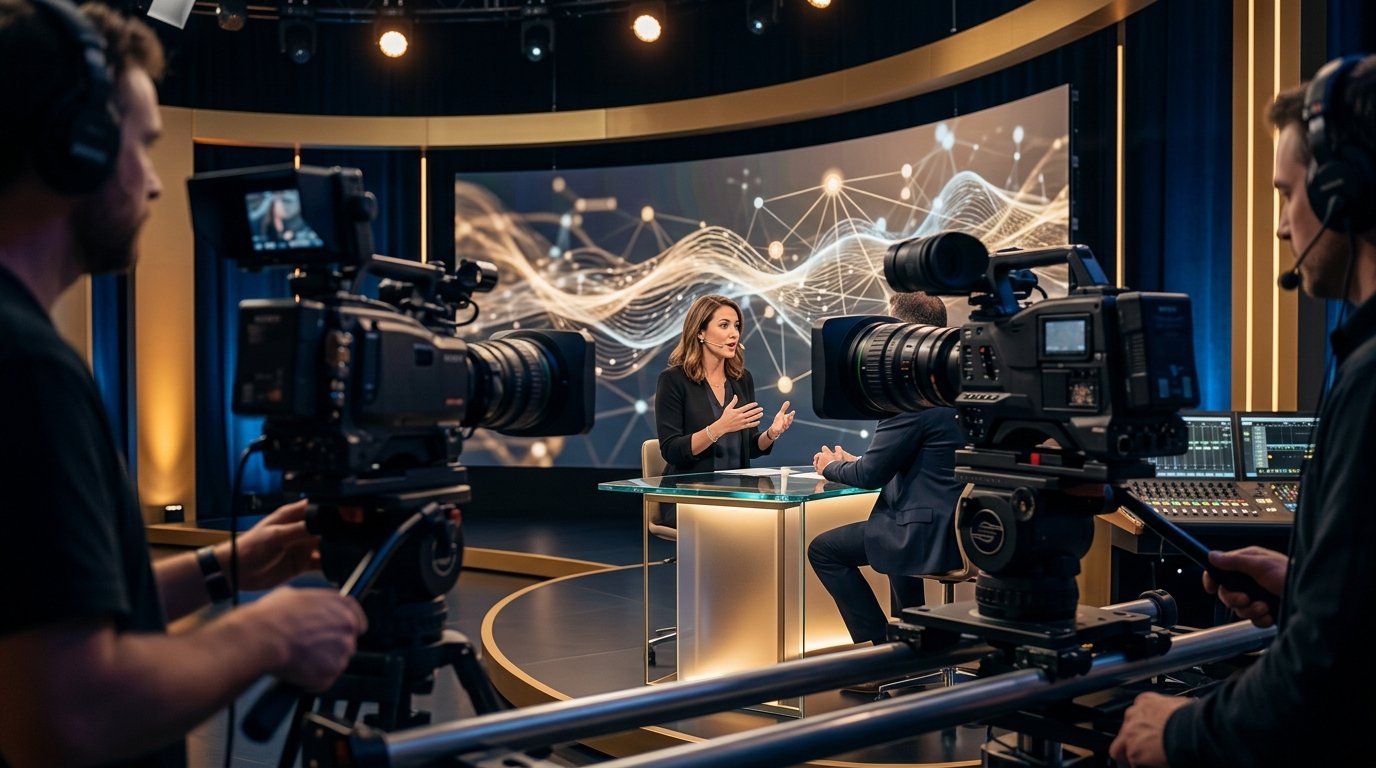
Agentic Media Buying: Will AI Kill Creative Strategy?
Artificial intelligence is no longer just suggesting audience segments or optimizing bids; it is now taking full control of end-to-end media buying. Welcome to the era of Agentic Media Buying, where performance is no longer a matter of manual settings, but of creative signal quality.
What is Agentic Media Buying and How Does it Impact Brands?
The media industry is currently undergoing a seismic shift that goes far beyond the simple digital transition. During the latest 'Upfront' presentations in New York, one term eclipsed all others: Agentic. This concept marks a sharp break from the classic programmatic automation we have known for a decade. While programmatic relies on rules predefined by human operators, agentic media buying relies on AI agents capable of autonomous reasoning. Industry giants like Disney, Netflix, Fox, and NBCUniversal are now deploying infrastructures where AI agents make real-time decisions to plan, buy, and optimize ad inventory across their streaming and linear platforms. For a CMO or VP of Events, this means the human hand is stepping away from the pure technical transaction to focus exclusively on high-level strategy and brand vision.
Agentic buying radically transforms media into a commodity managed by machines seeking absolute performance, free from emotional bias or the habits of traditional buyers. Fox, with its new AdStudio, promises media planning entirely driven by agents in the coming months, while Netflix integrates tools where AI manages the entire campaign lifecycle—from inventory selection to budget adjustments based on weather or instant social trends. The risk for brands is becoming invisible or blending into a uniform mass if they fail to realize that the algorithm now values only one thing: the ability of content to generate actionable engagement signals. In this context, data is merely the engine; content remains the only fuel capable of making a difference. If machines now manage the 'where,' 'when,' and 'how much,' the 'what' becomes the unique lever of differentiation for human decision-makers. This paradigm shift requires a deep reflection on asset production. How do you feed a machine processing millions of data points per second with content that won't be ignored by the algorithm—or worse, by the final audience developing increased resistance to automated messages? Agentic buying demands flawless visual and narrative consistency, as AI, in its quest for optimization, will ruthlessly discard any asset that does not generate immediate retention.
Why Photo and Video Quality is the Only Strategic Differentiator Against AI
The ubiquity of automation and AI-driven media buying creates a new hierarchy of values where craftsmanship regains its rights. As agentic AI decides ad placement based on predictive performance, visual saturation becomes the absolute norm. The algorithm, by its very nature, will naturally favor content that generates the strongest and fastest positive signals. This is precisely where the raw quality of image and sound acts as the X-factor in marketing strategy. We are no longer talking about simple snapshots or conference videos filmed hastily with a smartphone. To break through the automated flow and convince AI agents that your content deserves airtime, brands need premium visual production that exudes authority, credibility, and emotion.
High-end editorial photography or a perfectly produced conference video, with polished art direction, are no longer luxuries reserved for luxury campaigns, but algorithmic necessities for any B2B or corporate brand. At Alesia RSVP, we observe a direct correlation: superior visual assets, like those featured in our gallery, achieve significantly higher retention and recall rates. Agentic AI is programmed to optimize ROI; it will systematically favor visuals that catch the eye in the first few milliseconds of a scroll or view. If your production is mediocre, the AI agent will mechanically degrade your organic reach and increase your acquisition costs, as your content 'performs' worse than a competitor who invested in a cinematic aesthetic. The battle is no longer fought on the tactical choice of channel or time slot—the machine handles that with surgical precision—but on the image's ability to stop the scroll and captivate the viewer. The standardization of media buying by AI creates a creative void that only brands betting on high-end production can fill. This is the great paradox of our technological age: the more the distribution process is automated, the more the technical and aesthetic excellence of visual production becomes a critical strategic asset.
How B2B Events Feed Tomorrow's Autonomous Advertising Strategies
Corporate events, leadership summits, and major international conferences, such as what we see at SXSW, have become the true content factories of the attention economy. A three-day event, if covered with cinematic rigor, can generate raw material of incredible richness, capable of fueling AI-driven advertising campaigns for six months or even a year. However, for this synergy to work, the capture must be designed for advertising reuse and algorithmic optimization from the pre-production phase. It is no longer about passively documenting an event, but about producing dynamic segments, high-level interviews, and strong brand moments that can be sliced, tagged, and optimized by AI agents.
Latest advertising and event trends on BizBash confirm this inevitable convergence between physical events and digital media buying. By turning a corporate summit into a giant production studio, brands build a stock of authentic, premium assets. Because this content features real leaders, real human interactions, and tangible expertise, it possesses a trust value that purely synthetic or AI-generated creations will never reach. Agentic buying thrives on this 'high-definition' authenticity. A multi-camera capture during an expert panel in London, Paris, or Dubai provides a rich visual database that platforms like Netflix or Disney+ can distribute to ultra-targeted audience segments with formidable efficiency. The role of the event production agency is evolving radically: it becomes the guarantor of the purity and power of the signal sent to the AI. Alesia RSVP positions itself precisely at this crucial intersection, providing the art direction and technical rigor necessary for every image captured during an event to become a high-performing advertising asset in a machine-managed ecosystem. Ultimately, agentic buying is not a threat to events; it is an unprecedented reach amplifier, provided the visual source is irreproachable and carries a strong identity.
FAQ
Will agentic buying reduce the need for human creation?
Absolutely not. While AI handles the complex logistics of buying and optimization, it lacks the cultural intuition, aesthetic sensitivity, and emotional understanding required to build a strong brand identity. On the contrary, the need for high-quality human creation is increasing exponentially as it is the only way to stand out in a robotically managed and uniform advertising flow.
What type of video content performs best with AI algorithms?
Agentic AI algorithms favor content with high visual information density and professional production quality (4K resolution, controlled lighting, impeccable sound). Videos that maintain a high completion rate through dynamic editing and premium aesthetics naturally receive more budget and visibility from autonomous agents, as they are perceived as more 'efficient' for user engagement.
Questions Fréquentes
Will agentic buying reduce the need for human creation?
Absolutely not. While AI handles the complex logistics of buying and optimization, it lacks the cultural intuition, aesthetic sensitivity, and emotional understanding required to build a strong brand identity. On the contrary, the need for high-quality human creation is increasing exponentially as it is the only way to stand out in a robotically managed and uniform advertising flow.
What type of video content performs best with AI algorithms?
Agentic AI algorithms favor content with high visual information density and professional production quality (4K resolution, controlled lighting, impeccable sound). Videos that maintain a high completion rate through dynamic editing and premium aesthetics naturally receive more budget and visibility from autonomous agents, as they are perceived as more 'efficient' for user engagement.