
AI Crypto Flaws: The New Security Mandate for Fintech Events
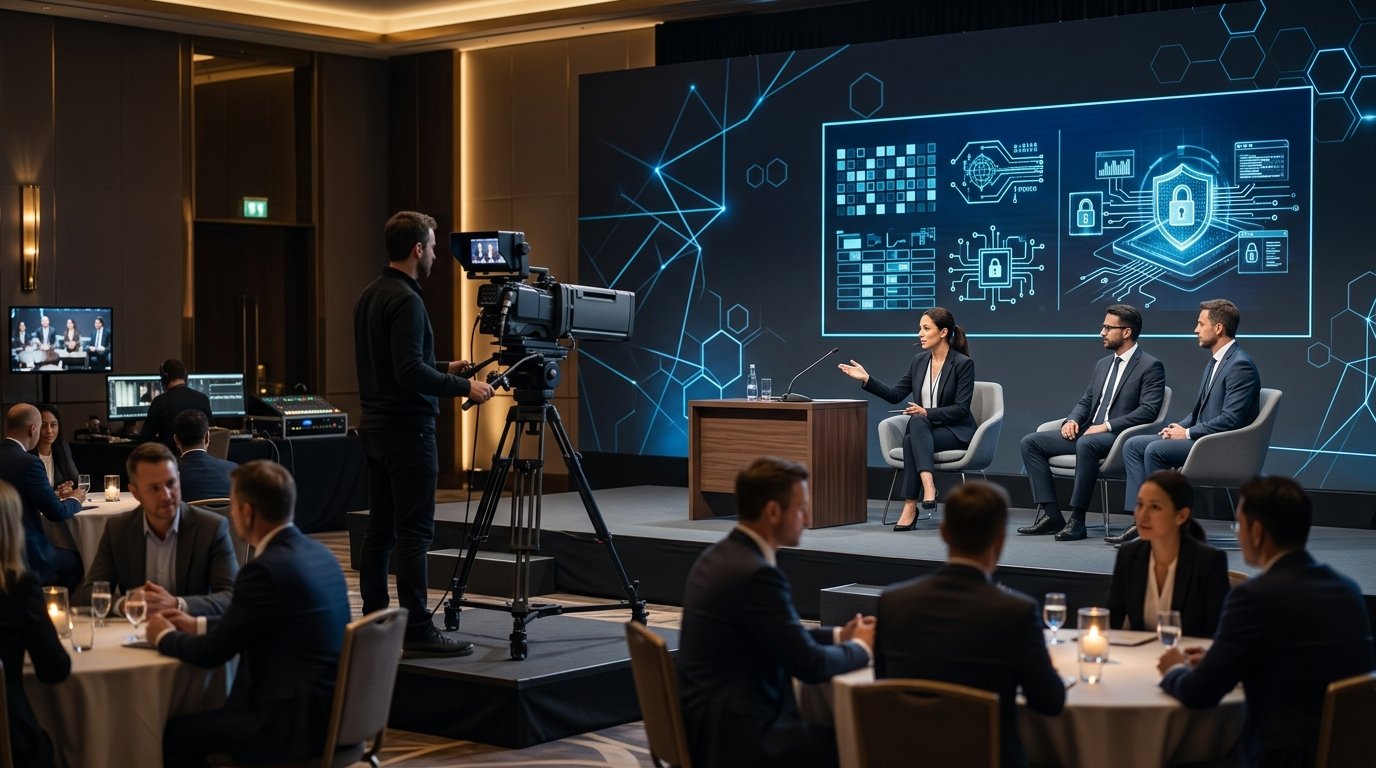
AI Crypto Flaws: The New Security Mandate for Fintech Events
Security experts warn that advanced AI is about to spark a hacking crisis for both crypto and banks, forcing a shift in event-based security discourse.
How is AI-driven vulnerability detection changing the landscape of financial security?
The recent discovery of a critical vulnerability in the Zcash network by Shielded Labs, utilizing Anthropic’s Opus 4.8 model, is not merely a technical footnote; it is a seismic shift in how financial systems must be audited. For four years, a flaw that allowed for the unlimited issuance of counterfeit tokens sat undetected by human eyes. It took the deployment of a high-level LLM by specialized researchers to expose what billions of dollars in market cap had missed. This transition from manual code review to AI-driven exploitation marks the end of security through obscurity. For the corporate decision-maker, this means that the software powering your fintech infrastructure or your event's payment rails is likely harboring similar 'zero-day' risks that are now visible to anyone with an API key.
Experts are now sounding the alarm that traditional banking systems, often built on legacy code far older and more convoluted than Zcash’s codebase, are the next logical targets. The speed at which AI can parse and identify logical inconsistencies in code far outstrips the capacity of even the most elite human red teams. This creates a terrifying asymmetry: attackers can use AI to find vulnerabilities in seconds, while institutions struggle with bureaucratic patch cycles. Industry discussions on AI security flaws suggest that the only response is to adopt AI-assisted formal verification as a baseline standard for any mission-critical financial software.
In the context of B2B events, this revelation changes the agenda. We are no longer discussing 'innovation' in a vacuum; we are discussing institutional survival. When a privacy-focused network like Zcash sees a 38% sell-off in 24 hours due to an AI-discovered bug, it serves as a case study in volatility. The landscape has shifted from preventative maintenance to active, AI-led defense, and this narrative is dominating the boardrooms of every major fintech firm entering the next quarter.
Why are elite tech summits like EthCC the frontline for solving AI-exposed crypto flaws?
While the vulnerability was discovered in a digital environment, the solution is always found in a physical one. High-stakes summits like EthCC and Consensus have become the de facto war rooms for the industry. When the Zcash news broke, the primary reaction wasn't just on social media; it was a flurry of closed-door meetings among developers, VCs, and security researchers who utilize these events to coordinate emergency responses. The density of talent at these gatherings allows for a level of high-bandwidth communication that a remote-first industry simply cannot replicate during a crisis.
EthCC, specifically, serves as a critical junction where the technical elite meet the institutional players. It is where the 'Mythos' of AI-driven security is dissected. These events provide the platform for 'hallway tracks' where the real consensus on security standards is built. For a marketing director or a VP of Events, the value of these summits has pivoted from lead generation to brand preservation. Being present at these events isn't just about showing off a product; it’s about demonstrating to the market that your leadership is part of the collective solution.
Corporate event planning for 2026 and beyond must account for this shift. The focus is now on technical depth. We are seeing a move away from generic keynotes toward deeply technical workshops and live 'war games' where AI models are pitted against network architectures in real-time. This is the new standard for high-value B2B engagement. The visual coverage of these moments—the intensity of a lead developer explaining a fix to a room of stakeholders—is the most potent content a brand can produce to signal competence in an era of AI-driven chaos.
How can financial institutions leverage AI-assisted verification to prevent future banking crises?
The transition from 'wait and see' to proactive AI-assisted formal verification is the defining challenge for banks in the next 18 months. Formal verification—the process of using mathematical proofs to ensure code behaves exactly as intended—was previously too expensive and time-consuming for most commercial applications. AI has changed that math. By using models like the upcoming Anthropic Mythos, institutions can automate the creation of these proofs, closing the window of opportunity for hackers.
However, the implementation of these tools is as much a cultural challenge as a technical one. Traditional banks are notoriously slow to adopt new paradigms, but the Zcash incident proves that the cost of inaction is a total loss of market confidence. This is where Trends in high-stakes event planning and tech security come into play. Financial institutions are increasingly hosting their own internal summits and private roundtables to facilitate knowledge transfer from the crypto-native security world into the legacy banking sector.
These private events require a different production approach. There is no room for 'filler' content. Every session must be captured with the intent of creating high-level internal intelligence. The documentation of these roundtables becomes a strategic asset—a record of the institutional logic used to defend against the next wave of AI-driven exploits. Alesia RSVP understands this shift. We don't just film a stage; we document the intellectual defense of a brand. As the premier visual storytellers for events like EthCC and Consensus, Alesia RSVP captures the raw intensity and high-level networking where industry leaders debate the future of AI security and financial stability. We document the moment innovation meets accountability.
What role does human networking play in navigating the risks of the 'Mythos' AI era?
In a world where AI can simulate reality and exploit code with equal ease, the value of 'human-in-the-loop' networking has never been higher. The 'Mythos' era of AI—defined by models capable of complex logical reasoning and autonomous tool use—threatens to decouple human oversight from technical execution. To counter this, the physical event becomes the ultimate verification layer. You cannot 'deepfake' a handshake or a technical debate in a crowded room at a Paris or London summit.
For corporate executives, the networking that happens at these events is the only way to gauge the true resilience of a partner or a service provider. The technical specifications of a network are now secondary to the quality of the team defending it. This is why high-end AV production for these events is non-negotiable. If you are hosting a summit to discuss the future of financial security, the medium is the message. A low-quality stream or a poorly lit panel suggests a lack of attention to detail that is unacceptable in a security-conscious market.
Professional content strategy for these events must focus on 'proof of presence.' Capturing high-fidelity visual evidence of these interactions is the most effective way to communicate that your organization is at the center of the security discourse.
Questions Fréquentes
Quel est l'impact de l'IA sur la sécurité des banques traditionnelles ?
L'IA permet d'analyser les codes hérités (legacy) beaucoup plus vite que les humains, exposant des failles jusque-là ignorées. Les banques doivent adopter la vérification formelle automatisée pour rester résilientes.
Pourquoi les événements physiques comme l'EthCC sont-ils cruciaux pour la cybersécurité ?
Ils servent de centres de coordination de crise en temps réel et permettent une vérification humaine de la confiance que le numérique ne peut plus garantir seul face aux deepfakes et à l'IA.
Comment le RGPD influence-t-il la gestion des failles détectées par l'IA ?
Le RGPD impose des notifications de violation strictes. L'utilisation de l'IA pour la détection préventive aide les entreprises à se conformer aux exigences de sécurité et de protection des données européennes.