
BMW at Goodwood: Using Emotion Analytics as a Key KPI
BMW at Goodwood: Using Emotion Analytics as a Key KPI
Is emotion the ultimate event marketing metric? Through the lens of BMW's Goodwood Festival of Speed activation, we analyze how agency TRO and emotional data analytics are redefining performance measurement and how high-end visual production amplifies these results for B2B stakeholders.
Beyond Badge Scans: Measuring the Emotional Impact of Events
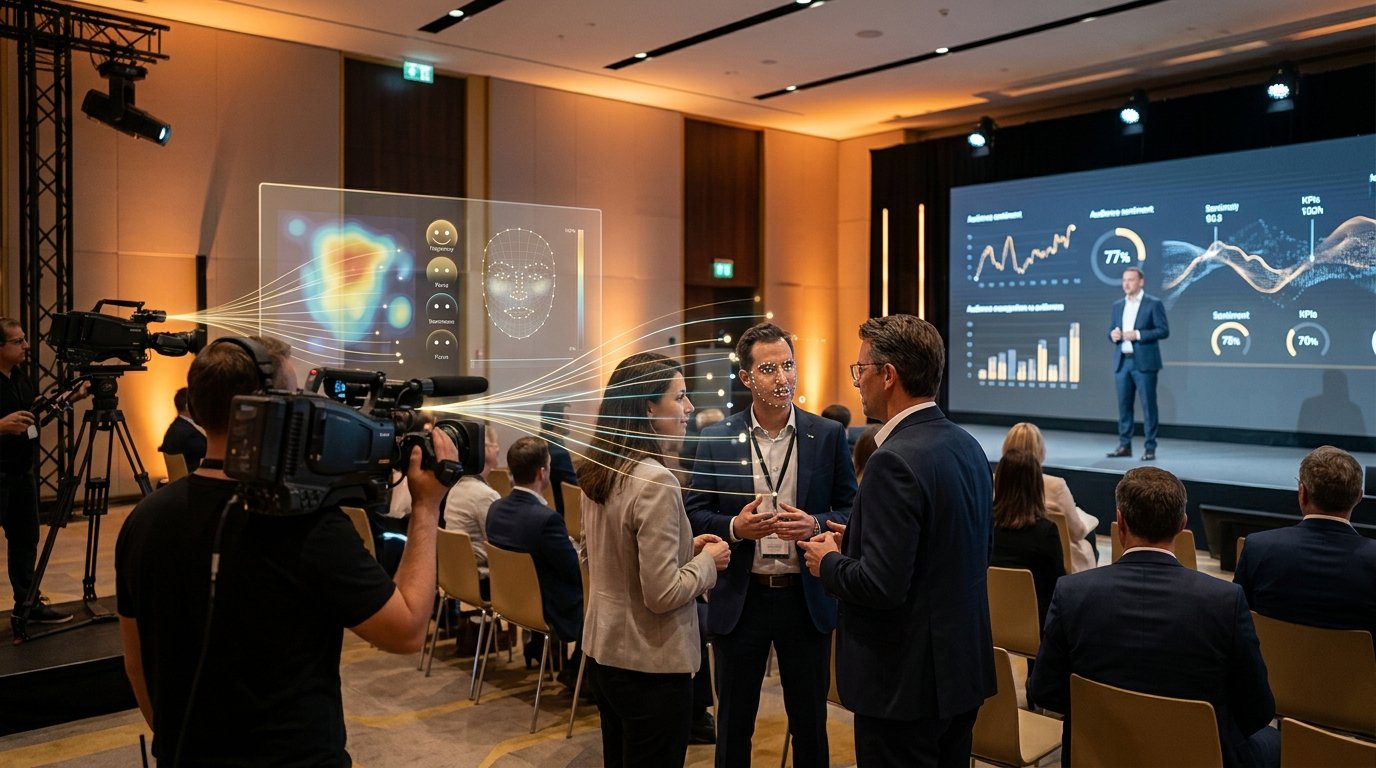
The days of measuring event success by simple lead counts, footfall, or badge swipes are long gone. In today's saturated marketing landscape, CMOs and innovation leads demand tangible proof of deep psychological engagement. At the Goodwood Festival of Speed, TRO deployed an innovative methodology for BMW based on emotion analytics, signaling a departure from traditional reporting. This approach doesn't just quantify visitor flow; it decodes the visceral reaction of participants to technological innovation and design. By merging experience design with real-time biometric measurement, brands can finally answer the fundamental question haunting every event budget: did the activation actually shift the audience's long-term perception?
This transition toward data-assisted qualitative measurement marks a strategic pivot in the industry. B2B decision-makers no longer seek mere mass visibility; they want a measurable transformation in opinion and lasting brand recall. To dive deeper into this trend, you can view this LinkedIn discussion on TRO emotion analytics. The ability to convert abstract feelings—like awe or surprise—into actionable data justifies the rising production costs of high-prestige events. By isolating the precise moments where emotional engagement peaks, brands can optimize future activations, removing friction points and amplifying the most impactful touchpoints. This isn't intuition-based marketing anymore; it’s psychological precision, where every interaction is weighed against its Return on Emotion (ROE).
Why Sentiment Analysis is Crucial for the Future of Electric Mobility
The automotive sector is currently navigating a major identity crisis as it shifts toward electrification. For a brand like BMW M, whose DNA is historically rooted in engine roar, mechanical vibration, and raw internal combustion performance, convincing purists that the electric 'Neue Klasse' can deliver the same thrill is a titanic challenge. The 'The Legacy Continues' activation at Goodwood served as a living laboratory to test this transition. Using sensory storytelling, BMW attempts to bridge the gap between ICE (Internal Combustion Engine) heritage and an electrified future. By deploying choreographed lighting, haptic environments, and cutting-edge immersive sound design, the brand aims to recreate performance-driven excitement without the traditional engine note.
Sentiment analysis becomes the ultimate validation tool for both engineers and marketers here. If biometric data shows a positive correlation between the immersive experience and a significant rise in interest for EV models, the gamble pays off. This strategy is being closely watched by industry experts, as noted in BizBash trends in experiential marketing. For event organizers, this means technology must move beyond mere 'wow factor' to serve the narrative. Data is simply the mirror reflecting the effectiveness of the onsite story. It allows us to understand if the 'Sheer Driving Pleasure' message survives the absence of pistons. Without this precise measurement, the EV transition remains a leap of faith; with it, it becomes a fact-driven emotional conversion strategy.
How Premium Visual Content Amplifies Experiential ROI
While TRO’s technology quantifies emotion in real-time for those on the stand, it remains inherently invisible to those not physically present. This is where high-tier visual production acts as the essential force multiplier. For a Goodwood activation to have global reach, it must be documented with surgical precision, transforming a fleeting moment into a permanent digital asset. A data report, no matter how detailed, is rarely enough to convince a board in Munich or New York of the value of a multi-million dollar investment. You need imagery that transmits, by proxy, the same emotion captured by the sensors.
At Alesia RSVP, our role is to operate at the intersection of data and aesthetics. We don’t just film an event; we capture and elevate the 'moments of truth.' We translate invisible data into premium visual narratives, allowing brands to extend the emotional impact long after the structures are dismantled. By producing cinematic aftermovies and editorial-grade photo galleries, we give physical, shareable life to the statistics. A data point showing 85% satisfaction is powerful, but a high-definition video showing real wonder, pupil dilation, and the spontaneous smile of a prospect in front of a prototype is irrefutable proof. To see how we translate the intensity of global summits into lasting imagery, explore our most impactful events. The synergy between emotional data and visual production is the key to modern ROI: the former proves effectiveness, the latter ensures the success is sustained and shared.
Future-Proofing 2026: The Next Wave of Participant Engagement Tech
The future of B2B events lies in hyper-personalization and non-intrusive biometric measurement. Looking toward 2026, computer vision and AI-driven facial analysis will allow for the mapping of entire crowd moods without ever interrupting the visitor journey or compromising anonymity—fully compliant with evolving GDPR and international privacy standards. At Goodwood, experimental use of motion sensors, acoustic analysis, and eye-tracking already helps pinpoint which specific segments of an activation generate the most engagement. These tools offer unprecedented granularity: we no longer just know that visitors stayed 10 minutes; we know they spent exactly 4 minutes admiring the Neue Klasse’s backlit grille with intense curiosity, followed by a phase of approval during the UI demonstration.
This surgical precision allows for real-time adjustments or course-correction for the next leg of a global tour. However, such technical sophistication requires a visual presentation that matches the innovation it carries. High-end tech presented through poor documentation or low-quality capture instantly loses its 'innovator' aura and credibility with partners. This is why we consistently recommend integrating a dedicated production team from the creative concept phase, as seen in our portfolio gallery. The generated content becomes the vehicle for innovation, proving to the world that the brand masters both the technological measurement tools and their spectacular staging. By 2026, the event will no longer end at the venue doors; it will live through a constant feedback loop between the physical experience, emotional data, and its sublimated visual output.
FAQ
What is emotion analytics in experiential marketing?
Emotion analytics uses advanced technologies such as AI facial recognition, biometric sensors (heart rate, skin conductance), and acoustic analysis to measure participants' psychological reactions. Unlike post-event surveys, it quantifies real-time, spontaneous engagement, providing an objective view of an activation's impact.
How does sensory storytelling influence brand perception?
Sensory storytelling engages multiple senses (sight, sound, touch) to create a much stronger memory anchor than a simple visual message. By linking positive stimuli and immersive environments to brand values, it fosters a deeper emotional connection, which is particularly effective for complex transitions like moving from traditional to electric vehicles.
Questions Fréquentes
What is emotion analytics in experiential marketing?
Emotion analytics uses advanced technologies such as AI facial recognition, biometric sensors (heart rate, skin conductance), and acoustic analysis to measure participants' psychological reactions. Unlike post-event surveys, it quantifies real-time, spontaneous engagement, providing an objective view of an activation's impact.
How does sensory storytelling influence brand perception?
Sensory storytelling engages multiple senses (sight, sound, touch) to create a much stronger memory anchor than a simple visual message. By linking positive stimuli and immersive environments to brand values, it fosters a deeper emotional connection, which is particularly effective for complex transitions like moving from traditional to electric vehicles.