
Behind the Scenes: Strategic Brand Roadshow Execution
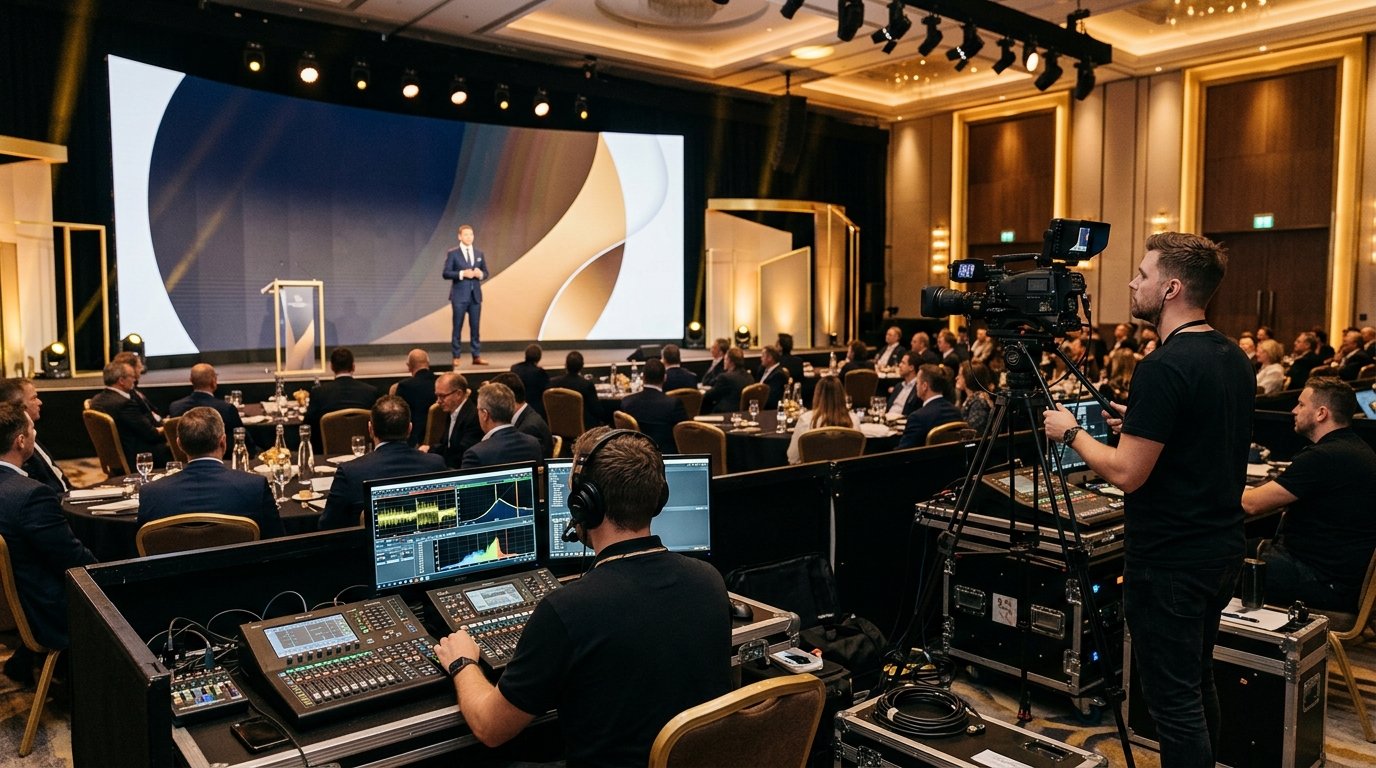
Behind the Scenes: Strategic Brand Roadshow Execution
Taking your brand on the road is a high-stakes marathon where every stop must feel like a flagship experience. Capture the momentum effectively.
What are the key challenges of organizing a global brand roadshow?
Taking your brand on the road is a high-stakes marathon where every stop must feel like a flagship experience. But how do you capture the momentum of a multi-city tour without losing the premium essence of your brand? A roadshow is not a series of isolated events; it is a single narrative deployed across multiple geographies. The primary challenge lies in the logistical fragmentation that occurs when moving from one market to another. Most corporate teams struggle with the 'Swiss Army Knife' problem—hiring local generalists in every city who lack a deep understanding of the brand's global visual identity. This leads to a disjointed experience where the event in London feels entirely different from the activation in Singapore.
Beyond logistics, the pressure to maintain a high-end feel while dealing with varying venue constraints and local vendor standards is immense. Decision-makers often find that the message gets diluted as the tour progresses. The fatigue of the traveling team can lead to a drop in execution quality, which is immediately visible to high-net-worth attendees or enterprise clients. Managing these moving parts requires a centralized strategy that prioritizes consistency over local convenience. Current industry shifts toward highly curated, smaller-scale roadshows demand even higher production values because the intimacy of the setting leaves no room for error.
Furthermore, the geopolitical and cultural nuances of each city can impact the flow of the event. A format that works for corporate events in London might require significant timing adjustments for a Dubai audience. The challenge is to adapt the format without compromising the core brand pillars. This requires a production partner that understands the global corporate environment and can provide a steady hand across borders, ensuring that the executive team can focus on the message while the production remains flawless.
How can high-quality visual storytelling enhance a roadshow's ROI?
In the B2B sector, the event itself is only half the battle. The true ROI of a roadshow is generated in the months following the tour through the strategic use of captured content. High-quality visual storytelling transforms a two-hour presentation into a library of marketing assets. If you are investing hundreds of thousands of dollars in a multi-city tour, relying on mediocre photography or amateur video is a financial mistake. Professional editorial coverage ensures that the energy of the room and the authority of the speakers are preserved in a way that resonates with those who couldn't attend.
Visual assets serve as the currency of the roadshow. They provide the 'social proof' needed to close enterprise deals and the high-end collateral required for PR and internal communications. When a roadshow is documented with a magazine-quality editorial eye, the resulting imagery can be used for annual reports, future event promotion, and executive LinkedIn profiles. This multi-purpose utility significantly lowers the cost-per-asset and extends the life of the event. Many brands treat photography as an afterthought, but in a digital-first corporate world, the image is the event for 99% of your audience.
Moreover, high-end video recaps and aftermovies allow marketing teams to demonstrate the scale and success of the tour to stakeholders and sponsors. A well-produced highlight reel can be the deciding factor for a sponsor considering a multi-year partnership. By prioritizing visual storytelling, you are not just documenting a moment; you are building a brand archive that validates your market position. The goal is to create a sense of 'FOMO' (fear of missing out) that makes the next roadshow even more anticipated.
Why is visual consistency crucial when taking a brand to different international markets?
Visual fragmentation is a silent brand killer. When a company takes its brand on the road, the visual output must be indistinguishable from city to city. If the photography style in New York is dark and moody while the Paris coverage is bright and airy, the brand appears disorganized and amateur. Consistency signals reliability—a trait that is non-negotiable for financial institutions and enterprise tech firms. Achieving this level of uniformity requires a single production standard and, ideally, a single agency partner who manages the visual output globally.
This consistency extends beyond just the 'look' of the photos. It includes the framing of video interviews, the quality of the audio in podcast recordings, and the speed of delivery. For a roadshow to be effective, the content from the Monday event in London needs to be live on social media by Tuesday morning to build momentum for the Wednesday event in Amsterdam. This pace can only be maintained by a team that understands the workflow and the brand's specific requirements. You can view examples of this cohesive approach in our visual portfolio, which showcases how we maintain high standards across diverse environments.
International markets also present different lighting and architectural challenges. A professional crew knows how to adapt to a basement conference room in Berlin just as effectively as a glass-walled skyscraper in Dubai, ensuring the brand always looks premium regardless of the setting. This technical expertise prevents the 'local vendor lottery' where quality fluctuates wildly. In a globalized economy, your brand is judged by its weakest link. Ensuring that the visual output is consistently excellent across all markets protects the brand's integrity and reinforces its status as a global leader.
How do you document the 'behind the scenes' of a roadshow to build brand authenticity?
Modern B2B audiences are increasingly skeptical of overly polished corporate propaganda. They want to see the human effort, the scale of the operation, and the personalities behind the brand. Documenting the 'behind the scenes' (BTS) of a roadshow is a powerful way to build authenticity and trust. It shows the commitment the company is making to meet its clients where they are. This type of content is particularly effective for LinkedIn, where professional audiences engage more deeply with stories of growth, logistics, and team collaboration.
Capturing the setup, the executive briefings, and the candid interactions between the team and attendees provides a layer of transparency that a standard keynote recording cannot achieve. It humanizes the C-suite and demonstrates the brand's culture in action. The most successful roadshows are those that utilize their internal journey as part of the external narrative. It’s about showing the 'why' behind the 'what.'
Alesia RSVP specializes in maintaining this visual excellence across borders. We ensure that whether your roadshow hits London or Singapore, the quality of your photo and video assets remains world-class, protecting your investment and amplifying your brand’s global presence.
Questions Fréquentes
Comment assurer la conformité RGPD lors d'un roadshow en Europe ?
Il est essentiel d'informer les participants de la captation visuelle dès l'inscription et via une signalétique claire sur place, tout en prévoyant des zones ou des badges spécifiques pour ceux refusant d'être filmés.
Quel est le délai idéal pour diffuser les contenus d'une étape de roadshow ?
Pour maintenir la dynamique, un format 'highlights' doit être diffusé sous 24h (J+1), tandis que les contenus de fond peuvent être distillés sur les semaines suivantes.