
Budget Planning for Corporate Events in Lisbon (2026 Rates)
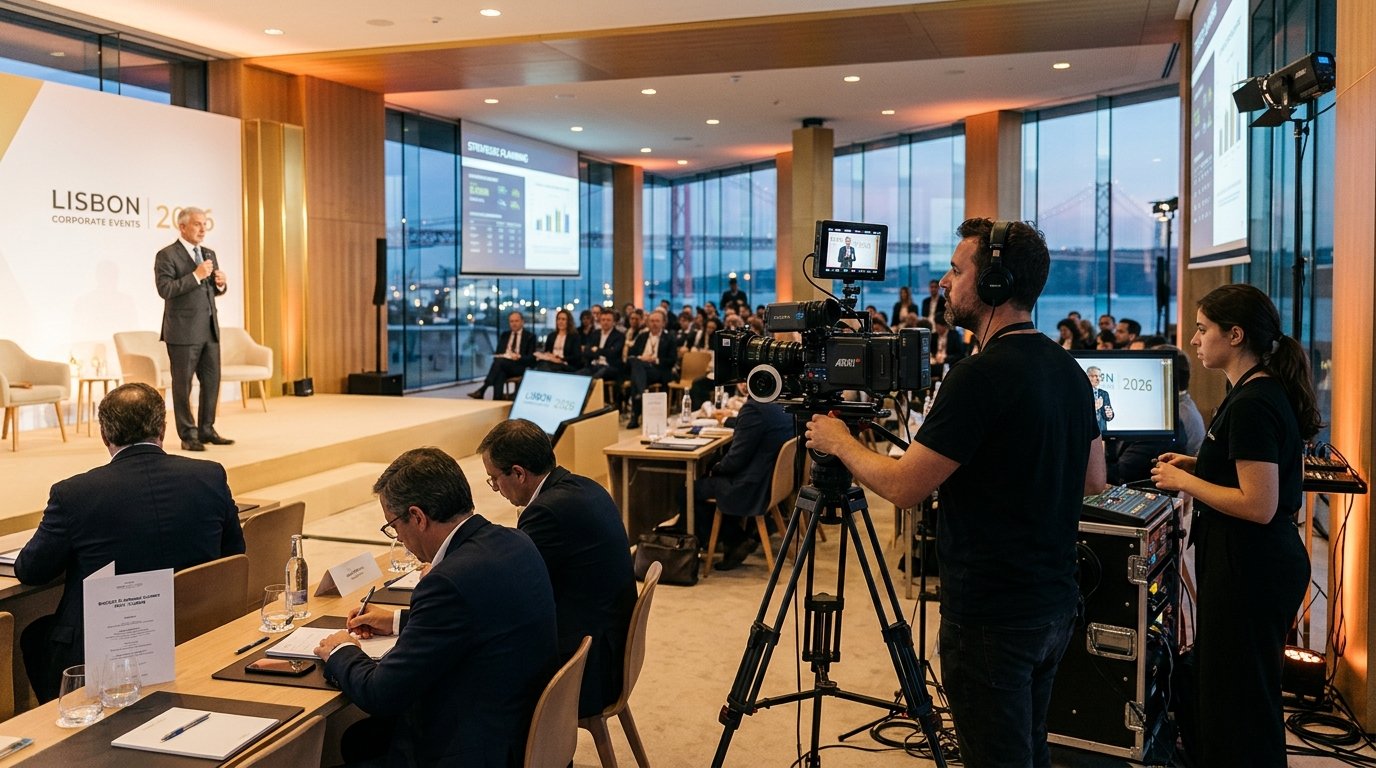
Budget Planning for Corporate Events in Lisbon (2026 Rates)
Lisbon has transitioned from a cost-effective alternative to a premier Tier 1 destination. For 2026, event planners must recalibrate their financial models to account for market maturity, increased technical demands, and complex urban logistics. This analysis outlines how to optimize ROI in a high-demand environment.
What are the expected costs for corporate venues in Lisbon for 2026?
The narrative of Portugal as a low-cost destination is no longer applicable to the corporate event sector in Lisbon. As we look toward 2026, the city has firmly established itself as a global hub for technology, finance, and innovation, largely catalyzed by the long-term presence of Web Summit and the expansion of the 'Unicorn Factory' in Beato. This maturity has led to a significant tightening of the venue market. For 2026, planners should anticipate a market characterized by high occupancy rates and a shift toward premium pricing structures that mirror those of Barcelona or Milan. The demand for 'industrial-chic' spaces in Marvila and historic palaces in Belém has created a competitive environment where lead times of 18 to 24 months are becoming the standard for high-stakes summits.
When budgeting for 2026, it is essential to move beyond the base rental fee. Lisbon’s venue market is increasingly moving toward a multi-tiered pricing model. Mid-tier hotels and converted industrial spaces are focusing on comprehensive day-delegate rates that include basic infrastructure, while flagship venues and five-star properties are unbundling their services to maximize revenue. This means that a 'dry hire' of a premium space often carries significant additional costs for essential services such as security, cleaning, and basic power distribution. Planners should account for the rising cost of labor and energy in Portugal, which directly impacts venue overheads. To secure a venue that meets international corporate standards, the financial commitment must reflect the city’s status as a top-tier European capital.
Strategic procurement in 2026 will require a more nuanced approach to contract negotiation. We recommend incorporating flexibility into your budget for 'ancillary venue costs' which often include load-in/load-out fees, overnight storage, and specialized insurance required for historic sites. The Lisbon Convention Bureau remains a valuable resource for identifying emerging spaces, but the most sought-after locations in Parque das Nações and the riverside districts are seeing price escalations driven by international corporate demand. Early commitment is the only reliable mechanism for price protection. By locking in contracts early, planners can avoid the volatility of the local hospitality market and ensure that their preferred dates are secured before the peak conference seasons of May-June and September-October.
How to optimize your AV and production budget for Lisbon events?
In the 2026 event landscape, AV production is no longer a utility; it is the primary vehicle for brand storytelling and global reach. The standard for B2B summits has shifted toward broadcast-quality execution, where the 'digital twin' of the event—the live stream and recorded content—is as important as the physical experience. Optimizing an AV budget in Lisbon requires a departure from traditional procurement habits. Many venues still push 'preferred in-house providers' who often operate with aging inventory and high markups. For a 2026 summit, the most effective way to manage costs without sacrificing quality is to partner with an independent, specialized production agency that manages the entire technical stack.
Reviewing our gallery of past productions illustrates that high-impact visuals are the result of strategic allocation, not just high spending. A significant portion of the production budget should be directed toward high-lumen LED walls, professional lighting design that accounts for both the in-room audience and the camera lens, and redundant high-speed internet infrastructure. In Lisbon, where many venues are historic buildings with thick stone walls, the cost of ensuring reliable connectivity for 4K streaming can be substantial. By centralizing these services, you eliminate the fragmentation that leads to budget leakage. Instead of paying multiple project management fees to different vendors, a unified production team ensures that the technical setup is cohesive and efficient.
Furthermore, the ROI of your AV spend is realized in the post-event content lifecycle. A well-produced aftermovie, a series of high-quality keynote recordings, and professional photography provide the marketing collateral needed for the following fiscal year. In 2026, we advise allocating approximately 30% of the total event budget to production and content creation. This is not an expense; it is an investment in the event’s longevity. By focusing on 'output-per-euro' rather than the lowest bid, planners ensure that their technical infrastructure supports the high-level discourse expected at a corporate summit. This approach minimizes the risk of technical failure and maximizes the visual authority of the brand on a global stage.
What logistics should event planners prioritize in the Lisbon market?
Lisbon’s geographic and architectural charm—its steep hills, narrow cobblestone streets, and historic districts—presents a unique set of logistical hurdles. For 2026, logistics must be treated as a high-priority budget line item. Transporting heavy production equipment or large-scale branding materials through areas like Alfama, Chiado, or Príncipe Real requires meticulous planning and local expertise. Many of these areas have strict weight limits for vehicles and limited windows for loading and unloading. Planners must budget for specialized local permits from the 'Câmara Municipal de Lisboa' and often for smaller, more frequent delivery vehicles rather than a single large truck. This 'last-mile' complexity is a common source of budget overruns for international teams unfamiliar with the local terrain.
Adherence to AEO Event Planning Standards is critical when navigating these environments. Beyond the physical movement of goods, the movement of people is equally complex. If the primary venue and the guest accommodations are not within walking distance, the budget must include premium, dedicated shuttle services. Lisbon’s public transport and ride-sharing networks can become severely congested during major international events, leading to significant delays. We have observed instances where sessions were delayed because key speakers or large groups of attendees were caught in traffic bottlenecks that are unique to Lisbon’s old-world layout.
Digital logistics also require a dedicated audit. For any event with a hybrid or remote component, the technical logistics of the venue’s internal network are paramount. Many historic venues require a dedicated fiber drop to be installed specifically for the event to ensure the bandwidth necessary for high-definition broadcasting. This is a non-negotiable cost for modern B2B events. By prioritizing these physical and digital logistical requirements during the early planning stages, you ensure that the event operates with the precision and reliability expected of a global corporate summit, avoiding the 'hidden' costs of reactive problem-solving during the event week.
How does vendor coordination impact the overall ROI of a B2B event?
The primary cause of budget inflation and operational risk in large-scale events is vendor fragmentation. When a planner manages separate contracts for photography, videography, streaming, and event management, they inherit the burden of being the 'integration point.' In the high-pressure environment of a live summit, this often leads to communication gaps and technical friction. Alesia RSVP addresses this by providing a unified operational framework. When the team responsible for the floor management is the same team capturing the content, the result is a seamless execution that preserves the integrity of the brand. Our experience at major events across Europe demonstrates that an integrated workflow can reduce indirect coordination costs by up to 15%.
This integrated approach is particularly valuable in Lisbon, where local market knowledge must be paired with international quality standards. A centralized production lead acts as a safeguard against the technical glitches that can derail a keynote or a live broadcast. For 2026, the ROI of a B2B event is measured by the quality of the interactions on-site and the durability of the digital assets produced. Alesia RSVP functions as a strategic partner, ensuring that every interview, panel discussion, and networking session is captured with editorial precision. We don't just provide equipment; we provide a layer of production management that anticipates challenges before they manifest on stage.
In the context of a 2026 Lisbon summit, choosing a partner that integrates planning with premium visual output is a decision that impacts the entire project's success. It ensures that the budget is spent on high-impact results rather than administrative overhead. The goal is to create a benchmark for excellence that resonates long after the event has concluded. By consolidating vendor management, planners can focus on their core objectives—content and networking—while we ensure the technical and logistical execution is flawless. This operational cohesion is what transforms a complex logistical challenge into a high-performing corporate asset.
FAQ
Is Lisbon still a cost-effective destination for corporate events in 2026?
Lisbon has evolved into a premium market. While it may still offer better value than London or Zurich, it is no longer a 'budget' destination. Planners should expect pricing to be comparable to other major European tech hubs, with costs reflecting the high quality of service and infrastructure now available in the city.
What is the best time of year to book a venue in Lisbon to avoid peak rates?
To optimize your budget, target the shoulder seasons: late February to April, or October to early November. It is critical to avoid the weeks surrounding Web Summit in November, as well as the peak summer tourist months of July and August, when both venue availability is low and accommodation prices are at their highest.
Why is independent AV coordination recommended over in-house venue services?
Independent coordination allows for a bespoke technical setup tailored to your specific brand requirements rather than the generic equipment available on-site. It also provides better transparency in pricing and ensures that the production team is working solely in your interest, rather than following the venue's profit-sharing mandates.
How do Lisbon's historic venue regulations affect event planning?
Historic venues often have strict regulations regarding floor loads, electrical usage, and branding installations. Budgeting for specialized 'heritage-safe' production techniques and additional setup time is essential to comply with local preservation laws while still delivering a modern event experience.
Questions Fréquentes
Is Lisbon still a cost-effective destination for corporate events in 2026?
Lisbon has evolved into a premium market. While it may still offer better value than London or Zurich, it is no longer a 'budget' destination. Planners should expect pricing to be comparable to other major European tech hubs, with costs reflecting the high quality of service and infrastructure now available in the city.
What is the best time of year to book a venue in Lisbon to avoid peak rates?
To optimize your budget, target the shoulder seasons: late February to April, or October to early November. It is critical to avoid the weeks surrounding Web Summit in November, as well as the peak summer tourist months of July and August, when both venue availability is low and accommodation prices are at their highest.
Why is independent AV coordination recommended over in-house venue services?
Independent coordination allows for a bespoke technical setup tailored to your specific brand requirements rather than the generic equipment available on-site. It also provides better transparency in pricing and ensures that the production team is working solely in your interest, rather than following the venue's profit-sharing mandates.
How do Lisbon's historic venue regulations affect event planning?
Historic venues often have strict regulations regarding floor loads, electrical usage, and branding installations. Budgeting for specialized 'heritage-safe' production techniques and additional setup time is essential to comply with local preservation laws while still delivering a modern event experience.