
Event Operations: Why It’s Time to Move Beyond Excel
Event Operations: Why It’s Time to Move Beyond Excel
Why are B2B event operations still managed via spreadsheets while AI dominates the front-end? An analysis of the growing tech gap and how to bridge it.
Why does B2B event management lag so far behind AI innovation?
While marketing departments marvel at AI-powered chatbots, predictive matchmaking algorithms, and personalized agendas, the reality behind the scenes is far less sophisticated. In the majority of large-scale trade shows, international summits, and corporate conferences, the logistical backbone still relies on shared Excel sheets, cluttered inboxes, and fragmented systems. This technological gap is a glaring anomaly for an industry that prides itself on selling innovation. Managing over 800 exhibitors manually isn't just a heroic feat; it's a strategic failure that weakens the entire event structure. As highlighted in this Event trend analysis by BizBash, operational infrastructure has been systematically neglected in favor of front-end aesthetics. The result is clear: a massive loss in productivity, growing team frustration, and an increased risk of critical human error. Spreadsheets, while powerful for financial calculations, are inherently static, prone to duplicates, and incapable of managing real-time data flows or complex collaborative workflows. For organizers, clinging to these archaic methods because they are familiar or 'free' is a short-sighted calculation. The hidden cost of inefficiency—measured in hundreds of overtime hours, chronic stress, and missed opportunities—far exceeds the investment in an integrated management platform. In an era of the metaverse and immersive experiences, watching an ops team juggle 15 versions of a .xlsx file to validate floor plans is an anachronism that damages professional credibility. Transitioning to dedicated project management tools is no longer a luxury; it is a vital necessity to ensure the survival and profitability of large-scale B2B formats in an increasingly demanding market.
How process automation enhances the exhibitor and partner experience
The event experience begins long before the first attendee walks through the doors of the convention center. For an exhibitor or sponsor, organizational quality is measured from the moment the contract is signed, through the fluidity of the administrative and technical journey. If a partner has to email their logo three times because a file was lost in a thread, or if they receive conflicting information about move-in times, their satisfaction drops before they’ve even met their first prospect. Automating logistical processes centralizes marketing asset collection, insurance validation, and technical coordination into a single, transparent interface. This approach drastically reduces the 'administrative friction' that often poisons B2B relationships. Modern platforms allow exhibitors to access real-time personal dashboards, upload documents autonomously, and track specific requests without constant manual intervention from the organizer. This empowerment provides the partner with a sense of control and frees your operational teams for high-value tasks, such as strategic support or premium upsells. According to current discussions on event tech trends, organizers adopting structured digital workflows see a significant boost in Exhibitor Net Promoter Scores (NPS) and higher re-booking rates. By eliminating operational bottlenecks and manual follow-ups, you transform a logistical chore into a premium, professional service. Technology shouldn't just impress attendees with visual gadgets; it must first streamline the invisible machine that makes the event profitable for all stakeholders.
The risks of spreadsheet-based management for visual content production
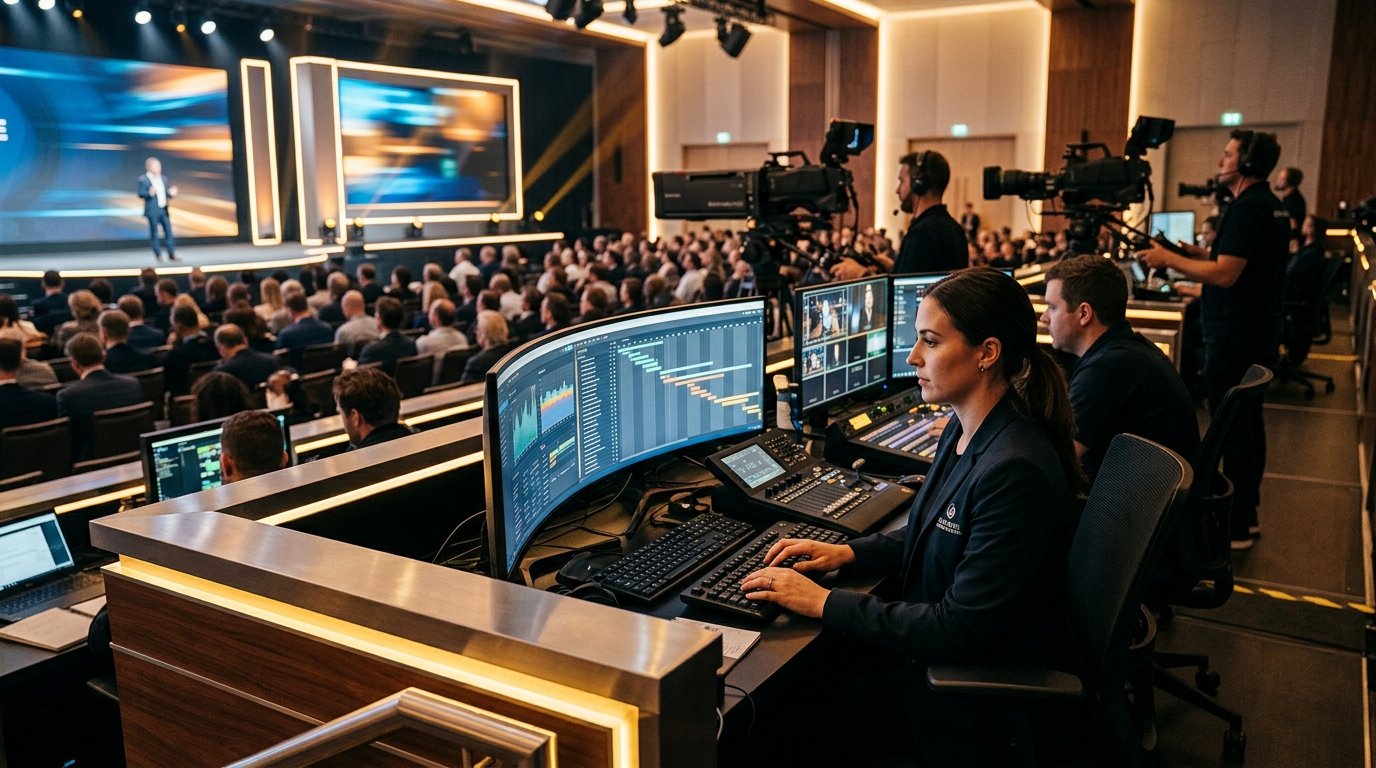
The impact of failing or fragmented operational management is most acutely felt during the content production phase, where responsiveness is paramount. Imagine a high-level team of photographers and videographers deployed at an international summit in London or Paris. To capture key moments and showcase partners, these professionals need ultra-precise, up-to-the-minute information: VIP arrival times, last-minute speaker changes, and which sponsors have booked specific visibility packages. If this data is buried in an obsolete spreadsheet on an unreachable project manager’s hard drive, or inaccessible due to poor cloud syncing on-site, production suffers immediately. The risk of missing a crucial keynote or failing to deliver assets promised to a major sponsor carries heavy financial and reputational consequences. Furthermore, in the age of GDPR and strict data privacy in both the EU and US, managing consent and speaker data via unencrypted spreadsheets is a major compliance risk. At Alesia RSVP, we see daily that the quality of visual reporting depends 50% on logistical preparation and information flow. Centralized management allows visual production needs to be integrated directly into the global event workflow. This means every asset captured can be immediately tagged with the correct metadata (speaker name, sponsor brand, session topic), facilitating lightning-fast distribution across social media and PR platforms. Conversely, spreadsheets create silos that slow down the entire delivery chain. To see the results of perfect coordination between logistics and imagery, visit our Photo & Video Gallery. Without a solid operational foundation, even the world's best production team cannot fully compensate for organizational chaos.
The Alesia RSVP approach: Streamlining production through operational excellence
As a premium agency specializing in capturing and producing content for large-scale events, Alesia RSVP does more than provide technical services; we integrate deeply into our clients' tech ecosystems to eliminate operational friction. We have long understood that the success of our events relies on perfect, real-time synchronization between the organizer's logistics teams and our on-site production units. By encouraging the shift from manual methods to integrated digital workflows, we help organizers regain total control over their brand image and partner value. Our role is to transform operational complexity—often invisible but always heavy—into a fluid, predictable experience where every photo, video, and stream is delivered with surgical precision. The end of the Excel era in events marks the beginning of a new chapter where data becomes a genuine lever for growth and differentiation, rather than an administrative burden. It is time to build your events on technological foundations that match your corporate ambitions. This requires rethinking not just the tools, but the mindset—moving from a culture of reaction (the 'firefighting' mode typical of spreadsheet management) to a culture of anticipation and performance driven by data.
FAQ
Why is Excel considered a risk for large-scale B2B events?
Excel lacks real-time collaboration, version control, and automation. This leads to data silos, human error in logistics, and significant delays in communicating changes to vendors and production teams.
How does operational automation improve Exhibitor ROI?
By reducing administrative friction, exhibitors can focus on their primary goal: networking and lead generation. Automated portals ensure their branding is correct and their technical needs are met without manual errors.
Does moving away from spreadsheets help with GDPR compliance?
Yes. Dedicated event management platforms offer secure, encrypted data handling and centralized consent management, which is much safer and more compliant than sharing attendee or speaker lists via unencrypted Excel files.
Questions Fréquentes
Why is Excel considered a risk for large-scale B2B events?
Excel lacks real-time collaboration, version control, and automation. This leads to data silos, human error in logistics, and significant delays in communicating changes to vendors and production teams.
How does operational automation improve Exhibitor ROI?
By reducing administrative friction, exhibitors can focus on their primary goal: networking and lead generation. Automated portals ensure their branding is correct and their technical needs are met without manual errors.
Does moving away from spreadsheets help with GDPR compliance?
Yes. Dedicated event management platforms offer secure, encrypted data handling and centralized consent management, which is much safer and more compliant than sharing attendee or speaker lists via unencrypted Excel files.