
Luxury Merchandising: A New Pillar for B2B Events
Luxury Merchandising: A New Pillar for B2B Events
Agency Heaps + Stacks is formalizing its merchandising offer, signaling a strategic pivot where the physical object becomes a primary narrative lever. By leveraging expertise built with luxury houses and global brands, the agency is transforming what was once a secondary accessory into a centerpiece of event strategy. This evolution marks the end of the era of generic promotional products in favor of curated objects capable of carrying a brand's DNA far beyond the physical space of an event. For industry decision-makers in both the US and EU, this shift requires a deep rethink of brand impact longevity and the tangible value offered to attendees.
Why is merchandising becoming a standalone strategic service in events?
Merchandising is no longer just about slapping a logo on a low-end promotional item; it is now a critical extension of brand identity. The recent announcement by Heaps + Stacks—the go-to agency for giants like Miu Miu, Diet Coke, Laneige, and Longchamp—to launch a dedicated merchandising division confirms this structural shift. For CMOs and event leads, this means the physical object is no longer a 'goodie' handed out at the end of a conference by habit, but a strategic tool designed to extend the brand experience long after the summit doors have closed. This professionalization of the sector meets a growing demand for products that embody a company's culture and values, turning every participant into a tangible ambassador.
In a market saturated by ephemeral digital content, the physical object offers a rare permanence and a tactile satisfaction that digital cannot replicate. Companies investing in standalone merchandising services seek to create 'objects of desire' that integrate naturally into their target's daily life, whether in the office or the private sphere. This approach is particularly visible in the fashion, beauty, and tech sectors, where exclusivity and manufacturing quality trump quantity. By isolating merchandising as a standalone service, agencies can now devote the same attention to production details as they do to the scenography of a main event. This involves deep research into materials, ethical supply chains (a priority for the EU market), and designs that respect the most demanding aesthetic codes.
Empowering this service also allows for better cost management and logistics optimization. Instead of last-minute ordering, brands can now plan entire capsule collections linked to their campaign cycles. To dive deeper into these dynamics, check out the latest Event Trends on BizBash. This trend highlights that event ROI is also measured by the lifespan of the objects guests take home. An item that stays on a desk for three years provides brand visibility and recall far superior to any digital banner ad. Working with clients like Longchamp, Heaps + Stacks demonstrates that merchandising can reach a level of sophistication where it becomes indistinguishable from retail products, thereby enhancing the prestige of the host event.
How to transform a physical product into a storytelling tool for luxury brands?
Brand storytelling finds an incredibly effective medium in merchandising. For luxury brands and premium B2B firms, every product must tell a specific story related to the current event or campaign. This requires a meticulous choice of materials, a polished aesthetic, and functionality that meets the real needs of the audience. Heaps + Stacks understands that merchandising 'done right' is one of the most powerful tools in the brand ecosystem, capable of creating an immediate sense of belonging. It’s not about producing for the sake of production, but about designing pieces that fit into a narrative continuity with pop-ups, launches, and influencer trips.
When a brand like Laneige collaborates on merchandising, the object must reflect not only the visual identity but also the brand's sensory promise. We are no longer talking about simple containers, but objects that evoke innovation, purity, and care. When planning Our events, we find that the most successful brands are those that view merchandising as a chapter in their global narrative. A well-designed object becomes tangible proof of the exclusivity of the experience. For example, a travel accessory designed for a Longchamp product launch doesn't just serve a purpose; it conveys the heritage of leather craftsmanship and Parisian elegance, even when gifted within a corporate event framework.
The key lies in consistency: the object must reflect the prestige of the event and the brand's standards. This strategy transforms a simple product into a cultural artifact that participants are proud to display, generating organic and sustainable visibility for the organizing brand. Storytelling through objects also allows for audience segmentation: ultra-exclusive pieces for VIPs and high-quality but more accessible items for the general public. This hierarchy of merchandising reinforces the perception of value and creates a desire for collection. Ultimately, the physical product becomes the witness to a privileged moment, a memory anchor that reactivates the emotions felt during the event every time it is used.
What is the impact of premium merch on participant engagement and belonging?
Attendee engagement in B2B events isn't limited to physical presence or interaction with conference sessions. The sense of belonging is amplified by the possession of exclusive objects that function as social markers within a professional community. Premium merchandising creates a strong emotional connection; it validates the participant's status and rewards their investment of time. As Keziah Wildsmith, founder of Heaps + Stacks, points out, merchandising is designed to create belonging and amplify a narrative. It is a vector of human connection that transforms a marketing transaction into a memorable and personal moment.
The psychological impact is significant: receiving a high-quality object triggers a sense of reciprocity and loyalty toward the brand. In high-level conferences or executive summits, this kind of special attention immediately differentiates the organizer from competitors. Discussions on this industry evolution are numerous, as seen in this Event Industry Discussion - LinkedIn. For decision-makers, investing in quality merchandising is not an expense but an investment in their brand's social capital. A participant wearing a well-cut branded garment or using a sleek tech accessory becomes a living, credible billboard for the company, with an authenticity traditional advertising cannot buy.
Furthermore, premium merchandising promotes information retention. An object used daily constantly recalls the themes discussed during the event. For brands like Diet Coke or Miu Miu, merchandising allows them to touch the user in their personal space, creating an unprecedented bond of proximity. The feeling of being part of an 'exclusive club' is reinforced by the item's rarity. If the product is only available at that specific event, its perceived value increases drastically. This scarcity stimulates not only on-site engagement but also post-event interest, as those who could not attend often seek to acquire these objects through other means, increasing the brand's overall desirability.
How to visually document your exclusive products to maximize digital reach?
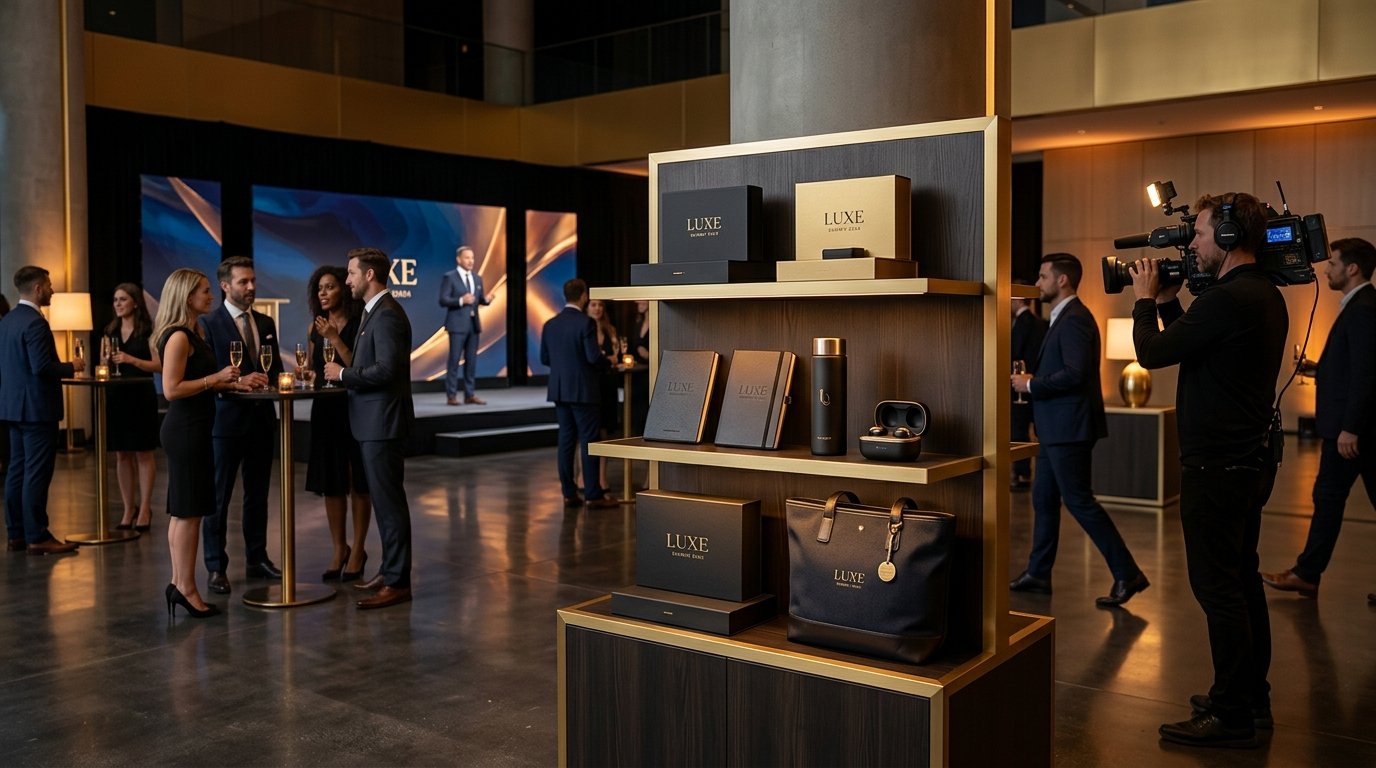
Creating exclusive merchandising is only half the equation. To maximize the impact of these investments, editorial-quality visual documentation is imperative. At Alesia RSVP, we know that premium merch only truly exists for the rest of the world if it is captured with the same aesthetic rigor used in its design. Photographing these objects within the context of the event, in the hands of participants, or staged in luxury environments, allows the campaign's reach to be amplified far beyond the physical space. High-quality imagery serves as social proof, turning a physical gift into a digital asset that fuels social media engagement and future event marketing.
FAQ
How does premium merchandising differ from traditional 'swag'?
Premium merchandising focuses on quality, storytelling, and brand alignment, whereas traditional swag is often generic, low-cost, and lacks a long-term strategic narrative.
What is the typical ROI of a standalone merchandising strategy?
ROI is measured through long-term brand recall, organic social media reach, and the increased perceived value of the event, often resulting in higher attendee retention and loyalty.
How can brands ensure their merchandising is sustainable?
By focusing on high-quality materials, ethical supply chains, and creating objects that are genuinely useful or desirable, brands reduce waste and align with EU and US sustainability standards.
Questions Fréquentes
How does premium merchandising differ from traditional 'swag'?
Premium merchandising focuses on quality, storytelling, and brand alignment, whereas traditional swag is often generic, low-cost, and lacks a long-term strategic narrative.
What is the typical ROI of a standalone merchandising strategy?
ROI is measured through long-term brand recall, organic social media reach, and the increased perceived value of the event, often resulting in higher attendee retention and loyalty.
How can brands ensure their merchandising is sustainable?
By focusing on high-quality materials, ethical supply chains, and creating objects that are genuinely useful or desirable, brands reduce waste and align with EU and US sustainability standards.