
VisitBritain Cuts: Future-Proofing Your London B2B Events
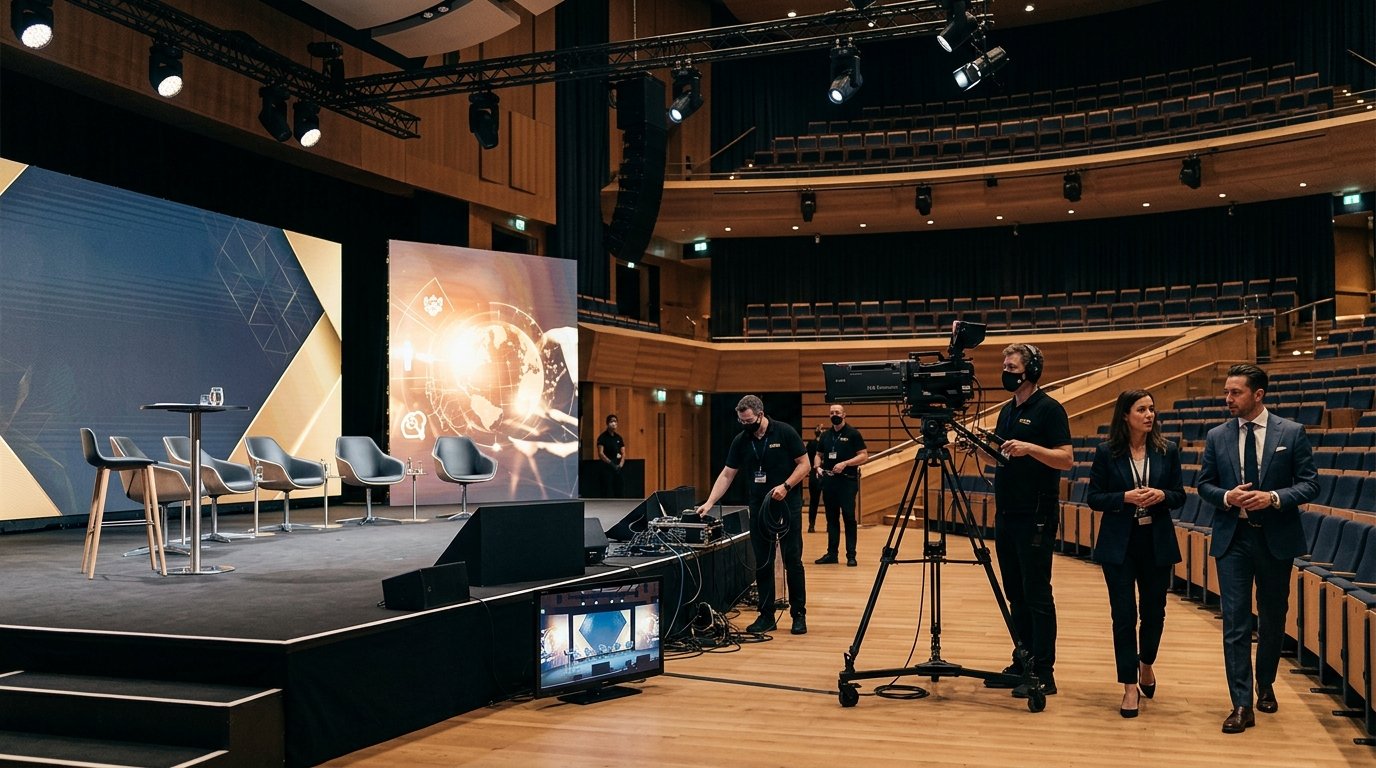
VisitBritain Cuts: Future-Proofing Your London B2B Events
As the UK reduces institutional support for B2B events, the competition for international attention is intensifying. The scale-back of VisitBritain, the national tourism agency, marks a critical turning point for the MICE (Meetings, Incentives, Conferences, Exhibitions) sector. In this landscape of dwindling public subsidies and logistical support, conference and trade show organizers must urgently rethink their communication strategies. The challenge is no longer just about booking a prestigious London venue; it is about building autonomous media authority to compensate for the absence of state-led promotion. This article analyzes the consequences of these budget cuts and proposes concrete solutions based on visual excellence and strategic content production to maintain the global influence of British events.
What Is the Real Impact of VisitBritain’s Budget Cuts on the Business Events Sector?
VisitBritain’s decision to drastically reduce its dedicated business events team—from nine experts to a skeleton crew—is not a mere administrative reshuffle; it is a strategic retreat that has alarmed the entire industry. For international conference organizers, this disengagement means losing a powerful ally during the crucial bidding and global promotion phases. Until now, institutional support helped structure the UK’s offering against aggressive hubs like Dubai, Singapore, or Paris, all of which benefit from increasing promotional budgets. Without this unified voice and shared resources, the UK risks falling off the radar of global decision-makers and international associations that plan their world summits three to five years in advance. This situation has already sparked a heated discussion on the impact of budget cuts in the event industry among sector leaders who fear an irreversible loss of market share.
The impact will be felt most acutely at major trade shows like IMEX Frankfurt or IBTM World. While France or Germany deploy massive national pavilions backed by public funds to reassure investors and attract delegations, the UK is leaving a void that private actors must now fill at their own expense. For a Marketing Director or VP of Events, choosing London no longer comes with the promotional aura of a strong national agency. The responsibility to prove destination value, logistical security, and economic dynamism now rests entirely on the shoulders of the organizer and their production partners. The risk is real: a decline in foreign delegation attendance as they no longer perceive British market vitality through traditional official channels. In the absence of direct destination marketing subsidies, every event must become its own media outlet to justify participant ROI.
Furthermore, the removal of programs like the 'Business Events Growth Fund' limits the ability of organizers to attract world-class speakers or fund on-site technological innovations. This fund specifically helped grow existing events and attract new strategic gatherings. Its disappearance creates a major competitive imbalance. Organizers must now demonstrate unprecedented creativity to maintain the prestige associated with the 'London' brand. This requires a transition from a model dependent on public aid to a self-promotion model based on high-quality digital assets capable of capturing attention in a saturated information landscape.
How Can London Event Organizers Maintain Their International Competitiveness?
In this context of public withdrawal, the competitiveness of a London event now depends on its ability to generate its own media authority and social proof. Since the institution is no longer actively selling the destination, the event itself must become the destination. This requires a radical upgrade of the attendee experience and, crucially, how that experience is documented, broadcast, and amplified across professional networks. For companies organizing corporate events in London, the focus must shift to creating proprietary marketing assets. It is no longer enough to rent a hall at ExCeL, the Barbican, or a Mayfair hotel; organizers must transform every session, keynote, and networking moment into high-end digital content that justifies the physical travel of international participants.
The strategy must be twofold: maximize emotional engagement on-site and extend the event’s reach far beyond the conference walls. By investing in broadcast-level audiovisual production, brands compensate for the lack of national promotion with a ubiquitous and high-quality digital presence. Event industry trends and insights on BizBash confirm that events succeeding despite economic headwinds are those that treat visual production as a strategic investment rather than a cost center. London still possesses world-class infrastructure and a creative talent pool, but technical execution and visual storytelling will now be the differentiators between a global summit and a lackluster local meeting.
To maintain this edge, organizers must adopt a 'Content First' approach. This means planning video capture and photography long before day one. How will lighting enhance sponsor branding? How will audio be optimized for replays targeting US or Asian markets while remaining GDPR compliant? How will highlights be edited into 'snackable' LinkedIn content? By answering these questions, organizers create perceived value that lasts long after the event ends. In London, where operational costs are high, the profitability of an event is determined by its ability to live on the web for months. This digital longevity reassures financial partners and exhibitors about the long-term viability of their investment in the UK market.
Why Premium Visual Production Is the New Lever for Business Tourism Promotion
Visual content has become the true currency of the modern event industry. As VisitBritain’s support fades, high-quality video and editorial photography step in to embody the prestige, innovation, and importance of a B2B gathering. An aftermovie produced with cinematic aesthetics or a flawless multi-camera livestream sends a clear message to international markets: this event is the center of gravity for its industry. This approach transforms a fleeting conference into a permanent, highly shareable marketing asset. Content generated over three days in London can fuel social media, PR campaigns, and lead generation strategies for the next twelve months, creating a continuous sales cycle for the following edition.
At Alesia RSVP, we see visionary clients moving away from basic, static recordings toward global, immersive content strategies. By integrating on-site podcast studios, conducting 'Late Show' style VIP interviews, or delivering dynamic same-day reels, they create a sense of urgency (FOMO) and exclusivity. This visual show of force reassures sponsors and international partners about the health and influence of the event. In a UK market deprived of its institutional megaphone, production quality becomes the primary indicator of a project's ambition. We step in to ensure that every event we cover is perceived as a global benchmark, regardless of public budget fluctuations.
Visual excellence also compensates for the lack of official communication regarding local infrastructure. By filming behind-the-scenes access, the ease of the Elizabeth Line, or the buzz of business districts like Canary Wharf and the City, video production fulfills the guiding role that VisitBritain can no longer fully provide. It’s about reassuring the foreign visitor of the ease and value of coming to London. Premium content acts as a powerful tool for destination marketing, effectively replacing the missing institutional voice.
FAQ
How do VisitBritain's cuts affect international bidding?
The reduction in staff means less institutional support for organizers when competing against other global hubs, making high-quality private marketing assets essential for success.
What is a 'Content First' event strategy?
It involves planning the entire event around the creation of digital assets (video, photo, social content) to maximize ROI and reach beyond the physical venue.
Questions Fréquentes
How do VisitBritain's cuts affect international bidding?
The reduction in staff means less institutional support for organizers when competing against other global hubs, making high-quality private marketing assets essential for success.
What is a 'Content First' event strategy?
It involves planning the entire event around the creation of digital assets (video, photo, social content) to maximize ROI and reach beyond the physical venue.