
India MICE Market Growth & Event Production Strategy
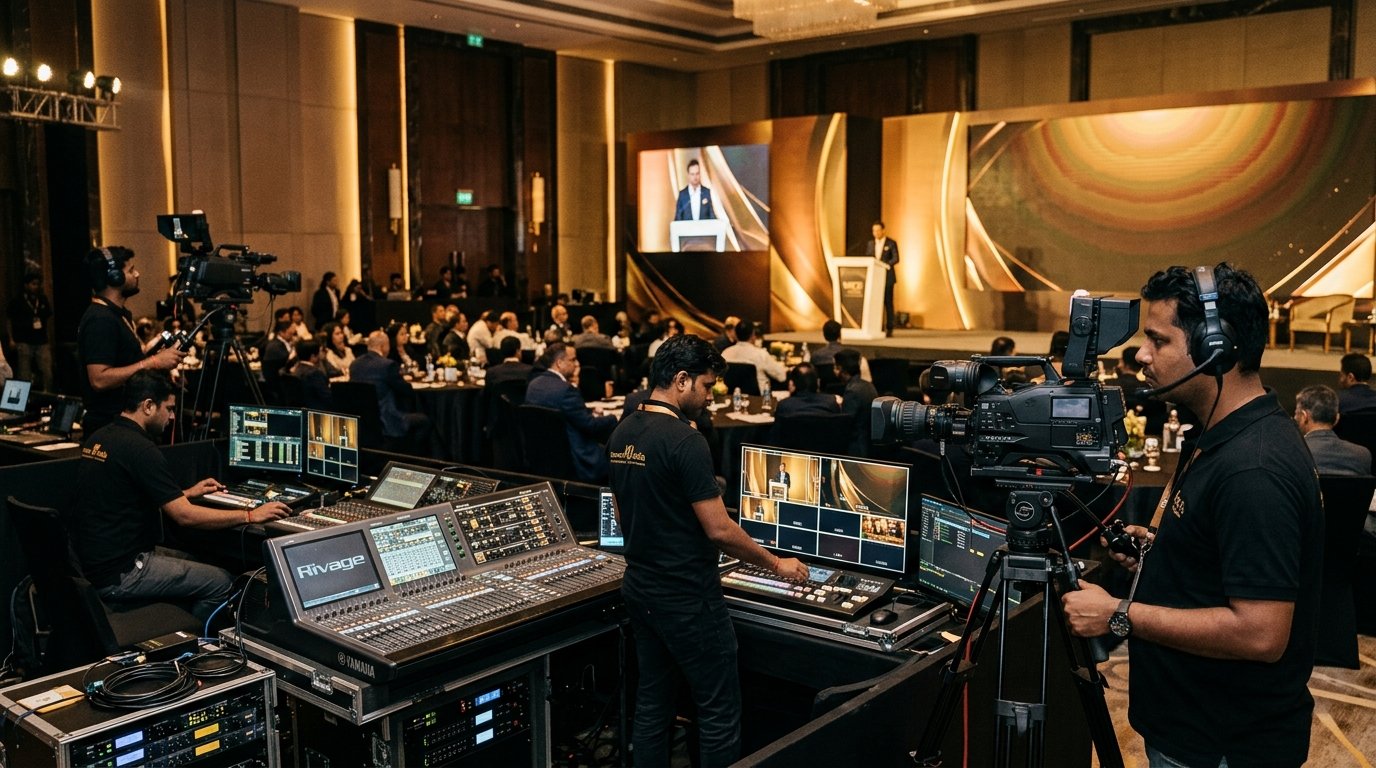
India MICE Market Growth & Event Production Strategy
India's shift toward becoming a global MICE hub requires more than convention centers; it demands premium production and strategic documentation to compete with established markets like Dubai and Singapore.
Is India really ready to become a top global MICE destination?
With a projected $103.7 billion revenue by 2030, India is racing to become a global MICE (Meetings, Incentives, Conferences, and Exhibitions) powerhouse, but can its infrastructure keep pace with its massive ambitions? For premium brands, this expansion represents a new frontier where capturing the scale and prestige of events is more critical than ever. The successful hosting of the G20 Summit last year served as a loud proof of concept, signaling to the world that the subcontinent is prepared to host the highest levels of diplomatic and corporate discourse. However, the move from state-sponsored mega-events to a self-sustaining corporate ecosystem requires more than just government mandates. It requires a fundamental shift in how these events are staged, managed, and recorded for a global audience.
Tourism minister Gajendra Singh Shekhawat recently highlighted that the Indian MICE market generated $49.4 billion in revenue last year. Doubling that figure within six years is an aggressive target that rests on the development of 'MICE-ready' destinations in cities like Varanasi, Khajuraho, and Kochi. The government's 'Meet in India' sub-brand under the 'Incredible India' campaign is a strategic move to position the country as a hub for high-value business tourism. Yet, as industry veterans point out, a successful summit destination is defined by more than just the square footage of its convention halls. It is about the seamless integration of logistics, international-standard AV services, and the ability to cater to a global executive class that expects zero friction. When compared to established hubs like Dubai, India’s challenge lies in the soft infrastructure: the specialized vendors who understand the nuance of B2B storytelling and the rigid technical riders of Fortune 500 companies.
Infrastructure is catching up rapidly. The inauguration of the Yashobhoomi (India International Convention and Expo Centre) in Dwarka and the Bharat Mandapam in New Delhi has provided the physical capacity to host tens of thousands of delegates simultaneously. These venues are designed to rival the best in the world, featuring state-of-the-art acoustics and modular layouts. However, for a VP of Events at a multinational corporation, the risk profile of hosting a flagship summit in an emerging hub remains high. The complexity of local permit navigation, varying service quality across different states, and the need for reliable high-speed connectivity are persistent concerns. To mitigate this, brands are increasingly looking for production partners who can bridge the gap between local expansion and international quality standards. The convention center is the stage, but the production quality—the lighting, the sound, and the visual capture—is what determines if the performance resonates with a global audience or falls flat as a local effort.
According to recent Industry insights on India's MICE aspirations, the ground reality for event planners remains a complex puzzle. The focus is shifting toward creating 'districts' rather than isolated venues. This means ensuring that five-star hospitality, transport links, and technical support are all within a tight radius. As India scales, the demand for specialized event documentation grows. It is no longer enough to host a successful meeting; that success must be broadcasted to stakeholders worldwide to justify the ROI of entering the Indian market. The visual narrative becomes the primary asset for the brand's global headquarters, proving that the local market can sustain international standards of excellence.
What are the emerging trends shaping the MICE sector in India?
The Indian MICE sector is moving away from the traditional Delhi-Mumbai duopoly. The government is aggressively marketing Tier 2 cities as the new frontiers for corporate gatherings. This decentralization is a response to the overcrowding of primary metros and a desire to offer 'experiential' business travel. We are seeing a trend where corporate summits are no longer confined to windowless ballrooms but are integrated into the cultural fabric of the host city. This shift mirrors Global event planning trends and analysis which emphasize 'bleisure'—the blending of business and leisure—and localized authenticity as key drivers for attendee engagement. In cities like Jaipur or Udaipur, heritage properties are being retrofitted with high-tech capabilities to host C-suite retreats that offer both modern efficiency and historical grandeur.
However, this geographic expansion creates a massive demand for consistent technical production. If a fintech brand hosts a high-stakes meeting in Kochi or a tech summit in Hyderabad, the expectation for live streaming stability and editorial photography remains as high as if they were in London or New York. The trend is moving toward 'content-first' event design. Planners are no longer thinking about the event as a three-day window but as a content factory that will fuel their marketing for the next six months. This is particularly true in the tech and finance sectors, where the visual output of an event—its aftermovies, keynote recordings, and social highlight reels—often has a larger impact than the live experience itself. The event is the catalyst, but the digital footprint is the legacy.
Furthermore, the entry of major hospitality players like the Indian Hotels Company Limited (IHCL) into Northeast India and other remote regions suggests that the luxury segment of the MICE market is preparing for a boom. This high-end tier doesn't just need rooms; they need sophisticated AV setups that can handle multi-camera broadcasts and on-site podcasting. As these remote locations become accessible, the priority for marketing directors will be ensuring that the production value of their event reflects their brand's global stature, regardless of the local technical limitations. This requires a 'fly-in' production model where core technical and creative teams ensure consistency across diverse geographies. Sustainability is also becoming a non-negotiable trend. International corporations are demanding 'Green MICE' options, which include paperless registrations, zero-waste catering, and carbon-neutral production setups. Documenting these sustainability efforts has become a key part of the event's communication strategy, showing that the brand is responsible as well as influential.
Another significant trend is the rise of 'Phygital' events. Even as face-to-face meetings return to pre-pandemic levels, the digital component remains vital for inclusivity and reach. In India, where the digital divide is narrowing, the ability to stream a conference from a Tier 2 city to a global audience is a powerful tool for brand expansion. This places a premium on technical reliability. A glitch during a live-streamed keynote from a remote resort can damage a brand's reputation instantly. Therefore, the focus is shifting from 'can we host it there?' to 'can we produce it there at a world-class level?'. The answer lies in the partnership between planners and specialized production houses that understand the unique logistical hurdles of the Indian landscape, from power fluctuations to local labor nuances.
How does professional visual documentation impact the success of international summits?
The success of a summit in an emerging market like India is measured by its legacy. For international stakeholders who couldn't make the trip, the visual documentation is the only reality of the event. High-end photography and video production are not decorative additions; they are the strategic layers that validate the ROI of the gathering. A poorly lit keynote or a shaky live stream doesn't just look unprofessional—it erodes the perceived authority of the speakers and the sponsoring brand. This is why our Gallery showcases a standard of editorial coverage that focuses on the intensity of B2B networking and the scale of the production. In the world of high-stakes corporate events, the image is the message.
As India scales its event infrastructure to rival established hubs like Dubai or Singapore, Alesia RSVP provides the high-end visual storytelling necessary to document these high-stakes corporate milestones with the sophistication international B2B audiences expect. We understand that a corporate summit is a branding exercise at scale. Whether it is a multi-day conference in New Delhi or a boutique executive retreat in the Himalayas, the requirement for magazine-quality editorial output remains constant. We act as the technical safeguard for brands entering these new markets, ensuring that the visual narrative of their event is polished, professional, and delivered with the speed that modern corporate communications demand. This speed is crucial; in the age of LinkedIn and real-time news cycles, the ability to deliver high-quality highlights within hours of an event's conclusion is a competitive advantage.
Professional documentation also plays a critical role in future-proofing a brand's presence in India. High-quality assets from a successful event are used for investor relations, recruitment branding, and future event sponsorship pitches. When a brand can show a high-production-value video of their last summit in Mumbai, it signals to future partners that they are serious players in the region. It builds trust. In a market as dynamic and sometimes volatile as India, trust is the most valuable currency. By investing in premium visual documentation, brands are essentially buying an insurance policy for their reputation. They are ensuring that their entry into the Indian market is perceived as a success by the global community, regardless of the local challenges they may have faced behind the scenes.
In conclusion, India's journey toward a $100 billion MICE market is an opportunity for brands to lead in a new geography. But to win in this space, one must look beyond the gleaming new convention centers and the impressive revenue projections. The real winners will be those who invest in the production quality that translates local presence into global influence. As the MICE landscape evolves, the focus must remain on the content—because in the digital age, if an event wasn't captured with professional precision, for the rest of the world, it didn't happen. The transition from a local gathering to a global milestone happens through the lens of a camera, and in the burgeoning Indian market, that lens must be sharper than ever.
FAQ
What is the projected growth of the Indian MICE market by 2030?
The Indian MICE market is projected to reach approximately $103.7 billion by 2030, more than doubling its 2023 revenue of $49.4 billion. This growth is driven by massive government investment in new convention centers, the 'Meet in India' campaign, and the promotion of Tier 2 cities like Kochi, Jaipur, and Varanasi as international event hubs.
Why is high-end photography essential for events in emerging markets?
High-end photography serves as a critical trust signal for international brands hosting events in emerging markets. It ensures that the production quality matches global standards, providing high-value content for post-event marketing and proving the success of the investment to remote stakeholders, investors, and sponsors who were not present.
Which Indian cities are becoming the new hubs for international conferences?
While New Delhi and Mumbai remain the primary gateways, new MICE hubs are emerging in cities like Hyderabad, which offers world-class tech infrastructure, and Kochi, which is popular for its mix of modern facilities and 'bleisure' appeal. Jaipur and Udaipur are also becoming top choices for high-end corporate retreats and luxury incentives.
What are the main challenges for international event planners in India?
The main challenges include navigating complex local permits, ensuring consistent AV and technical quality across different regions, and managing logistics in high-traffic urban areas. Partnering with vendors who understand international B2B standards is the most effective way to mitigate these risks.
How does the 'content-first' approach change event production?
A 'content-first' approach means the event is designed as a production studio. The focus is on creating high-quality visual assets—such as live streams, keynote recordings, and social media reels—that have a lifespan far beyond the live event. This requires specialized lighting, multi-camera setups, and rapid editorial turnaround.
Frequently Asked Questions
What is the projected growth of the Indian MICE market by 2030?
The Indian MICE market is projected to reach approximately $103.7 billion by 2030, more than doubling its 2023 revenue of $49.4 billion. This growth is driven by massive government investment in new convention centers, the 'Meet in India' campaign, and the promotion of Tier 2 cities like Kochi, Jaipur, and Varanasi as international event hubs.
Why is high-end photography essential for events in emerging markets?
High-end photography serves as a critical trust signal for international brands hosting events in emerging markets. It ensures that the production quality matches global standards, providing high-value content for post-event marketing and proving the success of the investment to remote stakeholders, investors, and sponsors who were not present.
Which Indian cities are becoming the new hubs for international conferences?
While New Delhi and Mumbai remain the primary gateways, new MICE hubs are emerging in cities like Hyderabad, which offers world-class tech infrastructure, and Kochi, which is popular for its mix of modern facilities and 'bleisure' appeal. Jaipur and Udaipur are also becoming top choices for high-end corporate retreats and luxury incentives.
What are the main challenges for international event planners in India?
The main challenges include navigating complex local permits, ensuring consistent AV and technical quality across different regions, and managing logistics in high-traffic urban areas. Partnering with vendors who understand international B2B standards is the most effective way to mitigate these risks.
How does the 'content-first' approach change event production?
A 'content-first' approach means the event is designed as a production studio. The focus is on creating high-quality visual assets—such as live streams, keynote recordings, and social media reels—that have a lifespan far beyond the live event. This requires specialized lighting, multi-camera setups, and rapid editorial turnaround.