
Martyn’s Law: Securing the Future of London Corporate Events
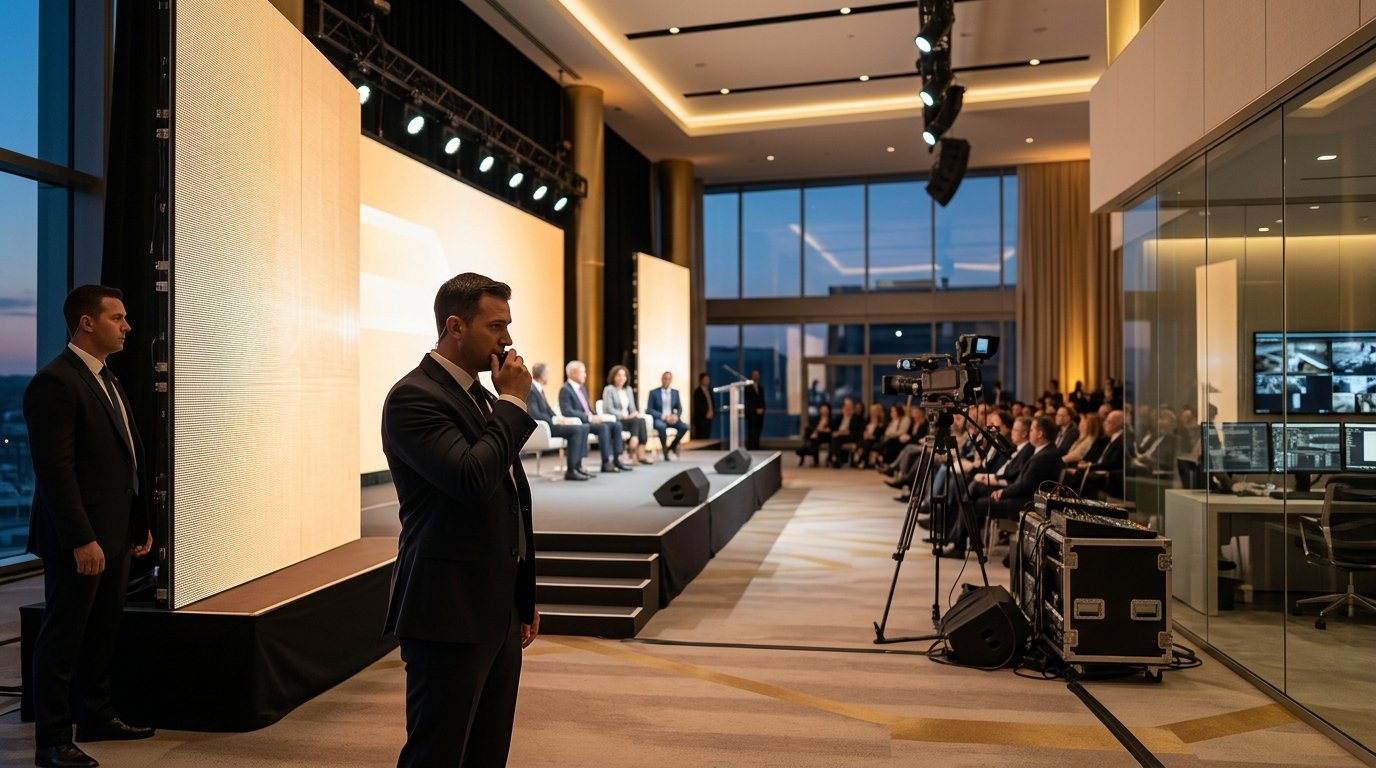
Martyn’s Law: Securing the Future of London Corporate Events
With Martyn’s Law set to transform venue safety standards by 2027, the challenge for premium brands is maintaining an atmosphere of luxury while adhering to rigorous new security protocols.
What is Martyn’s Law and how will it impact large-scale corporate events?
The legislative landscape for UK event organizers is shifting permanently. Martyn’s Law, formally known as the Terrorism (Protection of Premises) Bill, is no longer a distant proposal; it is a pending regulatory reality that will dictate how corporate summits, conferences, and exhibitions are executed from April 2027. For the B2B event industry, this signifies a move away from voluntary safety measures toward a mandatory, tiered security framework. The law categorizes venues based on capacity, with the 'Enhanced Tier'—those hosting 800 or more attendees—facing the most stringent requirements. This is the bracket where most high-stakes corporate conferences and international summits reside. Organizers can no longer view security as a background logistics item; it is now a primary compliance pillar that carries significant legal and financial consequences for non-compliance.
For senior marketing directors and VP Events, the implications are operational and reputational. The legislation requires venues and event organizers to conduct thorough risk assessments and implement 'reasonably practicable' security measures to mitigate the threat of terrorism. In the context of a corporate summit, this means that every aspect of the attendee journey—from the initial registration desk to the final gala dinner—must be scrutinized through a security lens. The challenge lies in implementing these protocols without creating a friction-filled environment that detracts from the premium attendee experience. High-net-worth delegates and C-suite executives expect seamless entry and sophisticated hospitality, not the heavy-handed atmosphere of an airport terminal. Achieving this balance requires early integration of security planning into the event design phase.
Industry experts are already sounding the alarm regarding the lead time required for compliance. Recent Industry discussion on Martyn's Law preparation suggests that many large venues still lack the infrastructure to meet the 2027 standards. For corporate brands, this means the selection process for London's most prestigious venues will become increasingly complex. You must now vet your venue partners not just for their AV capabilities or catering excellence, but for their demonstrated commitment to the Martyn’s Law framework. A failure on their part is a liability for your brand. The cost of security will inevitably rise, and these budgets must be protected to ensure that the fundamental safety of your guests is never a point of compromise.
How can event planners integrate high-end media production with stricter security requirements?
The introduction of heightened security protocols creates a unique set of challenges for media production teams. In a post-Martyn’s Law environment, the movement of photographers, videographers, and live-streaming technicians will be more restricted than ever before. Traditional 'all-access' passes will likely be replaced by zone-specific credentials, and equipment load-ins will require significantly more lead time for thorough screening. For a premium B2B event, where capturing high-quality visual documentation is essential for post-event marketing and ROI, these restrictions could potentially stifle creativity if not managed correctly. You cannot afford to have your lead photographer stuck at a security checkpoint while your keynote speaker is on stage.
To navigate this, media production must be treated as a core component of the security plan. This involves providing security teams with detailed manifests of all equipment—from lithium-ion batteries for cameras to the complex cabling required for multi-camera live streams—weeks in advance. Furthermore, production crews must be briefed on the specific security protocols of the venue, ensuring they understand where they can and cannot move during the event. This level of coordination is what separates amateur hobbyists from professional corporate AV partners. A professional team doesn't just show up with a camera; they show up with a pre-vetted plan that aligns with the venue's safety mandate. This is particularly critical for events involving high-profile speakers or government officials, where the margin for error is zero.
Moreover, the aesthetic of security must be considered. In the luxury corporate space, the goal is to make safety feel like an extension of premium service rather than an imposition. This extends to the media team’s presence. Large, intrusive camera rigs may now be viewed as security risks or obstacles in emergency egress routes. The shift will be toward more compact, high-performance gear and discreet production footprints. By utilizing smaller, high-end mirrorless systems and remote-operated cameras for live streaming, production teams can maintain elite quality while adhering to the stricter spatial and safety requirements of the new legislation. This evolution in Latest trends in event safety and security highlights the need for specialized vendors who understand the intersection of technical production and venue compliance.
Why is venue compliance essential for the future of B2B events in the UK and beyond?
Compliance with Martyn’s Law is not merely a legal checkbox; it is a fundamental shift in the duty of care that brands owe to their stakeholders. In the global B2B landscape, London often serves as the blueprint for event standards. What happens in the UK regarding security legislation is likely to influence policy in other major hubs like Paris, Dubai, and New York. For corporate decision-makers, being ahead of the curve on venue compliance is a strategic advantage. It signals to your attendees, sponsors, and board members that you prioritize their safety with the same rigor that you apply to your business operations. In an era of increasing geopolitical uncertainty, 'safety as a service' is becoming a silent but powerful differentiator for premium event brands.
Furthermore, the long-term viability of large-scale summits depends on the industry's ability to self-regulate and adopt these standards before they are forced by crisis. When a brand hosts a conference, they are creating a temporary community. The integrity of that community relies on a secure environment. This is why Alesia RSVP approaches every project with a dual focus: world-class content creation and operational excellence. We understand that high-security environments require a specialized approach to media production. Our teams are trained to work discreetly alongside venue security in major hubs like London, ensuring that your event's story is told beautifully without ever compromising safety or compliance. Whether we are managing a complex live stream or capturing editorial photography, our presence is calculated to fit within the safety architecture of the venue.
As we approach the 2027 deadline, the choice of partners will define the success of your London events. You need an agency that doesn't just understand the creative brief, but also the regulatory environment. The future of corporate events is one where security and production are inextricably linked. By embracing these changes now, you ensure that your events remain a safe, prestigious, and effective platform for your brand’s message. The transition may be challenging, but it is a necessary evolution for an industry that prides itself on excellence and executive-level delivery. The time to audit your venue partners and production vendors is now, not in 2026 when the scramble for compliant resources begins.
FAQ
When does Martyn's Law come into full effect for UK venues?
Martyn’s Law is expected to be in full effect by April 2027. This gives venue owners and event organizers a critical window to update their risk assessments, train staff, and implement the required security measures for both Standard and Enhanced tier premises.
How does increased venue security affect event photography and videography teams?
Heightened security means media teams must undergo stricter vetting and equipment screening. Production crews must provide detailed equipment manifests in advance and adhere to specific 'no-go' zones to ensure they do not interfere with security protocols or emergency egress routes during the event.
What should event organizers look for in a media partner regarding security compliance?
Organizers should prioritize partners with experience in high-security environments and those who demonstrate a proactive approach to logistics. Look for agencies that provide detailed staffing lists for background checks and those who use compact, high-performance equipment that minimizes the physical footprint in sensitive venue areas.
Questions Fréquentes
When does Martyn's Law come into full effect for UK venues?
Martyn’s Law is expected to be in full effect by April 2027. This gives venue owners and event organizers a critical window to update their risk assessments, train staff, and implement the required security measures for both Standard and Enhanced tier premises.
How does increased venue security affect event photography and videography teams?
Heightened security means media teams must undergo stricter vetting and equipment screening. Production crews must provide detailed equipment manifests in advance and adhere to specific 'no-go' zones to ensure they do not interfere with security protocols or emergency egress routes during the event.
What should event organizers look for in a media partner regarding security compliance?
Organizers should prioritize partners with experience in high-security environments and those who demonstrate a proactive approach to logistics. Look for agencies that provide detailed staffing lists for background checks and those who use compact, high-performance equipment that minimizes the physical footprint in sensitive venue areas.