
Multilingual Staffing: Boosting Trade Show ROI
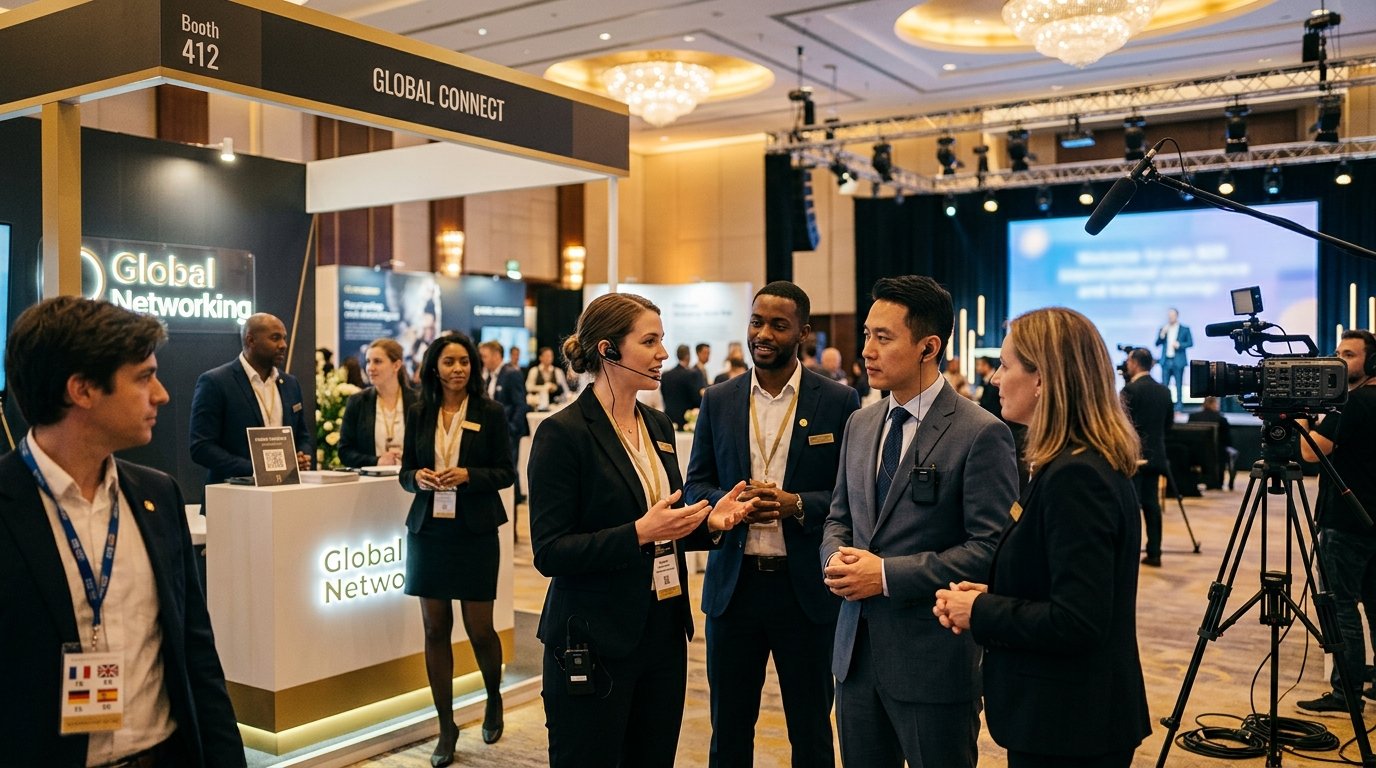
Multilingual Staffing: Boosting Trade Show ROI
TranslateAble's new multilingual stand staffing service aims to eliminate language barriers for exhibitors at major international trade shows, ensuring that every interaction is a potential conversion.
How does multilingual staffing improve ROI at international trade shows?
In the high-stakes world of international trade shows, a language barrier is more than a simple hurdle—it is a direct financial drain and a lost opportunity for a global partnership. Every minute an exhibitor spends struggling to translate a pitch or decipher a buyer’s inquiry is a minute lost to a competitor who can communicate with ease and precision. As TranslateAble launches its new multilingual staffing service, the industry is finally closing the gap between global reach and local connection. This isn't just about basic translation; it is about the seamless execution of international business at scale. For years, exhibitors have relied on generic hostesses or high-level executives who, despite their expertise, may lack the specific linguistic nuances and cultural intelligence required to close deals with international delegates. This friction leads to abandoned leads, mismanaged expectations, and a diluted brand message that fails to resonate in a crowded hall.
The introduction of Multilingual Stand Staffing—as seen recently at the International Food & Drink Exhibition (IFE)—represents a shift toward operationalizing inclusivity. By embedding language professionals directly into exhibitor teams, companies can ensure that every walk-up inquiry is handled with the same level of professionalism as a pre-scheduled meeting. For corporate event planners and marketing directors, the return on investment (ROI) is quantifiable: more conversations, higher-quality lead data, and a significantly reduced bounce rate from the booth. When a buyer feels understood in their native tongue, the psychological barrier to entry for a commercial relationship vanishes. This is particularly relevant in global hubs like London, where international attendance often exceeds 40% of the total gate, making a monolingual strategy essentially a strategy for missing half the market.
Furthermore, this service addresses a common blind spot in the industry: the 'domestic' show that attracts a silent majority of international buyers. Even at events held in the US or UK, a massive share of purchasing power comes from overseas visitors who may prefer to conduct high-level negotiations in their primary language. If your stand team is not equipped to handle a Mandarin, Arabic, or French speaker immediately, you are essentially leaving revenue on the table for those who have invested in linguistic agility. The 2026 IAAPA portfolio of events across Abu Dhabi, Japan, and the USA highlights the geographical breadth where these services are becoming the baseline for success. This trend is discussed further in the LinkedIn discussion on event industry language support, where professionals emphasize that language support is no longer a luxury but a fundamental requirement for global trade. By removing the 'language tax'—the extra time and effort required to understand a prospect—exhibitors can double their throughput of qualified leads during peak show hours.
To maximize this ROI, exhibitors must move beyond the idea of a translator as a passive observer. The modern multilingual staffer is a sales-enablement professional. They understand the sales funnel, the technical specifications of the product, and the cultural etiquette of the buyer. This proactive stance ensures that the booth remains an active sales environment rather than a passive information desk. When you calculate the cost per lead at a major international show, the incremental cost of specialized staffing is negligible compared to the value of a single high-ticket contract secured because the buyer felt an immediate, clear connection to the brand's representatives.
Why is visual storytelling essential for global event marketing?
While language removes the barrier to verbal communication, visual storytelling acts as the universal medium that translates brand value across all cultures simultaneously. An international trade show is a fleeting moment in time, but the content captured there has a shelf life of months, if not years. For exhibitors, the presence of a multilingual team is a strategic advantage that must be documented to show global competency to stakeholders, investors, and future clients who were not present on the floor. Professional photography and video production do more than just record an event; they validate the brand’s international appeal and operational maturity. High-end editorial photography captures the 'handshake moment'—the authentic interaction between diverse parties that signifies trust, agreement, and the beginning of a cross-border partnership.
When we analyze the success of large-scale conferences, the most effective marketing assets are those that show a brand thriving in a diverse, global environment. This visual proof is what convinces a buyer in Singapore or a partner in Dubai that your company is ready for global business. Strategic content capture ensures that the investments made in multilingual staffing are not lost once the lights go down on the show floor. By capturing these interactions through a premium lens, brands can create a narrative of global dominance and accessibility. You can see examples of how these moments are captured in our production gallery, which showcases the intensity and professionalism of international corporate networking. A well-produced aftermovie that features snippets of multilingual interactions sends a powerful message to the market: we speak your language, literally and figuratively.
Industry insights from BizBash trends in exhibition management suggest that the integration of tech and human-centric services like language staffing is the next frontier. However, without a corresponding visual strategy, the impact of these services remains localized to the few thousand people on the floor. To scale that impact, the 'language' of high-quality video and photography must be employed to tell the story of the event to a global digital audience. This involves more than just pointing a camera at the booth; it requires an editorial eye that understands the flow of a trade show. It means capturing the micro-expressions of a satisfied client, the focus of a technical demonstration, and the vibrant energy of a busy stand. These visual assets become the foundation of post-show follow-up campaigns, providing a warm touchpoint that reminds the prospect of the connection they made in person. In an era of digital noise, high-fidelity visual evidence of a successful physical interaction is the most credible marketing tool an exhibitor possesses.
How can exhibitors bridge the communication gap for international buyers?
Bridging the communication gap requires a two-pronged approach: human expertise and strategic documentation. The human element is solved by services like TranslateAble, which provide professionals who understand the specific jargon of industries like food and drink, fintech, or attractions. These professionals act as the bridge, ensuring that the technical specifications of a product or the intricacies of a contract are accurately conveyed without the risk of 'lost in translation' errors. This prevents the costly misunderstandings that often plague international trade, where a misinterpreted specification can lead to months of legal or logistical delays. However, the communication gap also exists between the event itself and the vast global audience that couldn't attend due to travel or budget constraints.
To bridge this second gap, exhibitors must capitalize on on-site content production that speaks to an international standard. This includes multi-language subtitles for aftermovies, localized social media clips, and high-resolution imagery that reflects the global nature of the event. At Alesia RSVP, we believe that while visual storytelling is a universal language, the most powerful moments we capture are the authentic interactions between diverse cultures. Our premium photo and video services complement multilingual staffing by documenting the seamless global networking that happens when barriers are removed, providing exhibitors with high-end visual proof of their international appeal. This documentation serves as a 'force multiplier' for the sales team, allowing them to share the excitement of the show with prospects worldwide long after the carpet has been rolled up.
When these two elements—language and visuals—work in tandem, the result is a formidable marketing engine. The language professional facilitates the deal on-site, and the production team captures the success of that facilitation for the world to see. This holistic approach is what separates a standard exhibition appearance from a genuine global market entry. As the IAAPA 2026 events approach, exhibitors should look beyond just booking floor space and ordering furniture. They must look at how they will speak to their audience, both verbally and visually, to ensure their message is heard and remembered in every corner of the globe. The era of 'one size fits all' English-only event marketing is over; the future is multilingual, multi-visual, and focused on genuine human connection. By investing in these areas, exhibitors don't just attend a show; they own the narrative of their global expansion, creating a legacy of content that continues to drive ROI and brand authority for years to come. The synergy between TranslateAble’s linguistic precision and Alesia RSVP’s visual excellence provides a turnkey solution for any brand serious about winning on the international stage.
FAQ
What are the benefits of embedding language professionals into exhibition teams?
Embedding language professionals directly into a stand team ensures that international buyers are greeted in their native language, building immediate trust and rapport. This service reduces the 'bounce rate' of non-English speaking visitors who might otherwise walk past a booth. It ensures that technical, legal, or commercial nuances are correctly communicated, leading to higher lead conversion rates, more accurate data collection, and a significantly better ROI for the exhibitor.
How does professional photography impact international trade show ROI?
Professional photography validates a brand's presence and success at an event. By capturing high-quality images of international interactions, brands create 'visual proof' of their global reach. These assets are vital for post-show marketing, stakeholder reporting, and social media, extending the value of the event far beyond the physical show dates and helping to close deals with prospects who did not attend.
Why is industry-specific jargon important for multilingual staffing?
General translation is often insufficient for B2B environments like trade shows. Multilingual staffers who understand industry-specific jargon (such as in the food, tech, or attractions sectors) can explain complex product features and contract terms accurately. This prevents misunderstandings that could jeopardize a deal and ensures the brand maintains an expert, professional image in every language.
How can visual content be used after an international event?
Visual content such as aftermovies, interview clips, and high-resolution photos should be utilized in multi-channel follow-up campaigns. By adding multi-language subtitles and localized captions, brands can reach international prospects who weren't at the show. This content also serves as a powerful tool for sales teams to re-engage leads by reminding them of the professional and vibrant interaction they had at the booth.
Frequently Asked Questions
What are the benefits of embedding language professionals into exhibition teams?
Embedding language professionals directly into a stand team ensures that international buyers are greeted in their native language, building immediate trust and rapport. This service reduces the 'bounce rate' of non-English speaking visitors who might otherwise walk past a booth. It ensures that technical, legal, or commercial nuances are correctly communicated, leading to higher lead conversion rates, more accurate data collection, and a significantly better ROI for the exhibitor.
How does professional photography impact international trade show ROI?
Professional photography validates a brand's presence and success at an event. By capturing high-quality images of international interactions, brands create 'visual proof' of their global reach. These assets are vital for post-show marketing, stakeholder reporting, and social media, extending the value of the event far beyond the physical show dates and helping to close deals with prospects who did not attend.
Why is industry-specific jargon important for multilingual staffing?
General translation is often insufficient for B2B environments like trade shows. Multilingual staffers who understand industry-specific jargon (such as in the food, tech, or attractions sectors) can explain complex product features and contract terms accurately. This prevents misunderstandings that could jeopardize a deal and ensures the brand maintains an expert, professional image in every language.
How can visual content be used after an international event?
Visual content such as aftermovies, interview clips, and high-resolution photos should be utilized in multi-channel follow-up campaigns. By adding multi-language subtitles and localized captions, brands can reach international prospects who weren't at the show. This content also serves as a powerful tool for sales teams to re-engage leads by reminding them of the professional and vibrant interaction they had at the booth.