
2026 NYC Corporate Event Budget & Planning Guide
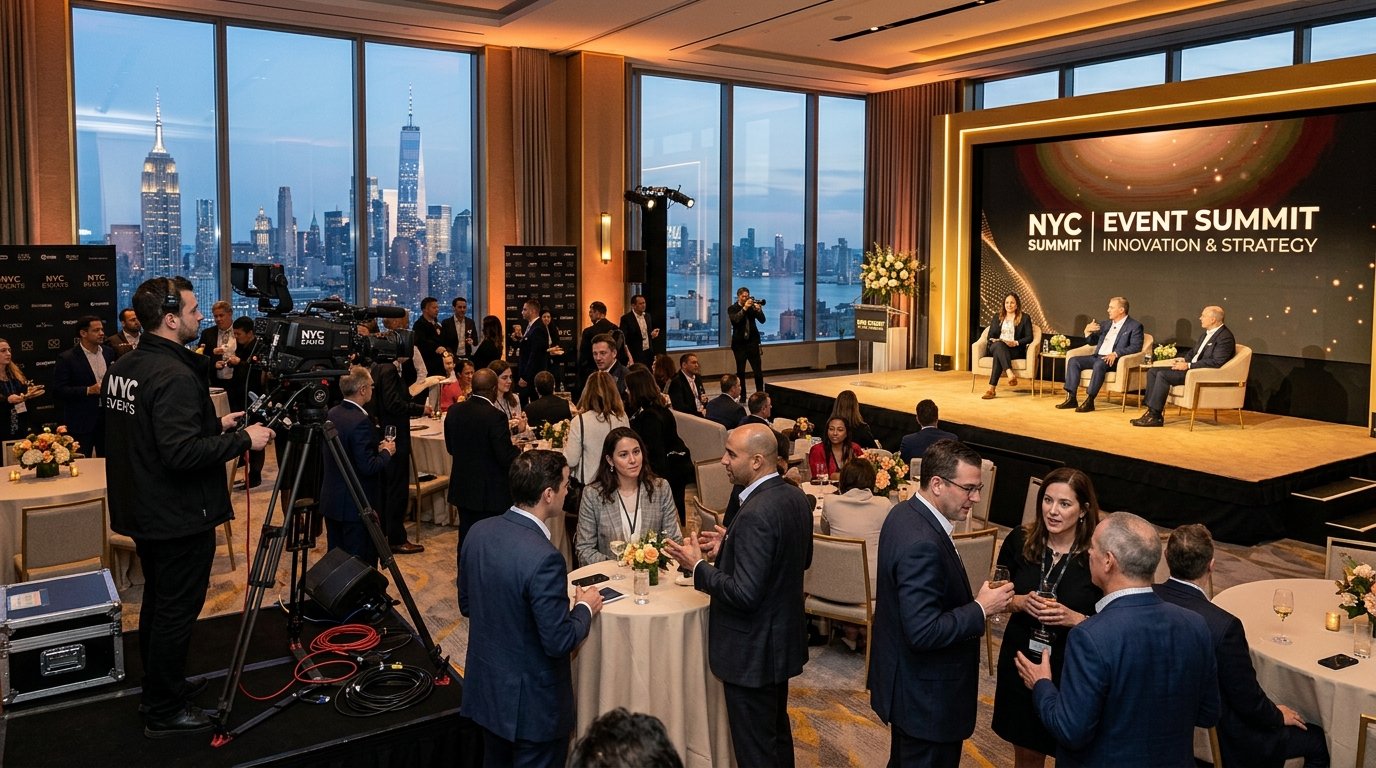
2026 NYC Corporate Event Budget & Planning Guide
Navigating the 2026 New York event market requires strategic vision where premium execution meets logistical precision and rigid budget control.
What are the projected costs for corporate event venues in New York for 2026?
Navigating the 2026 New York event market requires more than just a spreadsheet; it demands a strategic vision where premium execution meets logistical precision. For event directors planning high-stakes summits in Manhattan, the financial reality of 2026 is defined by a significant shift in how space and services are bundled. We are seeing a departure from flat rental fees toward dynamic, tech-weighted pricing models. In Tier 1 venues across Chelsea, Hudson Yards, and Midtown, rental rates are trending upward as demand for high-spec infrastructure grows. A premier summit in a venue like The Glasshouse or a high-end hotel ballroom now requires a robust baseline budget when factoring in premium catering, security, and baseline infrastructure.
This increase is driven by the rising costs of hospitality labor and the integration of permanent high-capacity fiber optics required for modern broadcasting. For organizations planning to host events in New York, the primary budget consideration is often the Food & Beverage (F&B) minimum. These minimums, combined with mandatory service charges and taxes common in Manhattan, represent a significant portion of the total spend. To maintain a competitive edge, corporate planners must secure contracts well in advance to lock in rates before the 2026 FIFA World Cup—which will be hosted across North America—puts an unprecedented squeeze on New York’s hotel and venue inventory during the summer months.
Furthermore, the concept of 'dry hire' venues is becoming a rarity in the New York market. Most premium spaces now mandate the use of in-house 'preferred' vendors for basic rigging and power, which adds a layer of non-negotiable costs. Smart planners are pivoting their budgets to prioritize venues that offer high-ceiling heights and unobstructed sightlines, even at a premium, because they significantly reduce the complexity and cost of custom AV rigging. When evaluating costs, the focus should not be on the lowest quote, but on the transparency of the line items regarding union labor and power distribution fees, which can often represent a substantial percentage of the total venue spend if not properly negotiated upfront.
How do you effectively manage AV and vendor coordination in the NYC market?
Managing a multi-vendor ecosystem in New York is a high-stakes exercise in diplomatic logistics. The city is a strictly regulated union environment, and failure to account for IATSE (International Alliance of Theatrical Stage Employees) rules can result in significant budget overruns. In 2026, the cost of a single 'shadow' technician or a missed load-in window can trigger overtime penalties that reach 1.5x to 2x the standard hourly rate. Effective coordination starts with a unified AV and production partner who understands the specific technical riders of New York’s major venues.
A common mistake among international agencies is assuming that a standard technical team can operate with the same flexibility in NYC as they might in Lisbon or Dubai. In Manhattan, every piece of equipment that crosses the loading dock is subject to specific handling rules. To mitigate these risks, event directors must centralize their vendor management. Instead of hiring separate teams for photography, videography, and live streaming, a consolidated approach ensures that the technical footprint on-site is lean and compliant.
By integrating AV coordination into the early planning phases, you avoid the 'silo effect' where the lighting team and the video production crew compete for the same power circuits or camera positions. In 2026, the standard for a corporate summit is no longer just a stage and a microphone; it is a full broadcast environment. This requires a production lead who can coordinate between the venue's house staff, the union labor, and the specialized production teams. This level of oversight ensures that the gallery of content produced during the event is not compromised by logistical friction. When vendors are managed through a single strategic lens, the focus shifts from troubleshooting to execution, allowing the brand's message to take center stage without the distraction of technical hiccups.
What logistical challenges should event directors anticipate for 2026 New York summits?
Logistics in New York City are perpetually complex, but 2026 introduces specific variables that will test even the most seasoned event directors. Traffic congestion pricing in Lower Manhattan and the ongoing redevelopment of major transit hubs mean that 'travel time' for attendees and equipment must be padded significantly compared to previous years. For a summit involving high-profile C-suite executives, the security and transportation manifest is as critical as the keynote schedule.
We are advising clients to move away from the traditional model of scattered hotel blocks. In 2026, the logistical gold standard is the 'Campus Model'—hosting the event, the VIP housing, and the evening networking events within a three-block radius or within a single integrated complex like Hudson Yards. This minimizes the risk of speakers being stuck in Midtown gridlock and ensures a controlled environment for high-end video production and interviews.
Another looming challenge is the surge in demand for sustainable event practices. New York's corporate sector is increasingly mandating zero-waste initiatives and carbon-offset reporting for large-scale gatherings. This impacts logistics through more complex waste management protocols and a preference for local sourcing. Planners must vet their vendors not just on technical capability, but on their ability to provide data on their environmental footprint. Additionally, the digital infrastructure for 2026 events must be robust enough to support 5G-enabled interactive elements and AI-driven networking tools, which require significant dedicated bandwidth that many older NYC buildings still struggle to provide without costly temporary upgrades.
How can premium photo and video production maximize your event's ROI?
A corporate event in New York is a massive capital expenditure. To justify this spend in 2026, the event cannot exist solely within the walls of the venue; it must serve as a content factory that fuels the brand’s marketing engine for the following twelve months. This is where premium photo and video production transition from line-item expenses to high-yield investments. The difference between a 'snapshot' and editorial-grade photography is the difference between a forgotten social post and a featured story in a major industry publication.
High-end production allows you to capture the intellectual capital generated during the summit. By setting up an on-site podcast studio or a dedicated interview suite, you can record dozens of high-quality sessions with industry leaders that would otherwise cost significantly more to produce in a standalone studio setting. In 2026, the demand for short-form, high-impact video content is at an all-time high. A single 48-hour event in New York should yield a cinematic aftermovie, multiple social cuts, and an extensive library of high-resolution images.
This content is the primary driver of long-term ROI. By leveraging professional production, the event’s impact extends far beyond the closing remarks, providing a continuous stream of high-value assets that reinforce brand authority and keep the conversation going throughout the fiscal year.
Frequently Asked Questions
Quel est l'impact de la Coupe du Monde 2026 sur les événements à NYC ?
La Coupe du Monde créera une pression sans précédent sur la disponibilité des hôtels et des lieux, entraînant une hausse des prix et nécessitant des réservations au moins 18 à 24 mois à l'avance.
Qu'est-ce que le 'Union Labor' à New York ?
Il s'agit de la main-d'œuvre syndiquée obligatoire pour certaines tâches (audiovisuel, manutention). Le non-respect de leurs protocoles peut entraîner des pénalités financières lourdes.
Comment assurer la conformité RGPD lors d'un événement aux USA ?
Même à New York, si vous collectez des données de résidents européens, vous devez respecter le RGPD en matière de consentement, de stockage et de transfert de données.