
Event Security: The Trap of Showcase Spending
Event Security: The Trap of Showcase Spending
An in-depth analysis of 'showcase spending' and its critical impact on the reputation and fluidity of high-level B2B events, proposing alternatives based on invisible integration and operational excellence.
What is 'Showcase Spending' and why does it threaten your B2B events?
The concept of 'showcase spending'—often referred to in security circles as 'security theater'—describes massive investments in highly visible security measures designed primarily to reassure stakeholders visually rather than to mitigate documented, real-world risks. In the premium event industry, this trend manifests as a proliferation of imposing barriers, overstaffed security teams with intimidating postures, and intrusive detection gates placed at the heart of the guest experience. For organizers of B2B summits or high-net-worth galas, succumbing to this approach is a major strategic error that confuses vigilance with performance art.
As Bruno Marx of jwc consultancy aptly notes, the story of an incident always travels faster than the incident report itself. However, saturating a space with coercive measures creates a latent atmosphere of anxiety that undermines the very essence of a high-level event: networking, serenity, and the free flow of ideas. When a multinational executive or an investor enters an event in London or New York, they expect exclusivity that rhymes with fluidity. Showcase spending breaks this unspoken contract by imposing an aesthetic of suspicion. Yet, real risk almost never resides where the surveillance cameras are ostentatiously pointed. By concentrating the majority of the security budget on the visible, organizers often neglect critical and much more probable vulnerabilities.
These overlooked flaws include the cybersecurity of conference Wi-Fi networks—frequently vulnerable to sensitive data interception—or the logistical management of flows during a real emergency evacuation, which can be hindered by the very barriers installed for security decorum. This purely cosmetic approach signals crisis management based on emotional reaction rather than technical anticipation. A rigorous analysis of risks in the event industry shows that the most sophisticated decision-makers now prioritize operational discretion over a show of force. The true luxury of modern security lies in its invisibility: being protected without ever feeling watched or restricted.
How to reconcile high-level security with premium aesthetics?
The aesthetics of a B2B event are its primary vector of credibility. Transforming a luxury hotel, a historic landmark, or a state-of-the-art convention center into a fortified zone instantly shatters immersion and the guest experience. The solution is not to lower security levels, but to integrate them invisibly. Contemporary technologies now allow for the securing of complex perimeters without imposing endless queues or invasive search procedures that are degrading for high-level executives. Security should be treated with the same rigor as technical production or floral design: if perfectly executed, no one notices its presence, but everyone feels the benefits.
At Alesia RSVP, we believe that fluidity is the ultimate 21st-century luxury. A well-managed event is an ecosystem where every touchpoint, from personalized greetings to discrete capture in our photo gallery, feels natural and frictionless. Deploying cutting-edge tech—such as low-frequency motion sensors, AI-assisted behavioral analysis (always in strict compliance with GDPR and consent protocols), and encrypted radio coordination via invisible earpieces—maintains maximum vigilance without altering the decorum. The goal is to protect the physical integrity of participants and the confidentiality of exchanges while preserving the prestige of the invitation.
Paradoxically, heavy-handed security suggests a loss of control by the organizer. It sends a message that the environment is inherently dangerous, generating unnecessary stress. Conversely, a subtle yet omnipresent backstage presence inspires total confidence in partners and sponsors. This requires training security personnel not just in surveillance, but in hospitality. An agent capable of directing a guest to the cloakroom while performing a discrete visual check is far more valuable than a static sentinel blocking a hallway. It is this fusion of safety protocols and concierge standards that defines operational excellence today.
What are the invisible risks truly impacting your brand reputation?
Beyond physical threats, which remain statistically rare in private corporate events, reputational risks are the most devastating and hardest to repair. A data leak during the online registration process, a major technical glitch during a global livestream, or poor VIP handling are gaping holes that showcase spending cannot fix. Security trends on BizBash confirm that event resilience is now measured by the ability to maintain absolute service continuity, regardless of technical or logistical hiccups.
The real risk is brand association. If your event is perceived as a place of friction, administrative slowness, or organizational paranoia, the perceived value of your brand drops instantly. C-suite decision-makers, whose schedules are timed to the minute, never return to an event where they felt inconvenienced by poorly thought-out or redundant security protocols. Modern risk management must therefore include a psychological and ergonomic dimension: how do we ensure the participant feels totally safe without ever feeling under constant surveillance?
This requires a multi-dimensional risk analysis before the event. Instead of spending exorbitant sums on metal detectors visible from a mile away, invest in a cybersecurity team capable of securing data flows in real-time. Instead of doubling the number of uniformed guards, invest in an intelligent badge access system (RFID/NFC) that allows for tracking crowd flows and anticipating bottlenecks before they become security hazards. This is where the expertise of a global production agency becomes essential, aligning security protocols with the most demanding hospitality standards and turning a logistical constraint into a discrete competitive advantage.
Why visual documentation is your best ally in crisis management?
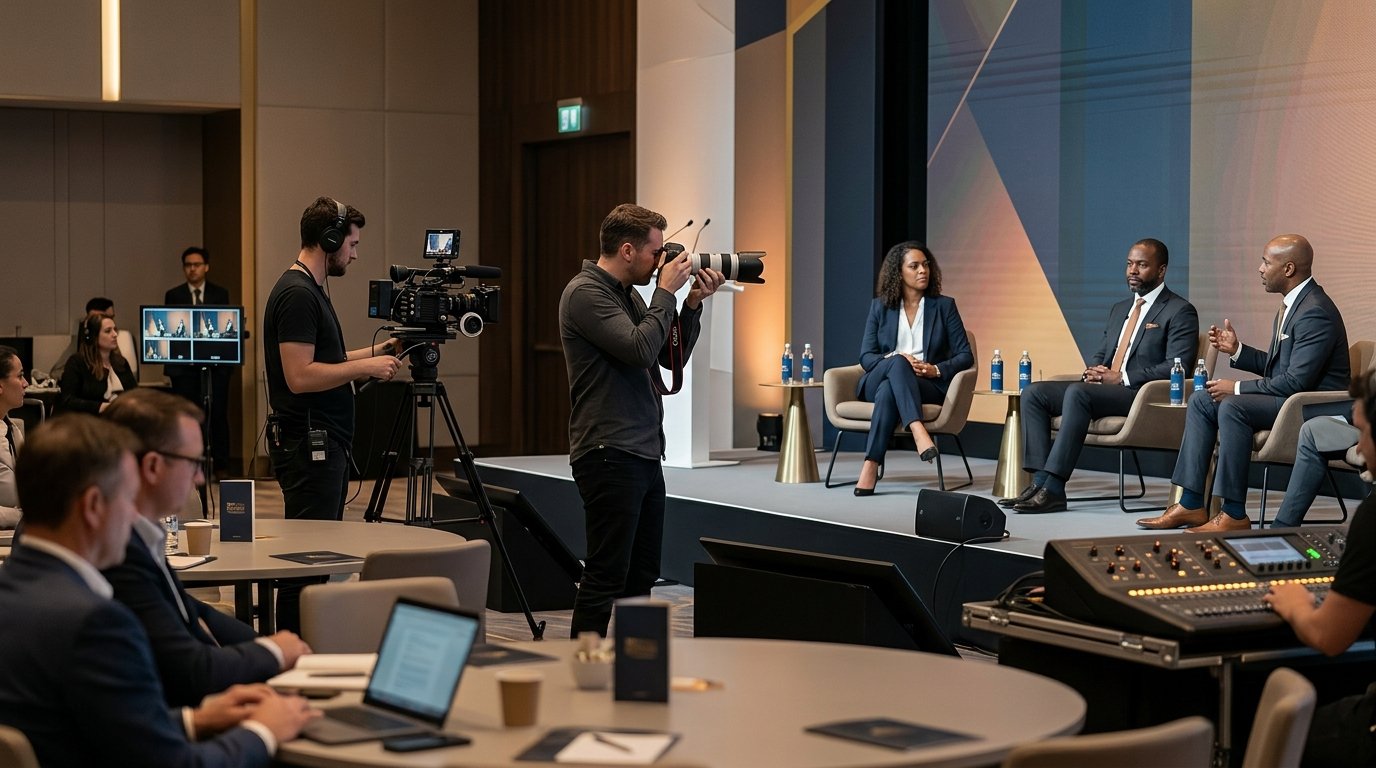
It is often forgotten that visual production—photo and video—is not just a marketing tool for social media or annual reports; it is, above all, a factual, time-stamped record of your event's execution. In the event of an incident, a dispute with a vendor, or a participant claim, having professional, high-quality photo and video coverage allows for a surgical reconstruction of the facts. It is an indispensable tool for legal protection and civil liability. Comprehensive documentation proves that security protocols were followed, emergency exits were clear, and due diligence was exercised at every stage.
Alesia RSVP acts here as a strategic partner in your resilience. By capturing every aspect of the production, from technical backstage areas to reception zones, we provide brands with tangible proof of their operational excellence. This rigor in documentation is what distinguishes premium agencies from mere service providers. Imagine being able to demonstrate, with visual evidence, that a crowd movement was handled professionally, or that access to a restricted area was perfectly secured at the time of an alleged incident. This is the difference between reactive crisis management based on vague testimonies and controlled crisis communication based on irrefutable visual proof.
Ultimately, security, logistics, and visual production form an inseparable triptych for any high-stakes event. Investing in high-quality capture is also an investment in your long-term security strategy.
FAQ
What is the difference between security theater and effective security?
Security theater (showcase spending) focuses on visible measures to create a feeling of safety, while effective security uses data-driven, often invisible methods to mitigate actual risks without disrupting the event flow.
How does GDPR affect event security technology?
In the EU, any security tech involving data (like facial recognition or RFID) must comply with GDPR, requiring clear consent, data minimization, and secure storage of attendee information.
Can visual documentation really help with legal liability?
Yes. High-quality, time-stamped photos and videos serve as a factual record that safety protocols were active and exits were unobstructed, providing essential evidence in case of disputes.
Questions Fréquentes
What is the difference between security theater and effective security?
Security theater (showcase spending) focuses on visible measures to create a feeling of safety, while effective security uses data-driven, often invisible methods to mitigate actual risks without disrupting the event flow.
How does GDPR affect event security technology?
In the EU, any security tech involving data (like facial recognition or RFID) must comply with GDPR, requiring clear consent, data minimization, and secure storage of attendee information.
Can visual documentation really help with legal liability?
Yes. High-quality, time-stamped photos and videos serve as a factual record that safety protocols were active and exits were unobstructed, providing essential evidence in case of disputes.