
AI & Web3: Securing B2B Summits Against Claude Fable 5
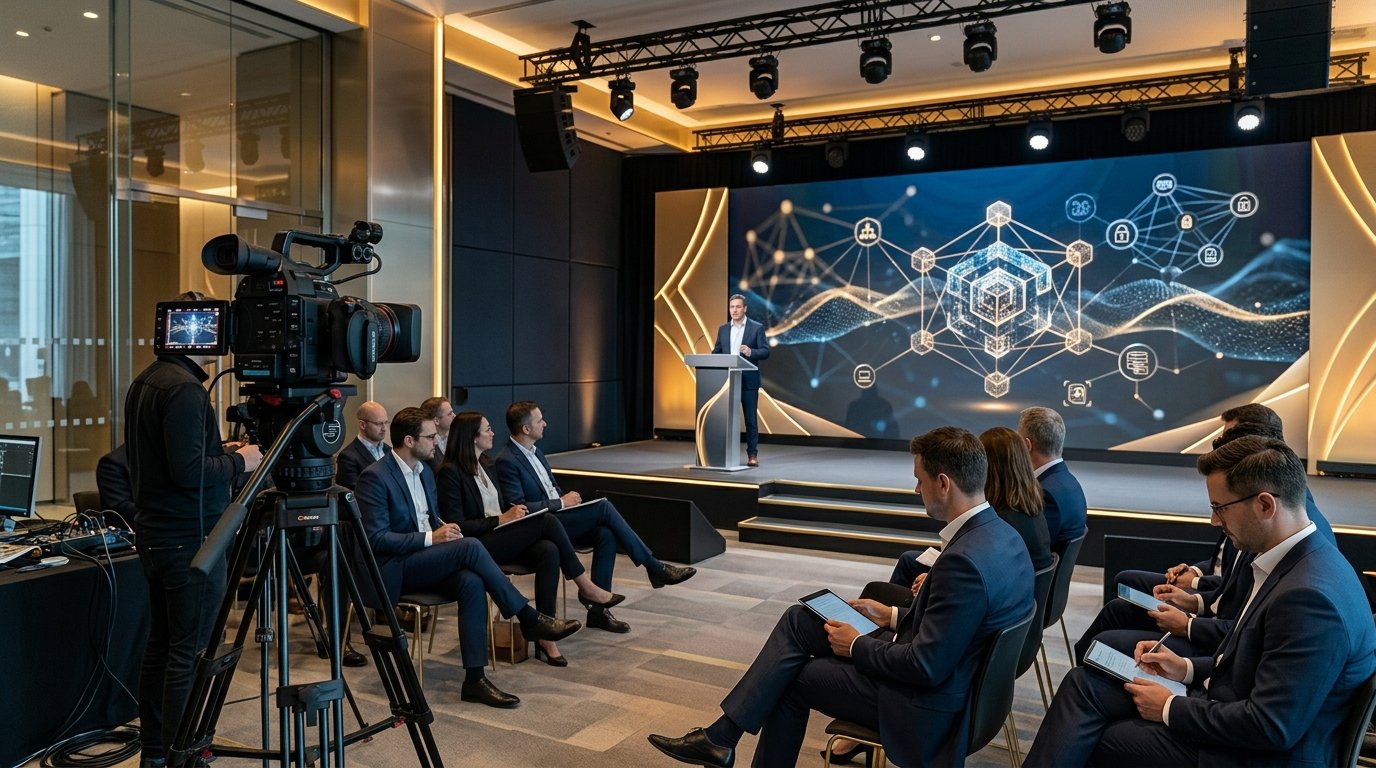
AI & Web3: Securing B2B Summits Against Claude Fable 5
The arrival of Claude Fable 5 is redefining security for Web3 summits. Alesia RSVP analyzes the impact of AI on physical event protection and digital brand integrity.
How Claude Fable 5 Redefines Security Risks for Web3 Summits
Anthropic’s announcement regarding the launch of Claude Fable 5 marks a decisive turning point for the security of decentralized ecosystems and the high-stakes events that anchor them. With the decentralized finance (DeFi) sector already recording over $840 million in losses in the first three quarters of the year, the introduction of a model with 'superhuman' reasoning and coding speed radically shifts the operational landscape. For international summit organizers, the threat isn't that AI is inventing new hacking methods from scratch; rather, it is industrializing the discovery of zero-day vulnerabilities and the exploitation of network configuration errors at an unprecedented scale. This model, capable of processing massive datasets in milliseconds, effectively reduces the reaction window for security teams to zero.
While the Mythos 5 model is theoretically restricted to cybersecurity professionals, it proves that raw computing power is now geared toward detecting structural flaws in temporary infrastructures. In the context of global tech conferences, this vulnerability manifests in local Wi-Fi networks—often deployed under tight deadlines—and participants' hardware wallets. AI can now scan thousands of data packets in real-time to identify unencrypted data streams or insecure transaction signatures. Security is no longer just a software layer or a standard firewall; it has become a critical component of the physical event infrastructure. As highlighted in this analysis on tech event security trends, protecting data at B2B gatherings must now integrate constant monitoring of generative AI’s ability to automate intrusion.
This evolution forces Marketing Directors and Event Leads to adopt a proactive, granular approach. It is no longer enough to secure a venue with physical guards; you must guarantee the integrity of the event's entire digital ecosystem. Claude Fable 5’s ability to chain complex vulnerabilities—for instance, using a minor flaw in a networking app to pivot to a main video streaming server—means a single oversight in a third-party service configuration can be exploited in seconds. Here, AI acts as a force multiplier for malicious actors, allowing them to test thousands of attack combinations where a human could only test a handful per hour. For Alesia RSVP, this reality necessitates close collaboration between visual production teams and cybersecurity experts to ensure every digital entry point is locked down.
Why Human Error Remains the Achilles' Heel of Crypto Events
Despite the technological sophistication of new AI models, 2024 statistics confirm an immutable truth: the majority of massive fund and data leaks stem from human error and basic operational failures. At major summits like /ethcc in Paris or high-profile gatherings in Dubai and Singapore, the concentration of industry whales creates an unprecedented attack surface. Social engineering, now supercharged by AI-driven voice synthesis and behavioral analysis, has become a precision weapon. A hacker can use Claude Fable 5 to analyze an organizer’s real-time social media posts, mirror their tone and current priorities, and simulate their identity with disconcerting accuracy to gain physical access to restricted zones or protocol private keys.
In the high-pressure environment of Paris or Dubai events, staff and participants often bypass strict security protocols to save time. This is where operational risk peaks. AI can now scan live video feeds—captured by attendees' smartphones or compromised CCTV—searching for fatal mistakes: a private key accidentally exposed on a shared screen during a workshop, or a VIP badge QR code containing sensitive data. This level of reactivity is impossible for a human but trivial for an AI-powered computer vision model. Consequently, managing visual capture and broadcasting has become a primary cybersecurity concern.
Security experts are unanimous: AI doesn't create new fundamental flaws; it exploits our usual negligence at a speed that prohibits manual correction. A recent discussion on the impact of AI in event cybersecurity emphasizes that on-site team training is often the weakest link. At Alesia RSVP, we have integrated this into our protocols: every production team member is trained to identify immediate visual risks. Rigorous on-site image management is no longer just about aesthetics; it is the first line of defense against the malicious exploitation of information. By limiting the accidental exposure of sensitive data within camera range, we drastically reduce the attack surface available to AI-augmented tools.
Protecting Brand Identity and VIP Data Against AI-Augmented Social Engineering
Protecting VIPs and C-suite executives at large-scale events like /consensus has mutated. It is no longer limited to bodyguards or securing VIP lounges. The major challenge is now protecting their digital identity and reputation against deepfakes or hyper-personalized phishing. Claude Fable 5 facilitates the creation of manipulation campaigns based on public speeches captured in real-time. If an executive speaks on stage, the AI can generate, within minutes, a perfectly coherent audio or text message to deceive colleagues at HQ or partners in the room, prompting them to authorize a transaction or share confidential access.
To counter this threat, the content production strategy must be locked down using 'Security by Design' protocols. Every image captured, every raw video sequence, and every streaming feed must pass through a strict control filter. The goal is to ensure no sensitive contextual information is made public: computer screens visible in the background of a VIP lounge, access badges with readable QR codes, or even working documents left on meeting tables during 'lifestyle' shoots. This is where the expertise of a premium production agency like Alesia RSVP becomes indispensable. We don't just produce high-quality imagery; we act as guardians of brand reputation, aware that every published pixel can be weaponized by a malicious actor using AI.
As an agency capturing the world's Web3 elite, Alesia RSVP constantly analyzes how the rise of AI-assisted cyber threats is redefining event risk management. We integrate absolute discretion and data security protocols into all our photography and video services. The value of a summit lies in the total trust of its participants and sponsors. By securing the production environment and strictly controlling the content distribution chain, we allow brands to focus on their message and networking without fearing the repercussions of their own content being weaponized. The conclusion for organizers is clear: in the face of AI evolving at superhuman speed, your visual production strategy must be one of absolute rigor and constant vigilance.
FAQ
What is AI-augmented social engineering at conferences?
AI-augmented social engineering uses advanced language models like Claude Fable 5 to automate, personalize, and lend credibility to psychological attacks. Hackers analyze live speeches, tone, and vocabulary to create convincing phishing messages or identity spoofs in real-time.
How can event organizers mitigate AI-driven risks?
Organizers should implement 'Security by Design' in their production workflows, ensure GDPR compliance for all data handling, use encrypted Wi-Fi networks, and partner with production agencies that understand visual cybersecurity to prevent accidental data exposure in photos and videos.
Questions Fréquentes
What is AI-augmented social engineering at conferences?
AI-augmented social engineering uses advanced language models like Claude Fable 5 to automate, personalize, and lend credibility to psychological attacks. Hackers analyze live speeches, tone, and vocabulary to create convincing phishing messages or identity spoofs in real-time.
How can event organizers mitigate AI-driven risks?
Organizers should implement 'Security by Design' in their production workflows, ensure GDPR compliance for all data handling, use encrypted Wi-Fi networks, and partner with production agencies that understand visual cybersecurity to prevent accidental data exposure in photos and videos.