
Stagestruck UK Liquidation: Lessons for B2B Event Strategy
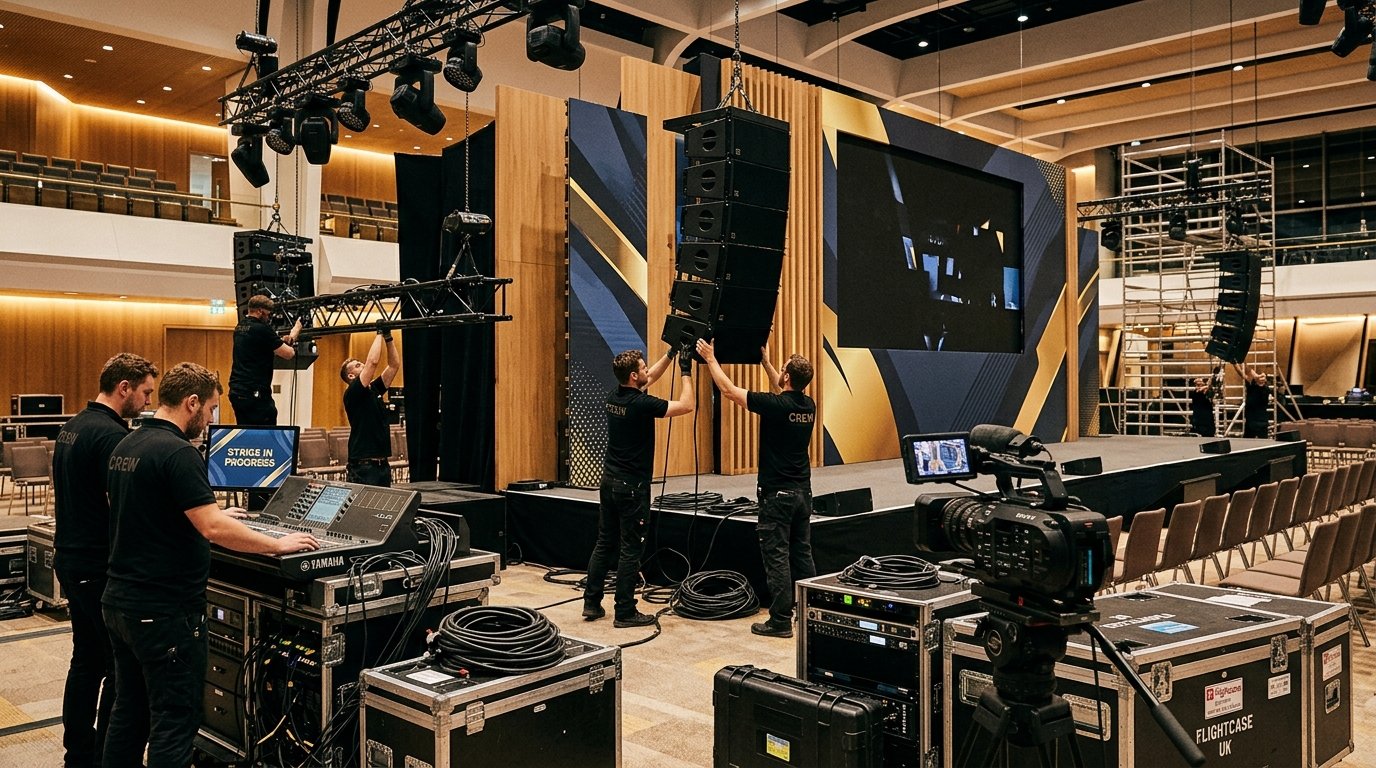
Stagestruck UK Liquidation: Lessons for B2B Event Strategy
The sudden closure of a 42-year industry titan serves as a stark reminder of the volatility within the live experience sector and the necessity for strategic financial resilience.
Why did Stagestruck UK enter liquidation after 42 years?
The sudden closure of Stagestruck UK, a firm with 42 years of operational history, has sent shockwaves through the global event industry. Managing Director James Finch confirmed the cessation of trading on May 27, citing a catastrophic convergence of geopolitical instability and project cancellation. For a company that survived multiple economic cycles since 1984, including the 2008 financial crisis and the global pandemic, its downfall was not a slow decline but a sharp, localized shock. Specifically, a major project in the Middle East—a region that had become a cornerstone of their recent growth—was postponed and then cancelled at short notice due to the escalating US/Iran conflict. This highlights a terrifying reality for B2B event agencies: even four decades of expertise cannot insulate a business from the immediate cash flow impact of a single high-stakes cancellation. When an agency operates on a legacy model, they often carry significant fixed costs, including large warehouses for set construction, specialized technical staff, and expensive inventory. In the case of Stagestruck, these overheads, which were once signs of strength, quickly became liabilities when the revenue from a multi-million dollar contract vanished overnight.
Industry observers have noted that the agency's heavy reliance on large-scale international projects made them vulnerable to regional shifts. When a primary revenue stream vanishes, the financial pressure on a legacy agency is immense. You can see the immediate fallout and Industry reactions on LinkedIn, where professionals are debating the sustainability of the current agency model. For corporate decision-makers, the lesson is clear: the stability of your production partner is as vital as their creative output. A 42-year track record is impressive, but it is not a guarantee of future performance in a world where geopolitical shifts can derail a multi-million dollar summit in a matter of hours. This liquidation serves as a case study in the fragility of the live experience sector. It underscores the danger of the 'all-eggs-in-one-basket' approach, particularly when dealing with regions prone to sudden political or economic shifts. For B2B brands, this means that vetting a partner's financial health and their ability to absorb a project loss is now a mandatory part of the procurement process. The collapse of such a long-standing entity suggests that the traditional model of the 'full-service' legacy agency may need to evolve toward more agile, asset-light structures that can pivot more quickly when global conditions change.
How can B2B brands mitigate risks in a volatile global event market?
Risk mitigation in the event industry is no longer just about health and safety on-site or having a backup generator; it is about financial and operational redundancy. Corporate marketing directors must move away from the 'single point of failure' model. When planning major summits in global hubs like London, brands should prioritize partners who demonstrate a diversified portfolio and a lean, scalable infrastructure. The Stagestruck collapse proves that even the most established names can be undone by over-concentration in a single market or project type. To protect your investment, consider a modular approach to event production. Instead of awarding a monolithic contract to one agency for everything from logistics to AV, sophisticated planners are increasingly unbundling services. This doesn't mean managing twenty different vendors, but rather creating a consortium of specialized partners who can operate independently if one part of the chain fails.
By separating the strategic management from the technical production and content creation, you ensure that if one vendor faces a crisis, the entire project does not collapse. Furthermore, the Latest event industry trends on BizBash suggest that 'just-in-case' planning is replacing 'just-in-time' delivery. This means securing secondary vendors and having a 'pivot-to-hybrid' strategy ready from day one. In the B2B world, where events are often the centerpiece of an annual marketing strategy, the cost of a total cancellation is far higher than the cost of building redundancy into your supply chain. You must vet your partners not just for their creative portfolio, but for their financial resilience and ability to weather regional disruptions. This includes asking for proof of professional indemnity insurance that covers geopolitical disruptions and ensuring that contract terms include clear 'Force Majeure' clauses that protect the client as much as the agency. Additionally, brands should look for agencies that utilize a network of local freelancers and partners rather than maintaining a massive, permanent internal headcount, as this flexibility often translates to lower risk for the client during economic downturns.
Why is high-quality event documentation essential for preserving brand legacy?
The liquidation of a major agency often means the loss of institutional memory and project archives. If your agency disappears, who holds the keys to your brand's visual history? This is where the bridge between event management and high-end production becomes critical. At Alesia RSVP, we argue that the visual legacy of an event—the high-resolution photography, the 4K aftermovies, and the recorded keynotes—is the only permanent ROI of a live experience. While the physical stage is struck and the agency may face unforeseen challenges, the content remains. Professional documentation acts as a form of brand insurance. By investing in premium editorial coverage, you ensure that the storytelling and executive insights generated during a summit are immortalized. This content can be repurposed for months, providing value long after the event budget has been spent. In many cases, the content generated at a B2B summit becomes the foundation for the next six months of social media, white papers, and lead generation campaigns.
You can explore how we approach this in our Galerie Photo & Video, where the focus is on capturing the essence of the event in a way that is independent of the physical infrastructure. When an agency like Stagestruck closes, the brands they worked with lose a partner, but if they prioritized independent, high-quality documentation, they still own the narrative of what they built together. For high-stakes B2B moments, the goal is to create a digital asset that outlives the temporary event structure. This shift toward content-first event planning ensures that your brand’s impact is never lost, regardless of market shifts or vendor stability. High-quality documentation also serves as a 'proof of concept' for future events, making it easier to secure internal buy-in and sponsorship for subsequent years. If your agency goes under, having a complete, high-quality archive of your past events allows you to onboard a new partner seamlessly, as they can clearly see the standards and visual language you have established. In essence, while the physical event is a moment in time, the documentation is an enduring corporate asset that must be protected and owned by the brand, not locked away in an agency's proprietary server.
What are the best practices for managing large-scale international event projects?
Managing a global event requires a balance of local expertise and centralized control. The Stagestruck UK situation was exacerbated by the volatility of international relations, a factor that many planners overlook until it is too late. The first best practice is 'Geopolitical Stress Testing.' Before committing to a location or a specific international vendor, evaluate the regional stability and the potential for sudden policy changes. This involves looking beyond the venue and the catering to the broader economic and political climate of the host country. Secondly, insist on transparent financial milestones. Large-scale events should never be paid for entirely upfront; payments should be tied to verifiable progress markers to protect your capital. If an agency requires massive upfront payments to cover their own overheads, it may be a red flag regarding their liquidity.
Thirdly, prioritize 'dual-capability' partners. Alesia RSVP represents a new breed of agency that combines strategic event management with in-house AV production. This dual expertise allows for greater agility; if a project needs to scale down or shift format due to external pressures, we have the internal resources to adapt without the friction of a multi-vendor supply chain. This vertical integration reduces the risk of miscommunication and ensures that the technical execution is perfectly aligned with the strategic goals. Finally, always maintain a 'Content First' mindset. If the physical event is the body, the content is the soul. By focusing on the broadcast and recording elements from the start, you ensure that the event's value is not tied solely to the number of people in a room. This approach not only increases ROI but also provides a safety net. If a regional conflict prevents travel, a well-prepared digital broadcast can save the event's objectives. In a world of increasing uncertainty, the most successful corporate events are those that are built to be resilient, documented to be permanent, and managed with a clear-eyed view of global risks. This means planning for 'Plan B' with the same level of detail as 'Plan A,' ensuring that your brand's presence is felt whether the audience is in a ballroom in London or watching a high-definition stream from their office.
FAQ
What caused the sudden downfall of Stagestruck UK?
Stagestruck UK entered liquidation after 42 years primarily due to the sudden cancellation of a major project in the Middle East, which was triggered by geopolitical tensions between the US and Iran. This unexpected loss of a significant revenue stream, combined with the high fixed overheads of a legacy agency model, made it impossible for the company to continue trading.
How can event planners protect their projects from geopolitical instability?
Planners can protect projects by conducting thorough 'Geopolitical Stress Testing' of host regions, diversifying their vendor base to avoid a single point of failure, and ensuring contracts include robust Force Majeure clauses. Additionally, maintaining a 'pivot-to-hybrid' strategy allows the event to continue digitally if physical travel or gatherings become impossible.
Why is owning event content more important than the physical production?
The physical production is temporary and carries high risk, whereas the content (video, photography, transcripts) is a permanent digital asset. If an agency fails or an event is disrupted, the content remains the only lasting ROI. Owning this content allows brands to maintain their narrative and repurpose insights for long-term marketing, independent of the vendor's stability.
What should B2B brands look for in a resilient event partner?
Brands should look for partners with a diversified client portfolio, a lean and scalable operational model, and 'dual-capability' (strategy plus in-house production). Financial transparency and the ability to demonstrate a clear risk-management framework for international projects are also critical indicators of a resilient partner.
Questions Fréquentes
What caused the sudden downfall of Stagestruck UK?
Stagestruck UK entered liquidation after 42 years primarily due to the sudden cancellation of a major project in the Middle East, which was triggered by geopolitical tensions between the US and Iran. This unexpected loss of a significant revenue stream, combined with the high fixed overheads of a legacy agency model, made it impossible for the company to continue trading.
How can event planners protect their projects from geopolitical instability?
Planners can protect projects by conducting thorough 'Geopolitical Stress Testing' of host regions, diversifying their vendor base to avoid a single point of failure, and ensuring contracts include robust Force Majeure clauses. Additionally, maintaining a 'pivot-to-hybrid' strategy allows the event to continue digitally if physical travel or gatherings become impossible.
Why is owning event content more important than the physical production?
The physical production is temporary and carries high risk, whereas the content (video, photography, transcripts) is a permanent digital asset. If an agency fails or an event is disrupted, the content remains the only lasting ROI. Owning this content allows brands to maintain their narrative and repurpose insights for long-term marketing, independent of the vendor's stability.
What should B2B brands look for in a resilient event partner?
Brands should look for partners with a diversified client portfolio, a lean and scalable operational model, and 'dual-capability' (strategy plus in-house production). Financial transparency and the ability to demonstrate a clear risk-management framework for international projects are also critical indicators of a resilient partner.