
On-Site Podcast Recording for Toronto Corporate Events 2026
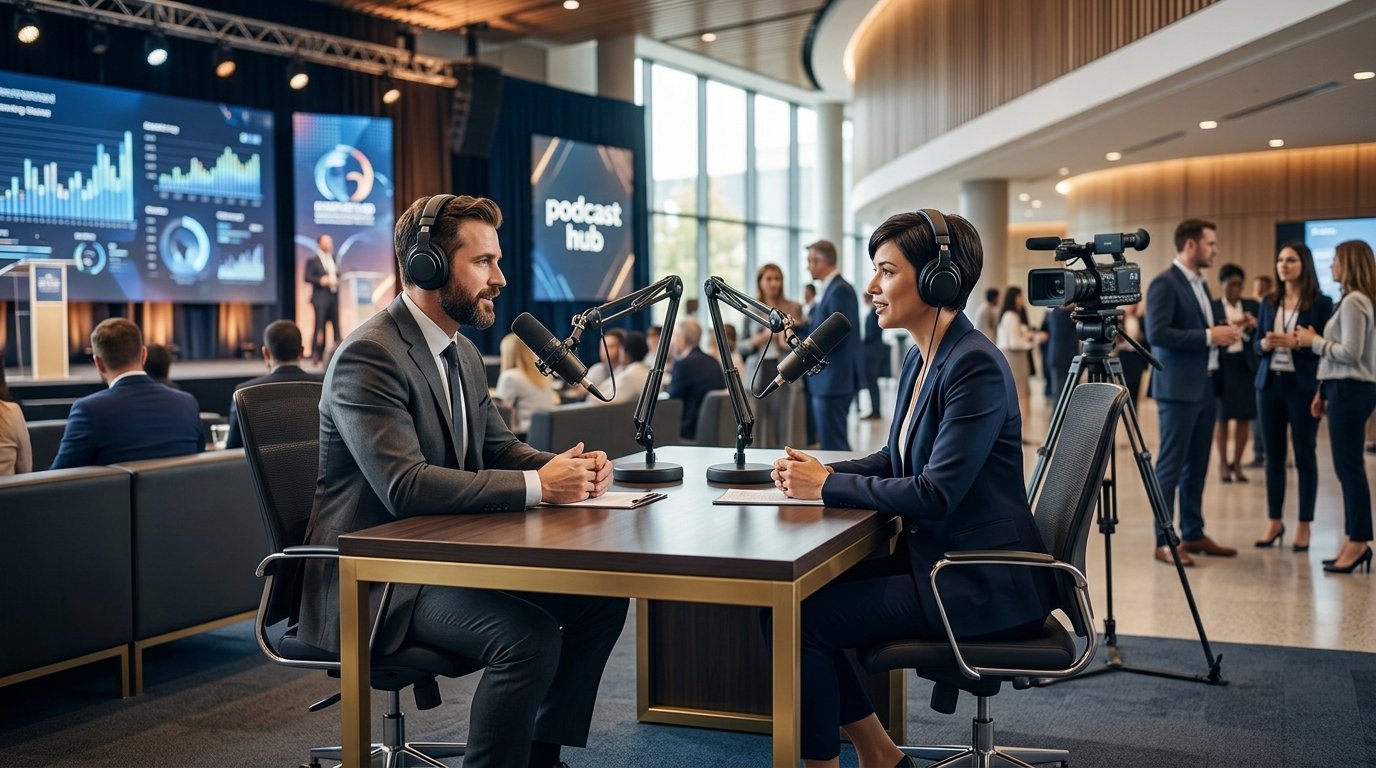
On-Site Podcast Recording for Toronto Corporate Events 2026
In 2026, Toronto's corporate landscape demands more than passive attendance; it requires a high-octane content engine to drive post-event ROI. The shift from simple event logistics to strategic content capture is no longer a luxury—it is the baseline for global brands operating in the city's competitive financial and tech sectors. This guide explores how to leverage on-site podcasting and integrated AV to ensure your summit resonates long after the stage lights go down. We examine the technical requirements for 4K broadcast-quality production and the editorial mindset needed to turn a three-day conference into a year-long marketing asset.
Why is on-site podcasting the ultimate engagement tool for Toronto corporate events in 2026?
In 2026, a corporate event is no longer just a gathering; it is a high-octane content engine. As Toronto emerges as the next global hub for B2B excellence, the question for every Marketing Director is no longer whether to host an event, but how to capture its intellectual capital. On-site podcasting has evolved from a niche novelty into the most potent engagement tool in the executive arsenal. It offers something that a standard stage presentation cannot: the intimacy of a 1:1 conversation and the raw, unscripted insight of industry leaders. When you pull a keynote speaker aside for a 20-minute deep dive in a dedicated glass-walled studio on the expo floor, you aren't just creating audio; you are manufacturing high-value digital assets that will sustain your brand’s relevance for months.
Toronto’s business ecosystem—from the financial district’s stalwarts to the burgeoning tech corridor—thrives on high-stakes networking. A professional on-site podcast booth acts as a gravity well for this talent. It provides a structured environment for sponsors to provide value and for C-suite executives to voice opinions that might be too nuanced for a 15-minute panel. By 2026, the standard for these recordings will have shifted. We are moving past the era of 'good enough' audio. To compete in a saturated digital landscape, these podcasts must be multi-camera video productions, edited in real-time, and ready for social distribution before the closing remarks are even delivered. This level of technical mastery is what separates a forgettable conference from a landmark industry summit.
The physical presence of a podcast studio also serves a psychological purpose. It signals to attendees that the event is a site of active knowledge creation, not just passive consumption. In the context of Toronto’s world-class venues like the Beanfield Centre or the MTCC, a sleek, branded podcasting suite becomes a focal point for the 'content-first' event strategy. It allows for the capture of 'micro-moments'—the immediate reactions to a major announcement or the spontaneous debates between industry rivals—that would otherwise be lost to the hallway chatter. By treating the podcast as a live activation, brands can bridge the gap between the physical floor and the global digital audience, creating a feedback loop of engagement that drives both immediate social buzz and long-term thought leadership.
How can a multi-pillar AV strategy maximize ROI for marketing directors and event agencies?
The traditional, fragmented approach to event AV—hiring one vendor for sound, another for photography, and a third for video—is a relic of the past. For the 2026 event cycle, Marketing Directors must adopt a multi-pillar AV strategy that views every aspect of the event through a single creative lens. This integrated approach ensures that the visual language of your event photography matches the color grade of your aftermovie and the professional polish of your live stream. When these elements work in concert, the ROI is multiplied. You aren't just paying for documentation; you are building a library of marketing materials that can be repurposed across every channel, from LinkedIn thought leadership to internal corporate communications.
Efficiency is the silent driver of event ROI. When a single agency manages the photography, video, and on-site podcasting, the friction of vendor coordination disappears. There is no more fighting for space on the floor or conflicting schedules for executive interviews. This operational alignment allows for a more aggressive content capture schedule. In a city as competitive as Toronto, being able to showcase the scale and prestige of your event through high-end visual assets is what attracts the next year’s tier-one sponsors and speakers. It transforms the event from a one-off expense into a long-term marketing investment that pays dividends long after the venue has been cleared.
Furthermore, a unified AV strategy allows for the implementation of 'real-time' content workflows. In 2026, the delay between a keynote ending and a highlight reel being posted should be measured in minutes, not days. A centralized production team can ingest footage from the main stage, the podcast booth, and the roaming photographers into a single cloud-based editing suite. This enables the immediate release of high-impact clips that capitalize on the event's peak momentum. For event agencies, this level of service is a significant differentiator. It moves the needle from being a service provider to being a strategic content partner, capable of delivering a comprehensive digital footprint that justifies the significant capital expenditure of a Toronto summit.
What are the essential components of a premium conference live streaming setup?
Live streaming in 2026 is no longer about simply 'being online'; it is about broadcast-quality production that rivals major television networks. For high-stakes summits in Toronto, the standard is now 4K multi-camera setups with dedicated vision mixers and redundant hardware encoders. The goal is to provide remote attendees with an experience that is as immersive, if not more so, than being there in person. This requires a technical infrastructure that can handle low-latency delivery to global audiences while maintaining the visual fidelity expected by premium B2B brands. Relying on basic webcasting tools is a risk to brand equity that most C-suite executives are no longer willing to take.
In major hubs like New York and London, we have seen a shift toward hybrid-first production where the virtual audience is given exclusive content, such as 'behind-the-scenes' interviews and live Q&A sessions. A premium setup must include professional lighting that is optimized for both the live audience and the camera, broadcast-grade audio capture to eliminate room echo, and a robust internet failover system. Relying on a single venue connection is a technical vulnerability. Alesia RSVP approaches live streaming with a 'zero-failure' mindset, using bonded cellular connections alongside venue fiber to ensure that the global reach of your Toronto summit is never compromised by technical instability.
Beyond the hardware, the 'human' element of the stream is what defines its success. This includes a dedicated virtual host to engage the online audience and a technical director who manages the multi-camera cuts to keep the visual pace dynamic. In 2026, we also see the integration of real-time data visualization and AR overlays into the stream, providing context to keynote data that a physical attendee might miss. This level of production value ensures that the remote audience remains engaged for the duration of the event, rather than dropping off after the first ten minutes. It turns the live stream into a standalone product, one that can be monetized through virtual ticketing or used as a high-value lead magnet for post-event follow-up.
How do professional aftermovies and photography sustain brand momentum post-event?
The true lifespan of a corporate event is measured by the quality of its visual legacy. While the physical event may last three days, the digital afterglow should last a year. Professional aftermovies are the primary vehicle for this longevity. They are not merely 'recap' videos; they are high-end cinematic productions that distill the energy, the key takeaways, and the prestige of the event into a compelling narrative. When executed correctly, an aftermovie serves as a powerful sales tool for the following year, providing tangible proof of the event’s impact and the quality of its attendees. It is the visual proof of your brand's authority in the Toronto market.
Photography plays a similarly vital role, but the 2026 standard has moved away from static, staged shots. The demand is for editorial-style coverage—dynamic, candid images that capture the 'moments between the moments.' These photos are essential for PR, social media, and internal reports. They humanize the corporate brand and provide a visual narrative of innovation and leadership. Alesia RSVP is redefining the Toronto event landscape for 2026 by merging these premium aesthetics with technical mastery. We position our five-pillar AV framework—from on-site podcasts to high-end keynote recording—as the essential toolkit for the modern C-suite. By capturing the event with an editorial eye, we ensure that the brand momentum built on-site is not lost, but rather amplified across the digital ecosystem.
To sustain this momentum, the distribution of these assets must be strategic. A single long-form aftermovie should be accompanied by a dozen 'social cuts'—15 to 30-second clips optimized for vertical viewing on LinkedIn and Instagram. Similarly, the photography should be organized into a searchable, high-resolution library that can be accessed by the press and internal marketing teams immediately. This ensures that the event remains a topic of conversation in the weeks following the closing gala. In the 2026 business environment, the 'event' is merely the production phase; the 'marketing' is the year-long deployment of the assets captured during those few days in Toronto. If your event wasn't captured with professional precision, it might as well not have happened.
FAQ
What are the benefits of recording a podcast on-site during a corporate event?
Recording a podcast on-site allows you to capture high-value insights from speakers and executives while they are already present and engaged. It creates authentic, high-quality audio and video content that can be repurposed for months of social media marketing and thought leadership. Additionally, a podcast booth serves as an interactive activation that attracts attendees and provides extra value to sponsors by giving them a platform to share their expertise in a high-production environment.
How does Alesia RSVP ensure seamless integration of photography and video without disrupting the event flow?
Alesia RSVP uses a coordinated team of specialists who work under a single production lead to ensure all AV pillars—photo, video, and audio—operate in harmony. We conduct extensive pre-event site visits to map out sightlines and equipment placement, using low-profile gear and silent shooting techniques. This allows us to capture premium editorial content without interfering with the attendee experience or the technical requirements of the stage production.
What technical redundancies are necessary for a 2026 Toronto corporate live stream?
For high-stakes events, we implement a 'zero-failure' protocol. This includes redundant hardware encoders, a bonded internet solution that combines venue fiber with dedicated 5G cellular backups, and a secondary power supply for the vision mixing desk. This ensures that even in the event of a local network outage or hardware glitch, the global broadcast remains uninterrupted and the brand's professional image is protected.
How can event content be repurposed for a 12-month marketing calendar?
By capturing the event through a multi-pillar strategy, we provide a library of assets: full-length keynote videos, 1:1 executive podcast interviews, editorial photography, and cinematic highlight reels. These are then broken down into 'micro-content'—short clips, quote cards, and blog posts—that can be scheduled throughout the year to maintain brand authority and keep the event's core messages top-of-mind for your target audience.
Questions Fréquentes
What are the benefits of recording a podcast on-site during a corporate event?
Recording a podcast on-site allows you to capture high-value insights from speakers and executives while they are already present and engaged. It creates authentic, high-quality audio and video content that can be repurposed for months of social media marketing and thought leadership. Additionally, a podcast booth serves as an interactive activation that attracts attendees and provides extra value to sponsors by giving them a platform to share their expertise in a high-production environment.
How does Alesia RSVP ensure seamless integration of photography and video without disrupting the event flow?
Alesia RSVP uses a coordinated team of specialists who work under a single production lead to ensure all AV pillars—photo, video, and audio—operate in harmony. We conduct extensive pre-event site visits to map out sightlines and equipment placement, using low-profile gear and silent shooting techniques. This allows us to capture premium editorial content without interfering with the attendee experience or the technical requirements of the stage production.
What technical redundancies are necessary for a 2026 Toronto corporate live stream?
For high-stakes events, we implement a 'zero-failure' protocol. This includes redundant hardware encoders, a bonded internet solution that combines venue fiber with dedicated 5G cellular backups, and a secondary power supply for the vision mixing desk. This ensures that even in the event of a local network outage or hardware glitch, the global broadcast remains uninterrupted and the brand's professional image is protected.
How can event content be repurposed for a 12-month marketing calendar?
By capturing the event through a multi-pillar strategy, we provide a library of assets: full-length keynote videos, 1:1 executive podcast interviews, editorial photography, and cinematic highlight reels. These are then broken down into 'micro-content'—short clips, quote cards, and blog posts—that can be scheduled throughout the year to maintain brand authority and keep the event's core messages top-of-mind for your target audience.