
UK Business Events: A £33.6 Billion Strategic Powerhouse
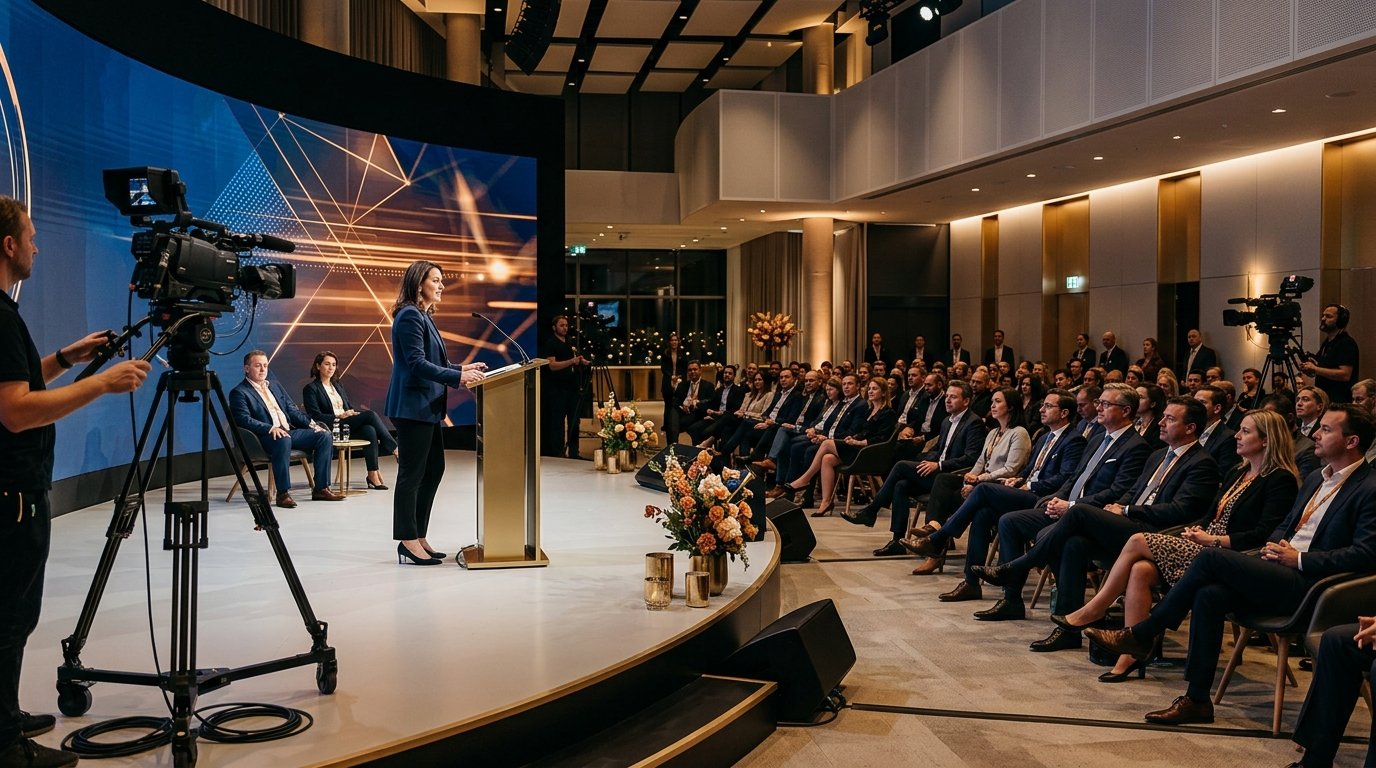
UK Business Events: A £33.6 Billion Strategic Powerhouse
The UK parliamentary report confirms business events generate £33.6bn annually, shifting the narrative from 'visitor economy' to 'strategic growth.'
Why is the UK parliamentary report a strategic turning point for the industry?
The UK government has finally acknowledged what industry veterans have asserted for decades: business events are not a subset of the 'visitor economy' or the tourism sector. They are a £33.6 billion economic engine. The House of Commons Culture, Media and Sport Committee’s report on Business Events marks a definitive shift in how high-stakes corporate gatherings are perceived by policymakers. For years, the sector was buried under the umbrella of hospitality, often dismissed as 'leisure-adjacent.' This report changes that calculus entirely. By recognizing that these events support over 700,000 jobs and drive massive regional investment, the narrative moves away from the 'heads on beds' metric and toward a sophisticated industrial strategy. For the corporate decision-maker, this report provides the political and economic cover to treat large-scale summits as essential infrastructure rather than discretionary marketing spend.
This recognition comes at a time when global competition for corporate headquarters and fintech leadership is at its peak. The report highlights that business events are critical for driving investment, exports, and innovation. When a major conference like Money20/20 or a high-level corporate summit takes place, it isn't just about the three days on-site; it is about the trade deals and 'knowledge exchange' that happen behind the scenes. This parliamentary backing is the first step toward a national business events strategy that aligns with broader industrial goals, ensuring the UK remains a top-tier destination for enterprise-level gatherings. Historically, the lack of a dedicated government voice meant the industry was often overlooked during major policy shifts. Now, with the committee advocating for a more centralized approach, we are seeing the groundwork for a National Business Events Council. This body would ensure that the sector’s voice is heard at the highest levels of the Department for Business and Trade, rather than just the Department for Culture, Media and Sport. This is a subtle but profound shift in power. It means that when you plan a summit in London or Manchester, you are participating in a recognized pillar of the UK’s global trade strategy. You can see more on the Industry discussion on the UK parliamentary report.
How do high-profile business events drive regional growth and innovation?
The committee’s findings emphasize that the impact of business events extends far beyond the M25. While London remains a global hub for corporate events, the report underscores the role of regional cities in fostering innovation through specialized summits. These events act as localized catalysts, bringing global expertise into regional ecosystems. In cities where Alesia RSVP operates, we see this firsthand: a single well-produced conference can revitalize a local tech corridor or financial district by facilitating high-density networking that would otherwise take months of travel to achieve. The 'knowledge exchange' mentioned in the report is the invisible ROI of the industry. It is the transfer of intellectual capital that happens in the corridors of a venue, which often leads to long-term collaborative projects and regional job creation.
Innovation doesn't happen in a vacuum; it happens when industry leaders are placed in a room designed for high-level interaction. The parliamentary report notes that the sector has been under-recognized and under-supported within government, despite its massive footprint. This lack of support has often led to fragmented planning across different regions. With a unified national strategy, we can expect better coordination between transportation, venue management, and international trade bodies. This structural support will allow organizers to focus on the content and quality of the event, rather than fighting logistical headwinds. For example, when a city like Birmingham or Glasgow hosts a major industrial summit, the economic impact is felt in the local supply chain, from AV technicians to specialized catering and transport. This 'levelling up' aspect of business events is a core component of the government's interest. By decentralizing the economic benefits of large-scale gatherings, the UK can leverage its regional strengths in sectors like renewable energy, life sciences, and advanced manufacturing. Explore the Latest trends in business event impact to understand how this shift is being mirrored globally. The report essentially argues that a conference in Leeds is as strategically important as a trade mission to Singapore, because it brings the world to the UK's doorstep.
What role does premium visual content play in a national business events strategy?
If business events are now officially recognized as drivers of trade and innovation, the way we document them must reflect that professional gravity. High-quality visual assets are the 'receipts' of economic impact. A grainy, poorly lit photo or a generic 2-minute recap video does nothing to signal the high-stakes nature of a £33.6 billion industry. To align with this new national recognition, corporate event photography and video must move from 'event snapshots' to 'editorial documentation.' This is where the bridge between event management and AV production becomes vital. When stakeholders, investors, or government officials look back at a summit, the visual narrative dictates the perceived success of the gathering. It is no longer enough to simply record what happened; you must capture the atmosphere of innovation and the scale of the networking taking place.
Professional visual coverage serves two masters: it provides immediate proof of the event’s success to stakeholders and sponsors, and it builds a library of intellectual property that extends the event's lifecycle. When the government looks for evidence of 'knowledge exchange,' they should be looking at high-definition recordings of keynotes, well-produced podcasts recorded on-site, and editorial-grade photography that captures the intensity of the networking floor. At our hub for Corporate Events London, we prioritize this level of production because we know that the visual narrative is what ultimately justifies the investment in the eyes of the C-suite and government bodies. Furthermore, the shift toward a national strategy means that events will be scrutinized for their global reach. High-end video production allows a local summit to have a global audience, effectively multiplying the £33.6bn impact through digital distribution. This 'digital twin' of the event—the archive of high-quality video and photography—becomes a permanent asset for the organizing brand. It serves as a recruitment tool, a sales asset, and a historical record of the brand's leadership in its sector. In an era where 'content is king,' the quality of that content must match the strategic importance of the event itself. We are moving away from the era of the 'event photographer' and into the era of the 'visual strategist' who understands how to frame a corporate narrative for a global audience.
How can event organizers leverage this new recognition to secure better ROI?
Organizers should use this parliamentary report as a mandate for quality. The era of apologizing for the costs of a premium event is over; the data now supports the fact that these gatherings are strategic assets. To maximize ROI, planners must look beyond the day of the event and focus on content repurposing. Every keynote, panel, and fireside chat is a piece of thought leadership that can be utilized for months. This is where Alesia RSVP excels. We position ourselves as the visual architects of this new narrative. We don't just provide cameras; we provide a production strategy that captures the prestige and economic weight of your event. By treating the event as a content-generation hub, you effectively lower the 'cost per lead' and increase the 'lifetime value' of the event's insights.
By partnering with a premium agency, you ensure that the visual output matches the high standards expected in a government-backed industry. Our work, which you can view in our Galerie Photo & Video, is designed to showcase the scale and professionalism that this parliamentary report now formally recognizes. As the UK moves toward a National Business Events Council, the focus will intensify on the quality and impact of every major gathering. Organizers should also use the report's findings to negotiate better internal budgets. When you can point to a House of Commons report that validates your sector as a £33.6bn powerhouse, the conversation shifts from 'how can we save money?' to 'how can we maximize our impact?' This is a crucial distinction. It allows for investment in better technology, more impressive venues, and higher production values—all of which contribute to a more successful event. The conclusion is clear: business events are no longer just 'visitor' attractions—they are the boardrooms of the future economy. Now is the time to invest in the production quality that proves it. This means integrating your visual strategy into the very beginning of your planning process, ensuring that every angle, every lighting setup, and every video edit is designed to reinforce your brand's authority. The report has given the industry the data; now it is up to the organizers to provide the excellence that justifies that data. By focusing on high-end production and strategic content distribution, you are not just running an event; you are managing a high-value economic asset.
FAQ
What is the economic impact of business events in the UK?
Business events generate £33.6 billion annually for the UK economy. They support hundreds of thousands of jobs and serve as a primary driver for international trade, regional investment, and industrial innovation.
How does professional event photography support business growth and trade?
High-end photography serves as visual evidence of an event's scale and influence, providing essential assets for sponsor reports and future marketing. It captures the 'knowledge exchange' and networking that drive trade deals, elevating the brand's perceived value in the marketplace.
What is the proposed National Business Events Strategy?
The strategy, welcomed by UKEVENTS, aims to align the business events sector with the UK Government’s Industrial Strategy. It involves creating a sector-led National Business Events Council to coordinate cross-government efforts and maximize the economic benefits of the industry.
Frequently Asked Questions
What is the economic impact of business events in the UK?
Business events generate £33.6 billion annually for the UK economy. They support hundreds of thousands of jobs and serve as a primary driver for international trade, regional investment, and industrial innovation.
How does professional event photography support business growth and trade?
High-end photography serves as visual evidence of an event's scale and influence, providing essential assets for sponsor reports and future marketing. It captures the 'knowledge exchange' and networking that drive trade deals, elevating the brand's perceived value in the marketplace.
What is the proposed National Business Events Strategy?
The strategy, welcomed by UKEVENTS, aims to align the business events sector with the UK Government’s Industrial Strategy. It involves creating a sector-led National Business Events Council to coordinate cross-government efforts and maximize the economic benefits of the industry.