
The £33.6bn Impact: Why B2B Events Drive the Global Economy
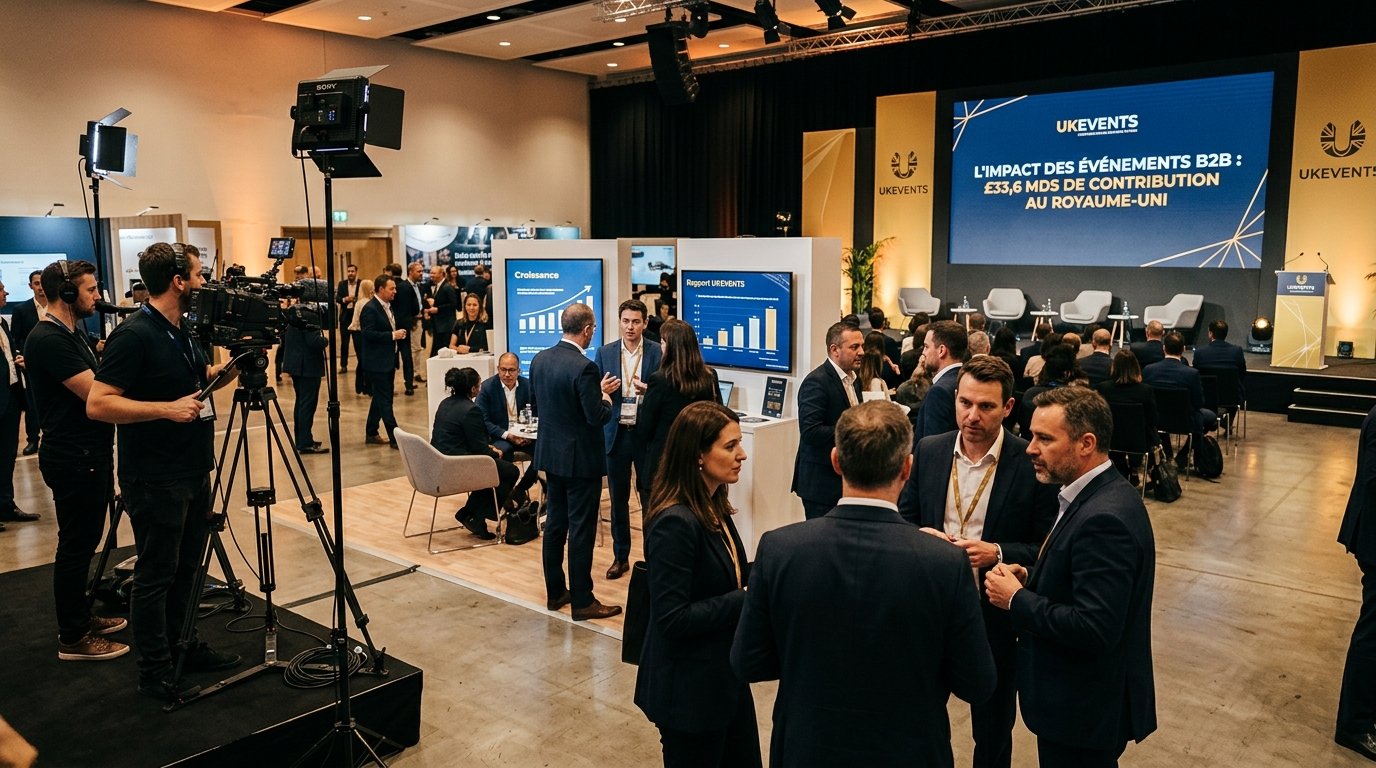
The £33.6bn Impact: Why B2B Events Drive the Global Economy
The B2B event industry has evolved beyond simple logistics; it is now recognized as a £33.6 billion economic powerhouse driving global trade and innovation.
Why the UK Parliamentary Report is a Watershed Moment for the B2B Sector
The landscape of business events in the UK has just reached a major institutional milestone. The publication of the report by the House of Commons Culture, Media, and Sport Committee marks the end of an era where conferences and summits were relegated to a mere sub-category of tourism. For CMOs and Corporate Communication Directors, this document is not just a bureaucratic formality; it is official validation that your events are instruments of economic power. By recognizing that the sector generates £33.6 billion annually and supports hundreds of thousands of jobs, the UK government finally acknowledges that B2B events are the connective tissue of the modern economy.
This recognition comes at a time when planning high-value gatherings, particularly when organizing a corporate event in London, requires increased strategic rigor. Much like the massive convention hubs in the US or the industrial trade fairs in Germany, the report emphasizes that events are not expenses, but investments in a nation’s intellectual and commercial capital. For decision-makers, this means every summit or conference must now be justified by KPIs that go far beyond headcounts. We are talking about knowledge transfer, export stimulation, and regional attractiveness.
UKEVENTS, the umbrella organization for the industry, views this report as a long-awaited victory. Glenn Bowdin, Chair of UKEVENTS, rightly points out that business events are not just part of the visitor economy—they are strategic drivers of regional growth. This distinction is fundamental. It forces organizers to think deeply about the longevity of the content produced. If an event is a lever for growth, then every keynote, panel, and innovation presented must be documented with surgical precision to feed the post-event strategy. This shift toward state-level recognition will force the market to elevate production standards, moving from service logistics to value engineering.
Catalyzing Innovation: The Real Impact of Business Events in 2026
In 2026, the impact of B2B events is no longer measured solely by direct hotel spend. The parliamentary report highlights a reality that industry leaders have long known: events are catalysts for sector-specific innovation. By facilitating the rapid exchange of ideas and the collision of business models, tech summits and financial forums accelerate R&D cycles. Data shows that the sector supports innovation through high-intensity networking platforms where investment decisions are often made behind the scenes, far from the plenary sessions.
The report explicitly mentions the critical role of events in driving investment and exports. For a company, participating in or hosting a summit is no longer an option for visibility; it is a necessity for survival in a globalized market. This dynamic is particularly visible in financial and tech hubs. You can follow the discussion on the UKEVENTS report impact to see how the international community of event professionals is using these figures to redefine their ROI strategies.
Innovation does not happen in isolation; it happens through interaction. The business events sector provides the physical and temporal infrastructure necessary for this interaction. The parliamentary committee's recommendations for a national business events strategy, aligned with the government's industrial strategy, confirm that we are entering a phase of extreme professionalization. Companies that integrate their events into a macro-economic vision will gain a competitive edge. For deeper market insights, consult the latest event industry trends on BizBash, which confirm this shift toward tangible, data-driven outcomes.
Maximizing ROI Through High-End Visual Content and Storytelling
Since B2B events are now recognized as major economic assets, the question of their visual documentation becomes central. A £33.6 billion industry cannot settle for mediocre coverage. To capture the value generated during these high-stakes moments, a premium visual strategy is indispensable. This goes beyond simple filming; it is about transforming ephemeral exchanges into durable marketing assets. A conference generating millions in potential transactions must be immortalized with cinematic production standards to serve as social proof for shareholders, partners, and global audiences.
Alesia RSVP operates at this level of excellence. As a preferred partner for AV production and complex event management, we understand that a summit's value lies in its ability to be broadcast, analyzed, and repurposed. Whether through multi-camera live streaming for global reach or editorial photography, we transform raw economic impact into a powerful brand narrative. Our premium portfolio perfectly illustrates how high-quality capture magnifies an event's prestige and reinforces speaker credibility.
Investing in top-tier audiovisual production is the only way to ensure that the innovation presented does not remain confined within four walls. In a context where the UKEVENTS report calls for better government recognition, companies must lead by example, producing content that reflects the seriousness of their projects. Visual ROI becomes the natural extension of economic ROI. A recap video delivered within 48 hours or an on-site podcast featuring industry thought leaders are massive conversion tools that directly support the trade and networking goals identified by the British Parliament.
Strategic Recommendations: Integrating Events into Global Growth
The UK report advocates for the creation of a National Business Events Council, emphasizing the need for inter-governmental coordination. For companies operating internationally—whether navigating GDPR in the EU or compliance in the US—this means that venue selection and event structure must align with regional clusters of excellence. Integrating events into a growth strategy is not just about picking a city; it involves leveraging local ecosystems to maximize impact. Decision-makers must view their events as platforms for commercial diplomacy.
A key recommendation from the committee is the alignment of events with national industrial strategies. This means the themes discussed at conferences must resonate with current technological and societal challenges to attract investment. In 2026, event planning has become an assembly science: bringing together the right people, in the right place, with the right message, and above all, the right broadcasting technology.
In conclusion, the UKEVENTS report is a loud signal to CMOs and CFOs: events are no longer a discretionary marketing cost; they are a pillar of industrial strategy. To capitalize on this shift, it is imperative to partner with agencies capable of managing both logistical complexity and visual excellence. By entrusting your projects to an agency that masters both, you ensure not only operational success but also the longevity of your event as a major strategic asset.
FAQ
What is the annual economic contribution of the UK business events sector?
According to the UK parliamentary committee report, the business events sector generates £33.6 billion annually for the UK economy, supporting hundreds of thousands of jobs and driving regional growth.
How do B2B events drive innovation and trade?
Events act as catalysts by facilitating knowledge transfer, R&D acceleration, and high-stakes networking. They align with industrial strategies to attract foreign investment and stimulate exports.
Why is high-quality AV production crucial for event ROI?
Premium visual production transforms a physical event into a long-term digital asset. It provides social proof, extends the event's reach to a global audience, and reinforces the brand's authority in its sector.
Questions Fréquentes
What is the annual economic contribution of the UK business events sector?
According to the UK parliamentary committee report, the business events sector generates £33.6 billion annually for the UK economy, supporting hundreds of thousands of jobs and driving regional growth.
How do B2B events drive innovation and trade?
Events act as catalysts by facilitating knowledge transfer, R&D acceleration, and high-stakes networking. They align with industrial strategies to attract foreign investment and stimulate exports.
Why is high-quality AV production crucial for event ROI?
Premium visual production transforms a physical event into a long-term digital asset. It provides social proof, extends the event's reach to a global audience, and reinforces the brand's authority in its sector.