
Wall Street & Blockchain: Solving the 2026 Trust Dilemma
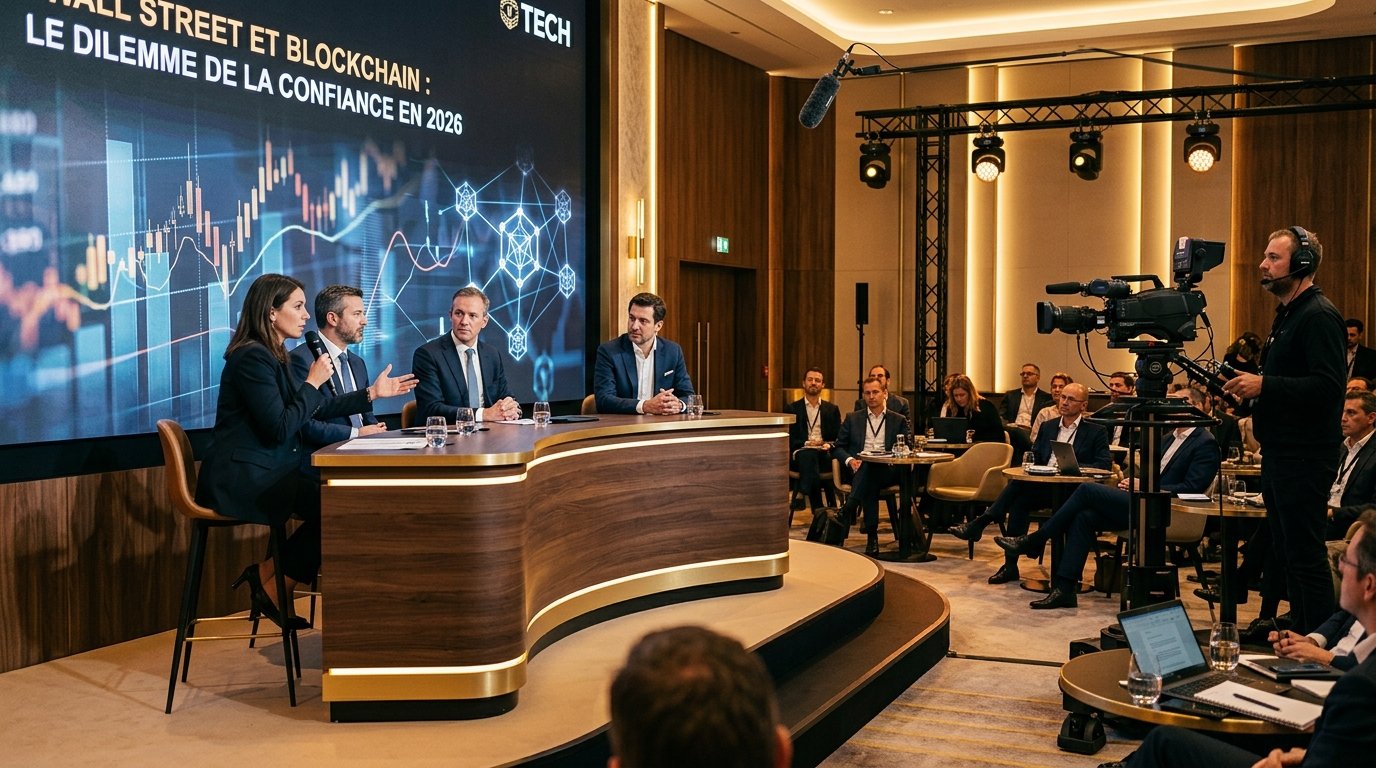
Wall Street & Blockchain: Solving the 2026 Trust Dilemma
With AI-powered cyberattacks hindering institutional blockchain integration, high-stakes physical events are emerging as the new frontier of security and trust.
Why AI-Driven Cyberattacks are Stalling Institutional Blockchain Adoption
The reality for Traditional Finance (TradFi) institutions in 2026 is sobering. By April, the Decentralized Finance (DeFi) sector recorded its darkest month in four years, with exploits occurring on 27 out of 30 days. This isn't just a streak of bad luck; it’s a technical paradigm shift. Hackers are now deploying sophisticated AI models to identify smart contract vulnerabilities, manipulate oracles, and compromise cross-chain bridges with a speed that exceeds human defensive capabilities. For Wall Street decision-makers planning to move trillions of dollars in assets on-chain over the next decade, this operational risk is the primary friction point. The efficiency promise of distributed ledgers is hitting a wall: the cost of defense is asymmetric. Attackers, often better funded and utilizing generative AI to automate social engineering and vulnerability scanning, are forcing banks into extreme caution. Major incidents, such as the $1.46 billion breach at Bybit or massive drains on Drift Protocol, prove that even 'robust' protocols are vulnerable. This creates a trust vacuum that technology alone can no longer fill. Asset managers no longer settle for static audit reports; they demand proof of resilience that goes beyond code. This is where the financial ecosystem must pivot: if the network is perceived as high-risk, the credibility of the human actors behind it becomes the most valuable asset. This credibility isn't built on Discord or Telegram, but through direct confrontation of ideas at strategic summits where transparency is the baseline.
How Summits Like the Digital Asset Summit Restore Banking Confidence
In a climate of technological uncertainty, physical presence is once again the bedrock of finance. Major global summits like the Digital Asset Summit or Consensus have evolved from networking mixers into informal regulatory chambers and hubs for mutual reassurance. For an Events VP or a Marketing Director at a tier-one bank, hosting or participating in these events is a strategic statement. It is here that discussions on the impact of blockchain security in the event industry become tangible. Human trust is the only firewall that AI cannot yet bypass. By bringing regulators, bank CEOs, and protocol developers into the same room, these events resolve the ambiguities that whitepapers never address. The agenda has shifted to governance, legal liability in the event of a hack, and asset recovery protocols. The value of these exchanges lies in their authenticity. When a leader from CertiK or Chainalysis speaks to an institutional audience, the stakes are reputational, not just technical. Institutions need to see the faces behind the protocols to validate their legitimacy. This transforms B2B events into full-scale risk management tools. The market leaders of 2026 understand that while blockchain is a network technology, finance remains a relationship industry. Documenting these moments of truth and broadcasting these insights to a global audience is essential for projecting stability in a volatile sector.
The Role of Premium Visual Documentation in DeFi Credibility
In the institutional world, the perception of security is just as vital as security itself. For a financial institution, associating with blockchain requires an impeccable brand image. Poor video quality or amateur event photography sends a signal of unprofessionalism that, by extension, suggests technical negligence. Conversely, editorial-grade visual production—what we at Alesia RSVP call 'magazine-quality output'—reinforces the authority of the message. When complex debates regarding AI exploits are captured with a cinematic aesthetic, they gain institutional weight. Video is no longer a souvenir; it is a strategic communication asset used to reassure shareholders and clients. An aftermovie produced within 48 hours, showing high-level exchanges between cybersecurity experts and central bankers, serves as social proof of the ecosystem's maturity. Current BizBash trends on security and tech highlight that investment in on-site content production is now inseparable from a brand's cybersecurity strategy. By demonstrating that industry leaders are actively solving blockchain's dilemmas, the narrative shifts from 'technological risk' to 'institutional mastery.' Alesia RSVP acts as a trusted partner, translating technical complexity into a powerful visual narrative that supports long-term FinTech credibility.
Securing Financial Brand Identity During High-Risk Events
Managing a bank’s reputation at a blockchain summit in 2026 requires iron-clad discipline. The risk isn't just a protocol hack during the event, but a loss of control over the narrative surrounding the bank’s involvement. The strategy must be to own the story from start to finish. This involves exhaustive internal media coverage: on-site podcast recordings to explain the long-term vision, executive interviews to clarify security stances, and high-quality live streaming to demonstrate transparency. The goal is to saturate the information space with verified, expert content, leaving no room for rumors or market-driven panic. An agency like Alesia RSVP, with dual expertise in event management and audiovisual production, allows institutions to focus on the message while we secure the medium. Whether in Paris or Dubai, consistent production quality reflects the operational consistency of the institution. Ultimately, Wall Street’s transition to blockchain won't happen through code deployment alone, but through a continuous demonstration of resilience and professionalism anchored in the physical world.
FAQ
How is AI changing blockchain security risks for banks in 2026?
AI is being used by hackers to automate the discovery of smart contract vulnerabilities and manipulate data oracles at speeds that bypass traditional human monitoring, making physical verification and institutional trust more critical than ever.
Why are physical B2B events considered 'risk management' tools?
Physical events allow for face-to-face due diligence between regulators, bankers, and developers, creating a 'human firewall' that helps resolve legal and governance issues that digital communication cannot address.
What is 'magazine-quality output' in event production?
It refers to high-end, editorial-grade visual content (video and photography) that reflects the prestige and technical rigor of institutional brands, helping to offset the perceived risks of emerging technologies.
Questions Fréquentes
How is AI changing blockchain security risks for banks in 2026?
AI is being used by hackers to automate the discovery of smart contract vulnerabilities and manipulate data oracles at speeds that bypass traditional human monitoring, making physical verification and institutional trust more critical than ever.
Why are physical B2B events considered 'risk management' tools?
Physical events allow for face-to-face due diligence between regulators, bankers, and developers, creating a 'human firewall' that helps resolve legal and governance issues that digital communication cannot address.
What is 'magazine-quality output' in event production?
It refers to high-end, editorial-grade visual content (video and photography) that reflects the prestige and technical rigor of institutional brands, helping to offset the perceived risks of emerging technologies.