
2026 Event Marketing: Data-Driven Visual ROI Strategies
2026 Event Marketing: Data-Driven Visual ROI Strategies
Data from mdg shows that 2026 audiences are more selective. Success now requires high-end visual social proof and influencer-led content strategies.
How can visual storytelling demonstrate event ROI to a selective 2026 audience?
In 2026, the era of 'attendance by default' has officially ended. According to the latest mdg trends report, which analyzed over 2.7 billion impressions across thousands of global campaigns, event marketers are facing an audience that is more selective, more skeptical, and more focused on tangible business relevance than ever before. With the IMF projecting a modest 1.5% growth in advanced economies, the corporate travel budget is no longer a blank check. Every flight booked and every registration fee paid must be justified by clear, scenario-based insights and macro-contextual value. For the event professional, this means the marketing strategy must shift from announcing an event to proving its worth before the first keynote even begins. This shift requires a departure from traditional promotional cycles toward a continuous narrative of value. Potential attendees are no longer swayed by a simple list of speakers; they demand to see the environment in which these speakers operate and the caliber of the peers they will be networking with.
Visual storytelling is the primary vehicle for this proof. When potential attendees evaluate a conference, they are looking for social proof that the environment facilitates the high-level networking and intellectual exchange they require. A generic stock photo or a poorly lit wide shot of a half-empty hall is a conversion killer. Instead, marketing teams must utilize high-end editorial photography that captures the nuance of executive interaction. By showcasing the caliber of participants and the intensity of the breakout sessions through a professional Gallery, organizers can visually articulate the ROI that data alone cannot convey. This isn't about capturing 'smiles'; it's about capturing the gravity of the event. The visual language must communicate that this is a place where industry-defining decisions are made. This involves focusing on the 'in-between' moments—the intense hallway conversations, the collaborative energy of a closed-door workshop, and the focused attention of a high-stakes Q&A session. These images serve as a visual shorthand for the professional growth and networking opportunities that justify the expenditure of time and capital.
Furthermore, the mdg data suggests that events providing 'macro context' are the ones that become essential. This context is best delivered through short-form, high-impact video content that summarizes key takeaways from previous years or previews the high-stakes discussions to come. In a market where 58.5% of searches end without a click, your visual assets must do the heavy lifting within the social feed itself. You are no longer selling a ticket; you are selling an indispensable business asset. This requires a strategic approach to content distribution where the most compelling visual proof is front-loaded in the marketing funnel. To understand the current trajectory of these shifts, you can find further Industry insights on 2026 marketing trends that highlight the move toward value-based attendance. By aligning your visual output with the economic realities of 2026, you transform your event from an optional gathering into a strategic necessity.
Why is premium video content essential for influencer-led event marketing?
The mdg report highlights a staggering 15-20% higher conversion rate for influencer-led paid content compared to traditional brand-led promotion. This shift is particularly pronounced among Gen Z and younger Millennials, with 41% starting their search for professional events on social media rather than traditional search engines. However, for a B2B corporate event, 'influencer marketing' does not mean hiring a lifestyle vlogger. It means empowering industry thought leaders, keynote speakers, and C-suite executives to act as the primary voices of your brand. These individuals are the modern gatekeepers of professional attention, and their endorsement is the most valuable currency in 2026. The challenge for organizers is that these high-level influencers have built their reputations on quality and authenticity. They will not risk their personal brand by sharing subpar content. Therefore, the provision of premium, broadcast-quality assets is not just a courtesy; it is a prerequisite for their participation in your marketing efforts.
To harness this potential, event organizers must provide these influencers with a library of high-end visual assets. An industry leader with a carefully curated personal brand will not share low-resolution, amateur footage. They require professionally edited highlight reels, high-fidelity audio snippets, and high-end portraits that align with their professional standing. When Alesia RSVP handles production for major summits like SXSW, the focus is on creating a library of 'social-ready' assets that influencers can deploy immediately. This symbiotic relationship turns your speakers into your most effective marketing department. By providing them with content that makes them look like the experts they are, you ensure that your event is presented to their niche, high-value audiences in the best possible light. This approach also bypasses the growing distrust of corporate messaging, as the value proposition is delivered by a trusted peer rather than a faceless brand entity.
This strategy also addresses the 'zero-click' reality of modern platforms. As social algorithms increasingly suppress external links to keep users on-platform, the influencer’s post must be a self-contained value proposition. High-production-value video that summarizes a complex industry trend or captures a provocative moment from a panel discussion provides the 'macro context' the mdg report identifies as a key driver for 2026 attendance. If the content looks like an ad, it will be ignored. If it looks like a high-end editorial production, it becomes a destination in itself. The bridge between a 'maybe' and a 'registered' attendee is built on the quality of the content they consume in their feed, long before they ever visit your registration page. In 2026, the video asset is the registration page. It must contain enough insight and visual authority to convince the viewer that their physical presence is required to fully access the value being teased. This necessitates a move away from 'hype' videos toward 'insight' videos—content that prioritizes substance and professional aesthetics over flashy transitions and generic music.
How do social-first visual assets overcome the decline in traditional brand messaging?
Traditional brand messaging is failing because it lacks the authenticity that 2026 audiences demand. The mdg data confirms that brand-led content often yields lower engagement because it feels like a sales pitch rather than a contribution to the industry conversation. With 58.5% of searches now ending without a click—a result of platforms like LinkedIn and X prioritizing native content—event marketers must rethink their approach to visibility. The goal is no longer to drive traffic to a landing page, but to build brand equity and 'intent' directly within the social ecosystem. This requires a fundamental shift in how we view event production. We are no longer just producing a physical gathering; we are producing a multi-channel content event where the digital experience is as important as the in-person one. The visual assets generated on-site are the fuel for this digital engine, and their quality determines the reach and impact of the brand's message.
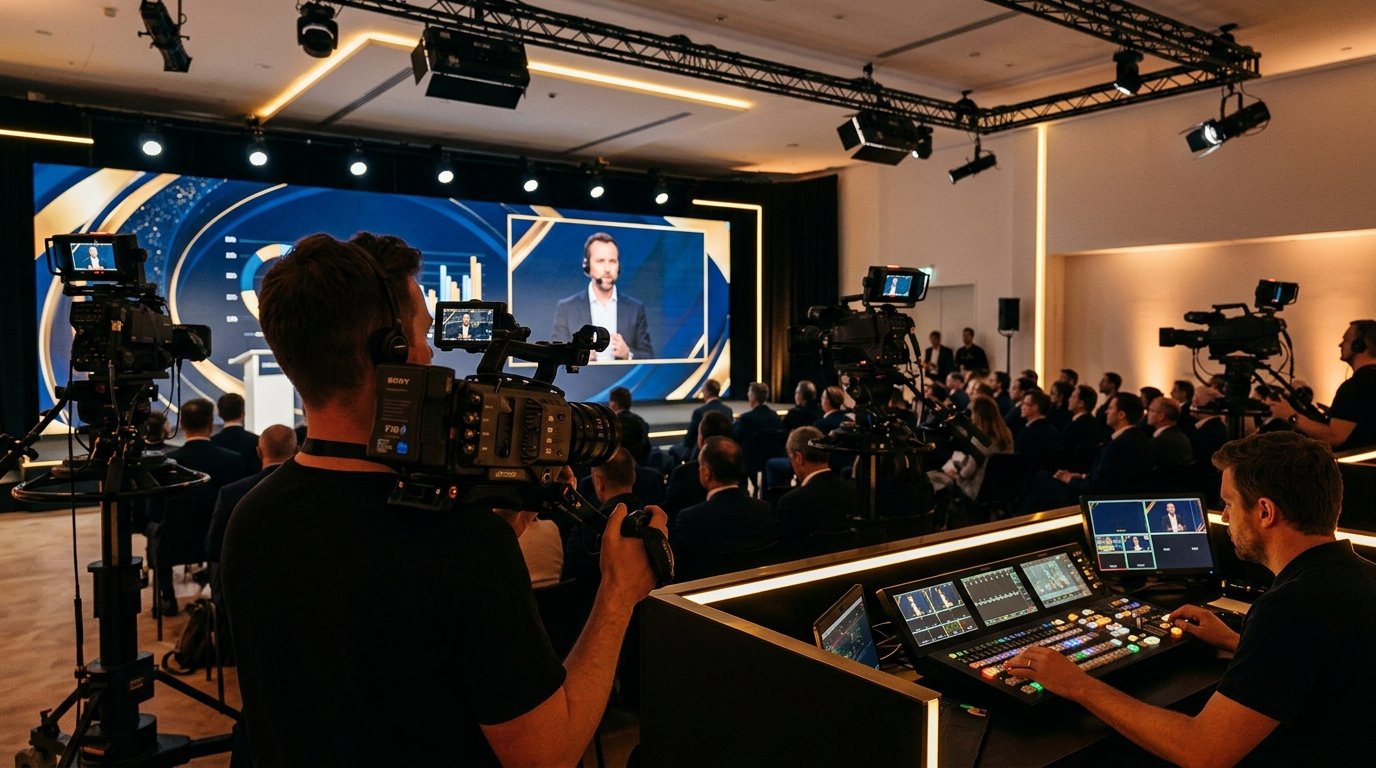
This requires a 'social-first' visual strategy. This does not mean 'lower quality.' On the contrary, it means the production must be so high that it stops the scroll. For B2B events, this translates to multi-camera live stream snippets, high-fidelity audio from on-site podcasts, and cinematic aftermovies that emphasize the 'exclusive' nature of the gathering. When your audience sees a polished, documentary-style recap of a high-level summit, the psychological impact is one of FOMO (Fear Of Missing Out) and perceived authority. They aren't just seeing an event; they are seeing a hub of industry power. This type of content works because it respects the user's time and the platform's constraints. It provides immediate value without requiring a click-through, thereby building trust and authority over time. By the time the call to action for the next event appears, the audience has already been 'sold' on the value through months of high-quality, native content consumption.
Alesia RSVP specializes in this exact intersection of high-end AV production and strategic event management. By treating every conference as a content-generation engine, we ensure that the visual output serves a dual purpose: documenting the event for current stakeholders and providing the 'social proof' necessary to market the next one. This is not a secondary consideration; it is the core of modern event ROI. As we move into 2026, the events that survive and thrive will be those that recognize their primary product isn't the session in the room, but the content that leaves it. This content must be meticulously planned, from the lighting of the stages to the specific angles used for networking shots, to ensure it meets the editorial standards of top-tier professional publications.
To stay ahead of these shifts, event professionals should Join the discussion on event marketing evolution and observe how the most successful global brands are pivoting their visual strategies. The conclusion is clear: in a selective market, your visual assets are your most persuasive sales team. If you aren't investing in premium production, you are essentially making your event invisible to the very decision-makers you need to attract. The future of event marketing is visual, data-driven, and deeply rooted in the authentic representation of professional value.
FAQ
How does high-quality photography impact event registration rates in 2026?
High-quality photography acts as essential social proof that justifies the ROI of attendance for selective 2026 audiences. By showcasing high-level networking and the caliber of speakers in an editorial style, organizers can increase registration intent by visually demonstrating the professional value and 'macro context' of the event. In a market where budgets are tight, these visual cues are often the deciding factor for C-suite decision-makers.
What does 'zero-click' marketing mean for event organizers?
Zero-click marketing refers to the trend where users consume all the information they need directly on social platforms without clicking through to an external website. For event organizers, this means your visual assets—videos, infographics, and photos—must convey the full value proposition of your event within the social feed itself, building brand equity and intent natively rather than relying on landing page conversions.
Why should B2B events focus on influencer-led content over brand-led content?
According to mdg data, influencer-led content sees a 15-20% higher conversion rate. In the B2B space, influencers are industry thought leaders and speakers whose personal authority carries more weight than traditional corporate messaging. Providing these leaders with premium visual assets allows them to advocate for your event authentically, reaching niche audiences that are otherwise skeptical of brand-led advertisements.
How can event production be optimized for 'social-first' content?
Optimizing for social-first content involves treating the event as a production studio. This includes setting up dedicated areas for high-fidelity audio recording (like on-site podcasts), using multi-camera setups for short-form video snippets, and ensuring that lighting is optimized for both the in-person experience and high-end digital capture. The goal is to create a library of assets that are ready for immediate deployment across LinkedIn, X, and other professional networks.
Frequently Asked Questions
How does high-quality photography impact event registration rates in 2026?
High-quality photography acts as essential social proof that justifies the ROI of attendance for selective 2026 audiences. By showcasing high-level networking and the caliber of speakers in an editorial style, organizers can increase registration intent by visually demonstrating the professional value and 'macro context' of the event. In a market where budgets are tight, these visual cues are often the deciding factor for C-suite decision-makers.
What does 'zero-click' marketing mean for event organizers?
Zero-click marketing refers to the trend where users consume all the information they need directly on social platforms without clicking through to an external website. For event organizers, this means your visual assets—videos, infographics, and photos—must convey the full value proposition of your event within the social feed itself, building brand equity and intent natively rather than relying on landing page conversions.
Why should B2B events focus on influencer-led content over brand-led content?
According to mdg data, influencer-led content sees a 15-20% higher conversion rate. In the B2B space, influencers are industry thought leaders and speakers whose personal authority carries more weight than traditional corporate messaging. Providing these leaders with premium visual assets allows them to advocate for your event authentically, reaching niche audiences that are otherwise skeptical of brand-led advertisements.
How can event production be optimized for 'social-first' content?
Optimizing for social-first content involves treating the event as a production studio. This includes setting up dedicated areas for high-fidelity audio recording (like on-site podcasts), using multi-camera setups for short-form video snippets, and ensuring that lighting is optimized for both the in-person experience and high-end digital capture. The goal is to create a library of assets that are ready for immediate deployment across LinkedIn, X, and other professional networks.