
2026 Paris Corporate Event Budgeting: A Strategic Guide
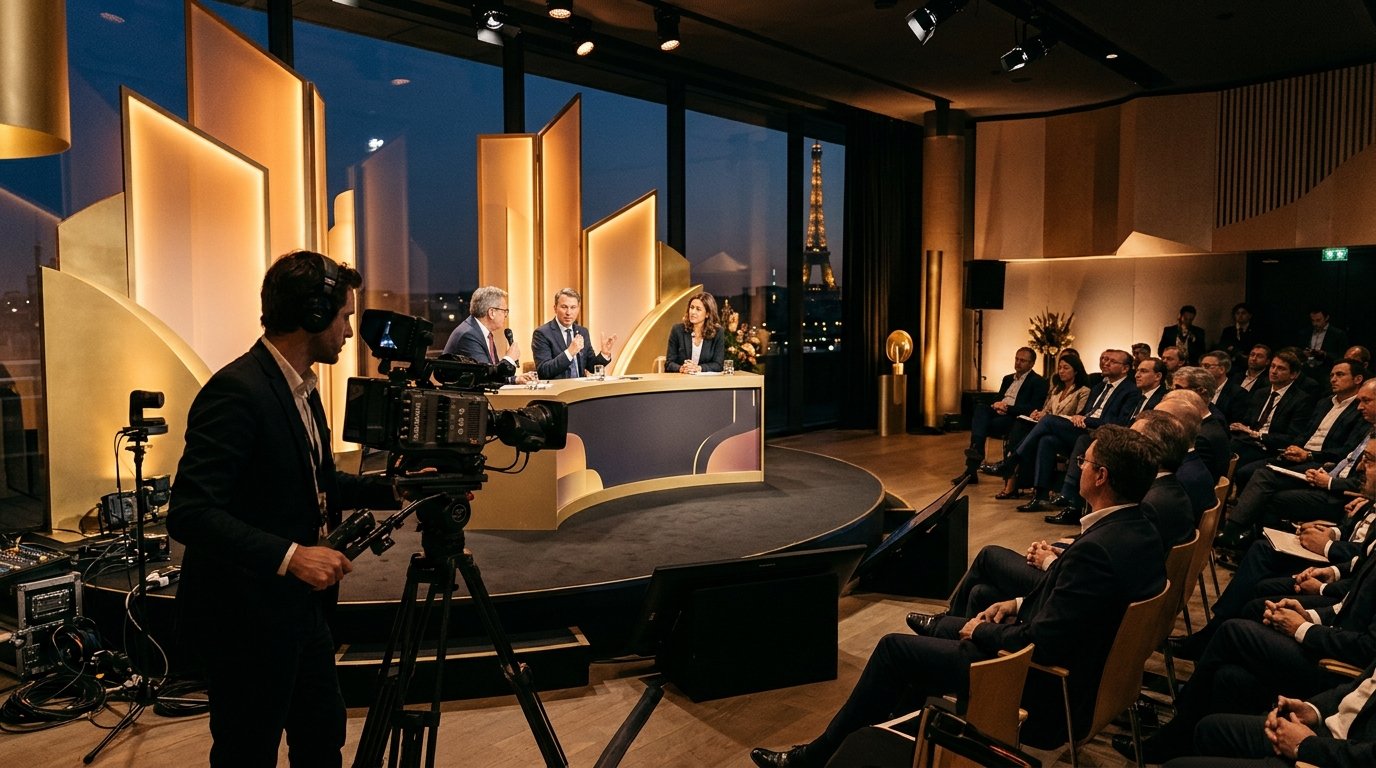
2026 Paris Corporate Event Budgeting: A Strategic Guide
Navigating the 2026 Paris event landscape requires a strategic vision where premium production meets logistical precision for B2B success.
How much should you budget for a corporate event in Paris in 2026?
Navigating the 2026 Paris event landscape requires more than just a spreadsheet; it demands a strategic vision where premium production meets logistical precision. As rates evolve, ensuring your budget captures the prestige of the City of Light is the key to a successful B2B gathering. Budgeting for Paris in 2026 is an exercise in scarcity management. With the city’s post-Olympic infrastructure now fully matured, demand for premium venues has reached an all-time high. For a high-stakes corporate summit of 200–500 attendees, decision-makers should anticipate a 15% to 20% increase in baseline costs compared to 2024. This isn't just inflation; it is the price of access to a market that has redefined its luxury standards.
Venues in the 'Palace' category or high-end industrial spaces in the 1st, 8th, and 16th arrondissements are commanding daily rental fees that reflect their global status. While the Paris Convention and Visitors Bureau - Corporate Meetings provides a comprehensive framework for the city's offerings, the current market trajectory indicates that securing these prime locations now requires a lead time of at least 14 months. If you are planning for 2026, the window for negotiation is closing. A realistic budget must account for the 'Paris Premium'—a combination of high labor costs, strict municipal regulations, and the sheer logistical complexity of the city’s historic center.
To avoid mid-cycle budget shocks, planners must move away from generic estimates. A B2B conference in Paris is no longer just a meeting; it is a brand statement. This means allocating significant capital toward guest experience and technical reliability. When we look at the 2026 projections, food and beverage costs are expected to stabilize, but the cost of specialized technical labor and high-end AV equipment is rising. If your budget doesn't reflect the need for a sophisticated Corporate Events Paris strategy, you are not just underfunding an event—you are risking your brand’s reputation in one of the world's most scrutinized markets.
What are the essential logistics for organizing a B2B event in the Paris market?
Logistics in Paris are notoriously binary: they are either a seamless extension of your brand or a catastrophic bottleneck. The city’s dense urban fabric and strict traffic regulations mean that load-in and load-out schedules are not suggestions—they are legal mandates. For 2026, the complexity of moving equipment and VIPs through the city center requires a dedicated logistical lead who understands the local 'Prefecture' permits and the nuances of Parisian labor laws. The 35-hour work week and specific French union regulations for stagehands and technicians can inflate costs by 30% if not managed with precision.
Furthermore, the shift toward sustainable event practices is no longer optional in France. The 'Loi Anti-Gaspillage' (Anti-Waste Law) impacts everything from catering to signage. Your budget must account for high-quality, reusable materials and sustainable waste management. This is where many international agencies fail; they attempt to import a standard global template into a city that demands local compliance. Partnering with an agency that understands the intersection of Parisian logistical constraints and international corporate standards is the only way to ensure operational continuity.
Security and VIP transport also require a revamped approach for 2026. As Paris continues to host high-profile global summits, the requirement for executive protection and secure transport links has become a standard line item. You cannot rely on ride-sharing apps for C-suite movement during a major conference. Dedicated chauffeured services and secure access protocols must be baked into the initial financial framework. Failure to do so results in executive frustration and a fragmented event flow that undermines the professional atmosphere you are trying to cultivate.
How to coordinate AV and premium vendors for maximum impact?
In the 2026 B2B ecosystem, AV production is the event. The physical venue provides the atmosphere, but the AV provides the reach, the data, and the legacy. Coordinating these vendors requires a move away from the 'vendor' mindset toward a 'production partner' philosophy. The AEO - Association of Event Organisers emphasizes that the integration of technical services into the early planning stages is the single biggest factor in event success. In Paris, where historic venues often present significant acoustic and electrical challenges, your AV team must conduct site surveys months, not days, in advance.
Premium vendors in Paris—ranging from Michelin-starred caterers to high-end set designers—operate on exclusivity. They do not 'bid' for work in the traditional sense; they select projects that align with their quality standards. To secure the best, your budget must be transparent and your lead times generous. The coordination of these moving parts requires a central command structure. When you have a separate team for lighting, another for streaming, and a third for photography, the risk of aesthetic and technical misalignment is high.
Alesia RSVP bridges the gap between logistical planning and high-end brand storytelling, positioning premium photo and video production as a critical ROI-driver rather than a line-item expense in your 2026 Paris budget. By consolidating these services, you eliminate the 'silo effect' that plagues large-scale corporate events. This integrated approach ensures that the lighting designed for the room also works perfectly for the 4K live stream, and that the photographer knows exactly when the keynote speaker will hit their mark for the hero shot.
Why is high-end visual documentation a non-negotiable for Paris event ROI?
The true ROI of a Paris corporate event is not measured by the number of badges scanned at the door; it is measured by the quality of the content that lives on after the doors close. If a keynote address is delivered in a stunning Parisian ballroom but captured on a shaky, poorly lit mobile device, the investment in that venue is effectively neutralized. High-end visual documentation is the bridge between a localized physical event and a global brand narrative. For 2026, your budget must prioritize a sophisticated content capture strategy that includes multi-camera video, editorial-grade photography, and on-site podcasting.
Consider the lifespan of your event. A three-day summit in Paris should generate twelve months of high-value marketing assets. This includes highlight reels, executive interviews, social media snippets, and deep-dive thought leadership videos. When you view visual production through this lens, it ceases to be a 'cost' and becomes a 'capital investment' in your brand’s content library. Our Galerie Photo & Video demonstrates the difference between standard event coverage and high-end editorial storytelling.
Ultimately, the decision to invest in premium production is a decision to respect your audience’s time and your speakers' expertise. In a world where every corporate leader is inundated with digital noise, the clarity and prestige of your event’s visual output are what will cut through. Alesia RSVP provides the technical infrastructure and the creative vision to ensure that your Paris event delivers a lasting impact.
Frequently Asked Questions
Quel est le délai de réservation recommandé pour un lieu premium à Paris en 2026 ?
Pour les lieux de catégorie Palace ou les espaces historiques prisés, un délai de 14 à 18 mois est fortement recommandé pour garantir la disponibilité.
Comment la loi AGEC impacte-t-elle mon budget événementiel ?
Elle impose la fin du plastique à usage unique et une gestion stricte des biodéchets, ce qui peut augmenter les coûts de restauration et de logistique de 5 à 10 %.