
5G at Manchester Co-op Live: A New Era for Event Production
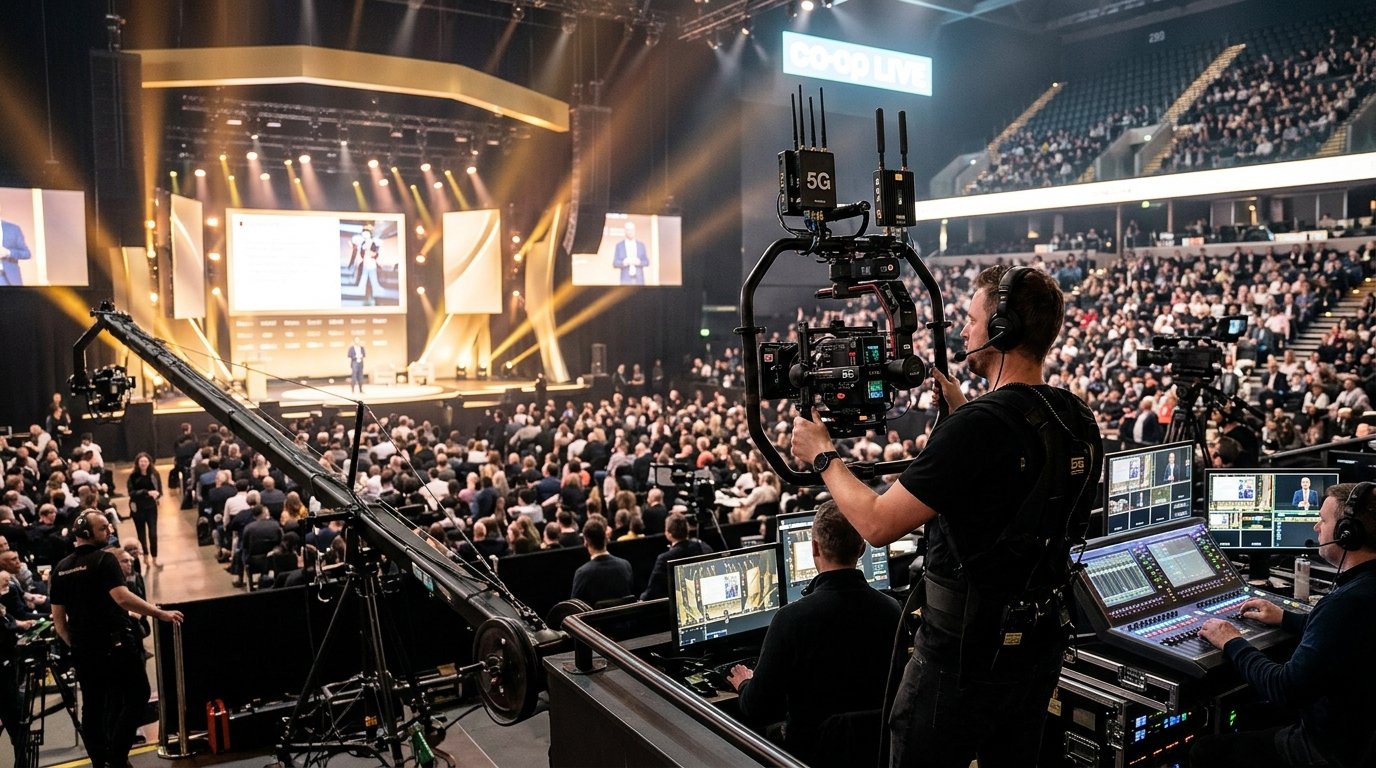
5G at Manchester Co-op Live: A New Era for Event Production
Vodafone Business and Co-op Live have announced a partnership to bring dedicated 5G connectivity to the UK's largest indoor arena, fundamentally altering the landscape of live event media production and digital engagement for the B2B sector.
How does 5G connectivity transform the quality of live event coverage?
In an era where instant high-definition sharing is the gold standard, the arrival of ultra-fast 5G at Manchester’s Co-op Live marks a fundamental shift for premium event coverage. For years, the primary bottleneck of event production was the physical transfer of data. Photographers and videographers had to wait for breaks in the schedule to run SD cards to a media room, or struggle with congested venue Wi-Fi that inevitably collapsed under the weight of 20,000 attendees. Vodafone Business has effectively removed this friction by installing dedicated 5G and 4G infrastructure throughout the venue, utilizing a sophisticated network of small cells and massive MIMO technology. This allows production teams to utilize high-bandwidth FTP transfers in real-time, moving high-fidelity assets from the camera sensor to a remote editor in seconds.
This shift means the 'recap' video is no longer a post-event deliverable; it is a live asset. When we manage visual production at large-scale summits, the ability to push 4K video clips and editorial-grade photography to a client’s social media team while the keynote speaker is still on stage changes the ROI calculation. High-speed connectivity ensures that the digital footprint of the event matches the physical scale of the production. You can view examples of this high-speed delivery in our visual gallery, where immediate turnaround is the standard rather than the exception. This infrastructure isn't just about faster downloads for attendees; it is a professional utility that enables a higher tier of storytelling. The technical specifications of 5G—specifically the increased throughput and the ability to handle thousands of simultaneous connections—ensure that professional media uplinks are prioritized over casual social media browsing by the crowd. This 'network slicing' capability is a game-changer for broadcast teams who require guaranteed bandwidth for live transmissions.
Furthermore, 5G offers the low latency required for sophisticated multi-camera live streaming without the need for miles of cabling. For corporate events, this means more flexible camera placements and the ability to broadcast from any corner of the arena with broadcast-grade reliability. The integration of 5G into the venue's core architecture allows for a more agile production environment, where technical limitations no longer dictate the creative vision of the event. In traditional settings, the 'latency gap' often meant that live streams were delayed by 30 to 60 seconds, killing the possibility of real-time interactivity with remote audiences. With the Co-op Live infrastructure, that gap is reduced to milliseconds, allowing for seamless Q&A sessions between on-site speakers and global virtual participants. This level of responsiveness is what defines a truly modern B2B experience, where the physical and digital boundaries are virtually non-existent. The use of 5G also facilitates the use of remote-operated robotic cameras and drones, which can now be controlled with the precision necessary for high-stakes corporate filming, all without the interference issues common with older wireless protocols.
Why are smart venues like Co-op Live becoming the new standard for B2B experiences?
Manchester is currently challenging the dominance of traditional hubs like London by investing in purpose-built smart infrastructure. Co-op Live represents a move away from the 'multi-purpose hall' toward a tech-native environment. For B2B decision-makers, choosing a venue with integrated 5G is a risk-mitigation strategy. In standard venues, organizers often face hidden costs—ordering dedicated fiber lines, hiring external network engineers, or dealing with the PR fallout of a failed live stream. By partnering with Vodafone, Co-op Live has baked these requirements into the building itself, offering a plug-and-play environment for high-end production. This eliminates the 'connectivity anxiety' that has long plagued event directors who fear that their most important announcements will be lost to a network outage.
This level of connectivity is becoming a non-negotiable requirement for modern industry discussion on 5G integration in venues. Corporate events are increasingly hybrid, and the venue must act as a broadcast studio. When a venue provides a dedicated 5G slice for production, it guarantees that the corporate message reaches a global audience without interruption. This reliability is what separates a premium experience from a generic one. The venue's design also accounts for the 'dead zones' typically found in large concrete and steel structures. By integrating the 5G nodes directly into the architectural fabric, Co-op Live ensures consistent signal strength from the loading docks to the VIP lounges. This is critical for B2B events where networking often happens in the periphery, not just in the main auditorium.
As a premium photo and video agency, Alesia RSVP harnesses these technological leaps to deliver real-time, high-fidelity visual assets, ensuring your event's highlights reach your audience before the applause even fades. We understand that for a VP of Marketing, the event doesn't just happen in the room—it happens on the screens of thousands of stakeholders worldwide. A venue that supports this reality is a venue that understands the modern B2B market. The Co-op Live model is likely to be replicated across Europe as organizers demand more than just four walls and a stage. They demand a digital ecosystem that can support AI-driven attendee analytics, augmented reality wayfinding, and instant content distribution. The data gathered through these smart systems also provides organizers with unprecedented insights into attendee behavior, allowing for more targeted post-event follow-ups and a better understanding of which sessions resonated most with the audience. This data-driven approach to event management is only possible when the underlying infrastructure is robust enough to handle the massive data loads generated by thousands of connected devices.
What role does high-speed infrastructure play in professional event storytelling?
Storytelling in the B2B space has evolved into a race for relevance. The window of impact for a corporate announcement is narrower than ever. High-speed infrastructure allows for a more sophisticated narrative approach, such as on-site podcasting and instant interview clips. According to trends in event technology and connectivity, the most successful events are those that treat content as a live product. With 5G, we can record a high-level executive interview and have it edited and published to LinkedIn within thirty minutes, maintaining the momentum of the live announcement. This speed is not merely a convenience; it is a strategic advantage in a saturated digital landscape where being first to market with a narrative can define the success of a product launch or a brand repositioning.
This speed does not come at the expense of quality. On the contrary, the bandwidth provided by Vodafone Business allows for the transmission of uncompressed files, ensuring that the brand's visual identity remains sharp and professional. The infrastructure at Co-op Live enables a 'content-first' planning approach. Instead of planning the event and then figuring out the coverage, the connectivity allows the coverage to be an integrated part of the attendee experience. For example, high-resolution screens throughout the venue can display real-time social feeds and professionally shot highlights as they happen, creating a feedback loop that encourages further engagement. This creates a sense of 'FOMO' (fear of missing out) for those not in attendance and reinforces the value of the event for those who are. The ability to move large volumes of data also facilitates the use of cloud-based editing workflows. A production team in Manchester can capture footage that is instantly accessible to a specialized motion graphics editor in another city, allowing for high-end post-production effects to be applied and returned for broadcast within the same hour.
Alesia RSVP provides the bridge between this raw technical power and the final editorial product. We don't just use the 5G to send files; we use it to manage a global workflow that brings the best editors and creative directors into the room virtually. This connectivity is the foundation upon which premium brand stories are built. As Manchester continues to grow as a corporate destination, the focus on digital infrastructure will be the primary differentiator for high-stakes events. The future of B2B storytelling is not just about the message, but about the medium and the speed at which that medium can reach its target. By choosing venues that prioritize 5G and high-speed backhaul, brands are ensuring that their stories are told with the clarity, speed, and professionalism that the modern market demands. This infrastructure also paves the way for future innovations, such as holographic presentations and real-time language translation for international delegates, ensuring that the venue remains at the cutting edge of the industry for years to come.
FAQ
How does 5G improve the delivery of event photography and video?
5G provides the high upload bandwidth and low latency necessary for real-time file synchronization. This allows photographers to transmit high-resolution raw images to off-site editors instantly, enabling social media teams to post professional-grade content while the event is still in progress. Unlike previous generations of mobile networks, 5G can maintain these speeds even in high-density environments where thousands of other devices are active.
What are the advantages of choosing a tech-integrated venue for corporate events?
Tech-integrated venues like Co-op Live reduce the need for expensive temporary infrastructure and minimize the risk of connectivity failure. They offer built-in support for live streaming, real-time data analytics, and high-capacity attendee Wi-Fi, which enhances the overall professional quality of the event. Furthermore, integrated 5G allows for more creative production choices, such as wireless 4K cameras and instant content distribution, without the logistical hurdles of traditional venues.
Does 5G connectivity affect the security of event data?
Yes, 5G offers enhanced security features compared to public Wi-Fi networks. Dedicated 5G infrastructure, such as that provided by Vodafone at Co-op Live, allows for private network slicing. This means professional production data can be isolated from general attendee traffic, providing a more secure and stable environment for sensitive corporate communications and high-value intellectual property.
How does 5G support hybrid event models?
5G is the backbone of successful hybrid events by providing the low-latency connection required for real-time interaction between on-site and remote participants. It enables high-quality, multi-camera live streams to be broadcast without interruption, ensuring that the remote audience receives the same high-fidelity experience as those physically present in the arena.
Frequently Asked Questions
How does 5G improve the delivery of event photography and video?
5G provides the high upload bandwidth and low latency necessary for real-time file synchronization. This allows photographers to transmit high-resolution raw images to off-site editors instantly, enabling social media teams to post professional-grade content while the event is still in progress. Unlike previous generations of mobile networks, 5G can maintain these speeds even in high-density environments where thousands of other devices are active.
What are the advantages of choosing a tech-integrated venue for corporate events?
Tech-integrated venues like Co-op Live reduce the need for expensive temporary infrastructure and minimize the risk of connectivity failure. They offer built-in support for live streaming, real-time data analytics, and high-capacity attendee Wi-Fi, which enhances the overall professional quality of the event. Furthermore, integrated 5G allows for more creative production choices, such as wireless 4K cameras and instant content distribution, without the logistical hurdles of traditional venues.
Does 5G connectivity affect the security of event data?
Yes, 5G offers enhanced security features compared to public Wi-Fi networks. Dedicated 5G infrastructure, such as that provided by Vodafone at Co-op Live, allows for private network slicing. This means professional production data can be isolated from general attendee traffic, providing a more secure and stable environment for sensitive corporate communications and high-value intellectual property.
How does 5G support hybrid event models?
5G is the backbone of successful hybrid events by providing the low-latency connection required for real-time interaction between on-site and remote participants. It enables high-quality, multi-camera live streams to be broadcast without interruption, ensuring that the remote audience receives the same high-fidelity experience as those physically present in the arena.