
Aftermovie Production for Summits in Seoul 2026
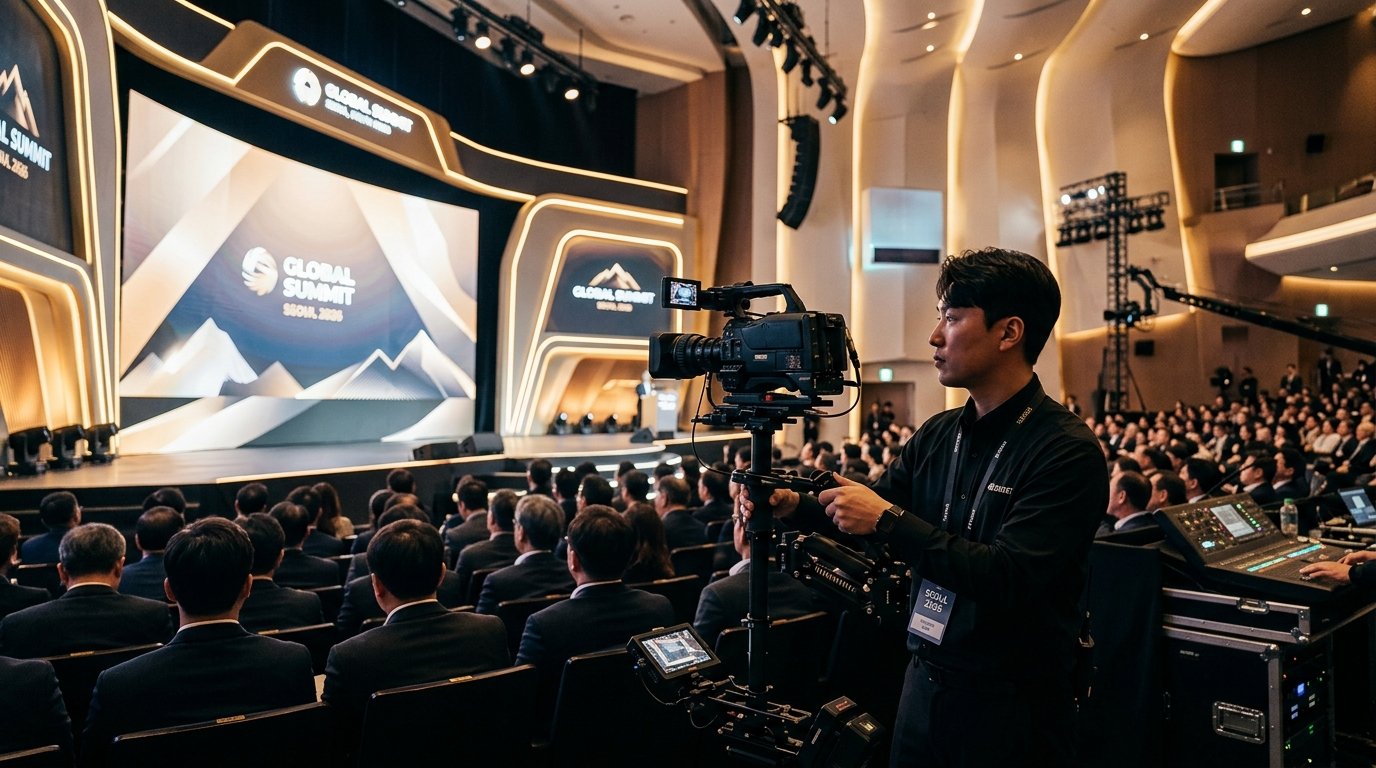
Aftermovie Production for Summits in Seoul 2026
As Seoul cements its status as a premier global hub for 2026 summits, your visual narrative requires a strategic AV partner to capture high-octane energy. In a city where technological innovation meets deep-rooted corporate tradition, the production of an aftermovie is no longer a peripheral task—it is the primary vehicle for your event's legacy and future commercial viability. Navigating the complexities of Seoul's premier venues, from the futuristic curves of the DDP to the high-capacity halls of COEX, demands a production team that understands both the local logistical landscape and the international standards of C-suite engagement.
How do you select the right aftermovie production partner for a Seoul summit?
Selecting a production partner in a market as sophisticated as Seoul requires moving beyond basic technical competency. By 2026, the standard for corporate video has shifted from simple chronological highlights to high-stakes brand storytelling. A partner must demonstrate an understanding of the B2B narrative—recognizing that a summit aftermovie is not a souvenir, but a strategic asset designed to secure future sponsorships and justify marketing spend. In Seoul, the logistical environment is defined by hyper-modern venues like the Dongdaemun Design Plaza (DDP) or the COEX Convention Center, where the scale can be overwhelming. You need a team that understands how to use this architectural gravity to enhance your brand's authority. This involves more than just pointing a camera; it requires a deep understanding of light, spatial dynamics, and the specific 'K-tech' aesthetic that global audiences now associate with Seoul.
The right partner focuses on the 'why' before the 'what.' They should ask about your key messaging, your primary stakeholders, and your post-event content distribution plan. In the context of a Seoul summit, where international delegates expect a seamless blend of technology and professional etiquette, your production team must be invisible yet omnipresent. They must possess the editorial instinct to identify the exact moment a networking connection turns into a strategic partnership. This isn't about having the latest sensors or drones; it is about having a director-level eye on the ground who understands corporate dynamics. We often see event leads making the mistake of hiring local generalist videographers who lack the nuance required for C-suite environments. The result is usually a shaky, poorly paced video that fails to reflect the prestige of the event.
Furthermore, the selection process must account for the unique cultural and linguistic landscape of South Korea. A production team that can bridge the gap between international event organizers and local venue staff is invaluable. They should be familiar with the 'Pali-pali' (hurry-hurry) culture of Seoul, ensuring that high-quality deliverables are produced under tight deadlines without sacrificing the cinematic quality expected of a 2026 summit. To avoid common pitfalls, prioritize agencies with a documented history in the event gallery of high-level B2B summits. This proves they can handle the pressure of live environments, manage complex lighting rigs, and interact with high-profile attendees without causing disruption. Your partner should act as a consultant, advising on how to leverage the venue’s unique features—such as the massive LED screens common in Gangnam’s luxury hotels—to maximize the visual impact of your aftermovie.
What are the 5 essential AV pillars for a successful 2026 conference?
A successful 2026 conference in Seoul rests on five technical pillars that must work in total synchronicity to ensure the event's message resonates globally. First, Event Photography must move away from static, wide-room shots toward a more editorial, magazine-style approach. This means capturing the intensity of a keynote speaker’s delivery and the genuine engagement in a breakout session. High-end photography in 2026 involves real-time delivery systems where AI-sorted galleries are available to attendees and PR teams within minutes of a session ending, allowing for immediate social proof.
Second, Video Production and Aftermovies need to be tiered. A single three-minute video is no longer enough to satisfy the diverse needs of a modern marketing department. You need a comprehensive content package: 15-second social cuts delivered within hours for Instagram and LinkedIn, 60-second highlight reels for the closing ceremony to drive emotional resonance, and a master documentary-style aftermovie for long-term PR and investor relations. This tiered approach ensures that every segment of your audience receives the content in their preferred format.
Third, Conference Live Streaming is now a non-negotiable standard for global reach. If your summit isn't being broadcast with multi-camera professional switching and dedicated fiber-optic redundancy, you are ignoring 90% of your potential global audience. In Seoul, the 6G-ready infrastructure allows for incredibly low-latency streams that can include interactive elements like real-time Q&A from remote hubs in London or New York. This pillar is about accessibility and ensuring that the 'Seoul experience' is not limited by geography.
The fourth pillar is On-site Podcast Recording. This has become the ultimate content multiplier for B2B events. By setting up a professional, glass-walled studio in the heart of the networking lounge, you provide a platform for sponsors and speakers to go deeper into their topics. This creates a wealth of audio and video content that can be drip-fed to your audience for months after the summit has concluded. It transforms the event from a three-day gathering into a long-term thought leadership campaign. The visibility of the podcast booth also adds a layer of 'media hub' prestige to the venue floor.
Finally, the fifth pillar is Cinematic Keynote Recording and Stage Integration. Static cameras at the back of the room are a relic of the past. For a 2026 Seoul summit, you need a multi-camera setup with crane or rail movements to capture the scale of the stage and the energy of the crowd. This pillar also involves the seamless integration of on-stage visuals—such as 3D mapping or holographic displays—into the video record. Looking at our strategic approach for corporate events in Singapore, we have found that when these five pillars are integrated under a single agency, the visual consistency and operational efficiency improve dramatically. This unified front eliminates the communication gaps that occur when juggling multiple vendors, ensuring that the photography looks like the video, and the live stream sounds like the podcast, creating a cohesive brand identity across all digital touchpoints.
How can on-site podcasts and live streaming increase your event's global reach?
The ROI of a corporate summit in 2026 is measured by its digital tail—the lifespan of its content long after the physical event has ended. Live streaming is the engine that drives immediate global engagement, allowing C-suite executives who couldn't fly to Seoul to participate in real-time. This isn't just about 'watching' a stream; it's about creating a virtual experience that mirrors the prestige of being on-site. High-fidelity audio, 4K video, and interactive elements ensure that the remote audience remains as engaged as the physical one. This level of production quality signals to the world that your summit is a primary industry event, not a localized gathering. When you stream a keynote from a Seoul stage to a boardroom in New York or London, the production value of that stream becomes your brand's first impression. In the competitive landscape of 2026, a low-quality stream is a reputational risk.
On-site podcasts take this engagement a step further by providing localized, intimate content that is easy to consume post-event. While a live stream captures the 'now,' a podcast captures the 'depth.' In the high-speed business culture of Seoul, where innovation moves at a breakneck pace, providing digestible 20-minute interviews with industry leaders is an invaluable service to your community. This content is easily repurposed for LinkedIn, YouTube, and internal corporate comms. It allows you to extract maximum value from the high-profile speakers you have flown in, capturing their insights in a format that remains relevant for months.
By treating your Seoul summit as a temporary broadcast studio, you transform a three-day event into a year-round content platform. This is where the true value lies for marketing directors: the ability to generate hundreds of high-quality assets—from audiograms to video shorts—from a single location. This strategy reinforces the event's status as a center of gravity for the industry. The integration of professional AV services isn't a line item expense; it's a content investment that pays dividends through increased brand authority and lead generation. As we look toward the 2026 summit season, the organizers who prioritize this 'media-first' mindset will be the ones who dominate the industry conversation. The goal is to make the digital experience so compelling that those who didn't attend in person feel a sense of 'FOMO' (fear of missing out), ensuring that your 2027 event is sold out before the early-bird tickets even launch.
FAQ
Why is Seoul a top destination for B2B conferences in 2026?
Seoul offers an unparalleled mix of high-tech infrastructure, world-class convention venues like COEX and DDP, and a strategic position as a gateway to the Asian market. The city's commitment to 6G technology and smart city logistics makes it the ideal backdrop for 2026 summits focusing on finance, technology, and manufacturing.
What makes Alesia RSVP's approach to event photography unique?
We prioritize an editorial, magazine-quality style over standard corporate snapshots. Our multi-photographer teams focus on the 'decisive moments' of a conference—the high-stakes networking and the dynamic energy of keynotes—delivering curated, same-day galleries that are ready for immediate PR and social media distribution.
How does live streaming impact the ROI of a corporate summit?
Live streaming dramatically expands your audience reach beyond the physical capacity of the venue, allowing for global participation and sponsorship exposure. By providing a high-production broadcast, you increase the event's perceived value, attract higher-tier speakers, and create a library of on-demand content that drives leads long after the event ends.
Frequently Asked Questions
Why is Seoul a top destination for B2B conferences in 2026?
Seoul offers an unparalleled mix of high-tech infrastructure, world-class convention venues like COEX and DDP, and a strategic position as a gateway to the Asian market. The city's commitment to 6G technology and smart city logistics makes it the ideal backdrop for 2026 summits focusing on finance, technology, and manufacturing.
What makes Alesia RSVP's approach to event photography unique?
We prioritize an editorial, magazine-quality style over standard corporate snapshots. Our multi-photographer teams focus on the 'decisive moments' of a conference—the high-stakes networking and the dynamic energy of keynotes—delivering curated, same-day galleries that are ready for immediate PR and social media distribution.
How does live streaming impact the ROI of a corporate summit?
Live streaming dramatically expands your audience reach beyond the physical capacity of the venue, allowing for global participation and sponsorship exposure. By providing a high-production broadcast, you increase the event's perceived value, attract higher-tier speakers, and create a library of on-demand content that drives leads long after the event ends.