
Agency Leadership 2025: AI, ROI, and Event Production
Agency Leadership 2025: AI, ROI, and Event Production
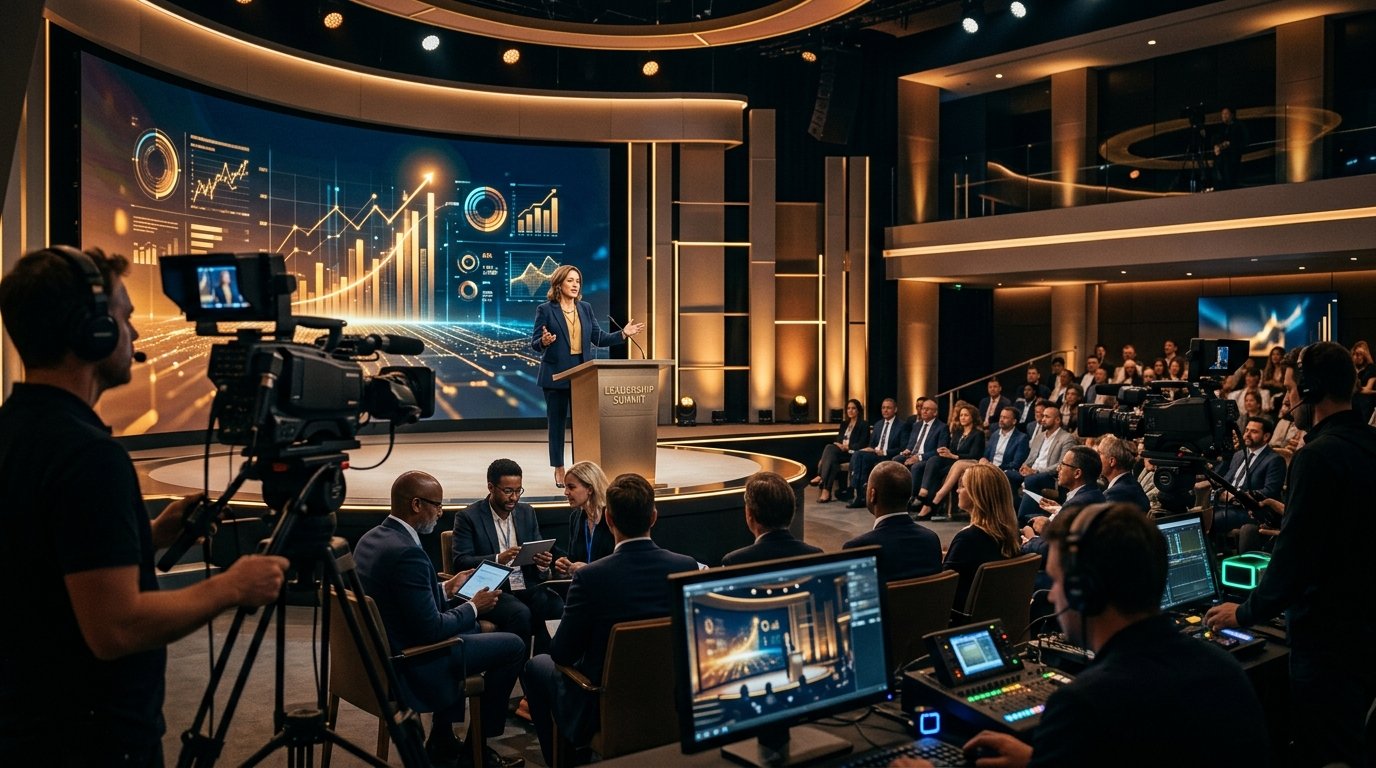
As agency leaders pivot toward AI integration and high-value problem solving, the demand for high-impact visual assets that prove ROI has never been higher. This shift requires a fundamental rethinking of how events are captured, processed, and distributed in an increasingly automated landscape.
How is AI transforming agency operations and event production in 2025?
The current economic climate has forced a reckoning among agency leaders, driving a transition from traditional service models to tech-enabled strategic partnerships. At a recent industry roundtable, executives including Melissa Berger, Chief Solutions Officer at Digitas, and Frances Webster, CEO of Walrus, highlighted a significant shift: AI is no longer a futuristic concept but a primary driver of operational efficiency and a tool to combat the 'squeeze on fees.' Berger pointed out that AI is actively forcing agencies to simplify and speed up their workflows to maintain margins. For the corporate event sector, this translates to a demand for leaner, faster, and more data-driven production cycles. The days of waiting weeks for a conference aftermovie are over; the market now demands immediate, high-fidelity output that can be fed directly into AI-driven marketing machines for real-time engagement.
This pressure on fees means that agency heads must find partners who don't just 'take photos' but provide a strategic content layer that justifies the investment. As marketing budgets become increasingly unpredictable, the ability to demonstrate immediate visual ROI is the difference between a renewed contract and a budget cut. You can find deeper Industry discussions on agency leadership changes that reflect this urgent need for operational evolution. The focus has shifted from mere presence at an event to the granular extraction of value from every minute spent on-site. Agencies are looking for ways to automate the mundane—like basic photo sorting, tagging, and transcription—to free up their talent for the high-level problem-solving that clients actually pay for. In this environment, the production partner must act as an extension of the agency’s strategic arm, ensuring that every frame captured serves a specific purpose in the broader brand narrative. The integration of AI in post-production allows for a level of personalization and speed that was previously impossible, enabling agencies to deliver tailored content to different audience segments almost instantly after a session concludes. This operational agility is becoming the new baseline for success in the 2025 event landscape.
Why is upskilling teams for tech-driven creativity the top priority for agency leaders?
Andrew O’Dell, co-founder of Pereira O’Dell and Silverside AI, recently emphasized that upskilling is the most significant priority for the next twelve months. This isn't about teaching employees how to use a chatbot; it is about a 'transformative revolution' in how creative work is produced, managed, and delivered. In the context of major B2B summits like SXSW 2026, the definition of a 'creative team' is expanding. It now includes producers who understand how to capture content that is optimized for AI-driven distribution platforms and who can navigate the complexities of real-time asset management. Agency leaders are realizing that their people need to move away from manual coordination and toward strategic asset management. If an agency team is bogged down in the logistics of managing five different photographers and three videographers at a global conference, they are not spending time on the creative strategy that drives brand growth.
The goal is to move the human element 'upstream' in the process. By partnering with high-end production houses that handle the technical complexities of multi-camera streaming, editorial-grade photography, and rapid-response editing, agency leaders can focus their internal talent on the 'why' rather than the 'how.' This shift is particularly visible in high-stakes environments where the cost of failure is high and the window for impact is narrow. Teams that fail to upskill in these technical areas will find themselves marginalized as clients look for agencies that can move at the speed of current tech. Upskilling also involves a cultural shift; it requires creatives to embrace data as a creative input rather than a constraint. When a team understands how a specific visual asset will perform within an AI-optimized social algorithm, they can direct the production crew more effectively. This synergy between human intuition and machine efficiency is where the most compelling B2B storytelling happens in 2025. Agency leaders are now investing heavily in training programs that bridge the gap between traditional craft and emerging technology, ensuring their teams can lead clients through the complexities of the modern digital ecosystem without losing the soul of the brand.
How can premium event documentation solve the 'efficiency vs. quality' dilemma for B2B brands?
There is a persistent myth in the event industry that you must choose between speed, quality, and cost. However, the modern agency chief knows this is a false choice. The real challenge is the 'efficiency vs. quality' dilemma. When budgets are tight, there is a temptation to settle for 'good enough' documentation. But as Trends in B2B event planning and agency priorities indicate, 'good enough' no longer cuts through the noise of a saturated digital market. Premium event documentation—high-end aftermovies, professional podcasting, and magazine-quality photography—serves as a force multiplier for an agency's work. It provides the raw material that fuels a brand's social presence for months, transforming a fleeting moment into a lasting asset.
When an agency delivers a 30-second social cut within hours of a keynote, they aren't just providing a video; they are providing a strategic advantage. This level of production quality acts as a safeguard against the 'unpredictable marketing budgets' mentioned by industry veterans. If an event is documented with precision, its shelf life is extended indefinitely, turning a one-day cost into a multi-month asset. This is where the integration of AV production and event management becomes vital. By streamlining the capture process and utilizing high-end equipment that requires less post-processing correction, agencies can ensure that every dollar spent on-site yields a maximum return in the form of high-utility content. Furthermore, premium documentation allows for better repurposing. A single high-quality keynote recording can be sliced into dozens of social clips, transcribed into white papers, and used as the basis for an entire webinar series. This efficiency is not about cutting corners; it is about maximizing the output of every creative input. In 2025, the agencies that thrive are those that view event documentation not as an afterthought, but as the primary engine of their content strategy. They understand that the quality of the visual record is the only thing that remains once the stage is dismantled and the attendees have gone home.
What role does high-end visual storytelling play in the new agency-client relationship?
In the new agency-client relationship, the agency is no longer just a service provider; it is a strategic architect. High-end visual storytelling is the medium through which this architecture is realized and communicated. Clients are looking for more than just a record of what happened; they are looking for 'unscripted conversations and after-hours connections,' as seen at major industry gatherings like ADWEEK House. Capturing these moments requires a sophisticated approach that goes beyond standard event coverage. It requires a production partner that understands the nuance of B2B branding, executive storytelling, and the subtle art of capturing authentic human interaction in a corporate setting.
Alesia RSVP aligns perfectly with these 'upskilling' and 'efficiency' goals by providing turnkey, premium visual content solutions that cater to the most demanding agency standards. We handle the complex problem-solving of event documentation—from the technical rigors of live streaming to the editorial demands of corporate photography—allowing agency leaders to focus on the overarching strategy and client relationship management. Our work, showcased in our Gallery Photo & Video, demonstrates how we deliver AI-ready, high-end assets that justify marketing spend and elevate the brand's perceived value. Whether it is a fintech summit in Singapore, a tech conference in San Francisco, or a corporate retreat in Paris, the requirement remains the same: the production must be as premium as the brand it represents.
When an agency can outsource the high-stakes production of an event to a trusted partner, they eliminate a massive operational headache and ensure that the final product exceeds client expectations. This partnership model allows agencies to scale their capabilities without increasing their overhead, providing them with access to top-tier talent and equipment on a project-by-project basis. The future of the agency model depends on these high-trust, high-output partnerships where the production team is as invested in the ROI as the agency chief. By focusing on high-end visual storytelling, agencies can move away from the commoditized world of 'content creation' and into the high-value world of 'brand world-building,' where every event is an opportunity to deepen the client's market position and drive measurable business results.
FAQ
How does AI impact the cost and speed of event photography and videography?
AI significantly accelerates post-production workflows by automating tasks like facial recognition for photo sorting, automated color grading, and instant transcription for video. This allows premium agencies to deliver highlight reels and curated galleries within hours rather than days. While this increases speed and can reduce labor costs for repetitive tasks, the high-end 'creative eye' and strategic direction remain a human-driven premium service that justifies its cost through superior brand alignment and storytelling nuance.
What skills should agency teams prioritize to better manage event content in 2025?
Agency teams should prioritize digital asset management (DAM), prompt engineering for visual consistency, and a deep understanding of multi-channel distribution strategies. Knowing how to direct a production crew to capture 'AI-ready' assets—raw material that is high-quality and flexible enough to be easily repurposed by automated tools—is essential. Additionally, teams should focus on data literacy to measure the performance of visual assets and adjust their creative strategy in real-time.
How can agencies justify the cost of premium production to clients with tight budgets?
The justification lies in the 'shelf life' and 'utility' of the assets. Premium production isn't just for a single event; it creates a library of high-quality content that can fuel a brand's marketing for 6-12 months. By demonstrating how one event's documentation can be turned into social campaigns, sales enablement tools, and website headers, agencies can show a much lower 'cost-per-use' than cheaper, lower-quality alternatives that are discarded immediately after the event.
What is 'AI-ready' content in the context of B2B events?
AI-ready content refers to high-fidelity visual and audio assets that are captured with the intention of being processed by AI tools. This includes clean audio tracks for perfect transcription, high-resolution video that can be cropped into various formats (9:16, 16:9) without losing quality, and metadata-rich photography. It also involves capturing a high volume of 'B-roll' and candid moments that AI can use to generate diverse content variations for different audience segments.
Why is the partnership between agencies and production houses changing?
The relationship is moving from a vendor-client model to a strategic partnership. Agencies need production houses that understand their strategic goals and can act autonomously on-site. This allows the agency to focus on high-level client management while the production partner ensures that the technical and creative execution of content capture is flawless, scalable, and aligned with the latest technological capabilities.
Frequently Asked Questions
How does AI impact the cost and speed of event photography and videography?
AI significantly accelerates post-production workflows by automating tasks like facial recognition for photo sorting, automated color grading, and instant transcription for video. This allows premium agencies to deliver highlight reels and curated galleries within hours rather than days. While this increases speed and can reduce labor costs for repetitive tasks, the high-end 'creative eye' and strategic direction remain a human-driven premium service that justifies its cost through superior brand alignment and storytelling nuance.
What skills should agency teams prioritize to better manage event content in 2025?
Agency teams should prioritize digital asset management (DAM), prompt engineering for visual consistency, and a deep understanding of multi-channel distribution strategies. Knowing how to direct a production crew to capture 'AI-ready' assets—raw material that is high-quality and flexible enough to be easily repurposed by automated tools—is essential. Additionally, teams should focus on data literacy to measure the performance of visual assets and adjust their creative strategy in real-time.
How can agencies justify the cost of premium production to clients with tight budgets?
The justification lies in the 'shelf life' and 'utility' of the assets. Premium production isn't just for a single event; it creates a library of high-quality content that can fuel a brand's marketing for 6-12 months. By demonstrating how one event's documentation can be turned into social campaigns, sales enablement tools, and website headers, agencies can show a much lower 'cost-per-use' than cheaper, lower-quality alternatives that are discarded immediately after the event.
What is 'AI-ready' content in the context of B2B events?
AI-ready content refers to high-fidelity visual and audio assets that are captured with the intention of being processed by AI tools. This includes clean audio tracks for perfect transcription, high-resolution video that can be cropped into various formats (9:16, 16:9) without losing quality, and metadata-rich photography. It also involves capturing a high volume of 'B-roll' and candid moments that AI can use to generate diverse content variations for different audience segments.
Why is the partnership between agencies and production houses changing?
The relationship is moving from a vendor-client model to a strategic partnership. Agencies need production houses that understand their strategic goals and can act autonomously on-site. This allows the agency to focus on high-level client management while the production partner ensures that the technical and creative execution of content capture is flawless, scalable, and aligned with the latest technological capabilities.