
AI Market Shifts: Human Connection Dominates Tech Summits
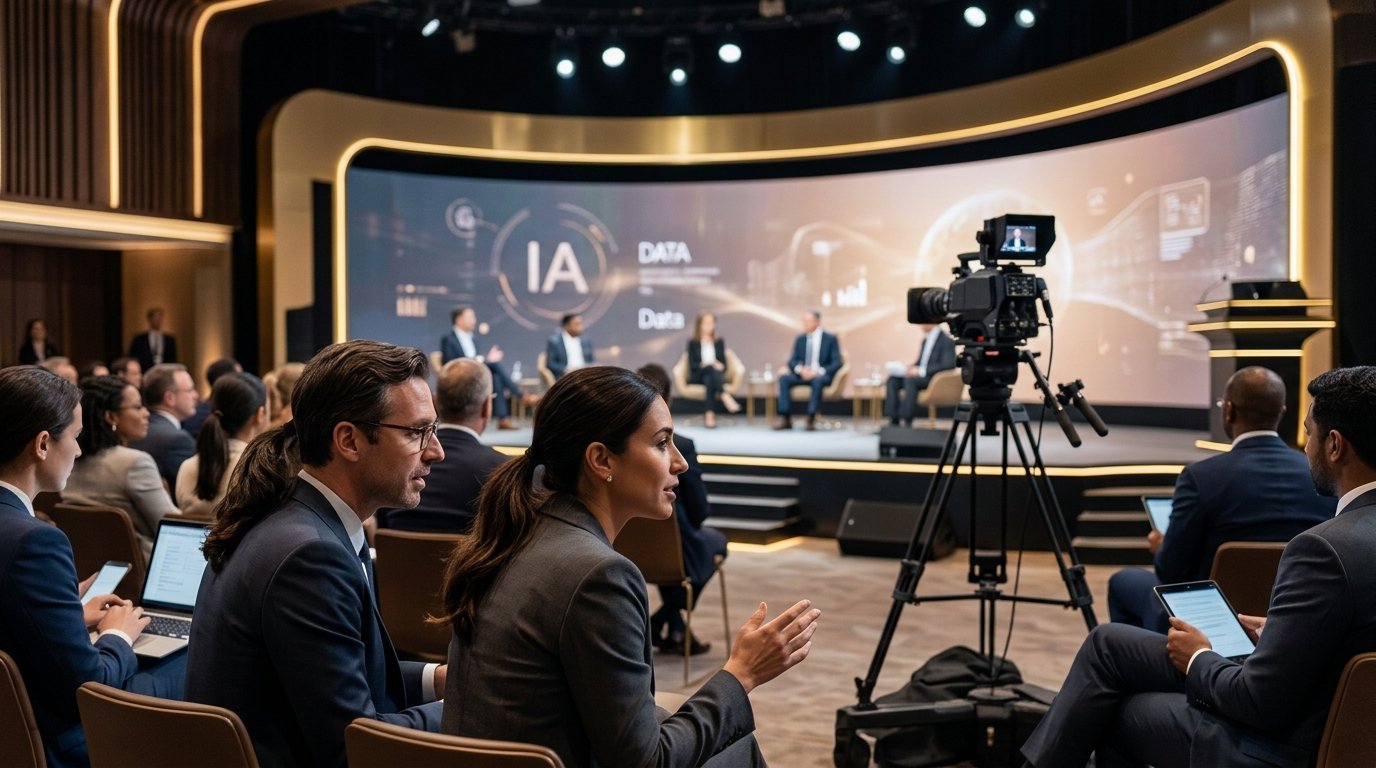
AI Market Shifts: Human Connection Dominates Tech Summits
As OpenAI and Anthropic pivot their strategies from raw scaling to sustainable implementation, corporate events have become the primary stage for demonstrating long-term brand authority. In a market saturated with digital noise, the physical summit is the new frontier for innovation and strategic partnership.
How does the AI development slowdown impact the tech event landscape in 2025?
The recent financial reports indicating that OpenAI is trailing Anthropic in certain efficiency metrics, combined with Sam Altman’s decision to pause frontier AI training, signals a fundamental shift in the technology sector. For years, the narrative was driven by raw computational speed and the promise of the next model. Now, as the industry hits a technical and financial plateau, the focus is pivoting from what the machines can do to how humans are implementing these tools. This transition has immediate consequences for the B2B event industry. When the 'next big thing' in software is delayed, the 'big thing' becomes the community, the partnership, and the strategic roadmaps shared at flagship summits. This isn't just a pause; it's a maturation of the ecosystem where the value of a company is no longer measured solely by its API latency, but by its ability to gather the right people in the right room.
In 2025, we are seeing a move away from hyper-technical spectacles toward high-level executive gatherings. Decision-makers are no longer satisfied with abstract demos; they want to see deployment strategies and peer-to-peer validation. This makes events like Consensus 2026 more than just industry meetups—they are the new testing grounds for corporate survival. For event planners, this means the pressure is on to facilitate deeper networking and more sophisticated content delivery. The slowdown in frontier model training gives the industry a much-needed moment to breathe and focus on the human element of innovation. This shift is being widely discussed as companies look for ways to maintain momentum during technical pauses, as seen in recent LinkedIn discussion on AI industry shifts. The narrative of 'exponential growth' is being replaced by 'sustainable integration,' and the physical event is where this integration is negotiated and showcased.
Marketing directors must realize that when the software cycle slows down, the event cycle must pick up the slack. Brand authority is no longer built solely in the laboratory; it is built on the keynote stage and in the VIP lounge. If your technical edge is narrowing, your narrative edge must widen. This is where professional production becomes a strategic asset rather than a line-item expense. The documentation of these moments serves as proof of leadership when the product roadmap is in flux. We are entering an era where the 'Proof of Human'—the physical presence of leaders and the tangible energy of a live audience—is the most valuable asset a tech brand possesses. When the digital world becomes commoditized through AI-generated content, the authentic, unscripted moments of a high-stakes summit become the only remaining source of true brand differentiation. This shift requires a total rethink of how we capture and distribute the intellectual property generated during these three-day windows of intense human interaction.
Why is high-quality event documentation essential when AI narratives shift?
In a market where technical dominance is no longer guaranteed, the perception of authority is everything. When OpenAI faces deepening losses and pauses training, the market looks for stability and vision. High-quality event documentation—professional photography, cinematic aftermovies, and high-fidelity live streams—serves as the permanent record of that vision. It transforms a three-day conference into a year-long marketing engine. For many enterprise firms, the event is the only time their entire ecosystem is in one room. Failing to capture that energy with premium visuals is a waste of capital. It is not just about recording the event; it is about manufacturing the legacy of the brand in a time of uncertainty.
Editorial-grade photography does more than just record who was there; it captures the intensity of the debate and the gravity of the deals being made. In the current tech climate, where skepticism is high, showing the 'human in the loop' is a powerful trust signal. This is why we see a trend toward documentary-style coverage at major tech gatherings. According to recent BizBash trends in tech event planning, there is a growing demand for content that feels authentic and less manufactured. This authenticity is the antidote to the 'AI-fatigue' currently sweeping through the enterprise sector. When every company claims to have the best algorithm, the only way to prove your relevance is to show the caliber of the people who are willing to stand on your stage.
While AI giants navigate their internal shifts, Alesia RSVP focuses on the one constant in the tech world: the power of human connection at global summits. We document the evolution of these industries, ensuring that even when frontier AI pauses, your brand's narrative remains at the cutting edge through premium visual storytelling. Our role is to ensure that the intellectual property generated during a keynote or a panel discussion is preserved and packaged for a global audience. Whether it is a localized gathering or a massive summit like EthCC, the quality of the visual output must match the caliber of the attendees. This is not about 'taking pictures'; it is about brand preservation in a volatile market. High-fidelity documentation acts as a hedge against the transience of the news cycle. A well-produced aftermovie or a series of high-impact portraits can sustain a brand's relevance for months after the physical event has concluded, providing a steady stream of authoritative content that reinforces the company's position as a thought leader.
What are the best ways to showcase human innovation at major tech conferences like Consensus or EthCC?
To effectively showcase innovation when the tech itself is in a 'wait and see' phase, event organizers must prioritize content that highlights people, problem-solving, and professional discourse. One of the most effective tools for this is the on-site podcast studio. By recording long-form conversations with C-suite executives and lead engineers, brands can generate weeks of high-value thought leadership content. This format allows for a level of nuance that a 30-second social clip cannot provide, which is exactly what the market demands as AI becomes more complex and its implementation more nuanced. These studios should be positioned as 'content hubs' where the most influential voices of the summit can converge, creating a secondary layer of value for both the brand and the attendees.
Secondly, multi-camera live streaming is no longer optional for high-stakes summits. If the industry is pausing its technical training, the hunger for information only grows. Providing a global audience with a front-row seat to your event’s discussions positions your brand as the center of the conversation. This is particularly relevant for the Web3 and Fintech sectors, where community trust is the primary currency. By investing in professional broadcast services, you elevate the speaker's credibility and the event's overall prestige. The goal is to create a 'digital twin' of the physical experience that is just as compelling as being there in person. This requires a director’s eye for pacing, high-quality audio, and a seamless integration of remote and on-site elements to ensure the narrative remains cohesive across all platforms.
Finally, the 'aftermovie' needs to evolve. Moving away from generic montages of people smiling at coffee stands, the modern corporate aftermovie should feel like a short-form documentary. It should tell the story of the event’s impact, the problems solved, and the future predicted. At Alesia RSVP, we specialize in this type of high-stakes visual storytelling. We understand that for a VP of Events or a Marketing Director, the goal is not just to show that the event happened, but to prove that it mattered. As the tech industry pivots toward a more mature, less hype-driven phase, your event production must reflect that same level of sophistication. The focus should always be on the tangible ROI of human interaction. This means capturing the 'aha' moments in workshops, the handshake that seals a partnership, and the quiet intensity of a high-level roundtable. These are the images that build trust and define the next era of tech leadership.
FAQ
How can event photography capture the human side of AI innovation?
Professional event photography focuses on candid interactions, the intensity of technical workshops, and the collaborative spirit of networking lounges. By prioritizing editorial-style shots over staged poses, photographers can document the intellectual labor and human partnerships that drive AI development forward even during technical plateaus.
Why should tech companies invest in professional video during AI market shifts?
When the pace of software releases slows, the narrative shift moves toward thought leadership and community building. Professional video production—such as keynote captures and executive interviews—allows tech companies to maintain brand visibility and establish themselves as stable industry leaders while competitors are in a technical pause.
What role does visual content play in maintaining brand authority during tech industry pivots?
Visual content serves as a high-fidelity record of a company's market presence and intellectual leadership. In a volatile market, high-quality documentation provides the 'proof of work' necessary to convince investors, partners, and customers that the brand remains at the center of the industry's evolution, regardless of temporary technical slowdowns.
How does documentary-style event coverage differ from traditional event videography?
Traditional videography often focuses on a chronological recap of the day's events. Documentary-style coverage, however, focuses on the narrative arc of the summit—the key themes, the challenges discussed, and the consensus reached by leaders. It uses cinematic techniques to emphasize the gravity of the event, making the content more engaging for a high-level professional audience.
Why is 'Proof of Human' becoming a critical concept for tech events in 2025?
As AI-generated content becomes indistinguishable from human-generated content online, the value of physical presence increases. 'Proof of Human' refers to the unique credibility gained by gathering experts in a physical space. High-quality documentation of these gatherings serves as the ultimate verification that your brand's ideas are backed by real-world expertise and human collaboration.
Frequently Asked Questions
How can event photography capture the human side of AI innovation?
Professional event photography focuses on candid interactions, the intensity of technical workshops, and the collaborative spirit of networking lounges. By prioritizing editorial-style shots over staged poses, photographers can document the intellectual labor and human partnerships that drive AI development forward even during technical plateaus.
Why should tech companies invest in professional video during AI market shifts?
When the pace of software releases slows, the narrative shift moves toward thought leadership and community building. Professional video production—such as keynote captures and executive interviews—allows tech companies to maintain brand visibility and establish themselves as stable industry leaders while competitors are in a technical pause.
What role does visual content play in maintaining brand authority during tech industry pivots?
Visual content serves as a high-fidelity record of a company's market presence and intellectual leadership. In a volatile market, high-quality documentation provides the 'proof of work' necessary to convince investors, partners, and customers that the brand remains at the center of the industry's evolution, regardless of temporary technical slowdowns.
How does documentary-style event coverage differ from traditional event videography?
Traditional videography often focuses on a chronological recap of the day's events. Documentary-style coverage, however, focuses on the narrative arc of the summit—the key themes, the challenges discussed, and the consensus reached by leaders. It uses cinematic techniques to emphasize the gravity of the event, making the content more engaging for a high-level professional audience.
Why is 'Proof of Human' becoming a critical concept for tech events in 2025?
As AI-generated content becomes indistinguishable from human-generated content online, the value of physical presence increases. 'Proof of Human' refers to the unique credibility gained by gathering experts in a physical space. High-quality documentation of these gatherings serves as the ultimate verification that your brand's ideas are backed by real-world expertise and human collaboration.