
AI Media Buying: Why B2B Event Content is the New Signal
AI Media Buying: Why B2B Event Content is the New Signal
In an era where algorithms dictate media placement and privacy regulations have dismantled traditional tracking, the quality of your visual assets has become the decisive factor in brand authority. This shift necessitates a move from generic event coverage to the generation of high-context visual data that feeds the new AI media engines.
How is AI media buying changing the way B2B brands approach event content?
The recent strategic pivot by Kargo, led by founder Harry Kargman, toward AI-powered media buying represents a fundamental realignment of the B2B marketing landscape. Having navigated the mobile and digital advertising space for over twenty years, Kargman’s move signals that the 'human' signal—the authentic, high-stakes environment of a corporate summit or industry conference—is now the most valuable data point left in an automated world. When media buying becomes optimized by sophisticated algorithms, the differentiator is no longer the size of the placement budget, but the authority and relevance of the creative asset itself. For years, B2B marketers treated event content as a secondary concern, often relegated to 'filling the social calendar.' That era has officially ended. In a market where AI platforms like Karlo make high-level media buying accessible to mid-market brands, the creative asset is the only variable that cannot be automated.
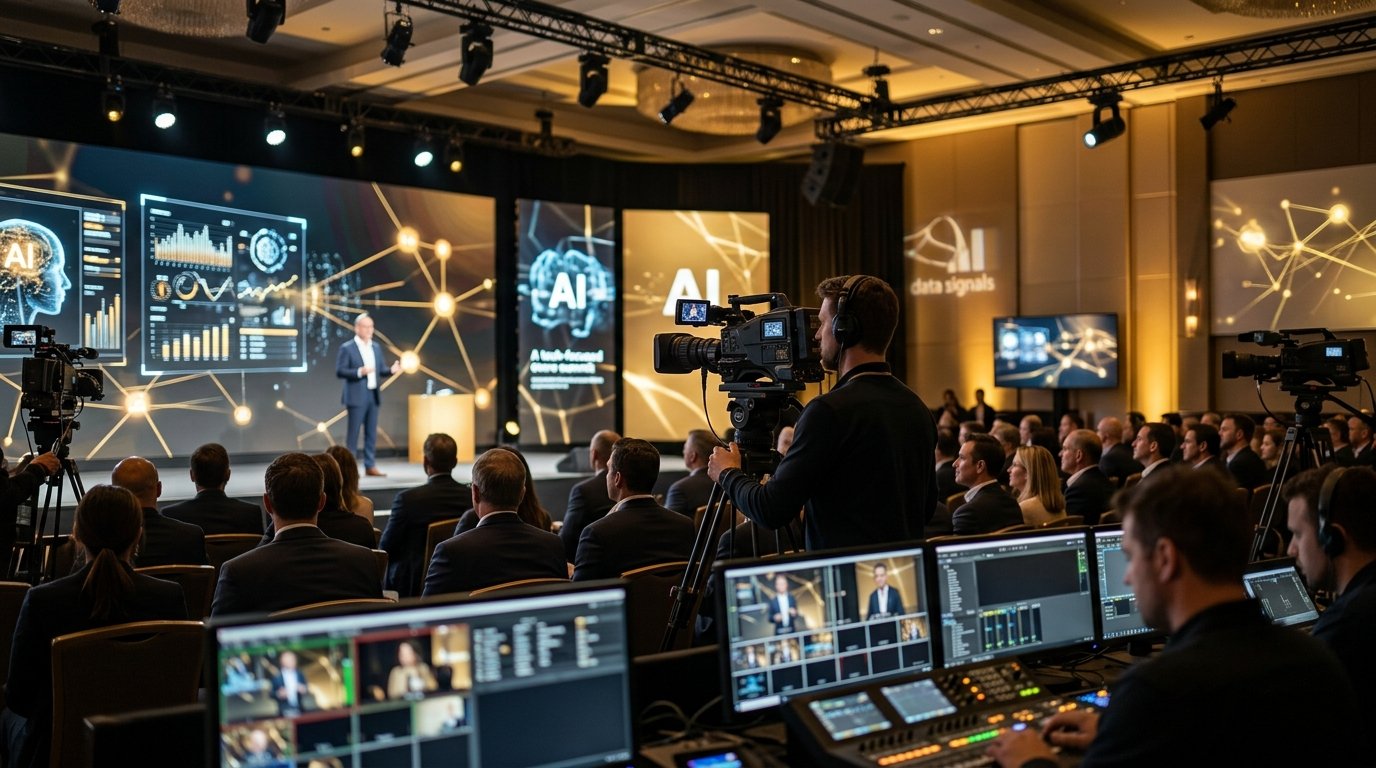
AI media buying thrives on high-quality, high-context inputs. If an algorithm identifies a prime opportunity to place your brand in front of a C-suite executive during a major industry moment, but the visual asset is a grainy, amateur smartphone photo, the AI has successfully optimized for failure. Professional event production is the essential fuel for these new media engines. When we cover global events like SXSW, our objective is not merely to document the day; it is to generate the high-context visual data that AI algorithms require to establish brand authority. This shift means that event planners and marketing directors must stop thinking about 'event photography' as a line item for archives and start viewing it as 'contextual asset generation' for their digital supply chain.
The reality is that B2B decision-makers are increasingly immune to generic, stock-heavy digital advertising. They respond to environments and social proof. If your brand is seen through high-end, editorial-grade imagery at a global summit, the AI-driven placement carries the weight of that physical presence. This is why the industry discussion on Kargo's AI pivot emphasizes the need for brands to reinvent their approach to creative. The 'pivot or perish' mandate applies directly to how we produce event content: either the output is professional enough to feed the algorithm and command attention, or it remains invisible in the noise of the programmatic landscape. We are moving toward a future where the physical event serves as the production studio for the entire year's digital media strategy.
Why does contextual targeting make premium event photography more relevant than ever?
As privacy regulations tighten and the industry moves away from third-party cookies, contextual targeting has returned as the gold standard for reaching high-value audiences. Harry Kargman has noted that the content a person is consuming provides a much stronger signal of intent than their identity graph ever could. For B2B brands, there is no higher-value context than a premium industry event. This makes the role of professional visual coverage—photography, video, and live streaming—paramount to the success of any digital campaign. Premium event photography captures more than just faces; it captures the architecture of influence. When a brand sponsors a stage at a major conference, the visual proof of that sponsorship serves as a 'contextual anchor' for all subsequent digital marketing efforts.
High-end imagery from our Gallery demonstrates how professional production elevates a brand's perceived market position. An AI media buying platform can identify that a user is reading about fintech or sustainable energy, but it requires a high-quality visual of your leadership team speaking at a summit to convert that 'interest' into 'trust.' We are seeing a definitive move away from the 'quantity over quality' approach that dominated social media for the last decade. In the context of AI-driven media, one iconic, perfectly lit, and compositionally sound photograph of a keynote session is worth more than a hundred mediocre snapshots. This is because the algorithm favors engagement, and engagement is driven by visual authority.
The latest event marketing trends on BizBash suggest that brands are reinvesting in high-production values specifically to feed their digital funnels. Alesia RSVP bridges this gap by ensuring that the 'context' captured on-site is powerful enough to stand up to the scrutiny of both the algorithm and the executive reader. By focusing on the nuances of lighting, framing, and timing, we create assets that signal 'industry leader' to the AI, ensuring that when your ad appears in a contextual environment, it feels like a natural extension of the high-value content the user is already consuming. This alignment between the medium and the message is the only way to maintain relevance in a saturated digital marketplace.
How can mid-market brands use AI and high-end video to compete with industry giants?
The democratization of media buying through AI platforms presents a unique opportunity for mid-market B2B brands to challenge industry giants. Historically, the 'moat' for Fortune 500 companies was their massive media spend and their ability to dominate physical spaces through sheer scale. Today, a mid-market firm can use AI to place their content with the same precision and frequency as a global conglomerate. However, the catch is that they must match the production quality of those giants to remain credible. If the placement is equal, the only thing that matters is the creative. This is where high-end video production and cinematic aftermovies become the ultimate equalizer.
A mid-market brand hosting a boutique summit in London, New York, or Dubai can produce a highlight reel that rivals a global conglomerate's production, provided they utilize a premium agency like Alesia RSVP. By focusing on high-production value, these brands create 'synthetic scale.' When this content is distributed via AI-powered contextual targeting, the market perceives the brand as a top-tier player. The strategy is clear: use physical events to generate high-authority content, then use AI to ensure that content is seen by the right people in the right context. This removes the need for massive, untargeted ad spend and replaces it with a surgical, content-first approach.
Alesia RSVP specializes in this exact workflow, providing the magazine-quality editorial output and same-day delivery required to keep pace with the speed of AI-driven media cycles. We don't just manage events; we build the visual infrastructure that allows mid-market brands to punch well above their weight class in the global B2B market. For a VP of Events or a Marketing Director, the conclusion is simple: your event is no longer a standalone moment in time; it is the production studio for your entire AI-driven media strategy. By investing in the highest level of visual documentation, you are providing the AI with the best possible material to represent your brand, ensuring that every programmatic placement reinforces your position as an industry authority. In the new landscape of AI media buying, the brand with the best content—not the biggest budget—wins.
FAQ
How does AI-powered media buying impact B2B event ROI?
AI-powered media buying increases event ROI by ensuring that the high-quality content generated on-site reaches a highly targeted audience in real-time. By using algorithms to place event visuals in relevant contextual environments, brands extend the lifespan and impact of their event investment far beyond the physical attendees, turning a two-day event into a year-long lead generation engine.
Why is contextual targeting replacing identity-based tracking in event marketing?
Privacy changes and the phase-out of third-party cookies have made it difficult to track individual users reliably. Contextual targeting focuses on the environment where the ad appears rather than the user's personal data. High-authority event content serves as a primary signal for reaching professional decision-makers who are already engaged with industry-specific topics, making it more effective and privacy-compliant.
What kind of visual assets perform best in AI-optimized ad campaigns?
High-resolution editorial photography and short-form, high-production-value video clips perform best. These assets provide the 'visual authority' necessary to trigger engagement in AI-driven placements. Algorithms prioritize content that demonstrates high quality and contextual relevance, as these factors lead to higher click-through rates and better brand sentiment among executive audiences.
Frequently Asked Questions
How does AI-powered media buying impact B2B event ROI?
AI-powered media buying increases event ROI by ensuring that the high-quality content generated on-site reaches a highly targeted audience in real-time. By using algorithms to place event visuals in relevant contextual environments, brands extend the lifespan and impact of their event investment far beyond the physical attendees, turning a two-day event into a year-long lead generation engine.
Why is contextual targeting replacing identity-based tracking in event marketing?
Privacy changes and the phase-out of third-party cookies have made it difficult to track individual users reliably. Contextual targeting focuses on the environment where the ad appears rather than the user's personal data. High-authority event content serves as a primary signal for reaching professional decision-makers who are already engaged with industry-specific topics, making it more effective and privacy-compliant.
What kind of visual assets perform best in AI-optimized ad campaigns?
High-resolution editorial photography and short-form, high-production-value video clips perform best. These assets provide the 'visual authority' necessary to trigger engagement in AI-driven placements. Algorithms prioritize content that demonstrates high quality and contextual relevance, as these factors lead to higher click-through rates and better brand sentiment among executive audiences.