
Amazon TNF Growth: Lessons for B2B Event Partnerships
Amazon TNF Growth: Lessons for B2B Event Partnerships
As Amazon’s Thursday Night Football sees a 6% surge in advertisers, the era of passive sponsorship is over. Brands must now lead with content.
How is Amazon scaling brand partnerships through immersive content?
As Amazon’s Thursday Night Football (TNF) enters its fifth season, the data is undeniable: advertiser growth is up 6% year-over-year, with a staggering 17% of those brands being entirely new to the platform. This isn't a fluke of the sports broadcasting market. It is a fundamental shift in how brands view high-stakes partnerships. For years, the industry relied on passive visibility—logos on jerseys, billboards in stadiums, and 30-second spots that viewers skipped. Amazon has dismantled this model by offering what Amy McDevitt, head of live sports sales partnerships at Amazon Ads, calls 'leaning in.' This involves expanding relationships across the entire Amazon ecosystem, moving from a simple ad buy to a deeply integrated content strategy.
For corporate decision-makers, the lesson is clear: volume is no longer a substitute for integration. The double-digit growth seen in sectors like financial services and automotive on Prime Video reflects a desire for brands to be woven into the fabric of the event itself. This mirrors the evolution of the modern B2B conference. When we look at industry trends on BizBash, we see that the most successful sponsors at summits like Davos or VivaTech are those who stop acting like guests and start acting like broadcasters. They aren't just 'attending' the event; they are creating the content that defines it. This requires a shift from marketing spend to production investment. If you are not producing high-end visual assets that can live beyond the four quarters of the game—or the three days of the conference—you are essentially renting space rather than building equity. Passive sponsorship is a liability in a market that demands engagement. Amazon’s success proves that when you provide advertisers with the tools to create conversation rather than just impressions, they return with larger budgets and longer-term commitments. This is the new baseline for any premium B2B event partnership.
Why is high-end visual production the key to 'leaning in' at B2B events?
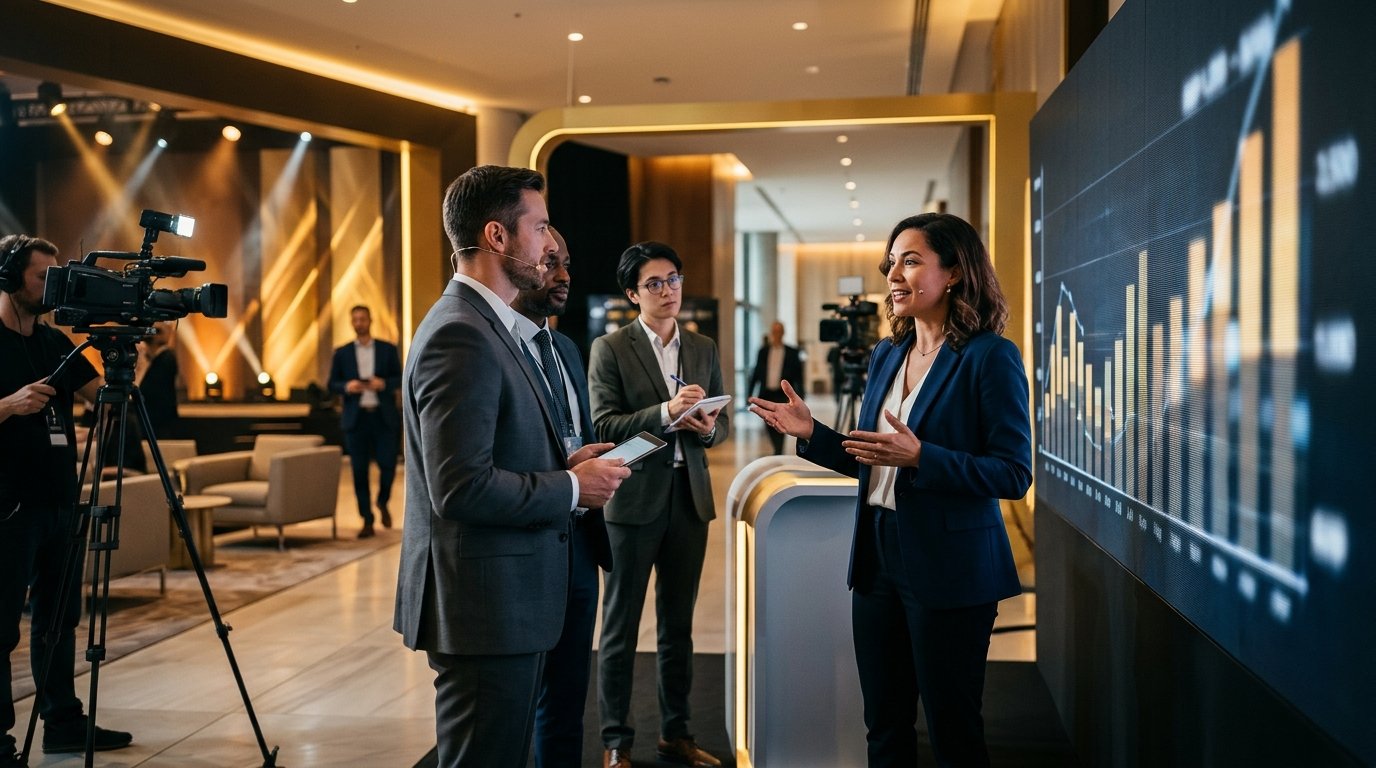
The transition from a passive sponsor to an active partner requires one specific catalyst: high-end visual production. In the context of a B2B summit, 'leaning in' means moving away from the static booth and toward a content-first presence. Amazon’s TNF strategy works because the production value of the broadcast matches the prestige of the NFL brand. B2B events must adopt the same mindset. When a brand sponsors a major tech or finance event, the ROI is often trapped within the walls of the venue. Without a professional cinematography and photography strategy, that investment evaporates the moment the doors close.
High-end visual production transforms a fleeting sponsorship into a permanent marketing asset. Consider the impact of a magazine-quality photo gallery compared to grainy smartphone shots or generic stock imagery. When corporate decision-makers see themselves or their brands captured through a professional lens, the perceived value of the partnership skyrockets. This is about more than aesthetics; it is about brand authority. In a world where every attendee is a potential broadcaster, the official brand content must be demonstrably superior. This is where many B2B brands fail—they spend six figures on a sponsorship slot but pennies on the documentation of that slot.
Amazon’s growth in the financial services and retail sectors is particularly telling. These are industries built on trust and legacy. By utilizing Prime Video’s advanced production capabilities, these brands are signaling that they belong on the big stage. For a VP of Marketing at a fintech firm, the goal at an event should be to produce a documentary-style recap or a series of high-fidelity executive interviews that can be repurposed for months of social media and PR outreach. This approach ensures that the event is not a line item on a budget, but a cornerstone of the annual content calendar. The 'leaning in' philosophy demands that you own the narrative of your participation through superior visual storytelling. Anything less is a missed opportunity to dominate the conversation.
How can brands maximize their ROI at major summits like SXSW or Consensus?
To maximize ROI at high-profile summits like SXSW or Consensus, brands must treat their presence with the same rigor as a televised broadcast. The 17% of new advertisers on TNF didn't join just to see their logo on a screen; they joined to access a suite of capabilities that allow them to talk to their audience in real-time. On the B2B stage, this translates to on-site podcast studios, live-streamed keynotes, and rapid-response social video production. The goal is to create a 'content factory' within the event itself.
According to recent LinkedIn discussions on event partnership strategies, the most successful activations in 2025 will be those that bridge the gap between the physical and the digital. If you are sponsoring a panel at a major summit, the live audience is only 1% of your potential reach. The other 99% are on LinkedIn, Twitter, and industry newsletters. By recording that panel with a multi-camera setup and delivering a high-energy highlight reel within 24 hours, you are effectively 100x-ing your sponsorship value. This is the level of performance Amazon is delivering to its partners, and it is the level that B2B brands must demand from their production agencies.
Just as Prime Video elevates the NFL experience through premium production, Alesia RSVP empowers B2B brands to capture their presence at global summits with high-end photography and cinematography. We don't just 'cover' an event; we produce it. This ensures that every keynote, every handshake, and every activation is documented with the same editorial precision you would find in a high-end commercial or a major broadcast. Whether it is a town hall in London or a massive tech takeover in Austin, the objective remains the same: transform event participation into long-term marketing assets. The future of event marketing is not about showing up; it is about showing off through world-class content that justifies the investment and drives future growth. In 2025, if your event isn't being filmed like a Prime Video broadcast, you aren't really there.
FAQ
What are the benefits of multi-year event partnerships for B2B brands?
Multi-year partnerships allow brands to move beyond transactional visibility and build a consistent narrative with their target audience. Over several years, brands can refine their content strategy, integrate deeper into the event's programming, and benefit from compounding brand recognition, as seen with Amazon's TNF growth.
How does professional video coverage improve sponsorship visibility?
Professional video coverage extends the life of a sponsorship by turning a physical presence into digital content that can be shared globally. High-production aftermovies, interview clips, and live streams ensure that the brand reaches the 99% of the target audience who were not physically present at the venue.
Why are more brands moving toward 'content-first' event strategies?
Brands are shifting to content-first strategies because traditional logo placement offers low engagement and zero post-event utility. By prioritizing the creation of high-quality video, podcasts, and photography, brands generate a library of marketing assets that drive ROI long after the event has concluded.
Frequently Asked Questions
What are the benefits of multi-year event partnerships for B2B brands?
Multi-year partnerships allow brands to move beyond transactional visibility and build a consistent narrative with their target audience. Over several years, brands can refine their content strategy, integrate deeper into the event's programming, and benefit from compounding brand recognition, as seen with Amazon's TNF growth.
How does professional video coverage improve sponsorship visibility?
Professional video coverage extends the life of a sponsorship by turning a physical presence into digital content that can be shared globally. High-production aftermovies, interview clips, and live streams ensure that the brand reaches the 99% of the target audience who were not physically present at the venue.
Why are more brands moving toward 'content-first' event strategies?
Brands are shifting to content-first strategies because traditional logo placement offers low engagement and zero post-event utility. By prioritizing the creation of high-quality video, podcasts, and photography, brands generate a library of marketing assets that drive ROI long after the event has concluded.