
Anthropic’s Strategic Friction: Navigating B2B Brand Safety and Intellectual Property
Anthropic’s Strategic Friction: Navigating B2B Brand Safety and Intellectual Property
While AI giants like OpenAI and Google engage in high-stakes licensing wars with publishers, Anthropic has maintained a unique, albeit expensive, middle ground. By analyzing their recent $1.5 billion class action settlement alongside their refusal to sign publisher deals, we uncover critical lessons for B2B brands navigating the complex intersection of intellectual property, event production, and corporate reputation.
How does Anthropic's 'Quiet Strategy' redefine brand safety at global tech events?
The current media landscape is increasingly defined by what industry insiders call the 'woo and sue' strategy. Major legacy publishers, including The New York Times, News Corp, and Axel Springer, are aggressively targeting artificial intelligence firms that have historically scraped their archives without compensation. In response, OpenAI and Meta have opened their checkbooks, securing peace through multi-million dollar licensing agreements. Anthropic, however, has taken a divergent path. To date, they have not signed a single licensing deal with a major publisher, yet they have managed to avoid the specific wave of litigation hitting their peers from the news industry. This is not to say they are legally untouchable; in July, Anthropic notably paid $1.5 billion to settle a massive class action lawsuit, a move that underscores the high cost of operating in the AI space without a traditional licensing framework. For B2B executives, this 'Anthropic anomaly' serves as a masterclass in strategic positioning. It demonstrates that brand safety is not merely about avoiding conflict, but about choosing which battles to fight and how to frame one's corporate identity before a high-stakes public appearance or conference keynote.
The core of Anthropic’s perceived immunity from publisher lawsuits lies in its branding as the 'safety-first' AI firm. While competitors optimized for rapid scaling and mass consumer adoption, Anthropic leaned heavily into 'Constitutional AI.' This is more than just a technical architecture designed to align AI behavior with human values; it functions as a potent legal and marketing shield. By positioning themselves as the responsible, laboratory-driven alternative to 'move fast and break things' tech giants, they have effectively lowered the temperature with potential litigants in the publishing sector. In the corporate event industry, we observe a strikingly similar dynamic. Companies that enter the public arena with aggressive, unvetted content strategies—often relying on automated tools or unverified third-party data—frequently find themselves in legal disputes with intellectual property holders. Conversely, brands that prioritize curated, professional storytelling and rigorous IP verification maintain a cleaner legal footprint. A recent LinkedIn discussion on Anthropic's legal strategy in the event industry highlights how this perception of 'safety' acts as a deterrent, even when the underlying legal realities are complex. For B2B brands, the lesson is clear: brand safety is a strategic asset that dictates how the market, the media, and the legal system interact with your organization during periods of technological disruption.
Why are digital publishers hesitant to sue Anthropic compared to other AI firms?
Publishers are inherently tactical in their litigation strategies. They prioritize targets with the deepest pockets or those whose market dominance poses the most immediate existential threat to their subscription-based business models. To date, Anthropic has managed to operate just below the threshold of direct provocation for publishers. By refusing to sign licensing deals, they have avoided setting a market price on their own potential infringement—a price that once established, becomes a baseline for all future negotiations. While OpenAI surrendered this leverage long ago to secure stability, Anthropic’s calculated restraint allows them to operate in a legal gray area. However, the $1.5 billion settlement in July proves that this strategy is not without significant financial risk. It suggests that while they may avoid the 'woo and sue' cycle of the publishing world, they remain vulnerable to broader class actions regarding data usage. This nuance is vital for B2B decision-makers: avoiding one type of legal risk often involves accepting another.
This dynamic mirrors shifting BizBash trends: AI and content licensing in corporate events, where the industry focus has moved from mass-produced content generation to verified, high-quality output. Publishers and IP holders are often baffled by Anthropic’s refusal to collaborate, as it should theoretically make them a prime target for copyright litigation. Yet, their 'advantageous branding' as a safety-oriented research lab rather than a data-hungry commercial monolith creates a psychological and strategic barrier. They aren't seen as the 'enemy' of the creator in the same way more aggressive firms are. For B2B brands, this proves that how your brand is perceived during major industry shifts is just as important as the legal reality of your operations. If your brand is seen as a collaborator in the ecosystem—even a non-paying one—you may face less scrutiny than a competitor seen as an exploiter. In the context of event production, this translates to the importance of transparent sourcing and the use of professional services that guarantee the provenance of every visual and auditory asset used in a keynote or brand activation.
What role does high-end content curation play in avoiding intellectual property disputes for B2B brands?
The risk of intellectual property disputes increases exponentially when brands rely on uncurated, bulk-scraped data or generic, AI-generated content. In the premium event sector, such as the high-level summits covered at /consensus, the value of a brand is intrinsically tied to the exclusivity and the verifiable quality of the content it produces. High-end content curation—where every frame of video, every photograph, and every line of a script is intentionally directed and vetted—removes the legal ambiguity that currently plagues mass-market AI tools. When a B2B brand invests in professional visual storytelling, they are not simply purchasing 'assets'; they are securing their intellectual property and insulating themselves from the volatility of the current copyright landscape.
Professional production teams act as the human equivalent of Anthropic's 'Constitutional AI.' They ensure that all talent, speakers, and background elements are cleared for use, preventing the 'accidental' infringement that leads to the 'woo and sue' cycle. Anthropic’s strategy, despite the $1.5 billion settlement, suggests that being precise with your data (or your content) is a valid path to maintaining a premium brand position. For a Marketing Director, this means that investing in bespoke, high-quality event production is a more robust strategy than relying on generic, automated coverage. Automated tools often pull from protected sources without the user's knowledge, creating a ticking time bomb of liability. By contrast, a curated approach ensures that the brand's narrative is built on a foundation of original or properly licensed material. This level of precision is what separates industry leaders from those who are constantly reacting to legal threats. In an era where data is the new oil, the quality and 'cleanliness' of that data—whether it's training data for an LLM or visual data for a global brand campaign—is the ultimate differentiator in brand safety.
How can event organizers protect the brand integrity of tech giants during major keynotes?
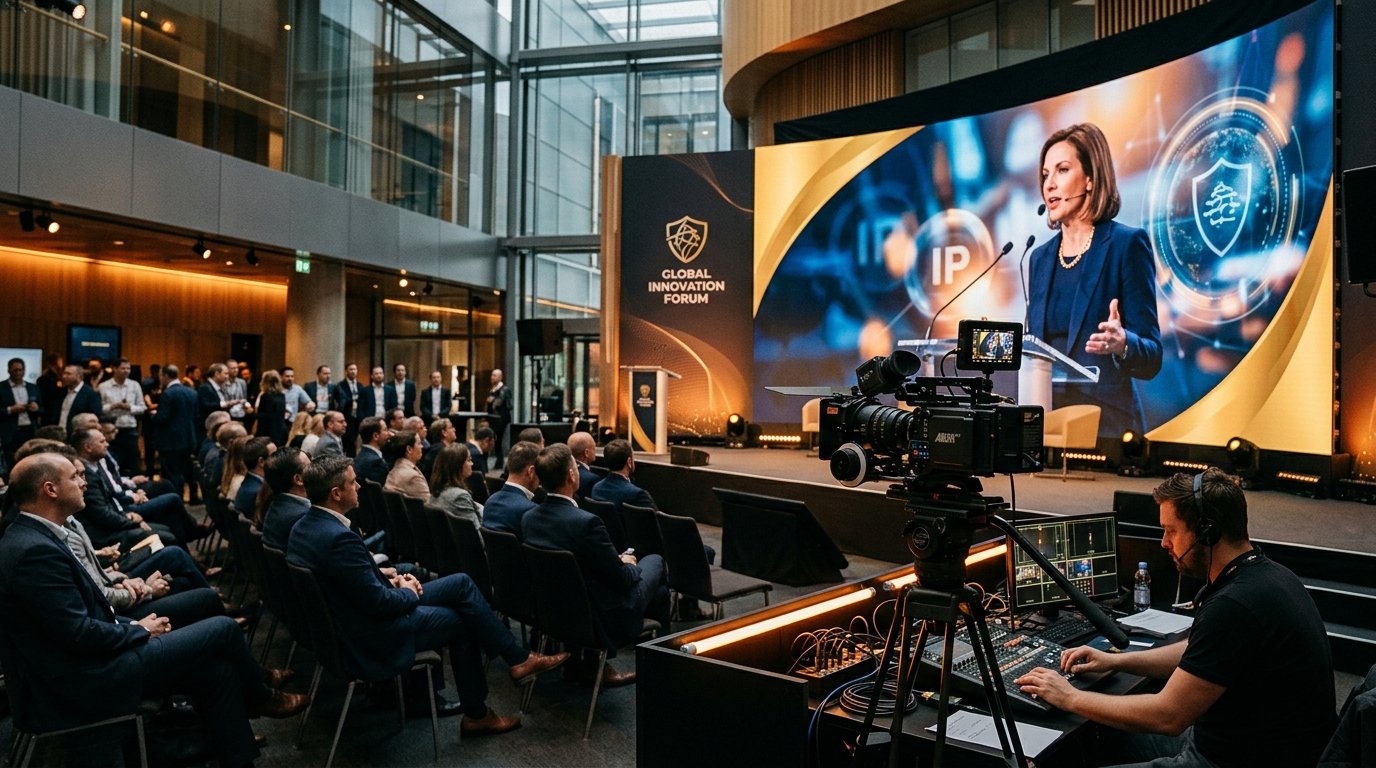
At Alesia RSVP, we witness the practical application of the 'Anthropic approach' at major tech summits: it is not just about being present in the room, but about how you curate and control your brand's digital footprint. Just as Anthropic manages a complex IP environment with strategic precision, we help premium brands capture their event presence with a focus on high-stakes discretion and expert visual storytelling. Whether it is a confidential executive town hall or a global keynote streamed to millions, the methodology used to record, edit, and distribute that content determines the brand's long-term safety and legal standing. The 'Anthropic anomaly'—the ability to remain a respected industry leader despite significant legal settlements and a refusal to follow traditional licensing paths—proves that brand integrity is built on consistency and perceived value.
We provide a level of editorial control that automated or low-tier production houses simply cannot replicate. By treating every conference as a high-stakes media event, we ensure that the resulting output—available for review in our /gallery—reflects the executive's intent without exposing the company to reputational or legal risk. The lesson from Anthropic's recent history is that in the AI era, being the loudest or most aggressive player in the room is often a liability. The most successful brands will be those that control their narrative through high-fidelity, curated content that respects the boundaries of the modern intellectual property environment. Protecting brand integrity starts with the choice of who captures your most important moments. It requires a partner who understands that a single unlicensed image or a poorly vetted video clip can lead to the kind of $1.5 billion headache that Anthropic recently faced. In the world of B2B tech, safety isn't an accident; it's a deliberate production choice.
FAQ
Why hasn't Anthropic been sued by digital publishers yet?
Anthropic has avoided publisher-specific litigation by maintaining a 'safety-first' brand identity and avoiding the aggressive consumer-facing expansion of competitors like OpenAI. However, they are not immune to legal challenges, as evidenced by their $1.5 billion settlement in July to resolve a class action lawsuit regarding data usage, showing that their strategy focuses on avoiding specific publisher 'woo and sue' tactics rather than total litigation avoidance.
How do content licensing deals affect the visual coverage of B2B tech events?
Licensing concerns are fundamentally changing event production. Brands must now ensure that every piece of content captured—from background music to keynote slides—is fully cleared. This has increased the demand for professional, curated AV services that can guarantee IP safety, as relying on automated or unvetted content generation risks infringing on the very licensing deals that publishers are now aggressively enforcing.
What is the 'woo and sue' strategy in the AI and media industry?
The 'woo and sue' strategy describes the approach of digital publishers who first attempt to negotiate lucrative licensing deals (the 'woo') and, if unsuccessful, pursue aggressive copyright litigation (the 'sue'). While firms like OpenAI have opted to pay for peace, Anthropic has resisted these deals, relying on their safety-oriented branding to navigate the resulting tension, despite other major legal settlements.
Frequently Asked Questions
Why hasn't Anthropic been sued by digital publishers yet?
Anthropic has avoided publisher-specific litigation by maintaining a 'safety-first' brand identity and avoiding the aggressive consumer-facing expansion of competitors like OpenAI. However, they are not immune to legal challenges, as evidenced by their $1.5 billion settlement in July to resolve a class action lawsuit regarding data usage, showing that their strategy focuses on avoiding specific publisher 'woo and sue' tactics rather than total litigation avoidance.
How do content licensing deals affect the visual coverage of B2B tech events?
Licensing concerns are fundamentally changing event production. Brands must now ensure that every piece of content captured—from background music to keynote slides—is fully cleared. This has increased the demand for professional, curated AV services that can guarantee IP safety, as relying on automated or unvetted content generation risks infringing on the very licensing deals that publishers are now aggressively enforcing.
What is the 'woo and sue' strategy in the AI and media industry?
The 'woo and sue' strategy describes the approach of digital publishers who first attempt to negotiate lucrative licensing deals (the 'woo') and, if unsuccessful, pursue aggressive copyright litigation (the 'sue'). While firms like OpenAI have opted to pay for peace, Anthropic has resisted these deals, relying on their safety-oriented branding to navigate the resulting tension, despite other major legal settlements.