
B2B Conferences in Seoul: Production & Logistics Guide
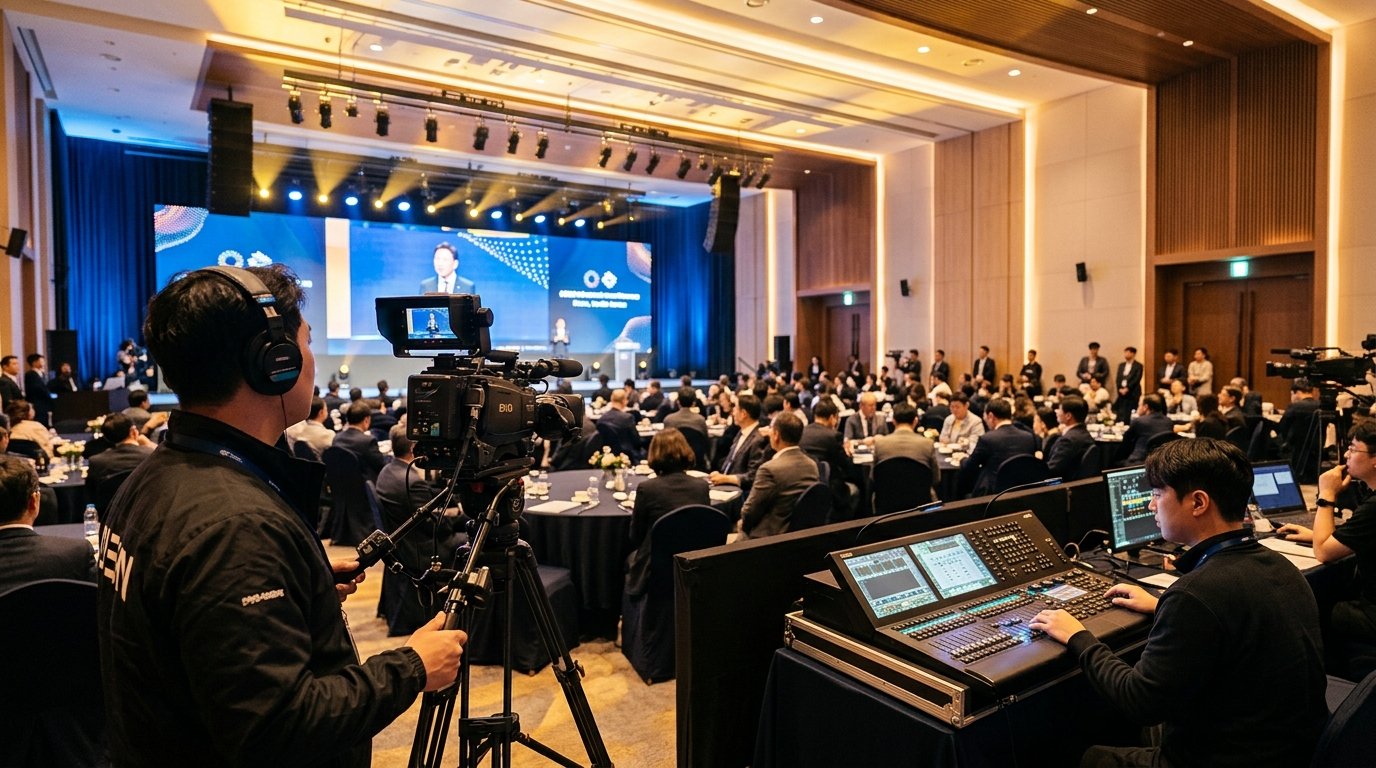
B2B Conferences in Seoul: Production & Logistics Guide
Discover the hidden cultural and technical nuances that local experts use to ensure a seamless B2B event experience in Seoul, from navigating COEX load-ins to mastering the art of Nunchi in the ballroom.
What are the biggest logistical challenges when hosting a B2B event in Seoul?
Beyond the neon lights of Gangnam and the sleek skyscrapers of Yeouido lies a complex logistical maze that can make or break your B2B conference in Seoul. Most international planners assume that South Korea’s reputation for high-tech infrastructure makes event execution a simple 'plug-and-play' affair. This is a common misconception. The real challenge is not the availability of technology, but the 'last mile' of communication, technical integration, and bureaucratic navigation. Seoul’s premier venues, such as the COEX Convention & Exhibition Center or the Zaha Hadid-designed Dongdaemun Design Plaza (DDP), are massive ecosystems. Navigating them requires more than a floor plan; it requires an understanding of specific load-in windows, freight elevator capacities, and the strict security protocols of the 'Gangnam-gu' district. Unlike the centralized event hubs in Singapore, Seoul is a sprawling metropolis where traffic congestion on the Olympic Expressway or Teheran-ro can derail a speaker’s schedule in minutes. Planning a summit here requires a granular approach to transport logistics, often involving dedicated 'VIP dispatchers' who monitor real-time traffic data to adjust transit times dynamically.
Furthermore, the local vendor ecosystem often operates on proprietary systems or local standards that don't always align with Western production riders. You aren't just booking a room; you are managing a vertical stack of vendors who may not be accustomed to the fast-paced, editorial-style delivery required by global brands. For instance, power requirements in Korean venues often use different connector standards, and the 'house' AV teams frequently have exclusive rights to rigging points, which can limit your creative stage design if not negotiated months in advance. Navigating these contracts requires a firm hand and a local understanding of how to negotiate service-level agreements (SLAs) for live streaming and high-speed internet. In Seoul, 'high-speed' is a baseline, but dedicated bandwidth for a 4K global broadcast requires navigating the specific peering agreements of local ISPs like KT or SK Broadband. To succeed, your production team must conduct exhaustive site visits to map out signal paths and cable runs that avoid public-facing areas, ensuring the 'invisible' nature of high-end production.
How do you find reliable AV and production vendors in South Korea?
Finding a vendor in Seoul is easy; finding a partner who understands the nuance of B2B storytelling is the real hurdle. The Korean production market is heavily bifurcated. On one side, you have massive agencies specialized in K-Pop concerts and consumer activations—high-energy, high-spectacle, but often lacking the restraint and corporate polish required for a C-suite summit. On the other side, you have smaller, local shops that may lack the English-language proficiency or the international equipment standards (like Barco E2 systems or Shure Axient Digital mics) that global technical directors demand. For a B2B audience, the focus must be on absolute clarity: professional lighting that favors diverse skin tones on camera, redundant audio signal chains, and low-latency translation booths. When vetting AV partners, you must look beyond their gear list. You need to verify their experience with international protocols and their ability to provide English-speaking technical directors who can interface directly with your global stakeholders.
At Alesia RSVP, we have observed that the most successful events in Seoul are those that bypass the standard hotel AV packages. Hotel 'in-house' teams are often generalists; for a high-stakes conference, you need independent, specialized production teams who treat the ballroom like a broadcast studio. This ensures that the quality of your visual documentation remains consistent with your global brand standards, rather than looking like a generic corporate video. Reliability in this market is built on 'Kibun'—the mood or state of mind governing a relationship. In Seoul, a contract is a starting point, but the strength of the personal connection with the production lead determines the level of 'service recovery' you receive if a technical glitch occurs. You need a lead who can bridge the gap between your corporate headquarters' expectations and the local crew's execution style. This includes managing everything from the specific pixel pitch of an LED wall (aiming for 1.9mm or lower for executive presentations) to the precision of the 'same-day edit' for your event aftermovie, which the Korean market expects to be delivered with lightning speed.
What cultural etiquette should event planners know for Seoul corporate gatherings?
The success of a corporate gathering in South Korea is as much about social hierarchy and 'Nunchi' as it is about the agenda. 'Nunchi' is the art of sensing others' thoughts and feelings to create harmony—a vital skill for event staff. For a B2B conference, this translates to how speakers are introduced, where VIPs are seated, and the order of operations during networking sessions. Hierarchy is strictly observed; the most senior executive should always be given the floor first, and their comfort must be the production team's priority. This extends to the 'Sang-seok' (the seat of honor), which must be strategically placed in relation to the stage and the entrance. This is not the place for 'disruptive' or overly informal event formats unless the brand identity specifically demands it and has been socialized with the local stakeholders beforehand. Even the exchange of business cards (Myeong-ham) is a choreographed ritual: cards must be given and received with two hands, and one must never write on a card in front of the owner.
Timing in Seoul is also distinct. The 'Pali-pali' (hurry-hurry) culture means that while things move incredibly fast, any delay is seen as a significant sign of incompetence. Your production schedule must be padded for the unexpected, yet your public-facing agenda must run to the second. If a keynote is scheduled for 9:00 AM, the room should be 'show-ready' by 8:15 AM. Additionally, hospitality is a cornerstone of Korean business culture. The quality of the catering—often a mix of high-end 'Hansik' (Korean food) and international options—and the thoughtfulness of the corporate gifts will be discussed long after the keynote ends. If you are hosting an international audience, balancing traditional Korean elements with international corporate standards is the gold standard. This cultural duality should be reflected in your content strategy, ensuring that the event feels local yet maintains a global executive appeal. For instance, incorporating a modern 'Gugak' (traditional music) performance during a gala dinner can provide a sophisticated local touch that resonates with both local and visiting executives.
How can professional event documentation enhance your brand's presence in the Asian market?
In a visual-first market like South Korea, your event is only as successful as the content it generates. High-end photography and cinematic video are not just 'add-ons'; they are the primary vehicles for your brand’s message in the region. Professional documentation allows you to repurpose a two-day summit into six months of marketing collateral for LinkedIn, KakaoTalk, and industry journals. This is where Alesia RSVP bridges the gap. We provide premium photo and video coverage that translates your brand’s vision into the Korean market’s aesthetic, which often favors high-contrast, polished, and modern visuals. By capturing the interaction between global executives and local leaders, you create a narrative of partnership and long-term commitment to the South Korean market. This is particularly important in the 'K-Tech' and fintech sectors, where visual proof of 'boots on the ground' carries significant weight with investors and partners.
Alesia RSVP operates at the intersection of international corporate standards and Seoul’s local production ecosystem. We provide full-service AV coordination, from multi-camera live streaming for global broadcasts to on-site podcast studios that capture executive insights in real-time. Our goal is to ensure that the technical execution is invisible, allowing the brand’s message to take center stage. Whether you are planning a fintech summit in the IFC Seoul or a corporate town hall in a boutique Gangnam space, our teams ensure that the visual output is magazine-quality and delivered with the speed the Korean market expects. We understand that 'done' is not enough; the content must be 'polished and shared' before the attendees have even left the venue. By managing the complexities of local vendor coordination and technical oversight, we allow event directors to focus on their attendees rather than the signal chain. The result is a seamless, high-production-value event that establishes your brand as a serious, sophisticated player in the South Korean business landscape, turning a one-off conference into a lasting digital asset.
FAQ
Do I need a local agency to manage a conference in Seoul?
Yes, a local agency or an international partner with deep local ties is essential for navigating language barriers and vetting technical vendors. They handle the specific nuances of Korean venue contracts, manage the 'Pali-pali' culture to your advantage, and navigate the complex 'Kim Young-ran Act' (anti-corruption laws) which can affect corporate gifting and hospitality limits for certain sectors.
What is the best time of year to host a corporate event in South Korea?
Spring (April to June) and Autumn (September to November) are the ideal periods. The weather is temperate, which is crucial for outdoor activations or guest transport. These months avoid the heavy monsoon rains of July and August, as well as the extreme cold of the winter months. Additionally, you should avoid the 'Chuseok' (Lunar Harvest) and 'Seollal' (Lunar New Year) holidays, as most businesses close and logistics become impossible.
How does Alesia RSVP handle AV coordination for international clients in Seoul?
Alesia RSVP acts as the technical and logistical bridge, providing English-speaking production leads who oversee local crews. We manage the entire signal chain, from sourcing high-spec LED walls to ensuring redundant fiber-optic lines for live streaming. By translating complex technical riders into local actionable tasks and managing the 'Kibun' of the local crew, we eliminate the risk of 'lost in translation' errors that often plague international productions in Korea.
Frequently Asked Questions
Do I need a local agency to manage a conference in Seoul?
Yes, a local agency or an international partner with deep local ties is essential for navigating language barriers and vetting technical vendors. They handle the specific nuances of Korean venue contracts, manage the 'Pali-pali' culture to your advantage, and navigate the complex 'Kim Young-ran Act' (anti-corruption laws) which can affect corporate gifting and hospitality limits for certain sectors.
What is the best time of year to host a corporate event in South Korea?
Spring (April to June) and Autumn (September to November) are the ideal periods. The weather is temperate, which is crucial for outdoor activations or guest transport. These months avoid the heavy monsoon rains of July and August, as well as the extreme cold of the winter months. Additionally, you should avoid the 'Chuseok' (Lunar Harvest) and 'Seollal' (Lunar New Year) holidays, as most businesses close and logistics become impossible.
How does Alesia RSVP handle AV coordination for international clients in Seoul?
Alesia RSVP acts as the technical and logistical bridge, providing English-speaking production leads who oversee local crews. We manage the entire signal chain, from sourcing high-spec LED walls to ensuring redundant fiber-optic lines for live streaming. By translating complex technical riders into local actionable tasks and managing the 'Kibun' of the local crew, we eliminate the risk of 'lost in translation' errors that often plague international productions in Korea.