
B2B Conference Planning in Singapore: Expert Logistics Guide
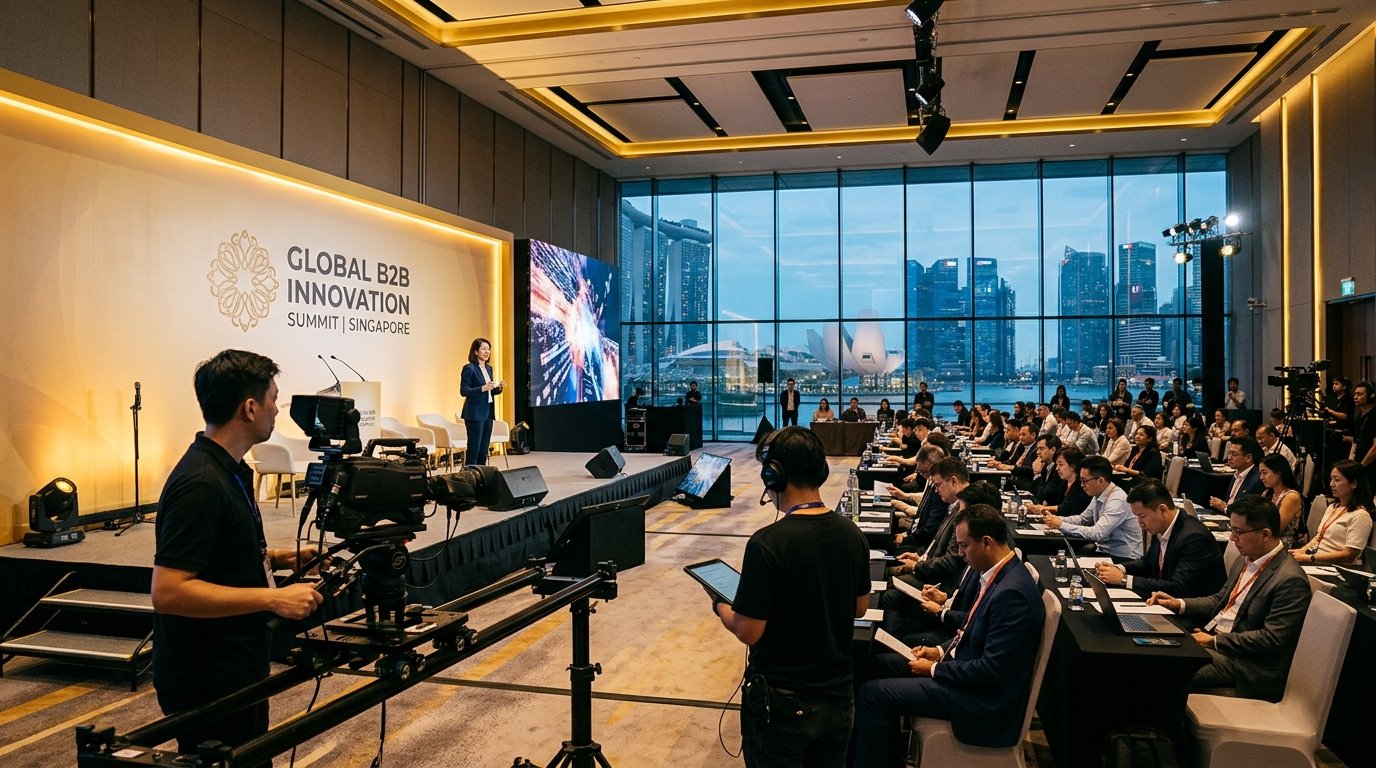
B2B Conference Planning in Singapore: Expert Logistics Guide
An expert guide to navigating the logistics and production standards of hosting high-stakes B2B conferences in the Lion City.
What are the hidden logistical challenges of hosting a B2B conference in Singapore?
Beyond the iconic skyline and the Marina Bay Sands, organizing a B2B conference in Singapore requires managing a complex web of local standards and elite-tier expectations. While the city-state is frequently ranked as the world's best place to do business, the 'Singapore Standard' implies a level of precision that leaves zero room for error. The first hidden challenge is the sheer density of the event calendar. Singapore is a victim of its own success; securing prime venues like the Sands Expo or Suntec Singapore Convention Centre often requires lead times of 12 to 18 months. Planning a summit here is not merely about booking a room; it is about securing a position in a high-velocity business ecosystem.
Logistics extend beyond the venue walls. For international organizations, the entry requirements and GST (Goods and Services Tax) implications for shipping booth materials or technical equipment can be a bureaucratic hurdle if not managed early. Furthermore, while the public transport system is world-class, executive-level transportation for VIP speakers requires a level of coordination that accounts for the peak-hour congestion in the Central Business District. You are not just planning a meeting; you are managing the movement of high-value human capital in a city that operates at 100 miles per hour.
When we look at corporate events in Singapore, we see that the most successful organizers are those who treat the city as a strategic partner rather than just a backdrop. This means understanding the local 'MICE' (Meetings, Incentives, Conferences, and Exhibitions) incentives provided by the Singapore Tourism Board and ensuring your event aligns with the city's focus on sustainability and digital innovation. The logistical perfection of the city is an asset, but only if your internal team is prepared to meet its rigorous operational demands.
How do you coordinate AV and photography vendors for a seamless event flow?
The technical execution of a Singaporean conference is where most international brands struggle. The common mistake is hiring fragmented teams: a local AV firm for the screens, a separate photographer for the shots, and perhaps a third-party for live streaming. This creates a friction-heavy environment where the technical director and the creative lead are working at cross-purposes. In a high-stakes environment like a fintech summit or a corporate AGM, this lack of technical cohesion results in missed moments and inconsistent brand representation.
Coordination begins with a unified technical blueprint. A professional production house should manage the interface between the stage lighting, the audio feed, and the recording equipment. For instance, if your photographer is not synced with the lighting director, your keynote shots will suffer from the high-contrast LED walls typical of modern Singaporean stages. You need a team that understands the interplay between live production and content capture. Our gallery demonstrates the result of this integrated approach: crisp, magazine-quality images and video that feel like a cohesive brand story rather than a collection of random snapshots.
For B2B events, the stakes are even higher regarding the audio-visual feed. If you are live-streaming to a global audience from a hub like Singapore, redundancy is the only policy. This means dedicated fiber lines, backup encoders, and a production team that knows how to pivot in real-time. Coordination isn't just about making sure everyone shows up; it’s about ensuring that the photographer, the videographer, and the streaming engineer are all reading from the same script. This unified front is what separates a standard corporate gathering from a world-class brand experience.
What makes Singapore a unique hub for international corporate networking?
Singapore serves as the undeniable gateway to the ASEAN market, making it the primary choice for firms looking to consolidate their presence in Asia. The city’s unique value proposition lies in its efficiency and its neutrality. It is a place where East meets West without the friction found in other regional hubs. For a B2B conference, this translates to a high-caliber attendee list. When you host an event in Singapore, you aren't just attracting local managers; you are drawing regional VPs and C-suite executives from across the Asia-Pacific region who can reach Changi Airport in under six hours from almost anywhere in the territory.
The networking culture in Singapore is highly professional and structured. Events often extend beyond the plenary sessions into high-end evening receptions at venues like the National Gallery or rooftop bars in the CBD. These social layers are where the real deals are struck. However, the prestige of the location must be matched by the prestige of the event's execution. If the production feels amateur, it reflects poorly on the host's commitment to the region. Singaporean business culture respects excellence and detail.
Moreover, the city is a leader in tech-integrated events. Whether it is a Web3 summit or a legacy banking conference, the expectation for high-speed connectivity and digital interaction is the baseline, not a luxury. The infrastructure here supports the most demanding technical setups, from AR-integrated keynotes to massive multi-camera broadcasts. Hosting here allows a brand to project an image of stability, innovation, and global reach that few other cities can replicate.
How can premium photo and video services elevate your event's ROI in the Asian market?
The return on investment for a B2B conference is often measured by the life of the content after the doors close. In the competitive Asian market, how your event is perceived on LinkedIn, in industry journals, and in internal recap videos determines its long-term success. If you invest hundreds of thousands of dollars into a Singaporean summit but rely on mediocre photography, you are effectively devaluing your own brand. Premium visual coverage serves as a force multiplier for your marketing efforts.
High-quality editorial photography captures the 'vibe' of the networking—the handshake between two CEOs, the intensity of a panel discussion, the scale of the audience. These images become the assets for next year’s sales deck, your PR pushes, and your corporate social media presence. Similarly, a professionally produced aftermovie is not just a souvenir; it is a high-octane sales tool. It demonstrates to sponsors and stakeholders that your event is a serious, high-value platform.
Alesia RSVP bridges the gap between complex event logistics and high-end visual storytelling. We ensure that the meticulous planning of your Singapore conference is captured with the prestige it deserves through our five core services: expert photography, cinematic video production, seamless live streaming, on-site podcasting, and full-scale event management. By integrating production and management, we eliminate the communication gaps that plague large-scale conferences.
Ultimately, the goal is to create a digital legacy. One day of filming in a city like Singapore can generate six months of high-performing social media content. In the B2B world, where the sales cycle is long, this constant drumbeat of high-quality visual assets is essential for maintaining brand authority.
Frequently Asked Questions
Quel est le délai idéal pour planifier une conférence à Singapour ?
Pour les lieux de premier plan, un délai de 12 à 18 mois est fortement recommandé en raison de la forte demande du secteur MICE.
Singapour est-elle conforme au RGPD pour les événements ?
Singapour applique le PDPA, qui partage de nombreuses similitudes avec le RGPD. Les entreprises européennes doivent s'assurer que leur collecte de données locale respecte ces deux cadres.
Quels sont les avantages fiscaux pour les événements B2B ?
Il existe des programmes d'incitation via le Singapore Tourism Board (STB) pour les conférences internationales répondant à certains critères d'innovation et de taille.