
B2B Event Engagement: Finding Your Event's 'Wordle'
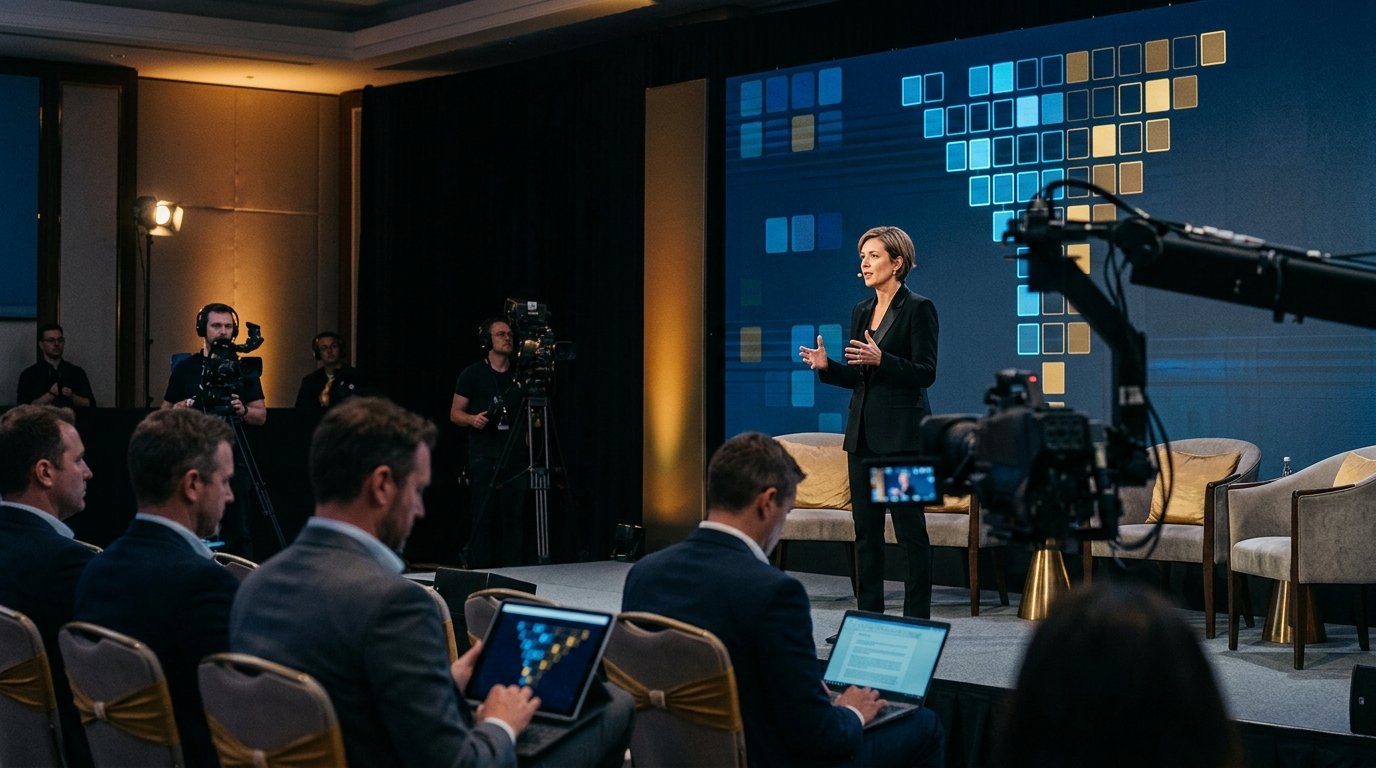
B2B Event Engagement: Finding Your Event's 'Wordle'
If streaming giants like Netflix and LG are betting on cloud gaming to kill passive scrolling, why is your B2B event still relying on static presentations? The shift from 'lean-back' viewership to 'lean-forward' participation is the new benchmark for professional gatherings.
How can gamification increase attendee engagement at B2B events?
The streaming wars have entered a new, more interactive phase. Netflix and LG are no longer content with being passive background noise; they are hunting for their 'Wordle'—that low-friction, high-frequency engagement loop that turns a viewer into a participant. LG, for instance, has partnered with the cloud gaming platform Blacknut to integrate gaming directly into their smart TV ecosystem, removing the need for consoles and lowering the barrier to entry. According to recent industry trends on event engagement, the corporate event sector is facing an identical challenge. The era of the passive attendee, content to sit through eight hours of back-to-back keynotes, is over. If your event doesn't offer a 'lean-forward' experience, you are losing your audience to the very devices they brought with them.
Gamification in the B2B context is frequently misunderstood as a childish distraction or a simple leaderboard for booth visits. In reality, it is a psychological tool designed to break the monotony of a long-form summit and stimulate the dopamine receptors associated with achievement and social recognition. By integrating interactive elements—whether through real-time polling that influences the speaker's direction, competitive networking challenges, or cloud-based gaming kiosks—planners can mirror the strategy of streaming platforms. The goal is to create a 'sticky' environment where the next interaction is only a few seconds away. This isn't about turning a fintech conference into an arcade; it's about utilizing the same engagement mechanics that keep users tethered to their smart TVs. When attendees are active, they are more likely to retain information and, more importantly, associate your brand with a sense of momentum rather than fatigue.
To successfully implement this, event organizers must look at the 'Wordle' model: a daily, simple, and highly shareable task. In a B2B setting, this translates to micro-engagements that don't require a manual to understand. For example, a cybersecurity conference could implement a 'threat-detection' mini-game accessible via a simple QR code, where the top performers are recognized on the main stage LED walls. This creates a narrative thread that connects the physical space to the digital experience. By focusing on these high-frequency, low-stakes interactions, you build a community of active participants rather than a room full of spectators. The psychological shift from being 'talked at' to 'playing with' the content is what separates a forgettable seminar from a landmark industry event.
Why is 'low-friction' content the key to post-event digital momentum?
The failure of many corporate gamification attempts lies in friction. Netflix’s pivot toward cloud gaming on TVs, using phones as controllers, is a masterclass in removing barriers. They realized that asking a user to buy a console or download a massive app is a conversion killer. B2B events often make the same mistake by forcing attendees to navigate complex, proprietary event apps that require new logins, multi-factor authentication, and steep learning curves. At major activations like SXSW, the most successful brands are those that integrate engagement into the existing flow of the attendee's day, rather than forcing them into a new, unfamiliar digital silo.
Low-friction content means that the transition from 'watching' to 'doing' is seamless. This applies to your post-event strategy as well. If your highlight reels and session recaps are buried behind gated walls or require a 10-minute commitment to watch, they will be ignored in the fast-moving LinkedIn feed. To maintain digital momentum, event planners must produce bite-sized, high-velocity assets. This mirrors the 'Wordle' effect: a small, daily interaction that provides immediate gratification and a sense of completion. By delivering same-day photo highlights and rapid-fire social cuts, you provide the 'low-friction' fuel that keeps the event's narrative alive on professional networks long after the physical doors have closed.
Furthermore, the concept of 'frictionless' extends to how attendees share their experience. If an executive has to wait three weeks for a photo of their panel, the moment has passed. The 'Wordle' success was built on the ease of sharing a simple grid of colored squares—no context needed, just instant social proof. B2B events need to provide that same level of instant utility. By utilizing AI-driven facial recognition or instant-delivery galleries, you allow attendees to share high-quality, professional content while the event is still trending. This turns every attendee into a high-tier content creator for your brand, amplifying your reach without the friction of traditional PR cycles. The objective is to make engaging with your event's digital footprint as effortless as playing a quick round of a mobile game during a coffee break.
How do premium photo and video assets act as the 'Wordle' of event marketing?
Visual storytelling is the ultimate low-friction engagement tool. A high-quality photograph or a 15-second cinematic clip requires zero effort from the viewer but delivers an immediate emotional impact. In the professional sphere, these assets serve as the social currency for your attendees. When an executive shares a professionally captured photo of themselves speaking at a major summit like Consensus, they aren't just posting a picture; they are participating in a high-value engagement loop that validates their presence and your event's prestige. This is the 'Wordle' of B2B: a shareable, recognizable, and repeatable piece of content that reinforces brand loyalty and professional status.
There is a direct correlation between production quality and the 'shareability' of event content. Low-quality, grainy phone shots do not get shared by C-suite executives who are protective of their personal brand. Premium visual assets, however, are treated as assets by the attendees themselves. As discussed in professional discussions on streaming and engagement, the quality of the broadcast and the speed of delivery are the two variables that determine whether an event goes viral within its niche or fades into obscurity. If the content looks like a Netflix production, it will be treated with the same level of attention. If it looks like a standard corporate recording, it will be relegated to the 'watch later' list that is never actually watched.
Alesia RSVP understands this dynamic intimately. We don't just 'cover' an event; we produce the high-octane visual assets that power these engagement loops. By delivering magazine-quality editorial photography and same-day video recaps, we enable our clients to offer their attendees a premium, low-friction way to stay connected to the brand. In the hunt for your event's 'Wordle,' high-end production is the most effective weapon in your arsenal. It provides the 'shareable grid' that proves participation and excellence. When your visual assets are as polished as the gaming interfaces developed by Blacknut or the streaming UI of Netflix, you move beyond simple documentation and into the realm of experience design. Stop settling for passive viewership and start building an interactive legacy through high-velocity, high-quality content that demands to be shared.
FAQ
What is low-friction engagement in the context of corporate events?
Low-friction engagement refers to interactive elements that require minimal effort, no specialized hardware, and no complex onboarding from the attendee. Inspired by the 'Wordle' model and cloud gaming platforms like Blacknut, this includes using smartphones as controllers for on-screen activities, web-based (no-app) interaction tools, and receiving instant, high-quality photos that are ready for social sharing without any editing required by the user. The goal is to remove every possible barrier between the attendee and the interaction.
How can I integrate gaming elements into my next B2B conference without it feeling childish?
The key is to focus on 'utility-based gamification' rather than just 'play.' Integration should focus on cloud-based solutions that don't require app downloads. Utilize large-scale LED walls for live leaderboards that track session attendance or networking milestones. Implement interactive polling that directly influences the direction of a keynote or a panel discussion, giving attendees a sense of agency. You can also create 'low-friction' gaming zones where attendees can engage in short, 60-second challenges that relate back to the event's core themes, such as a logic puzzle for a tech summit or a strategy simulation for a leadership retreat.
Why is high-quality video essential for event gamification strategies?
High-quality video acts as the visual proof of engagement and the primary driver of FOMO (Fear Of Missing Out) for those not participating. When attendees and remote observers see cinematic recaps of interactive sessions or high-energy gaming activations, it validates the experience and encourages more passive observers to join the 'active' group. Furthermore, in a 'lean-forward' digital economy, the quality of the video signals the importance of the content. High-production value ensures that the gamified elements are taken seriously by high-level stakeholders and provides the professional 'social currency' needed for the content to be shared across LinkedIn and other professional platforms, thereby increasing overall event ROI.
How does the 'Wordle' strategy apply to B2B content distribution?
The 'Wordle' strategy is based on three pillars: simplicity, frequency, and shareability. For B2B events, this means moving away from massive, 60-minute session recordings as your primary output. Instead, distribute 'micro-content'—daily highlights, 30-second expert insights, and professional headshots—that can be consumed and shared in under a minute. By providing these small, high-quality 'wins' to your audience every day during and after the event, you create a habit of engagement that mirrors the daily ritual of a Wordle player.
Frequently Asked Questions
What is low-friction engagement in the context of corporate events?
Low-friction engagement refers to interactive elements that require minimal effort, no specialized hardware, and no complex onboarding from the attendee. Inspired by the 'Wordle' model and cloud gaming platforms like Blacknut, this includes using smartphones as controllers for on-screen activities, web-based (no-app) interaction tools, and receiving instant, high-quality photos that are ready for social sharing without any editing required by the user. The goal is to remove every possible barrier between the attendee and the interaction.
How can I integrate gaming elements into my next B2B conference without it feeling childish?
The key is to focus on 'utility-based gamification' rather than just 'play.' Integration should focus on cloud-based solutions that don't require app downloads. Utilize large-scale LED walls for live leaderboards that track session attendance or networking milestones. Implement interactive polling that directly influences the direction of a keynote or a panel discussion, giving attendees a sense of agency. You can also create 'low-friction' gaming zones where attendees can engage in short, 60-second challenges that relate back to the event's core themes, such as a logic puzzle for a tech summit or a strategy simulation for a leadership retreat.
Why is high-quality video essential for event gamification strategies?
High-quality video acts as the visual proof of engagement and the primary driver of FOMO (Fear Of Missing Out) for those not participating. When attendees and remote observers see cinematic recaps of interactive sessions or high-energy gaming activations, it validates the experience and encourages more passive observers to join the 'active' group. Furthermore, in a 'lean-forward' digital economy, the quality of the video signals the importance of the content. High-production value ensures that the gamified elements are taken seriously by high-level stakeholders and provides the professional 'social currency' needed for the content to be shared across LinkedIn and other professional platforms, thereby increasing overall event ROI.
How does the 'Wordle' strategy apply to B2B content distribution?
The 'Wordle' strategy is based on three pillars: simplicity, frequency, and shareability. For B2B events, this means moving away from massive, 60-minute session recordings as your primary output. Instead, distribute 'micro-content'—daily highlights, 30-second expert insights, and professional headshots—that can be consumed and shared in under a minute. By providing these small, high-quality 'wins' to your audience every day during and after the event, you create a habit of engagement that mirrors the daily ritual of a Wordle player.