
Bitcoin Flash Crash: Impact on B2B Crypto Event Strategy
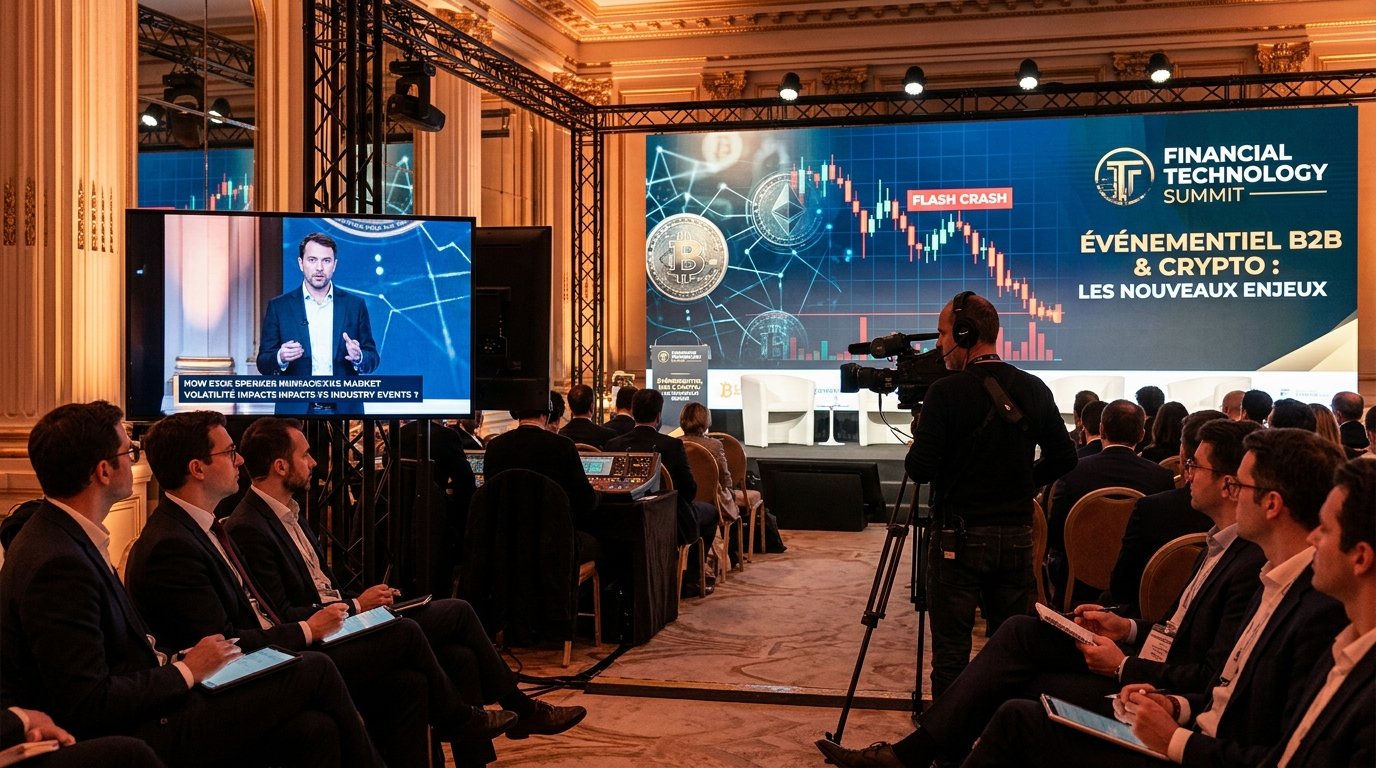
Bitcoin Flash Crash: Impact on B2B Crypto Event Strategy
A deep dive into how the 2025 Bitcoin flash crash forced a professional pivot in corporate event management and high-stakes visual storytelling.
How does crypto market volatility influence the atmosphere of global B2B events?
When $19 billion vanishes in minutes, the shockwaves aren't just felt on trading screens—they ripple through the halls of the world's most exclusive crypto summits. One year after the October 2025 flash crash, the industry has undergone a visible metamorphosis. The era of unchecked exuberance at conferences has been replaced by a grounded, institutional sobriety. This isn't just a change in mood; it is a fundamental shift in how corporate decision-makers approach networking and brand presence. The flashy, superficial activations of 2021 have been discarded in favor of high-level policy discussions and technical infrastructure debates. At major gatherings like Consensus 2026, the energy is no longer about the price of the day, but the resilience of the ecosystem. The 2025 liquidity event served as a definitive pivot point, separating the transient players from the long-term architects of the digital asset space. This transition is reflected in the physical layout of these events: the 'hype booths' featuring neon lights and loud music have largely vanished, replaced by minimalist, high-end meeting lounges designed for deep-dive technical consultations and regulatory alignment sessions.
Market volatility acts as a filter for event quality. During the bull runs, every pop-up event is packed, regardless of the value proposition. However, in the wake of a massive liquidation event, only the events with real substance survive. Professionals in the sector have become more discerning, moving away from 'hype-cycles' and toward long-term strategic partnerships. This shift is clearly documented in industry reactions to market shifts on LinkedIn, where the discourse has moved from price prediction to risk management and crisis communication. For an event organizer, this means the 'spectacle' is out, and 'utility' is in. The focus has shifted toward the 'Great Professionalization,' where the quality of the attendee list is prioritized over the sheer volume of ticket sales. We are seeing a rise in invitation-only executive summits that prioritize privacy and high-stakes deal-making over the mass-market approach that dominated the previous decade. This exclusivity is a direct response to the need for stability in an otherwise unstable market environment.
We see this specifically in the way sponsors engage. Instead of massive, empty booths, brands are investing in private meeting suites and curated roundtables. The objective is no longer to be the loudest in the room, but to be the most stable. In cities like London and New York, the post-crash conference landscape is defined by its maturity. The 2025 wake-up call taught the industry that while speculative exposure can evaporate in seconds, a well-built network remains. Consequently, the focus of B2B events has pivoted toward fostering these durable connections, ensuring that even when the charts are red, the room stays full of builders and institutional backers. This institutional inertia provides a floor for event attendance that did not exist in 2018 or 2022. The current strategy for major brands involves a multi-year commitment to specific flagship events, viewing them as essential touchpoints for maintaining market confidence rather than optional marketing expenses. This shift toward long-termism is perhaps the most significant legacy of the 2025 crash, turning the event circuit into a cornerstone of institutional trust rather than a playground for retail speculation.
Why is professional visual documentation vital for brands during market uncertainty?
In a market defined by volatility, optics are a form of currency. When a flash crash occurs, the immediate reaction from the outside world is often one of skepticism or panic. This is why professional visual documentation is no longer a luxury for crypto brands; it is a strategic necessity. High-end photography and video production provide a tangible counter-narrative to market chaos. They show that despite the liquidations, the industry leaders are still present, still collaborating, and still building. According to event industry trends and crisis management, the visual representation of an organization during a downturn directly correlates with perceived stability. When a brand invests in high-fidelity visual storytelling during a bear market, it signals to the market that they have the treasury and the long-term vision to weather the storm. This is 'Visual Proof of Work'—a demonstration of continued activity and relevance when others are retreating into silence.
At events like the Digital Asset Summit, the visual storytelling has shifted from recording 'parties' to capturing 'partnerships.' Brands need to project an image of permanence. A grainy smartphone video of a keynote speaker does not inspire confidence in a VP of Marketing or a C-suite executive. Conversely, a multi-camera broadcast or a magazine-quality photo gallery suggests that the brand has the resources and the foresight to maintain standards regardless of market conditions. This level of production quality serves as a signal to investors and clients that the firm is not a transient player. The psychological impact of seeing high-resolution imagery of a crowded, professional conference floor during a market dip cannot be overstated. It provides a sense of continuity and progress that counters the 'doom-scrolling' culture of financial Twitter. For institutional stakeholders, these visuals are often the only window into the health of the ecosystem outside of the price charts.
Furthermore, visual content is the primary tool for post-event ROI. If a company spends six figures on a sponsorship during a market dip, they must maximize the reach of that investment. Professional video recaps and on-site podcasts allow that single event to generate months of thought leadership content. This strategy ensures that the brand remains visible and vocal when competitors might be retreating. By documenting the 'human' side of the technology—the intense debates, the handshake deals, the late-night strategy sessions—brands can build a level of trust that a price chart could never achieve. This content becomes a vital asset for investor relations teams, who can use these high-quality visuals to demonstrate the tangible progress of the company's partnerships and ecosystem growth. In an era where digital trust is easily eroded, the physical presence captured through professional lenses acts as a necessary anchor for brand equity.
What have event organizers learned from the 2025 flash crash about community resilience?
The 2025 flash crash was a stress test for the community, and the results have permanently altered event planning checklists. Organizers have realized that community resilience is not built on shared profit, but on shared mission. The events that saw the highest retention rates in the year following the crash were those that prioritized education and high-level networking over entertainment. This is a significant departure from the 'party-first' mentality that dominated the previous cycle. Today’s summits are designed to be resilient to external shocks, with flexible programming that can pivot to address market shifts in real-time. This means having 'crisis tracks' ready to activate if a major market event occurs during the conference, ensuring that the event remains relevant regardless of what is happening on the exchanges. The ability to provide immediate, expert analysis in a physical setting is one of the unique value propositions of the modern B2B summit.
As the premier visual storytellers for global crypto conferences, Alesia RSVP captures the raw emotion and strategic pivots that occur when market volatility meets real-world networking. We document the resilience of the industry, moving beyond price charts to show the faces of the leaders navigating these high-stakes cycles. Whether it is a closed-door executive session in Dubai or a massive developer gathering in Paris, our role is to ensure that the narrative remains focused on progress and professionalism. We have seen firsthand how the most successful brands use this 'wake-up call' to refine their message and double down on high-quality production to distance themselves from the noise. Our documentation focuses on the 'quiet work'—the intense collaboration and technical problem-solving that happens behind the scenes, which is far more indicative of long-term success than any short-term price action. This shift in documentation style mirrors the industry's own shift toward maturity and substance.
In conclusion, the $19 billion liquidation of 2025 was not an ending, but a graduation. The B2B event space has matured, recognizing that the true value of a conference is not found in the ticker price of an asset, but in the collective intelligence of the attendees. For the decision-makers planning the next generation of summits, the path forward is clear: prioritize quality, document every strategic move with precision, and focus on the long-term narrative of growth. The flash crash was the wake-up call; the current era of professional, high-production events is the response. By moving away from the ephemeral and toward the enduring, the crypto event industry has finally found its footing as a serious pillar of the global financial calendar. The events of 2026 and beyond are no longer just gatherings; they are the strategic hubs where the future of finance is being documented, one high-resolution frame at a time.
FAQ
How do crypto market cycles affect attendance at major tech conferences?
While retail attendance fluctuates with price, institutional and B2B attendance often remains steady or increases during downturns as firms seek strategic partnerships and market clarity. Professional events prioritize 'builders' over 'speculators,' leading to higher-quality networking even if total attendee numbers dip slightly. This 'flight to quality' ensures that the most influential decision-makers remain present regardless of market conditions.
Why should crypto brands prioritize high-end video content during market downturns?
High-production video signals stability and institutional maturity to stakeholders during times of uncertainty. Professional content allows brands to control their narrative and demonstrate that they remain operational and well-funded. It serves as a hedge against reputational risk and provides a long-term asset for investor relations and brand building.
What is the ROI of professional photography at a B2B crypto event?
The ROI is found in brand equity and content longevity. Professional imagery allows a brand to maintain a premium presence across all digital channels for months after the event. It also facilitates higher-quality press coverage, as major publications require high-resolution, professional visuals to accompany their reports on the industry.
How has the profile of crypto event sponsors changed since the 2025 crash?
Sponsorship has shifted from marketing-heavy retail platforms to infrastructure providers, custody solutions, and regulatory compliance firms. These sponsors prioritize private meeting spaces and technical workshops over large-scale brand awareness activations, reflecting a more mature and targeted approach to business development.
Does regional location impact the resilience of a crypto event?
Yes, regions with strong regulatory frameworks, such as Dubai or London, tend to host more resilient events. These locations attract institutional players who are less affected by short-term price volatility and more focused on the long-term integration of digital assets into the global financial system.
Frequently Asked Questions
How do crypto market cycles affect attendance at major tech conferences?
While retail attendance fluctuates with price, institutional and B2B attendance often remains steady or increases during downturns as firms seek strategic partnerships and market clarity. Professional events prioritize 'builders' over 'speculators,' leading to higher-quality networking even if total attendee numbers dip slightly. This 'flight to quality' ensures that the most influential decision-makers remain present regardless of market conditions.
Why should crypto brands prioritize high-end video content during market downturns?
High-production video signals stability and institutional maturity to stakeholders during times of uncertainty. Professional content allows brands to control their narrative and demonstrate that they remain operational and well-funded. It serves as a hedge against reputational risk and provides a long-term asset for investor relations and brand building.
What is the ROI of professional photography at a B2B crypto event?
The ROI is found in brand equity and content longevity. Professional imagery allows a brand to maintain a premium presence across all digital channels for months after the event. It also facilitates higher-quality press coverage, as major publications require high-resolution, professional visuals to accompany their reports on the industry.
How has the profile of crypto event sponsors changed since the 2025 crash?
Sponsorship has shifted from marketing-heavy retail platforms to infrastructure providers, custody solutions, and regulatory compliance firms. These sponsors prioritize private meeting spaces and technical workshops over large-scale brand awareness activations, reflecting a more mature and targeted approach to business development.
Does regional location impact the resilience of a crypto event?
Yes, regions with strong regulatory frameworks, such as Dubai or London, tend to host more resilient events. These locations attract institutional players who are less affected by short-term price volatility and more focused on the long-term integration of digital assets into the global financial system.