
CME vs CFTC: How 'Perps' Are Shaping Web3 Event Strategy
CME vs CFTC: How 'Perps' Are Shaping Web3 Event Strategy
An in-depth analysis of the CME Group vs. CFTC dispute over on-chain perpetual futures. We explore how this regulatory tug-of-war is transforming the structure, networking, and high-end AV production of global Web3 summits leading into 2026.
Why the CME vs. CFTC Battle is the Core of 2026 Web3 Event Agendas
When TradFi giants and DeFi protocols clash in federal courts, the atmosphere of Web3 summits becomes electric. This is no longer just a difference of opinion between regulators and the industry; it is an open war for control of a market whose offshore volume reached a staggering $60 trillion last year. For event organizers in New York or London, the conflict between CME Group (Chicago Mercantile Exchange) and the CFTC (Commodity Futures Trading Commission) is not just legal background noise—it is the primary driver of the 2026 conference calendar. The CFTC’s decision, under Chairman Rostin Behnam, to allow platforms like Kalshi and later Coinbase to list on-chain 'perpetual futures' has shattered a decades-old status quo.
CME, the legacy derivatives titan led by Terry Duffy, views this move as a direct violation of the Commodity Exchange Act. Their central argument is technical yet high-stakes: by definition, a 'futures' contract must have an expiration date. By validating perpetual contracts, the CME argues the CFTC is overstepping its authority, creating massive legal uncertainty. This battle, now heading to the appellate courts, creates an ambiguity that has paradoxically become the most sought-after content for B2B summits. Marketing Directors and Corporate Communications heads must realize that the narrative of their events is no longer about blockchain technology itself, but about institutional legitimacy and the very architecture of global financial markets.
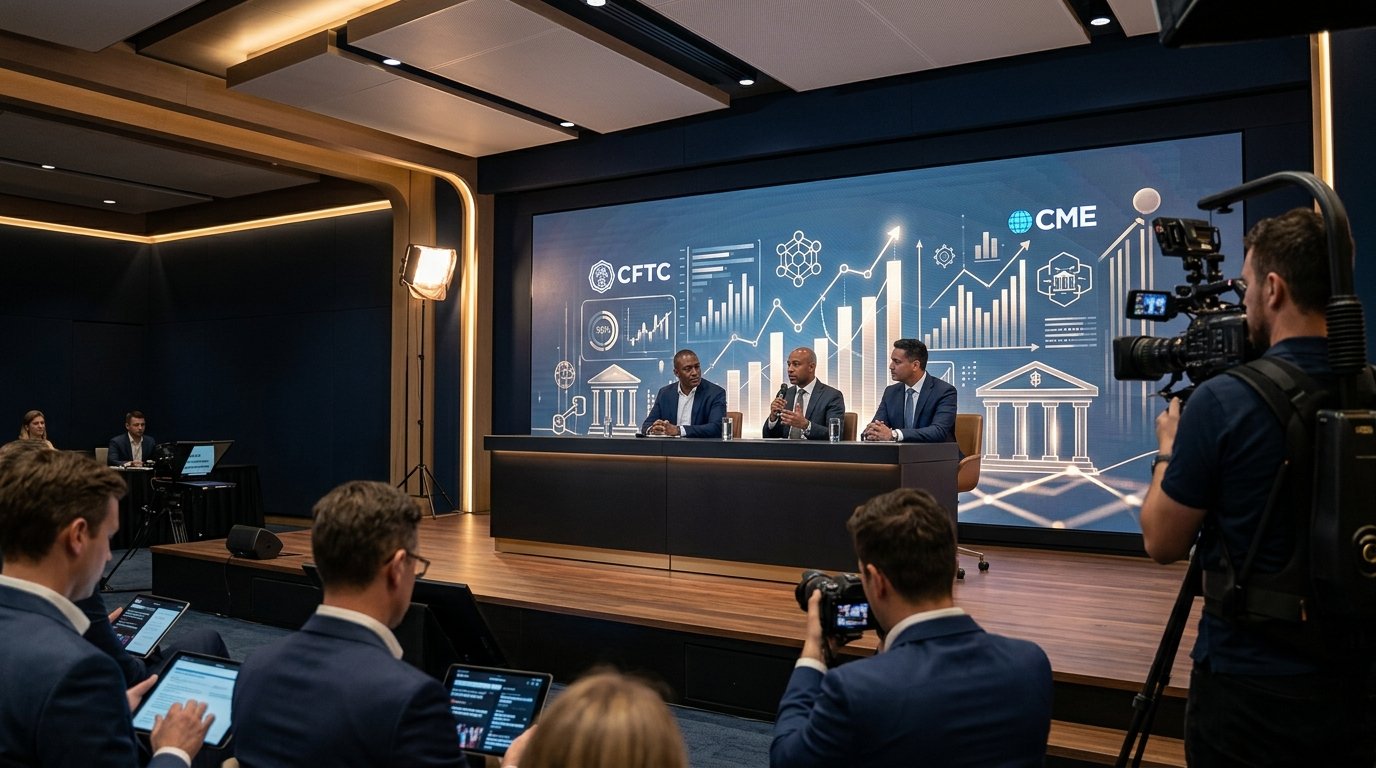
Recent LinkedIn discussion on CME vs CFTC highlights an industry at a crossroads. Your keynote content must reflect this tension. To ignore this conflict is to host an event disconnected from market reality. As experts in AV production for financial summits, we are seeing that the most attended sessions are now those where legal experts, DC lobbyists, and regulators go head-to-head on stage. Capturing these moments requires surgical precision. It’s no longer about filming a PowerPoint; it’s about immortalizing the verbal jousting that will determine which DeFi protocols remain legal in two years. This demand for quality is transforming production: multi-cam setups, studio-grade mics, and live vision mixing are now the standard for establishing credibility with a C-suite audience.
How 'Perpetual Futures' are Redefining Networking in Financial Summits
The 'perps' debate goes far beyond order books or smart contract code. In networking lounges at events like the Digital Asset Summit, this theme is completely redefining circles of influence. DeFi players, once relegated to the fringes or hackathons, are now at the center of strategic discussions with Wall Street institutions. This forced hybridization of decentralized finance and strict regulation (including MiCA in the EU and evolving SEC/CFTC stances in the US) is changing the nature of networking. Attendees no longer come just for technical partnerships or seed rounds; they come to align lobbying strategies, discuss on-chain KYC/AML compliance, and anticipate the next move from Washington.
For event organizers, this means the 'lounge' must be reimagined. It is no longer just a break area with a buffet; it is a high-stakes, high-confidentiality zone where the industry’s future norms are negotiated. On-site content production, particularly through mobile podcast studios or 'fast-track' interview zones, has become an essential thought leadership tool. By documenting these exchanges (while respecting Chatham House Rules where necessary), brands assert their position in this new ecosystem. Trends highlighted by BizBash trends in event industry confirm that attendee engagement peaks when topics touch on financial sovereignty and asset regulation.
The 'perpetual future' has become a metaphor for the modern event: a continuous stream of data and interaction without a real expiration date, extended by a rigorous post-event content strategy. This is where high-end photo and video coverage becomes vital. Capturing the intensity of a debate between a CME executive and a DeFi founder in a Dubai lounge creates invaluable marketing collateral. This visual content is no longer just a social media souvenir; it is proof of authority in a shifting market. Production agencies must now deliver 'hero clips' within minutes to feed financial news cycles, turning every booth interaction into a global corporate communication opportunity.
The Stakes of On-Chain Regulation for B2B Conference Organizers
On-chain regulation, crystallized by the CME/CFTC standoff, demands a new level of editorial rigor in B2B event planning. It’s no longer just about logistics or catering; it’s about pure editorial positioning. Organizers must navigate with precision between the compliance requirements of institutional sponsors (banks, hedge funds) and the disruptive agility of Web3 native players. This duality is at the heart of our approach at Alesia RSVP. As an agency capturing the essence of the world's largest blockchain summits like Consensus or EthCC, we document the debates shaping the future of global finance.
This regulatory conflict isn't a distant legal matter; it's the heartbeat of the discussions we immortalize on film. For a VP of Events or a Head of Marketing, the priority is ensuring that every minute of debate on perps or tokenization is captured with cinematic quality. Why? Because these visuals will anchor the brand’s institutional communication for the entire year. The complexity of financial products like on-chain perps requires absolute visual clarity during presentations. A glitchy livestream, poor white balance, or mediocre audio during a major regulatory announcement can severely damage the credibility of a summit and its organizers.
As we approach 2026, the ability to produce high-end content that visually translates the sophistication of financial markets is the ultimate differentiator for event agencies. You need to understand the nuances between a 'swap,' a 'future,' and a 'perp' to know which speaker to frame at the right moment. In conclusion, the battle for perpetual futures is a wake-up call for the professionalization of Web3 events. Decision-makers must partner with production teams who understand not just the AV tech (4K, three-point lighting, audio mixing), but also the macroeconomic and regulatory stakes driving their speakers. This dual expertise—technical and sectoral—is what transforms a simple conference into a historic industry milestone.
FAQ
How does perp regulation impact crypto conference programming?
Regulation of perpetual futures shifts the focus of crypto conferences toward high-level legal and institutional debates. This attracts a C-suite audience of financial leaders, compliance officers, and regulators, requiring more formal event production, increased security, and corporate-grade content capture to document strategic exchanges.
Why is high-quality visual content crucial during regulatory debates?
High-quality visual content serves as proof of authority and thought leadership. In the context of the CME vs. CFTC conflict, professional video capture helps demystify complex technical subjects and broadcasts strategic messages to global stakeholders, ensuring the event's influence extends beyond the venue.
Frequently Asked Questions
How does perp regulation impact crypto conference programming?
Regulation of perpetual futures shifts the focus of crypto conferences toward high-level legal and institutional debates. This attracts a C-suite audience of financial leaders, compliance officers, and regulators, requiring more formal event production, increased security, and corporate-grade content capture to document strategic exchanges.
Why is high-quality visual content crucial during regulatory debates?
High-quality visual content serves as proof of authority and thought leadership. In the context of the CME vs. CFTC conflict, professional video capture helps demystify complex technical subjects and broadcasts strategic messages to global stakeholders, ensuring the event's influence extends beyond the venue.