
Why CMOs Are Lagging in AI: A Guide for B2B Event Leaders
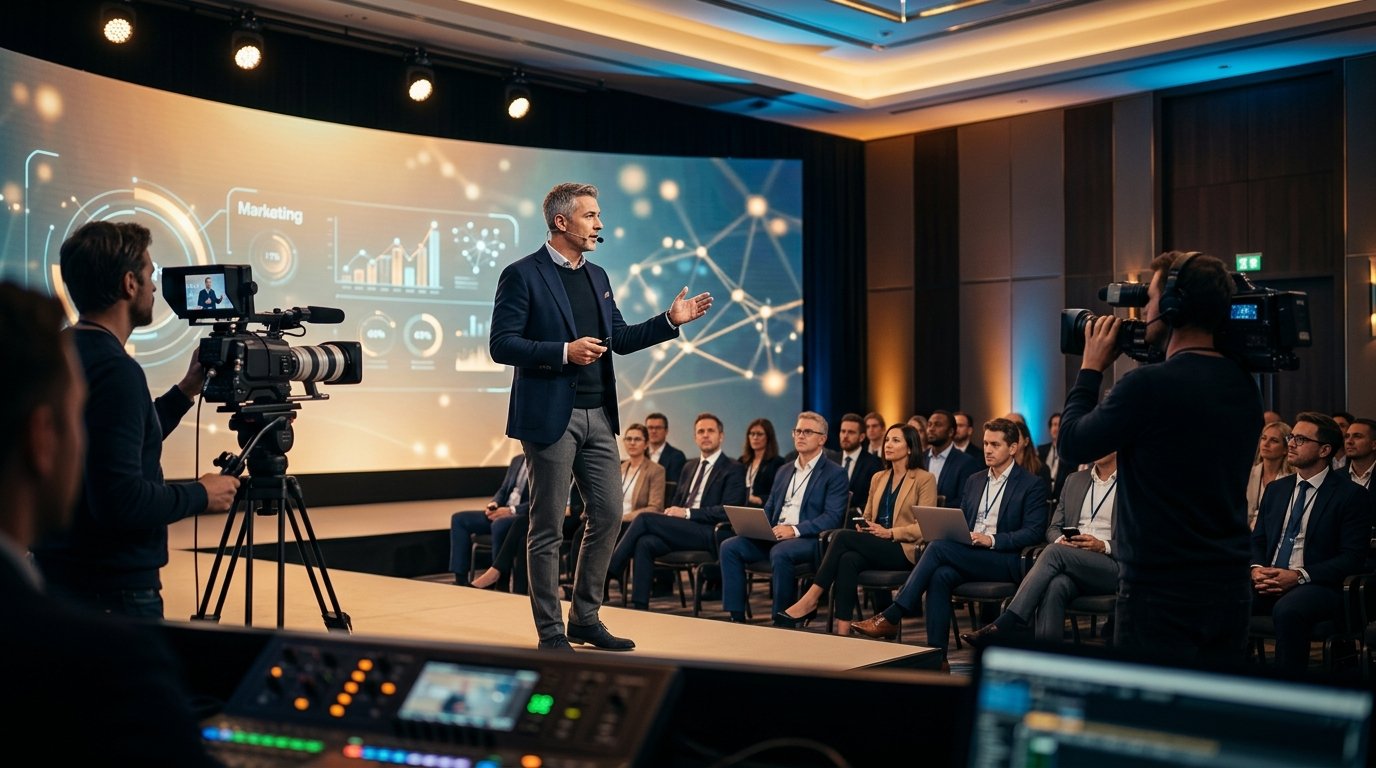
Why CMOs Are Lagging in AI: A Guide for B2B Event Leaders
A recent NewtonX/Adweek survey reveals that 47% of marketing leaders lack critical AI skills, creating a strategic blind spot for corporate events and brand consistency.
The AI Proficiency Gap: Why Marketing Leaders are Falling Behind
The data is clear: while Artificial Intelligence has become the engine of marketing performance, the executives responsible for steering it are often the least equipped to do so. A recent study by NewtonX for Adweek, surveying 500 industry professionals, reveals that 47% of respondents consider the C-suite to be the least proficient level regarding AI. This technological gap isn't just a corporate anecdote; it's a major risk to brand consistency during high-stakes B2B gatherings. The study highlights that 81% of marketers believe their peers significantly overestimate their actual technical capabilities. This disconnect between self-perception and operational reality creates a strategic blind spot. For a Chief Marketing Officer, failing to master AI fundamentals means an inability to judge the relevance of tools deployed on the ground or the true efficiency of budgets allocated to content production.
This delay is partly explained by cognitive overload and a focus on traditional KPIs. CMOs, often coming from backgrounds centered on brand building or classic media strategy, struggle to integrate the purely technical dimension of generative and predictive AI. They often view AI as a 'black box,' delegating execution to lower levels without understanding the control levers. In the context of prestigious corporate events, this lack of knowledge results in an inability to leverage real-time data. Gartner data confirms this trend: only 15% of CEOs believe their CMO possesses the technological mastery needed to lead the company toward 2026. Lizzy Foo Kune, an analyst at Gartner, explains that many marketing leaders have fallen into a psychological trap: they believe AI will impact the industry globally without fundamentally redefining their own role as decision-makers.
This passivity is particularly visible in the corporate event sector, where speed of delivery and content personalization have become the gold standards. To explore these stakes further, you can check the LinkedIn discussion on the CMO AI gap currently trending among industry experts. Ignoring these signals means allowing your brand to lose relevance against more agile competitors who are already using AI to optimize every client interaction. The delay isn't just technical; it's cultural. Successful organizations are those where the CMO is no longer just a creative, but an architect of technological systems capable of transforming every keynote into a durable, measurable digital asset.
Revolutionizing Content Capture for High-End B2B Events
AI does more than just draft emails; it is redefining how we capture the essence of a summit or conference. For a marketing department, the challenge is to transform a fleeting event into a permanent, multi-channel content source. Integrating AI into audiovisual production workflows now allows for logistical feats that were once impossible. For instance, facial recognition integrated into a photo and video gallery allows for the instant sorting and distribution of professional portraits to VIPs and speakers, organically boosting the event's social reach. This is no longer simple photography; it is real-time visual data management. This technology eliminates traditional delivery delays, allowing attendees to share their experience while they are still physically at the venue.
On the video front, automated editing algorithms can now analyze hours of raw footage to extract the most impactful moments, creating short-form content tailored for social media just minutes after a session ends. AI identifies tone shifts, strategic keywords, and audience reactions to isolate sequences with high viral potential. This responsiveness is a strategic advantage for CMOs looking to maintain audience engagement far beyond the convention center walls. In Paris, we are seeing growing demand for these hybrid solutions where human framing expertise meets AI processing power. Leaders who understand these mechanisms can demand higher quality deliverables and smarter distribution of their digital assets. Capture is no longer limited to the image; it now encompasses semantics: AI generates precise transcripts that serve as the foundation for immediate blog posts, white papers, or post-event newsletters.
As noted in event tech trends on BizBash, AI is becoming the connective tissue between the physical experience and a brand's digital resonance. The modern CMO must stop viewing AV production as a technical line item and start seeing it as a data marketing lever. By automating low-value tasks like logging or indexing, AI frees up time for editorial reflection. This allows for the production of ten times the content volume at a controlled cost, while ensuring aesthetic quality worthy of the world's leading luxury brands.
Strategic Tech Solutions for Marketing Leaders Heading into 2026
The 2026 horizon marks a tipping point: AI will no longer be a differentiator but a condition for operational survival. To close the gap, CMOs must partner with providers who master the end-to-end technological value chain. This begins with adopting AI-driven Digital Asset Management (DAM) platforms capable of predicting which content types will generate the most engagement based on the target audience. These systems do more than store files; they analyze, tag, and suggest distribution optimizations based on historical performance. On-site podcast production, for example, now benefits from AI for instant audio cleaning and multi-language transcription, allowing for near-immediate global broadcast with flawless sound fidelity.
Another key solution lies in using generative AI for visual post-production. It is now possible to modify backgrounds, adjust lighting, or even correct a speaker's eye contact in a video after the shoot, ensuring a perfect result without expensive reshoots. Alesia RSVP sits precisely at this intersection: we provide marketing departments with the technical expertise they lack internally. By integrating AI into our capture and post-production processes, we allow CMOs to focus on strategic vision while ensuring high-level technological execution. Whether for a financial summit or a tech conference, our role is to translate AI complexity into tangible results: more views, more shares, and a clearly identified ROI. We help brands move from a reactive to a predictive approach to their event content.
The takeaway for any marketing leader is simple: AI is not a threat to your creativity, but it is ruthless toward inefficiency. Adopting these tools today ensures your brand remains a benchmark in an ecosystem where attention is the scarcest currency. Taking action doesn't require becoming an engineer; it requires choosing partners capable of transforming computing power into brand prestige. In 2026, the difference between a leading CMO and a following CMO will be measured by their ability to orchestrate these technologies to create memorable, highly profitable experiences. Investing in AI must be seen as an investment in long-term brand equity.
FAQ
Why are CMOs currently lagging in AI adoption?
According to Adweek and NewtonX, 47% of marketing leaders lack AI skills due to a focus on traditional creative strategies and a 'black box' perception of the technology, leading them to delegate execution without strategic oversight.
How does AI improve ROI for B2B events?
AI increases ROI by automating content production (editing, transcription, tagging), allowing for a 10x increase in content volume and instant social media distribution, which significantly extends the event's digital reach.
Is AI content capture compliant with GDPR and privacy laws?
Yes, when implemented correctly with partners like Alesia RSVP, AI tools like facial recognition for photo galleries can be managed with opt-in features and secure data processing to meet EU and US privacy standards.
Frequently Asked Questions
Why are CMOs currently lagging in AI adoption?
According to Adweek and NewtonX, 47% of marketing leaders lack AI skills due to a focus on traditional creative strategies and a 'black box' perception of the technology, leading them to delegate execution without strategic oversight.
How does AI improve ROI for B2B events?
AI increases ROI by automating content production (editing, transcription, tagging), allowing for a 10x increase in content volume and instant social media distribution, which significantly extends the event's digital reach.
Is AI content capture compliant with GDPR and privacy laws?
Yes, when implemented correctly with partners like Alesia RSVP, AI tools like facial recognition for photo galleries can be managed with opt-in features and secure data processing to meet EU and US privacy standards.