
2026 Seoul Corporate Event Budgeting: Rates & Planning
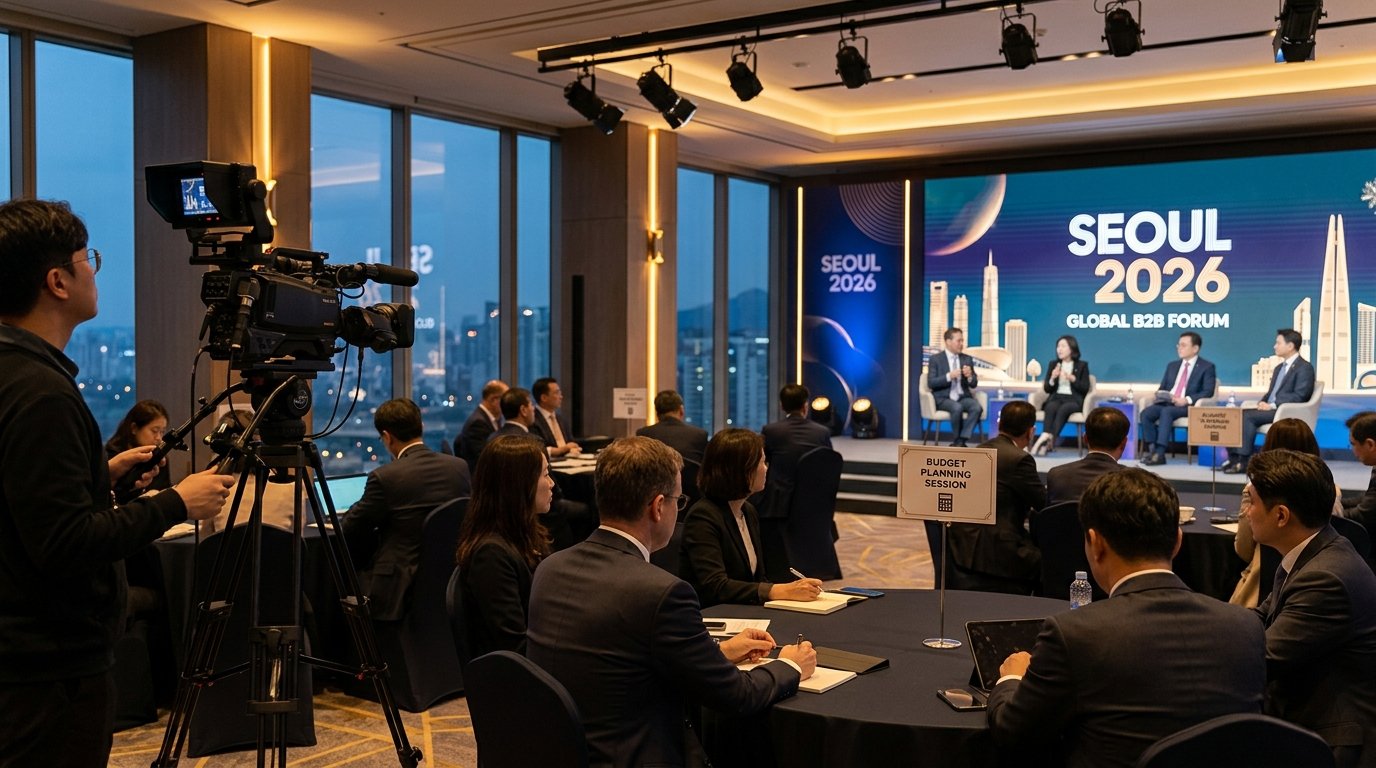
2026 Seoul Corporate Event Budgeting: Rates & Planning
An expert analysis of venue costs, AV production rates, and logistical planning for corporate events in Seoul for the 2026 season.
What are the projected venue and catering costs for Seoul corporate events in 2026?
Budgeting for a Tier-1 summit in Seoul for 2026 requires a departure from previous inflation-adjusted models. The South Korean market is experiencing a significant shift toward ultra-premium, tech-integrated spaces in districts like Gangnam and Jung-gu. Event directors should anticipate rising baseline venue rentals driven by a premium on prime real estate within the central business districts and increasing operational overheads. Catering is another significant line item where quality expectations have surged. Standard international buffets are no longer the benchmark for B2B excellence; decision-makers are now opting for curated, Michelin-adjacent menus that reflect Seoul's status as a global culinary capital. While these costs are substantial, the infrastructure provided by Seoul's top-tier venues—including high-density Wi-Fi and integrated LED surfaces—is often superior to equivalent spaces in Western Europe. To manage these fluctuations, planners should consult live market data and secure contracts well in advance to hedge against the continued appreciation of local service costs. If you fail to lock in rates early, your contingency fund will need to be robust enough to absorb the inevitable price escalations in the South Korean hospitality sector.
How can international brands effectively manage AV and vendor coordination in South Korea?
Managing technical production in Seoul is a study in balancing 'K-standard' efficiency with international corporate expectations. The local market is dominated by highly specialized vendors who operate with extreme precision but often within rigid silos. For an international event director, the challenge lies in the orchestration. Seoul's production environment requires a local partner who understands the 'Pali-pali' (hurry-hurry) culture while maintaining the meticulous standards required by global C-suite executives. AV coordination in 2026 will be dominated by the demand for 8K resolution displays and AI-integrated live translation services. These are the baseline for summits in a city that prides itself on technical dominance. Managing these vendors directly is often a recipe for miscommunication; the most successful international summits utilize a centralized production agency to bridge the language and technical gaps. This ensures that the technical rider provided by keynote speakers is met accurately. Effective management also means understanding South Korean labor laws, which have become increasingly strict regarding overtime and weekend work. Budgeting for a 24-hour setup window is often more cost-effective than attempting a high-pressure overnight build, which can trigger significant labor surcharges.
Why is high-end photo and video documentation a critical line item for your Seoul event budget?
The value of a corporate event in 2026 is measured long after the final keynote ends. For an event in Seoul, the visual documentation serves as a powerful signal of a brand's global reach and sophistication. High-end photo and video coverage are not merely archival; they are the primary assets for your post-event marketing cycle. Alesia RSVP approaches this through the lens of editorial storytelling, ensuring that every frame captured reflects the premium nature of the brand. In the context of a Seoul summit, this includes same-day highlight reels that can be shared with global stakeholders instantly. The ROI of professional documentation is found in the ability to repurpose a single three-day event into months of high-authority LinkedIn content, internal communications, and recruitment assets. In the South Korean market, where visual aesthetics are prioritized, the quality of your event's digital twin—the video and photo record—is what determines the event's ultimate success in the eyes of the board and external sponsors. We recommend prioritizing visual production as a core strategic pillar rather than a secondary expense.
What logistical challenges should event directors anticipate when planning in Seoul?
Logistics in Seoul are defined by world-class infrastructure and extreme density. While the KTX high-speed rail and the Incheon Airport Expressway are marvels of efficiency, the sheer volume of traffic in districts like Teheran-ro can derail a tightly scheduled itinerary. For 2026, event directors must account for buffer zones in their scheduling that go beyond standard planning. Transporting VIP speakers from Incheon to the city center can vary significantly depending on the hour. Professional ground handling is mandatory, as app-based ride-sharing services in Korea operate differently than in the US or Europe. Furthermore, the local regulatory environment for events is rigorous; safety certifications for temporary structures and strict fire codes for complex LED builds require early submission to local authorities. Another logistical nuance is the high demand for professional simultaneous interpretation. The formality of B2B summits often necessitates high-level Korean-English translation to ensure no nuance is lost during Q&A sessions. At Alesia RSVP, we bridge the gap between these complex logistical requirements and high-end visual storytelling. We ensure your Seoul event budget accounts for top-tier AV coordination and the premium documentation your brand deserves, eliminating the friction of managing multiple local subcontractors.
FAQ
What is the average lead time for booking premium venues in Seoul for 2026?
For flagship venues in Gangnam or major luxury hotels, a lead time of 12 to 18 months is recommended to secure preferred dates and lock in service rates before seasonal adjustments.
Questions Fréquentes
What is the average lead time for booking premium venues in Seoul for 2026?
For flagship venues in Gangnam or major luxury hotels, a lead time of 12 to 18 months is recommended to secure preferred dates and lock in service rates before seasonal adjustments.