
Saudi Aviation Crisis: The Future of B2B Events & MICE
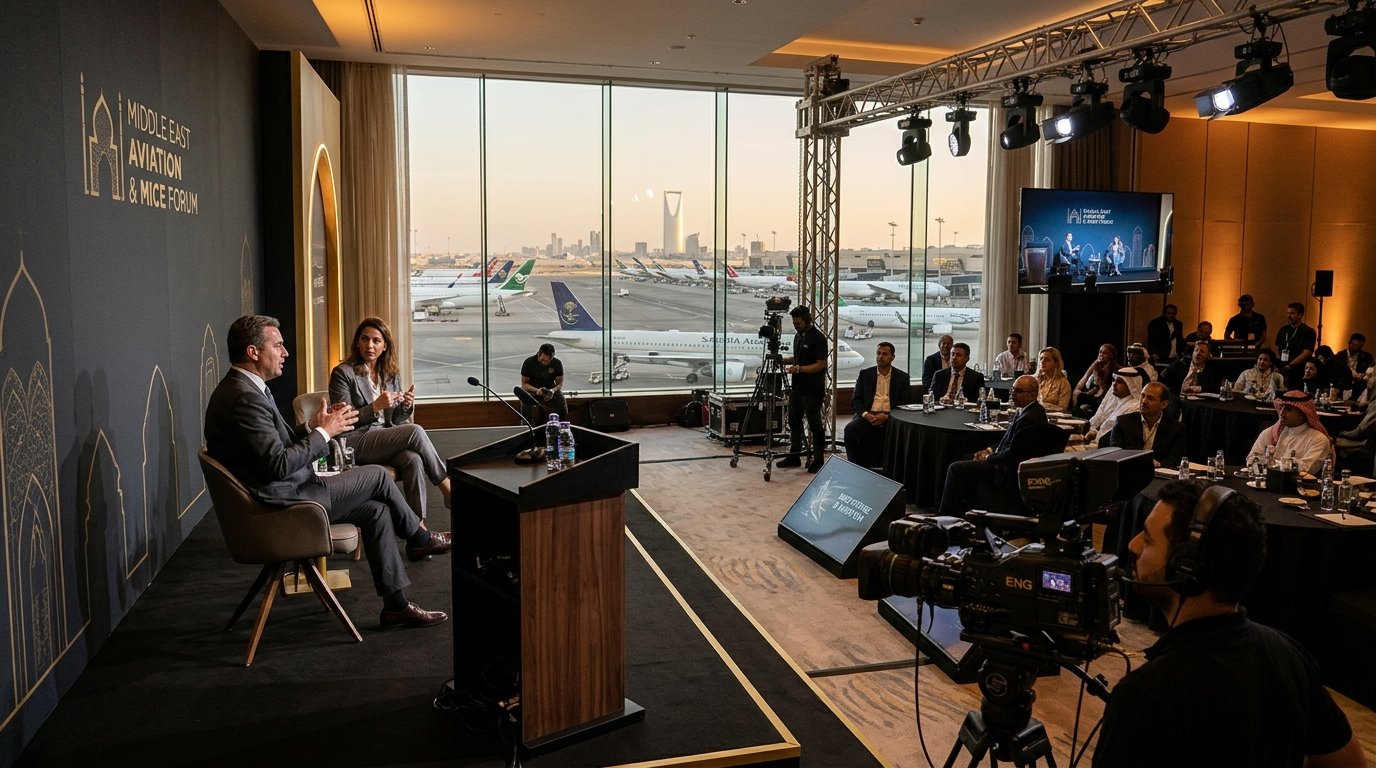
Saudi Aviation Crisis: The Future of B2B Events & MICE
A deep-dive analysis into how Riyadh’s airport restrictions are reshaping the global event calendar, forcing CMOs and event planners to shift operational focus toward Dubai and Paris for the 2026-2027 seasons.
What are the best alternatives for B2B events originally planned for Riyadh?
The current paralysis of Saudi airspace is more than a temporary logistical glitch; it is a structural wake-up call for CMOs, VP Events, and Chiefs of Staff who had banked on the Kingdom for their 2026 strategic summits. With King Khalid International Airport (RUH) under significant restrictions and growing uncertainty over landing slots, the operational risk has become untenable for luxury brands, top-tier consultancy firms, and international financial institutions. Pivoting to mature hubs is no longer a 'Plan B'—it is a brand protection necessity. In this shifting landscape, Dubai naturally emerges as the primary alternative. Boasting a battle-tested aviation infrastructure (DXB and DWC) and unmatched hospitality capacity, the city-state is already absorbing a massive share of the MICE (Meetings, Incentives, Conferences, Exhibitions) traffic originally destined for Saudi Arabia.
Organizing an event in Dubai guarantees global accessibility without the current security or administrative volatility. For a corporation, the reliability of a hub like Corporate Events Dubai lies in its ability to mobilize world-class audiovisual production services at a moment's notice. B2B decision-makers are no longer just looking for prestige; they demand a guarantee of continuity. This shift toward the UAE highlights a fundamental trend: geographical resilience now trumps the 'novelty factor.' Discussions regarding the impact on corporate travel in Saudi Arabia, widely documented on platforms like LinkedIn, confirm that attendee safety and seamless transit have become non-negotiable criteria for 2026.
Beyond Dubai, European metropolises like Paris are seeing their booking calendars fill up for conferences originally slated for the Middle East. The capacity of Corporate Events Paris to provide a prestigious, secure, and ultra-connected environment makes it an ideal refuge for executive summits and high-end product launches. Destination selection must now include a multi-criteria risk analysis covering aviation logistics, geopolitical stability, and, crucially, the local presence of vendors capable of delivering consistent quality despite last-minute changes. Emergency relocation requires total reactivity from production teams (video, photo, technical) to maintain the standard of excellence expected by shareholders and VIP clients. In 2026, operational flexibility is the new luxury.
How is the Saudi transport crisis impacting the global event calendar through 2027?
The partial freeze on scheduled flights and capacity restrictions toward Riyadh are sending shockwaves far beyond the current season. The massive postponement of the Saudi event season to 2027 is creating an unprecedented bottleneck in the global MICE calendar. Organizers of major economic forums, tech summits, and sales conventions now find themselves in direct competition for dates and venues in other global hubs. This temporal shift is forcing brands to entirely rethink their annual presence strategies. We are already observing extreme density in the second half of 2026 for cities like Singapore, London, and Paris, heightening the pressure on local resources—from venues to technical production crews.
This situation exposes the fragility of event strategies that over-rely on a single emerging market, however promising it may be. According to the latest BizBash trends on event industry resilience, companies that successfully maintain their leadership are those with geographically agnostic production partners. The risk of saturation in 'refuge' markets is real and immediate. Venue rental and technical production costs in Dubai, Paris, or Singapore are expected to climb by 20% to 30% due to the sudden influx of relocation requests. It has become imperative to lock in strategic partners—high-end photographers, corporate-specialist videographers, and technical directors—during the concept phase, long before the final venue is contractually confirmed.
The high-end B2B event landscape is fragmenting into a binary choice. On one side, mass events attempting to maintain their Saudi dates at all costs, often relying on precarious logistical workarounds like complex ground transfers via Bahrain or Kuwait, which degrades the attendee experience. On the other, elite summits that prioritize a seamless participant journey and choose to move their assets to zones of total logistical comfort. For a tier-one corporate brand, the event's image begins the moment the invitation is received; if the journey feels like a logistical obstacle course, the prestige and credibility of the event are compromised before the first keynote. Managing this transport crisis is, above all, a matter of brand reputation management.
Why Dubai and Paris are the new sanctuaries for premium business tourism
In this context of aviation volatility, Paris and Dubai are not merely default alternatives; they serve as pillars of stability for the luxury and tech sectors. The intrinsic strength of these cities lies in their complete and mature production ecosystems. When an event is relocated in an emergency, the absolute priority is to maintain the quality of visual documentation and media impact. A strategic summit must be able to rely on editorial-grade photography and cinema-level video capture, regardless of the fallback location. Paris, with its historical expertise in hosting diplomatic summits, Fashion Week, and major industrial trade shows, offers a technical and aesthetic sophistication that few cities can match. Dubai, meanwhile, excels in scale, speed of execution, and the integration of cutting-edge technology for live streaming and immersive experiences.
The choice between these two hubs often depends on the audience's geographic origin and the core nature of the event. For financial roadshows, tech product launches, or Web3 summits, Dubai’s proximity to Asian and African markets is a major logistical asset. For events focused on European leadership, heritage, or traditional luxury, Paris remains the unrivaled destination. What connects these two destinations is the presence of production agencies capable of managing the entire audiovisual value chain. A successful relocation hinges on the ability to recreate a brand’s universe in a new environment without participants feeling the transition as a 'downgraded' backup solution. This requires a perfect mastery of light, sound, and image.
As experts in 'haute couture' event imagery, we observe that the most resilient brands are those investing heavily in post-event content to offset potential drops in physical attendance caused by transport crises. Even if access logistics are complex, the exceptional quality of an after-movie, impactful social media capsules, and professional photo galleries ensures the summit’s impact lasts long after it closes. Alesia RSVP is positioned exactly at this intersection: we support decision-makers through these geographic transitions, ensuring consistent production quality in Paris, Dubai, or elsewhere. We transform every logistical challenge into an opportunity for superior visual storytelling. Ultimately, high-quality documentation of an event is the only tangible asset that survives transport crises and geopolitical uncertainties.
FAQ
What are the concrete consequences of the Saudi event season postponement to 2027?
The massive shift to 2027 is saturating calendars in other global hubs like Dubai, Paris, and Singapore for 2026. This leads to a 15-25% increase in production costs due to concentrated demand on the same peak periods.
How can companies mitigate risks when relocating a high-stakes B2B event?
Prioritize logistical resilience by selecting hubs with mature aviation infrastructure and securing geographically agnostic production partners who can maintain brand standards regardless of the venue.
Frequently Asked Questions
What are the concrete consequences of the Saudi event season postponement to 2027?
The massive shift to 2027 is saturating calendars in other global hubs like Dubai, Paris, and Singapore for 2026. This leads to a 15-25% increase in production costs due to concentrated demand on the same peak periods.
How can companies mitigate risks when relocating a high-stakes B2B event?
Prioritize logistical resilience by selecting hubs with mature aviation infrastructure and securing geographically agnostic production partners who can maintain brand standards regardless of the venue.