
Culture & Engagement: B2B Lessons from Atlanta’s Sports Scene
Culture & Engagement: B2B Lessons from Atlanta’s Sports Scene
Engagement is no longer just about the event itself; it’s about the culture surrounding it. We analyze Atlanta’s winning strategy and how B2B marketers can adapt it to transform passive attendees into true brand ambassadors.
How to Infuse Local Culture into B2B Events for Maximum Engagement?
What if the secret to engagement wasn't found in the event schedule, but in the culture surrounding it? At the recent Brandweek 2026, leaders from Atlanta’s top sports franchises—the Falcons, Hawks, Braves, and United FC—shared a vision that disrupts traditional marketing playbooks. For Shannon Watkins, founder of Watkins Brand Advisors, sports don't exist in a vacuum separate from music, history, or community. Sports is culture. This holistic approach is exactly what’s missing from many corporate summits that simply rent a ballroom without ever tapping into the local ecosystem. For a B2B CMO, integrating local culture goes beyond hiring a local band for the closing cocktail. It’s about understanding a city’s historical roots and social dynamics to create emotional resonance. Atlanta is a fascinating case study: it is the cradle of the Civil Rights movement, the global capital of hip-hop, and a major tech hub. Sports franchises here don't just sell tickets; they sell a sense of belonging to this complex identity.
Whether through partnerships with cultural institutions or by utilizing venues steeped in history, the goal is to transform a professional meeting into a life moment. Imagine a tech summit in Atlanta that, instead of being locked inside a sterile convention center, takes over the High Museum of Art or collaborates with local design studios for its scenography. As seen with major global events like SXSW 2026, the city becomes the stage, and the event becomes the catalyst for a global experience. Successful brands are those that stop viewing their events as isolated bubbles. Looking at the latest event industry trends on BizBash, it’s clear that the bridge between professional content and local identity is the primary lever for attendee retention.
This 'territorial contextualization' strategy helps break the fatigue of business travelers who jump from one identical conference to another across the globe. In the EU, where GDPR limits certain types of data-driven personalization, cultural immersion offers a powerful, compliant way to create deep connections. By anchoring your message in local reality, you provide a texture and authenticity that digital platforms can never replicate. In Atlanta, sports are inseparable from hip-hop and civil rights heritage. In B2B, your event must be inseparable from your industry’s challenges and your community’s aspirations. This requires intense preliminary research: Who are the local thought leaders? What social themes drive the city? How can your brand contribute to this ecosystem during its stay? This is how you move from event logistics to a true cultural influence strategy.
Why Visual Storytelling is the Key to Capturing Brand Identity
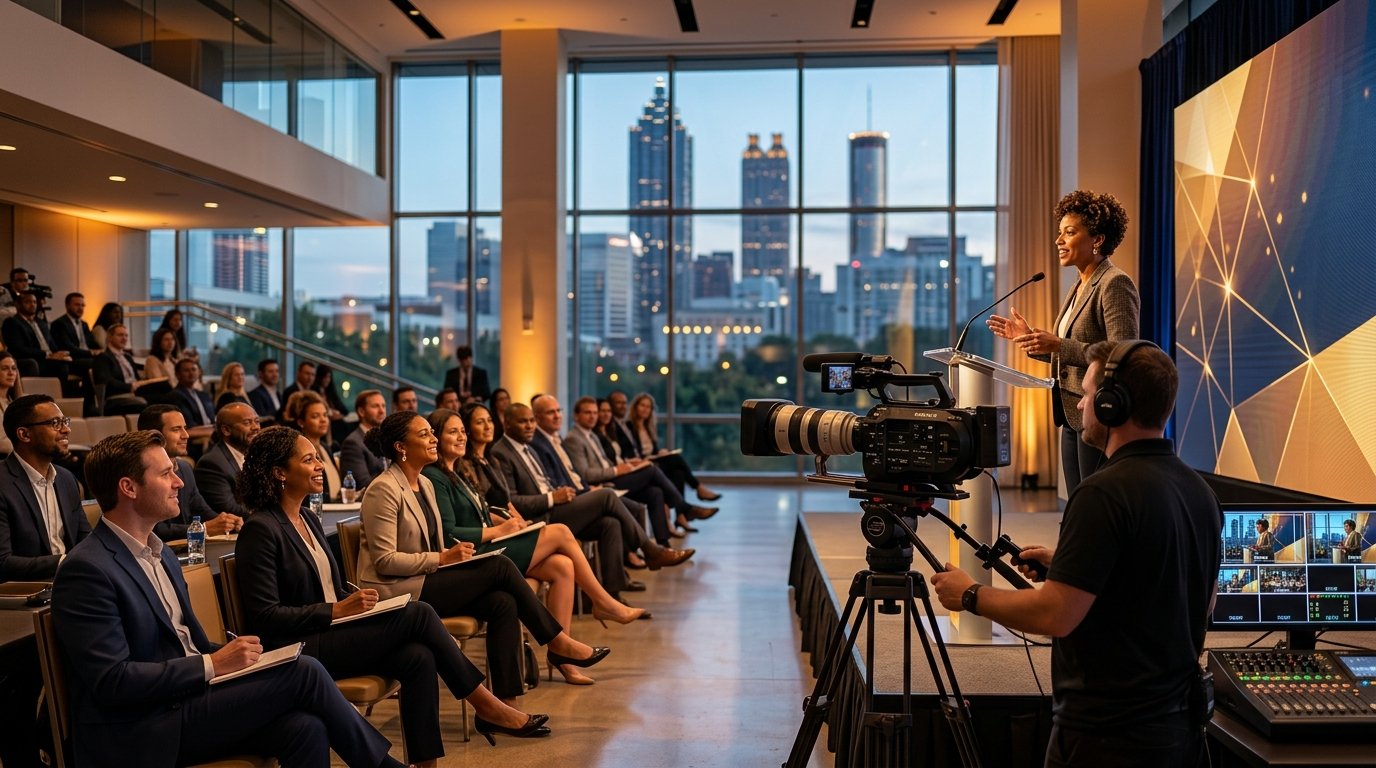
Visual storytelling isn't an aesthetic choice; it’s the vehicle for your cultural DNA. Adam Zimmerman of the Atlanta Braves emphasizes that marketing content must reflect the team’s soul to maintain long-term fan engagement. For a company hosting an international conference, this lesson is vital. If your visual production is limited to 'man-at-podium' shots, you’re missing the chance to tell a story. The role of imagery is to document the invisible: the energy in the room, the tension during a major announcement, or the chemistry between industry leaders during an impromptu networking session. High-quality editorial coverage transforms fleeting moments into durable marketing assets.
Exploring our Photo & Video Gallery, one realizes the difference between simple recording and visual storytelling lies in the intent behind every shot. It’s about capturing brand identity through the lens of the attendee experience. This requires art direction that goes beyond technical specs—choosing the right focal lengths, color grading that aligns with brand guidelines, and the ability to anticipate emotional peaks. This strategy extends the event's life long after the doors close. As noted in recent LinkedIn discussions on cultural engagement, attendees don't share PowerPoint slides; they share emotions and visuals that embody a sense of belonging.
In a world saturated with generic content, visual authenticity is a major competitive advantage. Premium AV production, including cinematic aftermovies and editorial portraits, gives a tangible reality to the brand culture you are building. Think about how the Atlanta Hawks use video content to humanize their players and build emotional ties even on non-game days. B2B brands must adopt this 'always-on media' mindset. The event is the peak of content production, but that content must be fragmented and redistributed year-round to feed the community. A well-lit portrait of a keynote speaker or a short clip capturing the buzz of a co-creation workshop has more value than a three-page press release. This is how you transition from a service provider to a culture creator.
Turning Corporate Gatherings into Memorable Community Experiences
Transforming an event into a community experience requires a shift from passivity to belonging. Atlanta’s franchises don’t just wait for fans to show up at the stadium; they embed themselves in daily life—neighborhoods, schools, and social feeds. For a B2B event, this means designing touchpoints where every participant feels like an active member of an ecosystem rather than a spectator. Technology and AV production act as crucial facilitators. Professional live streaming, for instance, shouldn’t just be a one-way broadcast; it must break the 'fourth wall,' integrating remote participants’ questions as if they were in the front row.
On-site podcast studios are another powerful method for community engagement. By giving the floor to experts, clients, and even niche partners, you foster a sense of co-creation. You are no longer delivering a top-down message; you are orchestrating a global conversation. At Alesia RSVP, we believe imagery shouldn't just document an event; it should capture the cultural DNA that makes it unique. Much like Atlanta’s franchises, we help B2B brands turn their gatherings into pure cultural moments through premium visual storytelling. This requires strategic planning where every AV detail—from lighting design to transition fluidity—aligns with brand values.
To succeed in this community model, we must also rethink the concept of a 'fan.' In B2B, a fan is someone who champions your solution, participates in your betas, and refers your services. By treating delegates like fans rather than badge numbers, you create loyalty that transcends sales cycles. This involves personalized touches, networking spaces that encourage authentic connection, and constant validation of each person’s contribution to the industry. The future of B2B events belongs to those who can marry professional organizational rigor with the fervor of cultural movements. Don’t just plan an event; cultivate a community. It takes time, empathy, and a willingness to step outside corporate comfort zones to embrace the authenticity that builds lasting relationships.
FAQ
How do you measure the impact of culture on attendee engagement?
Impact is measured through organic social sharing rates, the sentiment of post-event feedback, and the long-term retention of the community. Instead of just tracking badge scans, look at the depth of interactions and how often participants reference the event's unique cultural elements in the months following the gathering.
Frequently Asked Questions
How do you measure the impact of culture on attendee engagement?
Impact is measured through organic social sharing rates, the sentiment of post-event feedback, and the long-term retention of the community. Instead of just tracking badge scans, look at the depth of interactions and how often participants reference the event's unique cultural elements in the months following the gathering.