
AI Safety Debates at Dreamforce: Capturing Tech History
AI Safety Debates at Dreamforce: Capturing Tech History
When titans like Dario Amodei and Jensen Huang clash on stage, the visual documentation must match the gravity of the debate to ensure lasting ROI.
How does the AI safety debate impact the future of tech conferences?
When the titans of AI clash on the world's biggest stages, the atmosphere is electric—but how do you capture the weight of a debate that could redefine the future of technology? The recent confrontation at Dreamforce between Anthropic’s Dario Amodei and Nvidia’s Jensen Huang signals a fundamental shift in the B2B event industry. We are moving away from the era of polished product demos and entering an age of ideological friction. For event organizers and corporate decision-makers, this means the 'safe' fireside chat is dead. Attendees now demand high-stakes discourse that addresses the existential risks and rewards of the technologies they are being asked to adopt.
This shift toward high-tension programming has profound implications for conference production. A summit is no longer just a venue for networking; it is a courtroom for industry standards. When Amodei uses a keynote to advocate for a slowdown in AI development, while Huang pushes for maximum velocity, the event becomes a historical record. This level of discourse requires a production strategy that treats the stage not as a podium, but as a theater of ideas. The future of tech conferences lies in their ability to facilitate—and more importantly, to document—these moments of genuine conflict. This is similar to the high-stakes environments we see at the /digital-asset-summit, where regulatory pressure and innovation often collide.
For the marketing directors and VP Events planning the next generation of summits, the takeaway is clear: lean into the friction. The most successful events of the next decade will be those that don't shy away from controversy but instead provide the platform for it. However, providing the platform is only half the battle. The other half is ensuring that the intensity of that moment is captured with such precision that it can be felt by those who weren't in the room. This is where professional AV production transitions from a technical requirement to a strategic asset. Without high-fidelity capture, an industry-defining debate is just a fleeting moment in a crowded convention center.
Why is high-quality event coverage essential for capturing industry-defining moments?
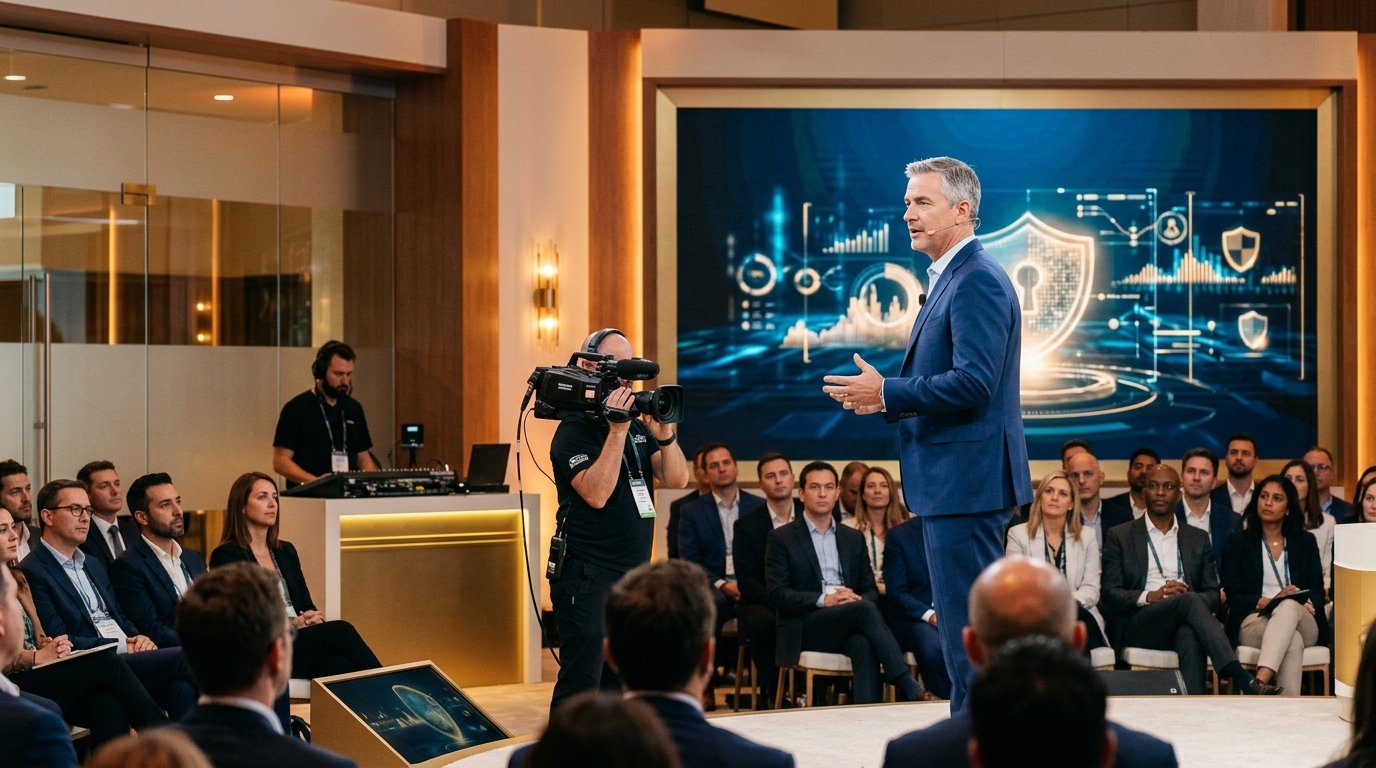
High-quality event coverage is not about recording what happened; it is about documenting how it felt. In the case of the Dreamforce keynote, a standard 1080p wide shot from the back of the room would have failed to capture the palpable tension between the two CEOs. To truly capitalize on a moment like this, you need cinematic intent. This involves multi-camera setups that focus on body language, micro-expressions, and the audience's reaction. As a premium photo and video agency, Alesia RSVP documents the raw intensity and historical significance of high-stakes debates at global summits, transforming industry-shifting friction into compelling visual narratives.
When we look at BizBash trends in event industry tech, it is evident that the demand for 'broadcast-quality' content is skyrocketing. Corporate brands are realizing that their events are their most potent content engines. A single 15-minute debate between industry leaders can generate months of social media clips, white papers, and promotional material—but only if the original capture is of sufficient quality. Low-grade audio or poorly lit video immediately devalues the authority of the speakers and the brand hosting them.
Furthermore, high-quality visual documentation serves as a 'proof of relevance' for sponsors and stakeholders. When you can show a highlight reel that captures the energy of 12,000 people reacting to a major industry announcement, the ROI of the event becomes undeniable. Our /gallery showcases how editorial-style photography and high-end video production can elevate a standard corporate gathering into a landmark industry event. In the world of high-stakes B2B marketing, if it wasn't captured beautifully, it might as well not have happened.
What were the key takeaways from the Dreamforce AI keynote clash between Anthropic and Nvidia?
The Dreamforce clash was a masterclass in contrasting corporate philosophies. Dario Amodei, representing the 'safety-first' camp, reiterated a three-step plan for AI companies to respond to safety concerns. His argument was rooted in the idea of pacing—ensuring that the speed of development does not outstrip our ability to control the outcomes. This was not a theoretical stance; it was a direct challenge to the 'move fast and break things' culture that has dominated Silicon Valley for decades. Amodei’s 3,800-word open letter served as the manifesto for this movement, and his presence at Dreamforce brought that document to life.
On the opposite side, Jensen Huang represented the 'accelerationist' perspective. His argument was simple: AI development must continue at full speed to solve the very problems that safety advocates are worried about. To Huang, the risks of slowing down are greater than the risks of moving forward. This debate is the defining conflict of our time in the tech sector, and seeing it play out in front of 12,000 attendees provided a rare moment of transparency in an often opaque industry.
For event professionals, the takeaway is that the 'keynote' is evolving into a 'debate.' The most engaging content at Dreamforce wasn't a solo presentation; it was the proximity of two opposing views. This creates a narrative arc that attendees can follow, making the event feel more like a live documentary than a corporate presentation. Documenting this requires a production team that understands the nuances of the tech industry—one that knows when to cut to a close-up during a rebuttal or how to frame a shot to show the scale of the disagreement. This level of industry fluency is what separates a generic AV vendor from a strategic production partner.
How can event organizers harness high-tension debates to increase brand engagement?
Friction is the most valuable currency in modern event marketing. When two industry leaders disagree on your stage, they are giving you a gift of high-engagement content. The key to maximizing this is a robust post-event content strategy. Instead of releasing the full one-hour keynote, savvy event organizers work with production partners like Alesia RSVP to create 'clash reels'—short, high-intensity clips that highlight the core points of disagreement. These clips are tailor-made for platforms like LinkedIn, where professional debates drive significant engagement and reach.
As seen in the LinkedIn discussion on AI safety at Dreamforce, the conversation doesn't end when the speakers leave the stage. It continues for weeks in the comments sections and industry newsletters. By providing high-quality video and audio of these moments, the event organizer remains the central hub of that conversation. You aren't just the host of a conference; you are the curator of the industry's defining narrative.
Frequently Asked Questions
Pourquoi privilégier le format débat pour un événement B2B ?
Le format débat génère plus d'engagement organique et de authenticité qu'une présentation unilatérale, créant un contenu plus mémorable et partageable.
Comment la production vidéo impacte-t-elle le ROI événementiel ?
Une captation premium permet de transformer un événement éphémère en une bibliothèque de contenus (reels, social clips) utilisable pendant plusieurs mois.
Comment gérer la captation vidéo en conformité avec le RGPD ?
Il est crucial d'utiliser des signalétiques claires, d'obtenir les consentements des intervenants et de travailler avec des agences expertes dans la gestion des droits à l'image en Europe.