
Event Carpet Waste: The New Red Flag for B2B Brands
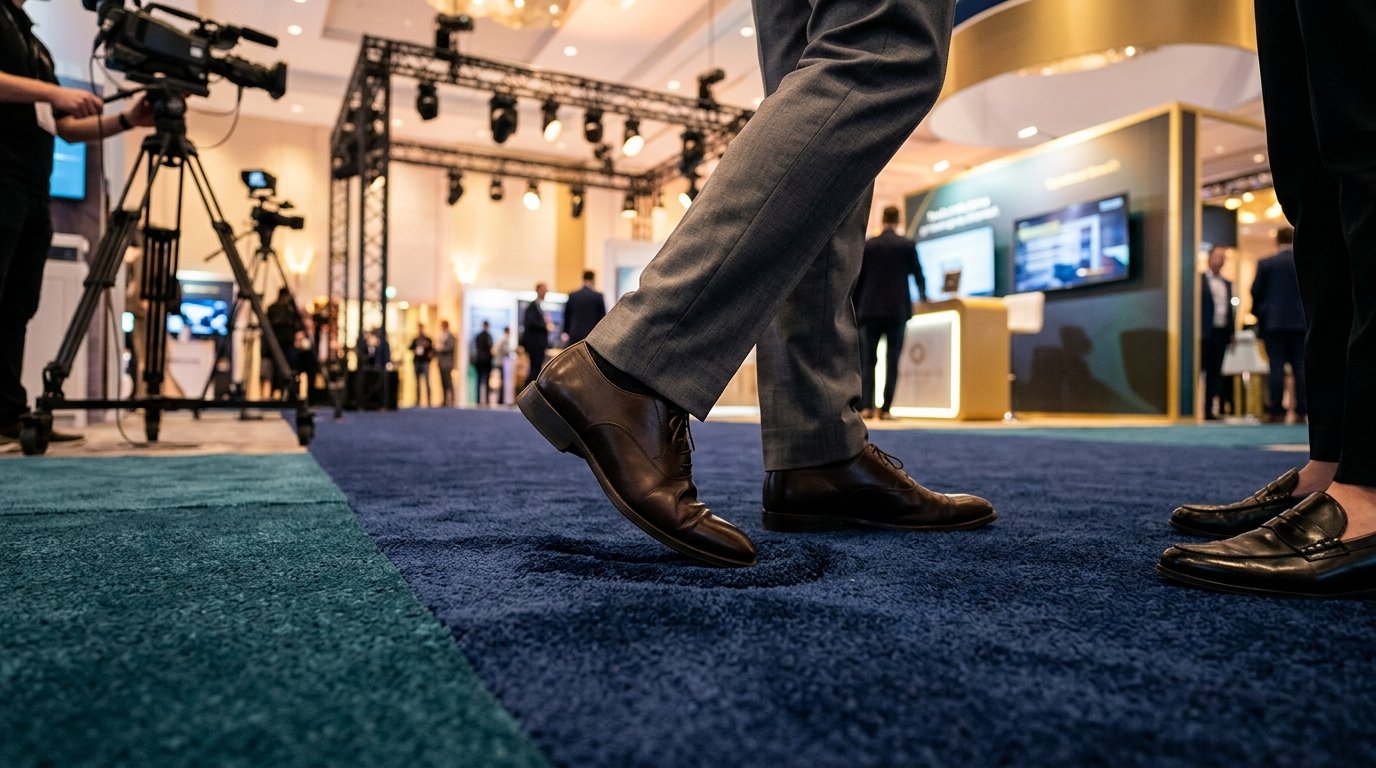
Event Carpet Waste: The New Red Flag for B2B Brands
New data from isla reveals that carpet is the events industry's most polluting material, with 78% used only once before being discarded.
What is the environmental impact of event carpeting according to isla data?
The recent report from isla, 'A Closer Look: Materials', has sent a shockwave through the corporate event industry by quantifying what many production leads have long suspected: the traditional red carpet is an environmental disaster. Drawing from over 6,400 material entries across nearly 800 events, the data confirms that carpet is the single highest-emitting build material used in the sector. Most damning is the fact that 78% of this material is used exactly once before being sent to a landfill. This is not just an ecological failure; it is a logistical and financial absurdity that modern B2B brands can no longer afford to ignore.
For a marketing director or VP of Events, these numbers represent a significant reputational risk. In an era where ESG (Environmental, Social, and Governance) reporting is a C-suite priority, the visual of rolls of single-use carpet being loaded into dumpsters post-summit is a liability. The isla report highlights that 84% of all materials measured in their study were 'virgin'—newly produced rather than hired or recycled. This reliance on the 'new' over the 'sustainable' accounts for a staggering 1,229 tonnes of single-use waste. Industry discussion on event material waste suggests that the industry is at a breaking point regarding these practices.
Beyond the carbon footprint, the financial cost of this waste is becoming harder to justify. With disposal fees averaging around £292 per tonne, the industry is effectively spending half a million pounds just to throw away its own production materials. For high-stakes events in hubs like London or Paris, where venue regulations are tightening, these costs will only escalate. The isla data serves as a wake-up call: the 'premium' feel of a carpeted floor is currently purchased at the expense of both the planet and the event budget’s efficiency. Transitioning away from this standard is no longer an optional 'green' initiative; it is a requirement for modern corporate events.
How can B2B event organizers transition to zero-waste flooring without losing the premium feel?
The primary resistance to removing carpet stems from a legacy definition of luxury. For decades, wall-to-wall carpeting was synonymous with high-end conference production. However, the aesthetic of the modern corporate summit is shifting toward industrial minimalism and raw authenticity. High-end brands are now opting for polished concrete, modular reusable flooring, or even high-quality recycled PET tiles that can be returned and reused dozens of times. The 'premium' feel is now being generated through sophisticated lighting and architectural design rather than disposable textiles.
To successfully transition, organizers must engage their AV and production partners early in the planning phase. By focusing on the existing architecture of venues in cities like New York or Dubai, planners can harness the natural character of a space. If flooring is a functional necessity for sound dampening or cable management, modular systems are the answer. These systems allow for the same professional finish without the post-event waste. This shift requires a move away from 'virgin' materials toward a circular economy model where every element of the build is hired, not owned and discarded.
Furthermore, the reduction of carpet allows for a more creative use of the floor as a branding canvas. Instead of 2,000 square meters of grey felt, organizers are using targeted, high-impact graphics on sustainable substrates. According to Sustainable event trends and insights, the move toward 'naked' floors is actually improving attendee movement and heat management within large exhibition halls. The goal is to create a space that feels intentional and curated, rather than just covered.
Why is high-quality visual documentation the best way to justify a sustainable event budget?
One of the hidden challenges of sustainable event production is the 'visibility' of the investment. When you spend a premium on eco-friendly materials or carbon-neutral logistics, the results aren't always immediately obvious to the attendee. This is where professional event photography and video become essential strategic tools. High-end visual documentation captures the intentionality of a sustainable setup, turning a minimalist, carpet-free floor into a statement of brand values rather than a budget cut.
At Alesia RSVP, we believe that sustainability is the new premium aesthetic. By capturing the raw, authentic beauty of eco-friendly venues and minimalist setups, our high-end photography and video services turn your commitment to the planet into a powerful visual legacy that outlasts any single-use material. When a brand decides to buck the trend of single-use waste, that decision needs to be broadcasted. Editorial-grade photography can highlight the textures of sustainable materials and the sophistication of a low-impact design, providing the marketing team with the assets they need to prove their ESG commitment to stakeholders.
This documentation bridges the gap between the physical event and the digital brand story. A 30-second aftermovie that highlights the zero-waste nature of a summit in Singapore carries more weight with modern investors than a traditional highlight reel. It shows a brand that is forward-thinking and responsible. By investing in premium AV coverage, you ensure that the 'invisible' benefits of your sustainable choices are made visible to your entire global audience, justifying the shift in production strategy.
What role do venues play in breaking the cycle of single-use build materials?
While event organizers drive the demand, venues hold the keys to systemic change. The isla report suggests that venues have a 'significant, largely unexplored role' in breaking the single-use norm. Currently, many venues mandate specific carpet types for protection or sound, or they lack the storage infrastructure to support modular, reusable flooring systems. To move the needle, venues must transition from being passive spaces to active partners in sustainability.
In major event hubs, we are seeing a shift where venues are beginning to offer 'in-house' sustainable flooring packages. By owning the flooring and renting it to every event that passes through, the venue can ensure a 100% reuse rate, drastically lowering the carbon footprint of every conference held on-site. This model also reduces the logistical burden on organizers and the carbon emissions associated with transporting tonnes of carpet for every individual show. Venues that lead this charge will become the preferred partners for the world's largest B2B brands.
Ultimately, the 'carpet problem' is a symptom of a broader industry reliance on convenience over consequence. Breaking the cycle requires a tripartite agreement between the brand, the production agency, and the venue to prioritize circularity and long-term material management.
Questions Fréquentes
Pourquoi la moquette événementielle est-elle si polluante ?
La majorité des moquettes utilisées sont en plastique vierge et sont collées ou fixées de manière à rendre le recyclage impossible, entraînant une mise en décharge systématique après quelques heures d'utilisation.
Quelles sont les alternatives durables à la moquette traditionnelle ?
Les options incluent les dalles de moquette recyclées et réutilisables, les sols modulaires en bois certifié, le béton ciré naturel du lieu ou des tapis en fibres naturelles (sisal, jute) qui peuvent être réutilisés sur plusieurs cycles.
Le retrait de la moquette impacte-t-il l'acoustique d'une conférence ?
Oui, mais cela peut être compensé par un design scénographique intelligent utilisant des panneaux acoustiques muraux réutilisables ou des structures suspendues, offrant souvent un rendu esthétique plus moderne.