
Franklin Templeton $150M XRP Move: Impact on Finance Events
Franklin Templeton $150M XRP Move: Impact on Finance Events
When a $150 million institutional move hits the XRP Ledger, it is not just a transaction—it is a signal that the future of finance is being built. This shift from theoretical blockchain application to large-scale capital allocation is fundamentally altering the landscape of B2B financial summits.
How is institutional tokenization shifting B2B finance event dynamics?
The recent injection of $150 million into the XRP Ledger by Franklin Templeton, which saw the fund's tokens nearly quadruple from 48 million to 193 million, is not an isolated event for the crypto markets; it is a seismic shift for the corporate event industry. As Real World Asset (RWA) tokenization moves from theoretical whitepapers to nine-figure balance sheets, the environment where these deals are discussed must evolve. We are seeing a swift departure from the 'crypto winter' aesthetic of low-fidelity stages and casual attire. Institutional players demand an environment that reflects the scale of their capital. This move suggests that upcoming gatherings like the Digital Asset Summit will see a surge in TradFi attendance, requiring a higher standard of production quality and executive hospitality.
For event planners, this means the 'Institutionalization of the Stage' is now mandatory. When major asset managers move significant capital onto public ledgers, their presence at a conference changes the gravitational pull of the room. Networking sessions are transitioning into high-stakes negotiations that require private, soundproofed lounges and secure, premium environments. We are observing a significant trend where high-end financial summits are prioritizing curated, invitation-only tracks over mass-market attendee numbers. This shift is particularly evident in financial hubs like Singapore, where the intersection of regulation and capital is most active. The logistics of these events must now account for the security and privacy needs of C-suite executives from the world's largest financial institutions.
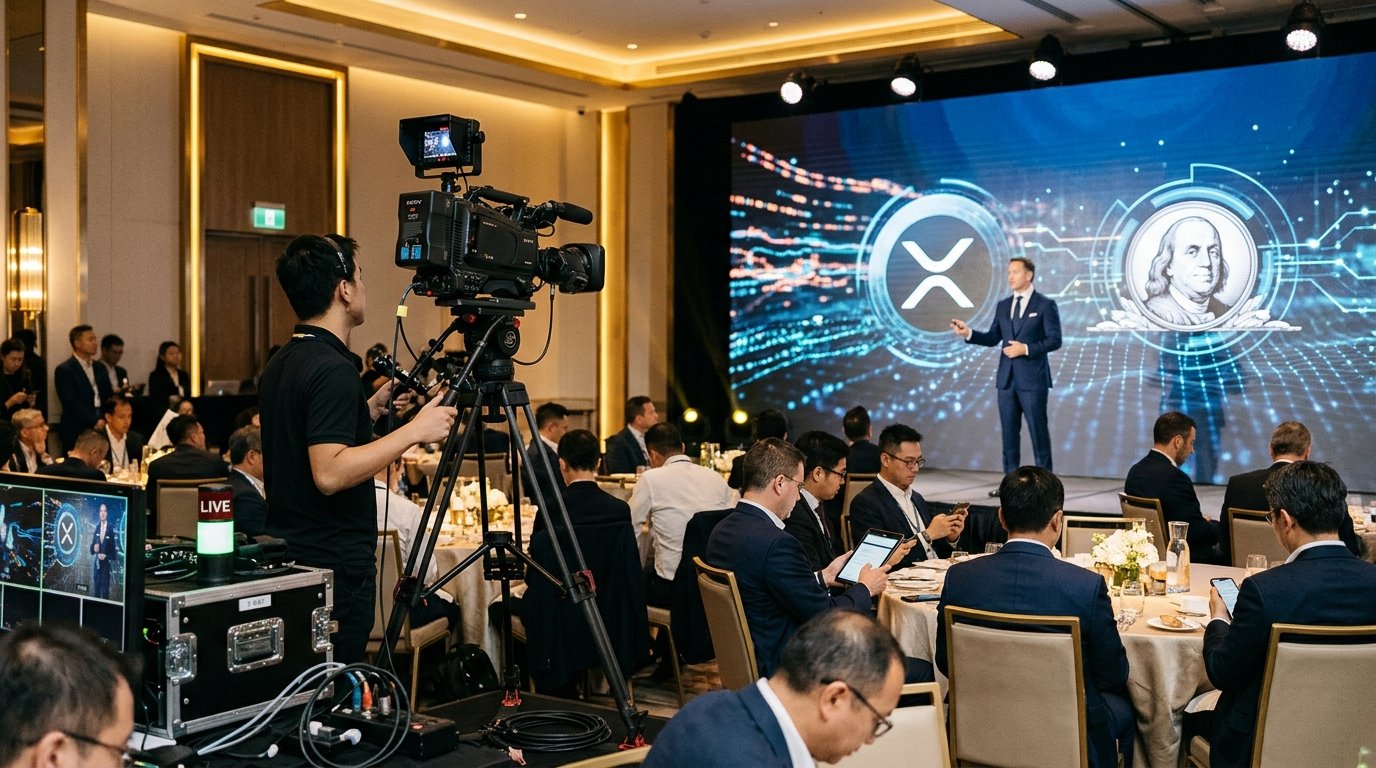
Professionalism is the new currency. The technical requirements for these events are becoming more complex. It is no longer enough to have a basic livestream; institutions expect broadcast-grade redundancy and multi-camera setups that can be integrated into global corporate communications. According to insights on financial industry trends, the focus has shifted toward creating 'impact-driven' environments. This means every aspect of the event—from the lighting design to the speed of the photography delivery—must signal institutional reliability. Alesia RSVP understands that at this level, the event production is a direct reflection of the brand’s fiduciary responsibility. The production value must match the rigor of the compliance departments that cleared these $150 million transactions.
Furthermore, the physical layout of these summits is being redesigned to facilitate deeper technical dives. The 'main stage' is being supplemented by highly specialized breakout rooms where the focus is on the plumbing of finance—settlement speeds, ledger interoperability, and custodial security. These are not just sessions; they are the workshops where the next decade of financial infrastructure is being stress-tested. Event organizers who fail to provide the technical infrastructure for these high-level conversations will find themselves sidelined as institutions gravitate toward venues that offer the same level of sophistication as a Tier-1 investment bank's boardroom.
Why does Franklin Templeton's $150M move to XRP Ledger matter for digital asset summits?
Franklin Templeton's decision to nearly quadruple its holdings on the XRP Ledger—increasing its token count from 48 million to 193 million—signifies a massive vote of confidence in blockchain infrastructure for enterprise use. For the event industry, this creates a specific demand for content that bridges the gap between blockchain developers and institutional fund managers. Events like Consensus are no longer just about 'crypto'—they are the primary battleground for asset management dominance. When $150 million moves into a single wallet, the story behind that wallet becomes the main attraction of the next summit cycle. The narrative is shifting away from the 'if' of blockchain adoption to the 'how' of institutional integration.
This influx of institutional capital into the XRP Ledger ecosystem directly impacts sponsorship budgets and the type of activations seen on the floor. We are moving away from gimmicky booths toward sophisticated 'experience centers' where data visualization and real-time ledger tracking take center stage. The narrative at these summits is shifting from speculation to utility. As institutional leaders share their insights on LinkedIn regarding XRP Ledger adoption, the demand for high-quality video content to document these keynote sessions has never been higher. The visual output of a conference now serves as a primary source of truth for the global market.
The technical narrative is now a corporate narrative. Large-scale conferences in cities like London are now being designed with 'the institutional investor' as the primary persona. This means shorter, more impactful sessions and a heavy emphasis on panel discussions featuring compliance officers and CTOs from the world's largest banks. The visual documentation of these panels serves a dual purpose: it provides marketing collateral for the event and acts as a trust-building tool for potential investors who could not attend in person. Alesia RSVP specializes in capturing this specific corporate gravitas, ensuring that the visual output matches the high-stakes nature of the conversation.
We are also seeing a change in the demographic of the speakers. The 'visionary' keynote is being replaced by the 'operational' fireside chat. Attendees are less interested in the price of a token and more interested in the legal framework that allowed Franklin Templeton to scale its presence on the XRPL. This requires event photographers and videographers to be more than just observers; they must understand the flow of the conversation to capture the decisive moments of agreement between regulators and innovators. The documentation of these events is becoming an archival record of the transition from legacy finance to a tokenized future. Every frame captured must reflect the seriousness of this transition, moving away from the saturated, high-contrast 'tech' look toward a more refined, editorial aesthetic that resonates with the institutional world.
What role does premium visual storytelling play in documenting the RWA revolution?
The tokenization of real-world assets is an abstract concept that requires concrete visual storytelling to become tangible for stakeholders. When an institution moves $150 million worth of money market shares onto a ledger, the visual record of the announcement and the subsequent industry reaction is what builds market sentiment. High-end photography and cinematic aftermovies are not just 'event coverage'; they are essential tools for executive storytelling. They capture the handshakes, the closed-door discussions, and the collective energy of the institutions driving this digital transformation. In an era where trust is the most valuable asset, the quality of the visual record is a proxy for the quality of the underlying technology.
At Alesia RSVP, we see this as the 'Content Bridge.' The event is the moment of impact, but the visual content is what extends that impact across the global financial community. In cities like Dubai and New York, where these digital asset announcements are frequent, the quality of the visual production determines how the message is received by the press and the public. Low-quality, grainy event photos can undermine a billion-dollar announcement. Conversely, magazine-quality editorial coverage reinforces the message that the institution is in full control of the narrative. This is particularly important for the XRP Ledger ecosystem, which is positioning itself as the premier layer for institutional RWA issuance.
As major firms accelerate their RWA strategy, Alesia RSVP is on the ground at global hubs, capturing the high-stakes networking and visual narrative of the institutions leading this digital transformation. We provide the technical backbone—from multi-camera live streaming to on-site podcast studios—that allows these firms to amplify their message. Our presence at events like the Digital Asset Summit ensures that every key moment is documented with the precision and quality that institutional finance demands. The goal is simple: to make the digital move as visually impactful as the capital it represents.
The future of B2B events lies in this intersection of high finance and high-end production. As more assets are tokenized, the events surrounding them will become more exclusive, more technical, and more visually sophisticated. We are moving toward a model where the 'event' is a multi-platform media production that starts long before the first attendee arrives and continues long after the final session ends. The visual assets created during these summits are used in annual reports, investor presentations, and global marketing campaigns. Therefore, the production team must operate with the same level of precision as a financial auditor. Every shot must be intentional, every angle must be considered, and every deliverable must be of the highest caliber. This is the standard that Alesia RSVP brings to the global stage, ensuring that the RWA revolution is documented with the gravitas it deserves.
FAQ
How does the rise of RWA tokenization impact the networking experience at financial summits?
RWA tokenization attracts a more conservative, institutional demographic to financial summits, shifting the networking focus toward private, structured meetings and high-end hospitality. This transition requires event organizers to provide premium environments like executive lounges and soundproofed meeting rooms to facilitate large-scale deal-making between asset managers and technology providers.
Why is professional photography essential for institutional blockchain announcements?
Institutional blockchain announcements involving hundreds of millions of dollars require high-quality visual documentation to signal reliability and professional rigor to stakeholders and the press. Low-quality imagery can detract from the credibility of the announcement, whereas editorial-grade photography reinforces the brand's position as a leader in the digital asset space.
What technical production standards do institutional players expect at B2B events?
Institutions expect broadcast-grade production, including multi-camera setups, redundant livestreaming capabilities, and high-fidelity audio. The production must be capable of being integrated into global corporate communications and must meet the security standards required for high-profile executive participation.
How has Franklin Templeton's activity on the XRP Ledger changed the summit narrative?
The nearly fourfold increase in Franklin Templeton's XRPL tokens has shifted the summit narrative from theoretical exploration to practical, large-scale implementation. Discussions now focus on the operational realities of managing $150 million in tokenized assets, including regulatory compliance, custodial security, and ledger efficiency.
Which global hubs are leading the trend in institutional digital asset events?
Cities like Singapore, London, and Dubai are at the forefront of this trend. These hubs offer the necessary regulatory clarity and concentration of capital that attract institutional players, leading to a higher demand for premium event production and sophisticated visual storytelling in these regions.
What is the 'Content Bridge' in the context of financial event production?
The Content Bridge refers to the high-quality visual assets—such as photography, video, and live streams—that extend the impact of a physical event to a global audience. For institutional finance, this bridge is crucial for communicating complex digital transformations to investors, regulators, and the broader market.
Frequently Asked Questions
How does the rise of RWA tokenization impact the networking experience at financial summits?
RWA tokenization attracts a more conservative, institutional demographic to financial summits, shifting the networking focus toward private, structured meetings and high-end hospitality. This transition requires event organizers to provide premium environments like executive lounges and soundproofed meeting rooms to facilitate large-scale deal-making between asset managers and technology providers.
Why is professional photography essential for institutional blockchain announcements?
Institutional blockchain announcements involving hundreds of millions of dollars require high-quality visual documentation to signal reliability and professional rigor to stakeholders and the press. Low-quality imagery can detract from the credibility of the announcement, whereas editorial-grade photography reinforces the brand's position as a leader in the digital asset space.
What technical production standards do institutional players expect at B2B events?
Institutions expect broadcast-grade production, including multi-camera setups, redundant livestreaming capabilities, and high-fidelity audio. The production must be capable of being integrated into global corporate communications and must meet the security standards required for high-profile executive participation.
How has Franklin Templeton's activity on the XRP Ledger changed the summit narrative?
The nearly fourfold increase in Franklin Templeton's XRPL tokens has shifted the summit narrative from theoretical exploration to practical, large-scale implementation. Discussions now focus on the operational realities of managing $150 million in tokenized assets, including regulatory compliance, custodial security, and ledger efficiency.
Which global hubs are leading the trend in institutional digital asset events?
Cities like Singapore, London, and Dubai are at the forefront of this trend. These hubs offer the necessary regulatory clarity and concentration of capital that attract institutional players, leading to a higher demand for premium event production and sophisticated visual storytelling in these regions.
What is the 'Content Bridge' in the context of financial event production?
The Content Bridge refers to the high-quality visual assets—such as photography, video, and live streams—that extend the impact of a physical event to a global audience. For institutional finance, this bridge is crucial for communicating complex digital transformations to investors, regulators, and the broader market.