
GL Events 2026: Why Live Experiences Outperform Trade Shows
GL Events 2026: Why Live Experiences Outperform Trade Shows
An analysis of GL Events' H1 2026 results and the industry's profound shift toward experiential, international, and content-driven events.
Why are B2B Trade Shows Facing a Structural Crisis in 2026?
The B2B event landscape is undergoing a radical transformation, and GL Events' H1 2026 results provide undeniable proof. While the group reported a 9% overall growth reaching €966 million, the 'Exhibitions' division plummeted by 28%. This isn't a temporary dip; it's a structural pivot. Decision-makers are no longer satisfied with renting floor space in sterile convention halls. They demand impact, storytelling, and direct engagement. The traditional trade show model, built on passive attendance, is being replaced by agile, immersive formats. According to event industry trend analysis on BizBash, this erosion stems from a reallocation of marketing budgets toward proprietary events and hyper-targeted summits. While biennial cycles in Europe and South America are often blamed for revenue fluctuations, the reality is clear: square footage alone no longer guarantees ROI. Companies now aim to transform every interaction into a durable, data-compliant digital asset. This decline in legacy trade shows forces a total rethink of B2B meeting spaces. The drop from €172M to €124M in GL Events' Exhibition revenue highlights the urgency for organizers to reinvent the value of physical presence. It's no longer about exhibiting; it's about staging an experience.
How 'Live' Events and Premium Venues are Fueling Global Growth
In stark contrast to the decline of trade shows, GL Events' 'Live' and 'Venues' divisions are thriving. International revenue now accounts for 54% of the group's total, driven by massive momentum in the Middle East and the successful integration of iconic venues like the Stade de France. This trend confirms that the future of B2B events lies in the exceptional and the localized. Brands are moving away from generalist fairs to invest in high-level summits in Dubai, Singapore, or London. For CMOs, the challenge is now to create 'disruption moments' that leave a lasting impression. Despite unfavorable biennial cycles, the 2% growth in current operating income proves that strategic venue management and live event production are the real profit engines. In Paris, the demand for corporate events in Paris remains high, but it has shifted toward qualitative formats where experience outweighs volume. Internationalization is no longer an option; it's the core engine. CEO Olivier Ginon notes that the group's diversified business model offsets sectoral weaknesses. For brands, this means partnering with agencies capable of managing both complex logistics and the spectacular dimension of their messaging. 'Live' is no longer just a market segment—it is the new communication standard for industry leaders.
The Role of Premium Visual Production in Hybrid Event Success
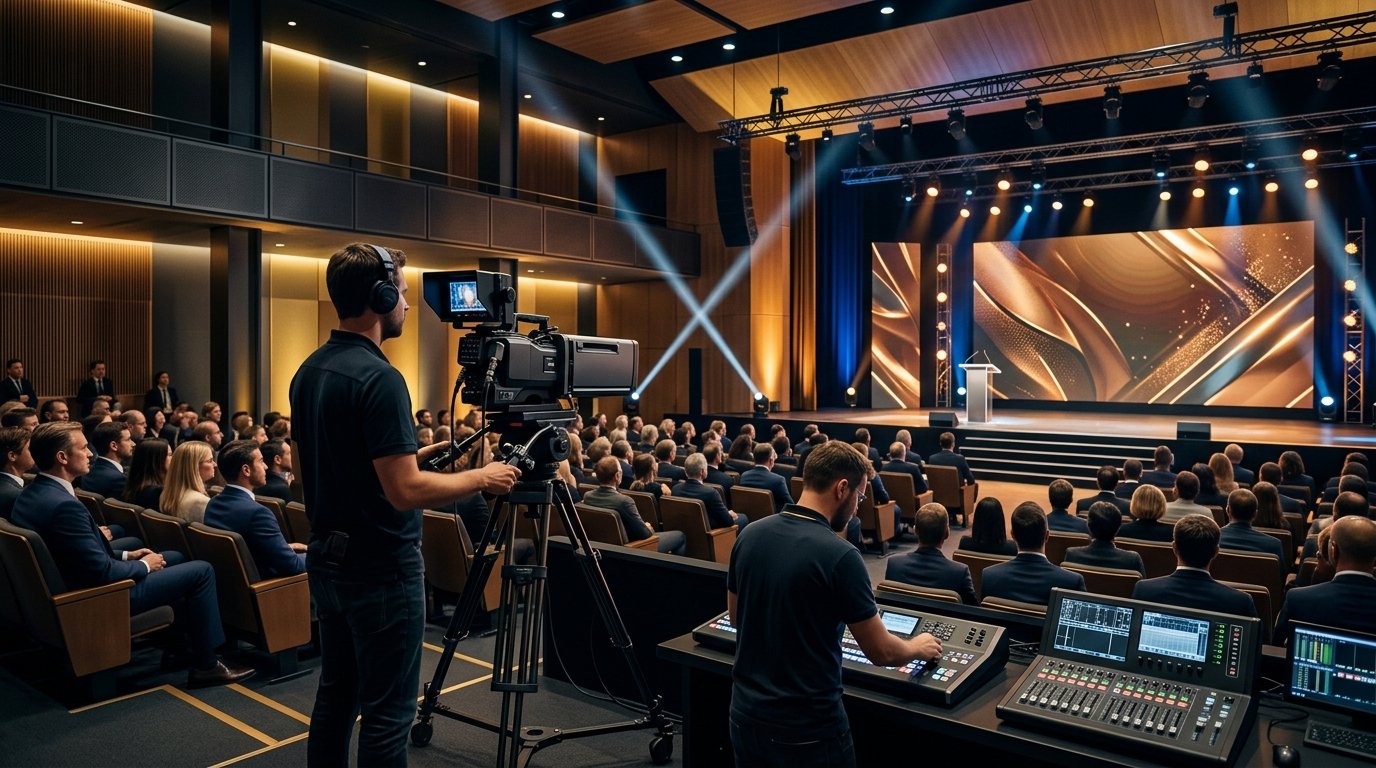
In an era dominated by 'Live' experiences, high-end visual production is the ultimate differentiator. If an event doesn't generate world-class content, it effectively only exists for the few hundred people in the room. To justify increasing investments in premium venues, brands must capture the energy of the moment. Video, editorial photography, and multi-cam streaming are no longer luxuries; they are strategic imperatives. As discussed in industry evolution threads on LinkedIn, an event's success is now measured by its post-event digital resonance. Poor AV production instantly degrades the credibility of a speaker or brand, regardless of the venue's prestige. At Alesia RSVP, we see that companies successfully transitioning to the 'Live' model treat their events like broadcast sets. Every keynote and panel must be designed for both the live audience and the replay. This approach transforms a one-off event into a multi-month content campaign. By integrating on-site podcast studios or 24-hour turnaround aftermovies, organizers maximize their reach far beyond physical borders. This fusion of logistical mastery and image control defines operational excellence in 2026. To see how we apply these principles, explore our event management expertise.
Maintaining Audience Engagement Between Major Event Cycles
One of the major challenges highlighted by GL Events' results is managing biennial cycles. How do you avoid 'radio silence' during 'off' years? The answer lies in an aggressive, decentralized content strategy. As massive trade shows lose their luster, brands must create their own intermediate touchpoints—roadshows, hybrid town halls, or permanent podcast studios. The goal is to maintain a constant narrative with the audience. Content produced during peak event years must be atomized and redistributed throughout the cycle. A professionally captured conference can generate dozens of video snippets, thought-leadership articles, and client testimonials. This approach smooths out investment and ensures permanent top-of-mind awareness. Alesia RSVP supports communication departments in this shift from 'technical vendor' to 'strategic content partner.' The 28% drop in the Exhibition division serves as a reminder that relying on third-party calendars is a financial risk. By taking control of their visual production and investing in proprietary 'Live' formats, companies liberate themselves from trade show market fluctuations to build their own media ecosystems. The future belongs to those who can turn a physical event into a perennial digital experience.
FAQ
Why did GL Events' Exhibition division drop by 28%?
The decline is due to a combination of unfavorable biennial cycles in France and South America, alongside a growing corporate shift away from traditional trade shows. Marketing budgets are migrating toward more immersive 'Live' formats and high-value international summits.
What are the benefits of choosing 'Live' formats for B2B events?
Live formats prioritize emotional experience and direct engagement, offering a higher ROI than passive exhibitions. They allow for the creation of high-quality visual content (streaming, video, social media) that can be distributed globally, extending brand impact far beyond the physical attendees.
How can photo and video content compensate for biennial event gaps?
By producing a premium content library during a major event, brands can 'repurpose' these assets (interviews, keynotes, highlights) during off-years. This 'content repurposing' strategy maintains a constant media presence and keeps the community engaged without the need for a costly new physical event every year.
Questions Fréquentes
Why did GL Events' Exhibition division drop by 28%?
The decline is due to a combination of unfavorable biennial cycles in France and South America, alongside a growing corporate shift away from traditional trade shows. Marketing budgets are migrating toward more immersive 'Live' formats and high-value international summits.
What are the benefits of choosing 'Live' formats for B2B events?
Live formats prioritize emotional experience and direct engagement, offering a higher ROI than passive exhibitions. They allow for the creation of high-quality visual content (streaming, video, social media) that can be distributed globally, extending brand impact far beyond the physical attendees.
How can photo and video content compensate for biennial event gaps?
By producing a premium content library during a major event, brands can 'repurpose' these assets (interviews, keynotes, highlights) during off-years. This 'content repurposing' strategy maintains a constant media presence and keeps the community engaged without the need for a costly new physical event every year.