
GL Events H1 Analysis: Why Live Experiences Outpace Trade Shows
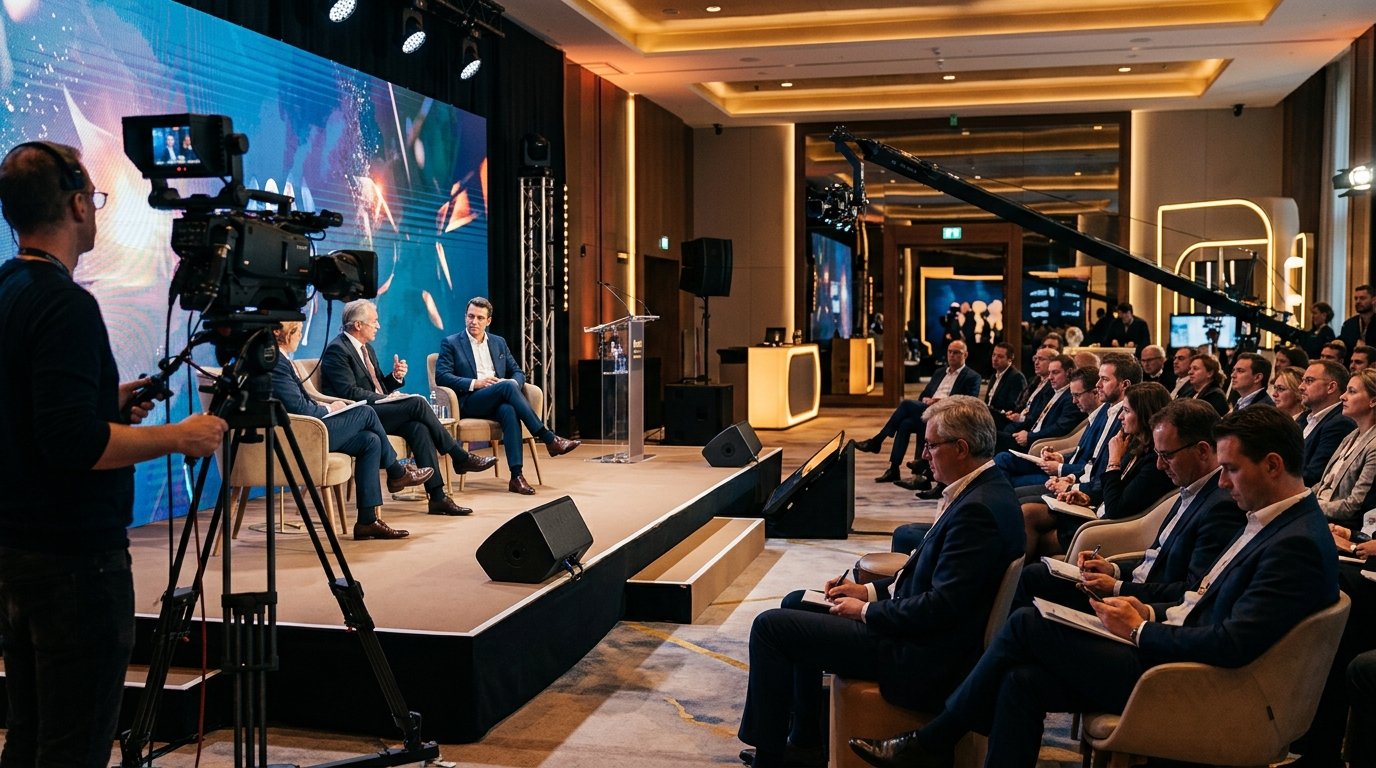
GL Events H1 Analysis: Why Live Experiences Outpace Trade Shows
As the exhibition landscape shifts, GL Events' H1 results reveal a critical truth: traditional trade shows are yielding to high-impact live experiences.
Why are traditional exhibitions declining while live B2B events are growing?
The latest H1 2024 financial results from GL Events present a striking dichotomy that every corporate event strategist should evaluate. While the group saw a 9% rise in overall revenues to €966m, its Exhibitions division suffered a significant 28% drop, bringing in only €124m. This is not simply a statistical anomaly caused by biennial cycles in South America or France; it is a reflection of a fundamental shift in how B2B brands allocate their marketing spend. The era of the 'big box' trade show, where success was measured by the sheer square footage of a booth, is being replaced by a demand for curated, high-stakes live experiences. Decision-makers are no longer satisfied with passive participation in massive halls. They are looking for the 'Live' and 'Venues' activities that GL Events noted as their primary growth drivers.
This shift toward live experiences is driven by the need for higher signal-to-noise ratios. As digital fatigue becomes a tangible reality, the physical event must offer something that a webinar or a standard trade show booth cannot: prestige, intimacy, and high-level networking. This trend is particularly evident in our work across major corporate events, where the focus has moved from lead scanning to relationship building. Brands are investing in bespoke summits and high-end corporate gatherings that prioritize the quality of the environment over the quantity of the foot traffic. When you look at the latest B2B event trends on BizBash, the narrative is consistent: experiential is the new standard.
For the corporate planner, the decline in traditional exhibition revenue at major groups should serve as a signal to diversify. Relying on the traditional trade show model is becoming a risky bet. Instead, the growth in the 'Live' sector suggests that the budget is moving toward proprietary events, executive retreats, and high-production value conferences. These formats allow for total brand control and a much higher level of engagement. The momentum is clearly with international markets, which now account for 54% of GL Events' total revenue. This global expansion signifies that B2B brands are following the money to emerging hubs, requiring a more sophisticated approach to event production that can be replicated across borders without losing quality.
How can international event organizers maintain momentum in a complex global market?
Maintaining growth in a fragmented global market requires more than just logistics; it requires a deep understanding of local production standards and the ability to navigate complex geopolitical landscapes. Olivier Ginon, chairman-CEO of GL Events, highlighted that despite a complex global backdrop and a significant footprint in the Middle East, the group maintained discipline and vigilance. For corporate event directors, this means that the 'where' is just as important as the 'how.' Planning a summit in a Tier 1 hub like Paris requires a different tactical playbook than a launch in Dubai or Singapore. The most successful organizers are those who can harness international scale while maintaining the precision of a local boutique agency.
International momentum is also tied to the ability to offset 'unfavourable biennial event cycles.' This is a common challenge in the industry, where certain massive shows only happen every two years, creating revenue gaps. The solution, as demonstrated by the GL Events results, is a business model built on 'complementarity.' By balancing venue management with live production services, event groups can stabilize their income streams. For the end-client, this means working with partners who aren't just vendors, but strategic advisors who understand the financial ebbs and flows of the industry. You can see the industry discussion on GL Events H1 momentum to see how peers are reacting to this need for multi-disciplinary expertise.
The complexity of the current market also demands a higher level of 'discipline and vigilance' in budget allocation. As exhibition revenues drop, the pressure on 'Live' events to deliver measurable ROI increases. This is where the bridge between event management and content production becomes critical. An event is no longer a moment in time; it is a content factory. If you are hosting a high-level summit in a global hub, the physical gathering is only 50% of the value. The other 50% is the digital tail—the video recaps, the executive interviews, and the social proof generated by professional documentation. This is the only way to justify the premium costs associated with international live experiences in 2024.
What role does premium visual content play in the success of high-growth live experiences?
As the industry pivots away from traditional exhibitions toward high-end live events, the role of visual storytelling has evolved from an afterthought to a core strategic requirement. In a traditional trade show, a few snapshots of a booth might suffice. In a premium live summit, the production quality of your photo and video assets is the primary indicator of your brand's authority. When GL Events reports growth in their 'Live' activities, they are talking about events where the atmosphere, the speakers, and the exclusive networking are the product. If that product isn't captured with magazine-quality editorial photography or cinema-grade video, the ROI is effectively halved.
Premium visual content serves as the bridge between the physical event and the global audience. For an executive who couldn't attend a summit in London or New York, a high-production value highlight reel or a live-streamed keynote is their only touchpoint with the brand. This content is what transforms a local event into a global marketing asset. At Alesia RSVP, we have seen this first-hand: the clients who are winning in the current market are those who treat their event as a broadcast-ready production. They aren't just 'covering' an event; they are creating a narrative. This is why our dual positioning as both an event management agency and a high-end AV production house is so critical. We understand the logistics of the 'Live' experience, but we also know how to package that experience for a C-suite audience.
Alesia RSVP aligns perfectly with this industry pivot. As traditional exhibitions lose their luster, we provide the premium photo and video storytelling necessary to capture the prestige and ROI of high-stakes live moments in global hubs like Paris, Dubai, and London. Whether it is a multi-camera live stream for a financial summit or editorial photography for a tech conference, we ensure that the 'Live' momentum reported by groups like GL Events is translated into tangible brand equity for our clients. The future of B2B events is not in the floor space you buy, but in the stories you tell and the quality with which you tell them.
The shift is clear: the market is moving toward quality over quantity. For global brands, the focus has shifted from the size of the floor to the strength of the experience.
Questions Fréquentes
Pourquoi la division Exhibitions de GL Events a-t-elle chuté de 28 % ?
Cette baisse est principalement due aux cycles biennaux d'événements majeurs et à un glissement des budgets marketing B2B vers des formats d'événements propriétaires et plus exclusifs.
Qu'est-ce que la 'complémentarité' dans le modèle de GL Events ?
C'est l'équilibre stratégique entre la gestion de lieux (Venues), l'organisation de salons (Exhibitions) et les services de production événementielle (Live) pour stabiliser les revenus.