
Sustainable Event Guide: The New B2B Industry Standard
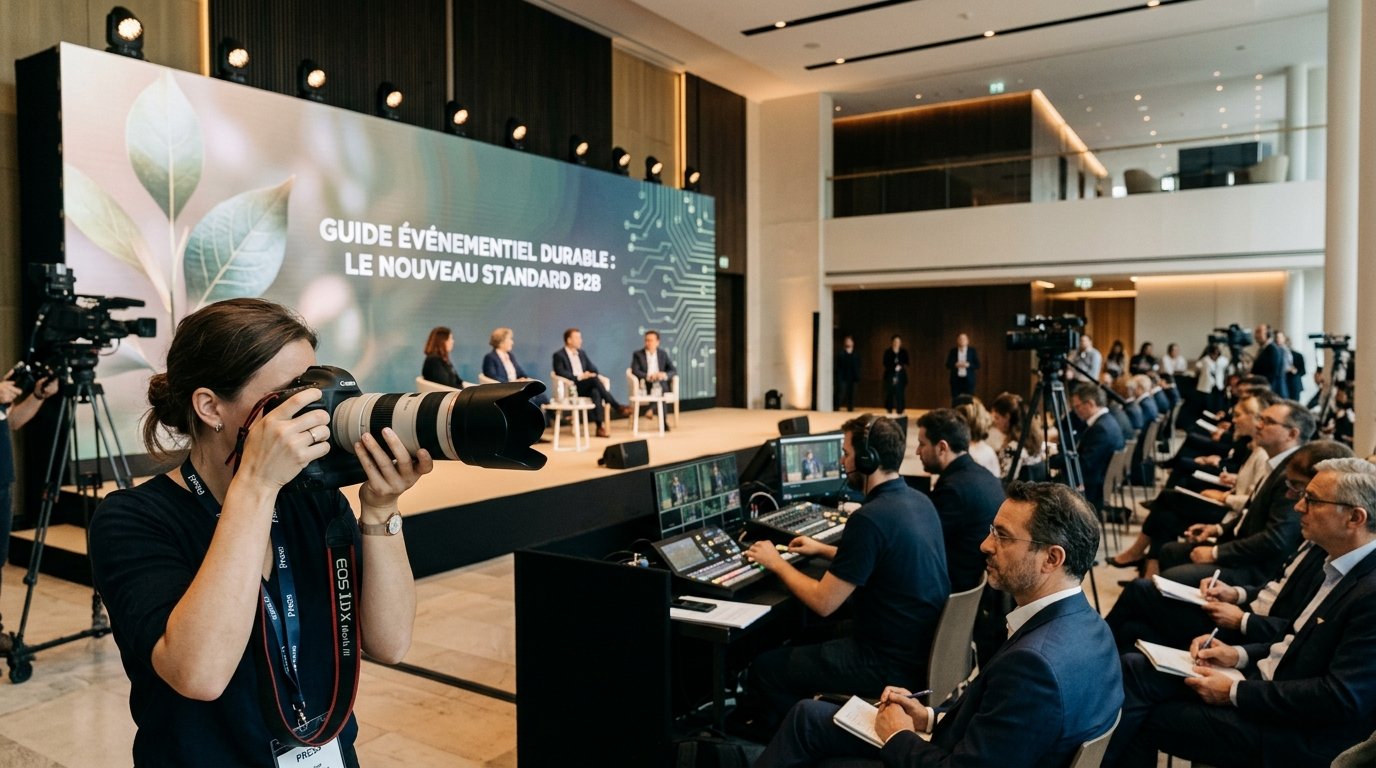
Sustainable Event Guide: The New B2B Industry Standard
A strategic analysis of the new BCD Meetings & Events guide and the integration of sustainability within high-end audiovisual production.
How to Host Eco-Responsible B2B Events Without Sacrificing Prestige
The misconception that sustainability compromises the standing of a corporate event is a major strategic error. In 2024, luxury lies in intentionality and precision, not unnecessary excess. For CMOs and VPs of Events, the challenge is to maintain a top-tier User Experience (UX) while drastically reducing the carbon footprint. This begins with rigorous venue selection. Choosing LEED or BREEAM-certified conference centers in global hubs like Paris or London allows organizers to leverage energy-optimized infrastructure from the start.
Prestige is now defined by the quality of interactions and the relevance of content rather than plastic swag or oversized buffets. The transition toward circular scenography, using modular and reusable materials, is becoming the industry standard. On the production side, this means prioritizing technical solutions that minimize the transport of heavy equipment. By hiring local crews for filming and technical management, companies reduce both logistical costs and travel-related carbon emissions. This approach isn't a constraint; it’s an opportunity to demonstrate modern organizational agility. A successful sustainable event strategy is one that is barely seen but felt in every detail—from waste management to air quality—reinforcing brand credibility with an audience that is increasingly sensitive to ESG criteria. For concrete examples of high-end deployments, visit our gallery.
Why the New BCD Meetings & Events Guide is Essential for Decision-Makers
The launch of the guide by BCD Meetings & Events (BCD M&E) is more than just another industry white paper; it is a strategic sales and dialogue tool. This guide is designed to transform sustainability—often perceived as a cost center—into a driver for lead generation and business value. For decision-makers, the value lies in the agency's ability to structure complex conversations around concrete environmental decisions. As highlighted in the event industry trends on BizBash, the industry is moving away from simple 'greenwashing' and entering an era of tangible metrics.
The BCD M&E guide helps organizations navigate the labyrinth of certifications and carbon offset calculations while ensuring business objectives remain the priority. It emphasizes that every event is unique and requires a bespoke approach. This vision aligns with the Alesia RSVP philosophy: technology must serve the message. By integrating sustainable KPIs from the planning phase, companies can now justify budgets to their CFOs not just through traditional ROI, but also through ROO (Return on Objectives). This professionalization of the eco-responsible approach reassures partners and sponsors looking to align their image with ethical and responsible practices. The guide acts as a catalyst for deeper discussions on the very purpose of physical gatherings in a post-digital world.
The Role of Audiovisual Production in a Sustainable Event Strategy
Audiovisual production is the most powerful lever for amplifying an event's impact while limiting its negative externalities. Deploying professional live-streaming solutions is at the heart of this shift. By allowing a portion of the audience to participate remotely with broadcast-quality delivery, organizers mechanically reduce the need for massive international travel. This is not a 'downgraded' alternative, but an extension of the event's reach. A summit in Singapore can thus reach thousands of decision-makers in Europe without a single extra transcontinental flight.
Furthermore, investing in high-quality video capture extends the life of the event far beyond its closing remarks. Creating post-event content—such as on-site podcasts or editorialized aftermovies—transforms a one-time expense into a long-term marketing asset. Instead of hosting multiple small regional events, a company can centralize resources on one perfectly produced annual flagship event and extract months of content for social media and internal communications. This 'content recycling' approach is the essence of sustainability applied to marketing: doing more with fewer physical resources and more digital creativity. At Alesia RSVP, we believe every pixel captured should serve a long-term communication goal, minimizing the need for multiple costly and energy-intensive productions. You can explore our formats on our events page.
Leveraging Visual Storytelling to Showcase Your Environmental Commitments
Documenting the 'invisible' is the primary challenge of CSR communication. A sustainable event involves numerous initiatives that, if not filmed or photographed with editorial intent, remain unknown to the public. Visual storytelling steps in to make abstract concepts tangible. It’s about capturing the behind-the-scenes: the choice of stage materials, optimized energy management in the control room, or the absence of single-use plastics. These images serve as social proof and reinforce the authenticity of the brand's commitment. As often discussed in sustainable event trends on LinkedIn, transparency is the currency of trust in B2B.
Alesia RSVP supports this transition by transforming these concrete commitments into premium visual content. We don't just photograph smiles; we document the event’s ecosystem. By integrating interviews with CSR leads or local partners directly on-site via our mobile podcast studios, we give a voice to your values. This content becomes a valuable tool for your annual reports, recruitment campaigns, and corporate communications. Ultimately, sustainable events are about consistency. If your message is about innovation and responsibility, your production must reflect that. Visually highlighting these efforts is not a vanity project; it is the final link needed to close the loop on your eco-responsible investment and ensure its impact resonates with all stakeholders.
FAQ
What are the pillars of a sustainable corporate event in 2024?
The pillars include drastic waste reduction (zero plastic), choosing energy-certified venues, local and seasonal catering, and transport optimization. Integrating hybrid participation technology is also essential to reduce the overall carbon footprint associated with attendee travel.
How can event photography support your CSR goals?
Professional photography serves as visual proof of your concrete on-site commitments. It documents sustainable initiatives (recycled materials, energy management) and leverages these efforts in your CSR reports and corporate communications, turning ephemeral actions into long-term reputational assets.
What tools can be used to measure the carbon impact of a B2B event?
It is recommended to use specialized calculators like TRACE or tools provided by certified agencies. These tools analyze transport, accommodation, on-site energy consumption, and waste management to provide an accurate report, enabling effective reduction and offsetting strategies.
Frequently Asked Questions
What are the pillars of a sustainable corporate event in 2024?
The pillars include drastic waste reduction (zero plastic), choosing energy-certified venues, local and seasonal catering, and transport optimization. Integrating hybrid participation technology is also essential to reduce the overall carbon footprint associated with attendee travel.
How can event photography support your CSR goals?
Professional photography serves as visual proof of your concrete on-site commitments. It documents sustainable initiatives (recycled materials, energy management) and leverages these efforts in your CSR reports and corporate communications, turning ephemeral actions into long-term reputational assets.
What tools can be used to measure the carbon impact of a B2B event?
It is recommended to use specialized calculators like TRACE or tools provided by certified agencies. These tools analyze transport, accommodation, on-site energy consumption, and waste management to provide an accurate report, enabling effective reduction and offsetting strategies.