
How to Plan a Corporate Summit in Paris: 2026 Guide
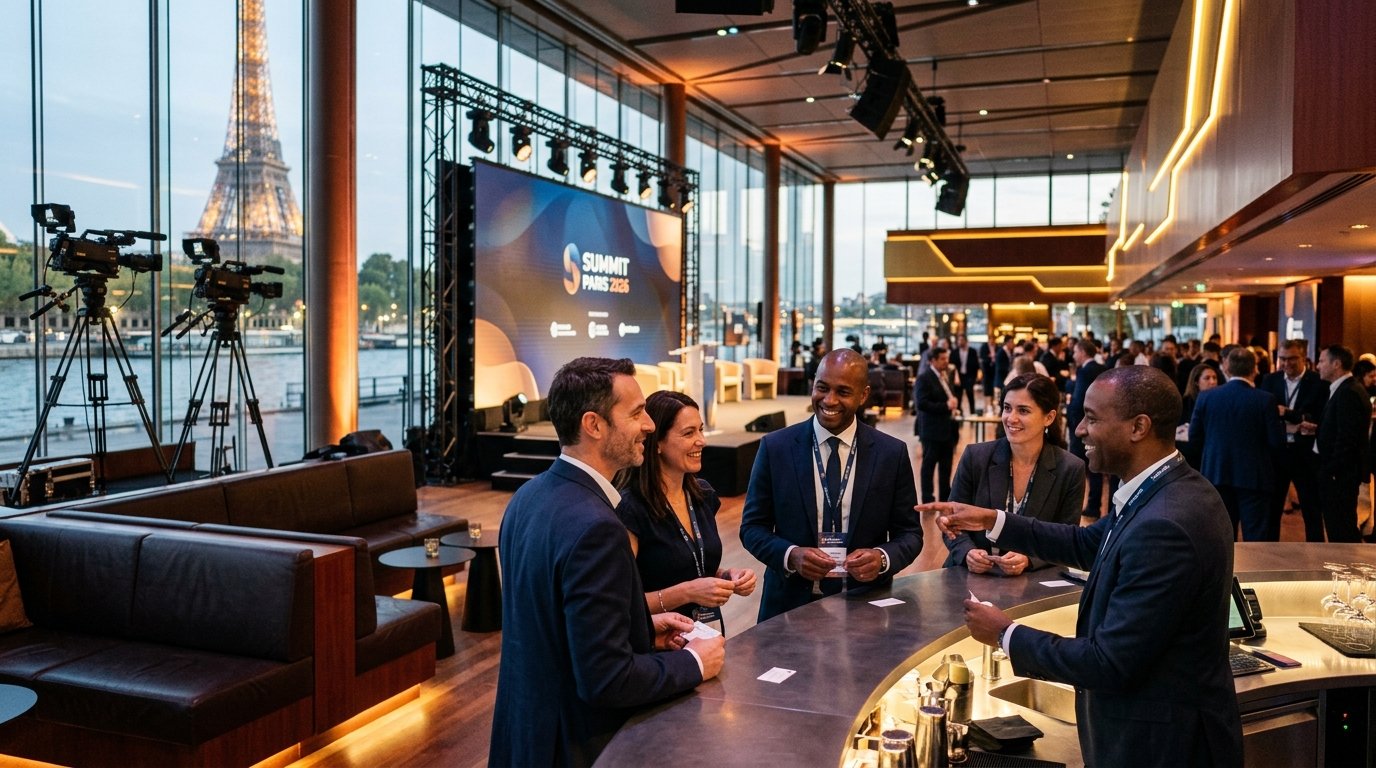
How to Plan a Corporate Summit in Paris: 2026 Guide
A comprehensive guide for decision-makers planning high-stakes corporate summits in Paris, focusing on logistics, AV production, and content ROI.
What are the key logistical requirements for a 2026 Paris corporate summit?
Planning a corporate summit in Paris for 2026 requires more than just a venue; it demands a masterclass in logistics and high-end brand storytelling to stand out in the global B2B landscape. By 2026, the Parisian event market will have fully matured post-major international sporting cycles, resulting in a city that is more technologically capable but also significantly more expensive and crowded. Decision-makers must secure their primary locations at least 15 to 18 months in advance. The competition for iconic spaces like the Palais Brongniart or the Pavillon Cambon is no longer limited to local French firms; global tech giants and financial institutions now treat Paris as their primary European theater.
Logistics in Paris are governed by two factors: historical constraints and modern security protocols. Most premier venues are Haussmann-era buildings with strict load-in schedules and weight limits for AV equipment. You cannot simply roll in a 20-ton LED wall without a structural survey and a specific permit from the Prefecture. This is where most international agencies fail—they underestimate the bureaucracy of the 1st and 8th arrondissements. Furthermore, transportation for attendees must account for the city's aggressive 'Plan Vélo' which has restricted bus access in central zones. Planning corporate events in Paris now requires a hyper-local understanding of micro-mobility and pedestrian flow to ensure 500+ executives aren't left stranded between a hotel in the 17th and a gala in the 4th.
Beyond the physical movement of people, the digital logistics of 2026 are paramount. High-density Wi-Fi that can support 1,500 simultaneous devices, each streaming or uploading 4K content, is not a luxury—it is a baseline requirement. Many historic Parisian venues have thick stone walls that act as Faraday cages. Your planning phase must include a rigorous RF (Radio Frequency) coordination plan and a dedicated fiber injection if you intend to broadcast your summit to a global audience. Failure to address these technical foundations six months prior to the event will result in a catastrophic failure of your digital reach, regardless of how prestigious the ballroom appears.
How do you choose the right AV and photography partners for premium B2B events?
The choice of an AV and photography partner in Paris often separates a standard corporate gathering from a world-class summit. In the B2B world, your event only exists as far as its documentation travels. If your photography looks like a series of blurry snapshots and your video recap is a generic montage of handshakes, you have wasted your budget. For 2026, the standard for event photography and video gallery output has shifted toward an editorial, magazine-quality aesthetic. You need a team that understands the difference between 'capturing a moment' and 'crafting a brand narrative.'
When evaluating partners, look for those who offer a unified production stack. Hiring a separate photographer, a different video team, and a third-party streaming provider is a recipe for operational friction. A consolidated team ensures that the lighting for the live stream is also optimized for the still photographers and that the audio feed for the on-site podcast studio is crystal clear. In Paris, the market is flooded with freelancers, but a high-stakes summit requires an agency structure that can handle the redundancy of equipment and the intensity of a 48-hour turnaround.
Demand to see portfolios that specifically feature B2B conferences, not weddings or fashion shows. A fashion photographer will focus on the aesthetic of the room; a corporate event photographer will focus on the interaction between a CEO and a key sponsor. You are paying for the ability to identify the power players in the room and document the 'deal-making' atmosphere. Furthermore, ensure your AV partner is proficient in English-first production. While the event is in Paris, the global B2B language is English. Your technical director must be able to communicate flawlessly with your international speakers and your home-office marketing team without any linguistic ambiguity.
What are the best practices for vendor coordination in the Parisian event industry?
Navigating the Parisian vendor ecosystem is a cultural exercise as much as a professional one. The city operates on a network of long-standing relationships and 'prestige-tier' suppliers. To execute a flawless summit in 2026, you must move away from a transactional mindset and toward a partnership model. This means involving your key vendors—catering, AV, and décor—in the site visits from day one. In Paris, the 'Maitre d' model still prevails in high-end catering; you need someone who understands the choreography of a 400-person lunch served in under 60 minutes to keep your afternoon sessions on track.
Vendor coordination also involves managing the 'syndicats' and local labor laws. Paris has strict regulations regarding working hours and Sunday labor. If your summit requires a Saturday night setup for a Sunday morning opening, your budget must reflect the premium labor costs. An experienced agency will build these contingencies into the initial quote rather than surprising you with a 30% surcharge two weeks before the event. Transparency is the only currency that matters here.
Alesia RSVP elevates the standard Paris summit by integrating elite photo and video production into the planning phase, ensuring every logistical milestone is captured with a premium aesthetic that serves your long-term marketing goals. We don't just provide cameras; we provide a production management layer that bridges the gap between your vision and the local Parisian reality. By treating the capture of the event as a core logistical pillar rather than an afterthought, we ensure that the investment you make in a Parisian venue continues to pay dividends for months after the stage is dismantled.
How does high-quality content capture drive ROI for international summits?
The ROI of a corporate summit in Paris is no longer measured solely by the number of attendees in the room. In 2026, the real value lies in the 'content tail'—the months of social media assets, thought leadership articles, and marketing collateral generated from two days of programming. High-quality content capture transforms a localized event into a global brand moment. If you host a keynote in Paris but don't have a broadcast-quality recording, you have effectively silenced your most important speakers.
Consider the multi-channel approach: a single panel discussion should yield a full-length video for YouTube, three 60-second clips for LinkedIn, an audio file for your corporate podcast, and a dozen high-resolution images for your annual report. This level of output requires a production team that is thinking about the edit while the cameras are still rolling. On-site podcasting, in particular, has become a high-value asset for B2B summits. It allows you to pull speakers aside for deep-dive interviews that provide more value than a 20-minute stage presentation ever could.
Ultimately, your Paris summit is a statement of intent. It tells your industry that you are a leader capable of convening the best minds in the world's most prestigious city. If the visual record of that event is mediocre, your brand appears mediocre. Investing in premium production is not an expense; it is a brand insurance policy. It ensures that every euro spent on catering, venues, and travel is amplified through a lens of professional excellence, securing your position at the top of your market for the following year.
FAQ
How far in advance should I book a venue and production team in Paris?
For a major corporate summit in 2026, you should secure your venue at least 15 to 18 months in advance. Premium production teams, especially those with English-speaking crews and international standards, should be booked 9 to 12 months out to ensure availability during peak seasons like June and October.
What services does Alesia RSVP offer for large-scale corporate summits?
Alesia RSVP provides a full-service technical and management suite including multi-camera live streaming, magazine-quality event photography, high-end aftermovies, on-site podcast studios, and end-to-end event management. We specialize in coordinating these services for international brands hosting high-stakes events in Paris.
Frequently Asked Questions
How far in advance should I book a venue and production team in Paris?
For a major corporate summit in 2026, you should secure your venue at least 15 to 18 months in advance. Premium production teams, especially those with English-speaking crews and international standards, should be booked 9 to 12 months out to ensure availability during peak seasons like June and October.
What services does Alesia RSVP offer for large-scale corporate summits?
Alesia RSVP provides a full-service technical and management suite including multi-camera live streaming, magazine-quality event photography, high-end aftermovies, on-site podcast studios, and end-to-end event management. We specialize in coordinating these services for international brands hosting high-stakes events in Paris.