
AI in B2B Storytelling: The Future of Event Video Production
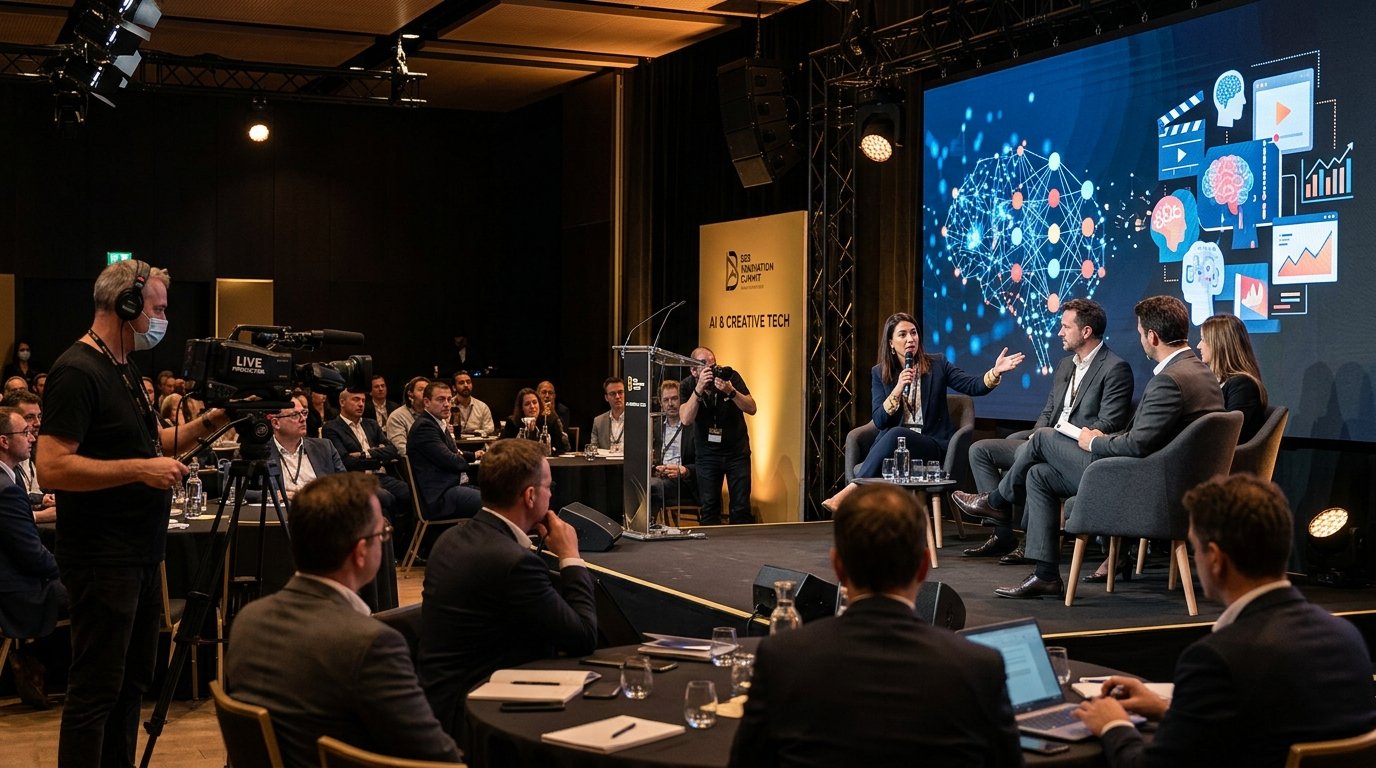
AI in B2B Storytelling: The Future of Event Video Production
AI has evolved from a technical gimmick into the new creative language for high-level B2B brands and events, effectively breaking traditional barriers of cost, time, and physical logistics.
Is Generative AI Truly Ready for High-End Event Video Production?
For years, artificial intelligence was relegated to the status of a technical curiosity or a "toy" for early adopters. Those days are over. The advertising and corporate events industries are undergoing a phase of rapid maturation where AI is becoming a strategic pillar. At the recent Brandweek 2026 conference, during a fireside chat hosted by Higgsfield AI and Adweek, the demonstration was clear: AI is no longer a distant promise; it is an operational production engine. For CMOs and organizers of international summits, the question is no longer whether AI can generate an image, but how it can shatter the physical constraints that have historically limited storytelling for prestigious events.
Traditional boundaries—massive shooting budgets, complex lighting setups in conference halls, or the logistical impossibility of deploying production teams to twenty different locations simultaneously—are fading away. AI now allows creators to realize what is in their mind's eye without the usual material friction. We are seeing massive adoption of these tools to create immersive content that goes beyond simple factual reporting. As Higgsfield CEO Mahi de Silva points out, AI acts as a "capability enhancer," allowing for the production of high-quality visual assets at a fraction of the usual time and cost. This evolution is particularly visible in new distribution strategies, where the focus is on increasing production value without exploding the budget.
AI does not replace the director; it provides them with a virtual camera capable of filming the impossible. For a company hosting a summit in Dubai, Singapore, or London, this means that content captured on-site can be instantly enriched, stylized, and adapted into dozens of narrative formats that scrupulously respect brand identity while captivating a global audience saturated with generic content. The shift from static production to AI-assisted dynamic production maintains visual consistency across the entire value chain, from pre-event teasers to premium recaps released just hours after the closing remarks.
This profound transformation of the media landscape requires brands to rethink their approach to creation. It is no longer about producing to document, but producing to engage. Generative video AI, in particular, allows for the simulation of environments or stagings that would have required weeks of post-production previously. By integrating these technologies from the design phase, agencies can propose bolder narrative concepts where the only limit is the creative's imagination, not the depth of the technical wallet. It is a paradigm shift that favors agility and emotional relevance.
How Tools Like Higgsfield AI Empower B2B Content Creators
The real obstacle to mass AI adoption in the enterprise has long been technical complexity and poor UX. Having to become a "prompt engineer" to get a decent result is a major deterrent for marketing teams under pressure. Platforms like Higgsfield AI are radically changing the game by offering intuitive, often mobile-first interfaces that integrate directly into the daily workflow of creators. The goal is pure productivity combined with cinematic quality. Instead of spending weeks in post-production for a conference aftermovie, AI tools allow for the processing of video feeds to generate social-media-optimized clips with consistent art direction and automatic professional color grading.
This ease of use allows brands to regain total control over their narrative. In the B2B sector, where credibility and authority are the primary currencies, the use of AI must not equate to "fake" or "artificial." On the contrary, it must serve to amplify the reality of the event and highlight human expertise. Using AI to improve the image quality of a speaker filmed in difficult lighting conditions, or to instantly translate keynotes into multiple languages with natural voice cloning (while remaining mindful of GDPR and data ethics), enhances accessibility and the audience experience. The tool must remain at the service of the message and the human element—a philosophy now prevailing among creative tech leaders.
For production agencies, integrating these creative suites means that delivery turnaround is no longer an insurmountable bottleneck. Content captured in the morning during a panel discussion can be transformed into a premium advertisement or a thought-leadership piece by that same afternoon. This agility is what clients now expect from audiovisual production leaders. The ability to transform raw data into impactful visual stories without waiting for the traditional multi-week editing cycle is becoming a major competitive advantage for brands looking to dominate the post-event conversation on LinkedIn or X (formerly Twitter).
Furthermore, Higgsfield AI and its direct competitors emphasize personalization. It is now possible to train models on a brand's specific aesthetic, ensuring that every generated video respects the brand guidelines, color palettes, and overall corporate atmosphere. This solves the problem of "AI-generated sameness." In B2B, differentiation is vital. Being able to produce content at scale while maintaining a unique visual signature is the holy grail of modern communication. Creators are no longer limited by traditional linear editing tools; they have a visual experimentation lab capable of producing multiple iterations in record time, allowing them to test different narrative angles with various audience segments.
Tangible Benefits of AI for Storytelling and Rapid Post-Production
The most immediate and tangible benefit of AI in corporate events is the scheduled end of "stale content." Too often, recap videos of a summit or product launch are published two weeks after the event, at a time when audience interest has already waned and the conversation has moved on. AI enables near-instant post-production. By automating logging, intelligent subtitling, and even the editing of highlights based on semantic analysis of speech and audience reactions, brands can distribute cinema-quality content while the event is still ongoing, creating an immediate resonance effect.
At Alesia RSVP, we view AI not as a replacement for the human eye, but as a multiplier of creativity and efficiency. By integrating these cutting-edge tools into our production workflow, we allow brands to break free from physical limits to tell even more impactful stories after every event. Whether it's enhancing a photo and video gallery or creating ultra-personalized teasers for sponsors in a few clicks, AI offers unprecedented content granularity. It allows for segmenting content for every stakeholder: a version for investors, a version for employees, and a version for the general public, all from the same base capture.
Authenticity, however, remains the central pillar of any successful communication strategy. AI is used to polish, adapt, translate, and distribute, but the heart of the content—the emotion of a speaker, the spontaneous interaction between two industry leaders, the tension of a major announcement—remains captured by the expert eye of a professional on the ground. The combination of human sensitivity and AI's computing power creates a new production standard that was once reserved for Hollywood blockbusters or multi-million dollar ad campaigns. For companies, this is the opportunity to transform every event, even mid-sized ones, into a long-running advertising campaign, maximizing the ROI of every minute spent on stage.
Finally, AI facilitates intelligent archiving and content repurposing. Thanks to automatic indexing via facial and thematic recognition, a company can instantly find a specific intervention from three years ago to integrate it into a new production. This gives a second life to digital assets and strengthens the continuity of brand storytelling over the long term. Alesia RSVP stands as the strategic partner to navigate this new era where technology serves the narrative.
FAQ
Does AI-generated video look professional enough for premium B2B brands?
Yes, current tools like Higgsfield AI focus on 'cinematic quality' and can be trained on specific brand guidelines to ensure high-end, consistent visual output that matches professional standards.
How does AI speed up event post-production?
AI automates time-consuming tasks like footage sorting, subtitling, and highlight detection, allowing for high-quality recaps to be published hours, rather than weeks, after an event.
Is voice cloning and facial recognition in events GDPR compliant?
When used in an EU context, these technologies must be implemented with explicit consent and robust data protection measures. Leading AI platforms are increasingly building 'Enterprise' versions to address these regulatory requirements.
Frequently Asked Questions
Does AI-generated video look professional enough for premium B2B brands?
Yes, current tools like Higgsfield AI focus on 'cinematic quality' and can be trained on specific brand guidelines to ensure high-end, consistent visual output that matches professional standards.
How does AI speed up event post-production?
AI automates time-consuming tasks like footage sorting, subtitling, and highlight detection, allowing for high-quality recaps to be published hours, rather than weeks, after an event.
Is voice cloning and facial recognition in events GDPR compliant?
When used in an EU context, these technologies must be implemented with explicit consent and robust data protection measures. Leading AI platforms are increasingly building 'Enterprise' versions to address these regulatory requirements.