
India MICE Growth: Scaling Premium Events in New Delhi
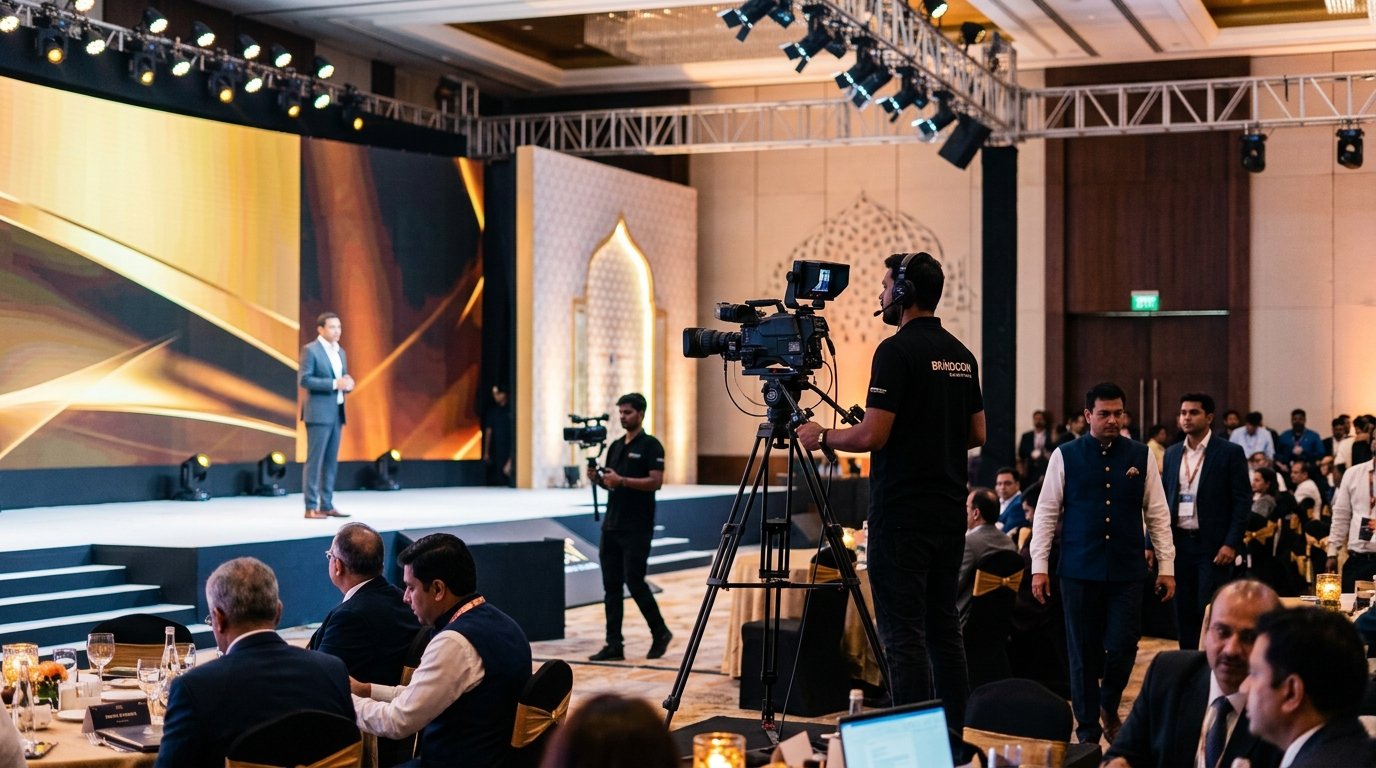
India MICE Growth: Scaling Premium Events in New Delhi
India's convention center boom, sparked by the G20, aims to double MICE revenue to $103 billion by 2030 through massive new hubs like Yashobhoomi and a strategic focus on emerging regional centers.
Is India truly ready to compete with global MICE destinations?
India has entered an aggressive expansion phase in its Meetings, Incentives, Conferences, and Exhibitions (MICE) sector, targeting a massive $103.7 billion in revenue by 2030. The success of the G20 Summit served as a massive proof-of-concept, showcasing that the country can handle high-security, high-stakes international gatherings on a scale few nations can match. However, building massive halls is only half the battle. While the government is busy erecting structures like the Yashobhoomi (IICC) in New Delhi—one of the largest MICE facilities in the world—the real question for corporate decision-makers is whether the operational ecosystem matches the architectural ambition. Global hubs like Singapore and Dubai have set a high bar for seamless logistics and professional services. For a VP of Events or a Marketing Director, square footage is irrelevant if the 'last mile' of execution—local AV reliability, catering standards, and technical fluency—is missing. India is currently in a transition period where its 'hardware' is outpacing its 'software.'
The Ministry of Tourism has identified the MICE segment as a primary engine for economic influence, moving beyond traditional leisure tourism. This strategy isn't limited to the capital; the government has specifically highlighted cities like Varanasi, Khajuraho, and Kochi as the next frontiers for global summits. These locations are being positioned to offer a blend of cultural heritage and modern infrastructure. Yet, for an event in a city like Khajuraho to be considered 'world-class,' it must offer more than just a large room near a monument. It requires a sophisticated layer of service providers who understand the nuances of a B2B brand's reputation. When moving a flagship event to an emerging market, the risk to brand equity is significant. The infrastructure might be new, but the experience must feel established. We are seeing a shift where the focus is moving from 'can we host it?' to 'how well can we produce it?'
To bridge this gap, the Indian government is implementing the 'National Strategy and Roadmap for MICE Industry,' which focuses on ease of doing business and improving the skill sets of local event professionals. However, the maturity of the vendor market remains uneven. While New Delhi and Mumbai offer a relatively robust pool of technicians and production houses, the secondary hubs are still catching up. This creates a challenge for planners who require consistency across a multi-city tour or a series of regional summits. The ambition is clear: India wants to move from its current 1% share of the global MICE market to a dominant position. Achieving this will require more than just concrete and glass; it will require a culture of precision that aligns with the expectations of Fortune 500 companies.
What are the essential elements of a world-class event ecosystem?
A successful MICE destination requires a holistic ecosystem that supports every facet of the attendee journey, from the moment they clear immigration to the final keynote. For corporate planners, the priority is often the technical backbone: high-speed fiber optics, redundant power systems, and acoustic treatments that don't make a keynote sound like it is being delivered in a hangar. In many of India's new sprawling centers, the scale itself becomes a challenge. Yashobhoomi, for instance, offers over 70,000 square meters of exhibition space. Without a meticulous production plan, the premium feel of a corporate summit can easily be lost in the sheer vastness of the venue. To combat this, planners must look toward high-end production strategies that create 'zones of excellence' within these massive spaces, using lighting, soundscapes, and modular architecture to build intimacy.
Professional labor is the second, and perhaps more critical, pillar. A world-class event demands a crew that speaks the language of international corporate standards. This isn't just about technical skill; it's about understanding the pacing of a C-suite agenda, the visual expectations of a global audience, and the ability to troubleshoot in real-time without disrupting the flow of the event. When comparing these new hubs to established locations like Dubai, the difference is often found in the maturity of the vendor market. In Dubai, the visual and technical standards are standardized across the board; in emerging Indian hubs like Kochi or Varanasi, those standards must be imported or strictly managed by an external production partner. Brands that succeed in these new markets are those that bring their own high-level production partners to ensure the 'local' flavor doesn't lead to a 'local' quality dip.
Furthermore, the logistics of the 'last mile'—the transport between hotels and venues, the efficiency of the registration desk, and the quality of on-site catering—must be flawless. In cities like New Delhi, traffic management and security protocols can add layers of complexity that require months of advance planning. A world-class ecosystem isn't just about what happens on stage; it's about the invisible infrastructure that allows the stage to remain the focus. For international brands, the goal is to achieve a result that looks like it could have happened in London or New York, but with the unique backdrop of a rising economic power. This requires a level of oversight that goes beyond traditional event management, entering the realm of strategic production and brand stewardship.
How can brands maintain premium visual standards in emerging international markets?
Visual prestige is the only currency that matters once the doors close and the attendees return home. In the context of India's rapid expansion, there is a legitimate concern regarding visual consistency. If your brand is hosting a summit in a newly opened center in Kochi or a heritage-focused venue in Varanasi, the photography and video production must reflect your global identity, not the venue's growing pains. High-stakes events are increasingly becoming content engines. The ROI of an event is now measured by its digital reach and the quality of post-event assets. If the lighting is flat, the audio in the recording is echoey, or the video recap feels amateur, the entire investment—often running into millions of dollars—is undermined.
To maintain these standards, corporate planners should prioritize the creation of 'content zones.' This means designing specific areas for high-end interviews, podcasting, and editorial photography that are insulated from the chaos of a 5,000-person exhibition hall. In these massive new Indian venues, creating a sense of exclusivity is vital. This is achieved through controlled lighting environments and professional-grade AV setups that are brought in specifically to override the generic 'house' systems. House systems are designed for general utility; premium events require bespoke engineering. The objective is to produce a body of work—recap videos, social clips, and keynote recordings—that maintains a premium aesthetic regardless of the geographical location. Documentation is not an afterthought; it is the primary deliverable for your global stakeholders who couldn't attend in person.
Moreover, the choice of equipment and the expertise of the operators are non-negotiable. In emerging markets, there is often a temptation to rely on local equipment rentals that may not be maintained to the highest standards. A premium production strategy involves vetting every piece of gear, from the sensor size of the cameras to the color temperature of the LED panels. When the goal is to produce cinematic-quality content, the margin for error is zero. Brands must ensure that their production partners have a track record of delivering executive-grade output in challenging environments. By treating the event as a live broadcast production rather than a simple meeting, brands can ensure that their visual narrative remains untarnished by the logistical hurdles of a developing MICE destination.
Why is professional documentation critical for events in new convention centers?
Emerging hubs are inherently risky for a brand’s reputation because they lack a decades-long track record of perfection. Professional documentation serves as a powerful tool for narrative control. Alesia RSVP views India’s infrastructure boom not just as a logistical challenge, but as a canvas for high-end storytelling. While the government builds the walls and the floors, we provide the visual prestige that fills the space. We ensure that events in New Delhi, Kochi, or Khajuraho meet the same aesthetic benchmarks as those we produce in Paris or Singapore. By focusing on elite photo and video production, we bridge the gap between 'large-scale' and 'premium.'
Our approach is to treat every corporate event as a cinematic production. Whether it is a multi-camera live stream of a keynote or same-day editorial photography for PR distribution, the quality must be non-negotiable. We understand that for a corporate brand, the event is a statement of intent. When you choose to host in an emerging market like India, you are signaling growth, ambition, and a forward-looking strategy. Our role is to make sure that signal is captured with the highest possible fidelity. High-quality documentation also serves as a risk mitigation strategy; it allows the brand to showcase the success of the event to global headquarters, justifying the choice of an unconventional location.
In these new centers, the architecture is often the star of the show, but it shouldn't overshadow the brand. Professional documentation ensures that the brand remains the protagonist of the story. This involves careful art direction, choosing angles that emphasize the scale without losing the human element, and using post-production techniques that align with the brand’s global visual guidelines. You can view the level of consistency we bring to international summits in our gallery, where the focus is always on executive-grade output, regardless of the venue's age or location. In the end, the building is just a backdrop; the content we create is the legacy. As India continues its journey to becoming a global MICE powerhouse, the brands that will stand out are those that recognize that the quality of their documentation is just as important as the quality of their destination.
FAQ
What is driving the growth of India's MICE market?
The growth is primarily driven by massive government investment in infrastructure, such as the Yashobhoomi and Bharat Mandapam convention centers, following the successful execution of the G20 Summit. India is positioning itself as a cost-effective but high-scale alternative to traditional hubs, aiming for $103.7 billion in revenue by 2030 through its 'National Strategy and Roadmap for MICE Industry'.
How does Alesia RSVP ensure high-end visual consistency across international borders?
We maintain consistency by deploying a lead creative team that oversees local production, ensuring that lighting, framing, and technical standards align with the brand's global identity. We use standardized high-end equipment and rigorous post-production workflows to ensure that an event in New Delhi looks as polished as one in London or Singapore.
Which Indian cities are being developed as specialized MICE hubs?
While New Delhi and Mumbai remain the primary hubs, the Indian government has specifically targeted Varanasi, Khajuraho, and Kochi for MICE development. These cities are being upgraded with modern convention facilities to offer a unique blend of cultural heritage and professional event infrastructure.
What are the biggest challenges for corporate planners in India's new venues?
The primary challenges include managing the 'software' gap—ensuring that service levels, technical expertise, and operational logistics match the high-quality 'hardware' of the new buildings. Managing the sheer scale of venues like Yashobhoomi to maintain a premium, intimate feel for corporate audiences is also a key consideration.
Frequently Asked Questions
What is driving the growth of India's MICE market?
The growth is primarily driven by massive government investment in infrastructure, such as the Yashobhoomi and Bharat Mandapam convention centers, following the successful execution of the G20 Summit. India is positioning itself as a cost-effective but high-scale alternative to traditional hubs, aiming for $103.7 billion in revenue by 2030 through its 'National Strategy and Roadmap for MICE Industry'.
How does Alesia RSVP ensure high-end visual consistency across international borders?
We maintain consistency by deploying a lead creative team that oversees local production, ensuring that lighting, framing, and technical standards align with the brand's global identity. We use standardized high-end equipment and rigorous post-production workflows to ensure that an event in New Delhi looks as polished as one in London or Singapore.
Which Indian cities are being developed as specialized MICE hubs?
While New Delhi and Mumbai remain the primary hubs, the Indian government has specifically targeted Varanasi, Khajuraho, and Kochi for MICE development. These cities are being upgraded with modern convention facilities to offer a unique blend of cultural heritage and professional event infrastructure.
What are the biggest challenges for corporate planners in India's new venues?
The primary challenges include managing the 'software' gap—ensuring that service levels, technical expertise, and operational logistics match the high-quality 'hardware' of the new buildings. Managing the sheer scale of venues like Yashobhoomi to maintain a premium, intimate feel for corporate audiences is also a key consideration.