
India MICE Growth: High-End Event Production in New Hubs
India MICE Growth: High-End Event Production in New Hubs
India is aggressively positioning itself as a global MICE powerhouse, but infrastructure alone won't win over high-stakes corporate event planners. The transition from a leisure-first destination to a premier business hub requires a sophisticated approach to technical production and visual documentation.
Is India truly ready to compete with established MICE hubs like Dubai or Singapore?
As India aims to double its MICE (Meetings, Incentives, Conferences, and Exhibitions) market to $103.7 billion by 2030, the race is on to prove that its infrastructure can match its global ambitions. The 2023 G20 Summit served as a massive proof-of-concept, showcasing world-class convention centers like Bharat Mandapam and Yashobhoomi that rival the best in the West. However, in the world of premium B2B events, a shiny new building is merely the entry fee. To compete with established powerhouses like Dubai or Singapore, India must move beyond square footage and focus on the seamless integration of technology, hospitality, and reliability. The current market, valued at $49.4 billion, is growing at a breakneck pace, but international organizers remain cautious. They aren't just looking for a hall; they are looking for an ecosystem that understands the nuances of a high-stakes corporate summit. This includes everything from the speed of customs clearance for specialized AV equipment to the availability of broadcast-grade technical staff who can manage complex hybrid event environments.
According to Industry perspectives on India's MICE aspirations, the challenge lies in the 'soft' infrastructure—the specialized vendors, the technical AV standards, and the logistical precision required for C-suite attendees. While cities like Varanasi, Khajuraho, and Kochi are being marketed as the next frontier, the reality is that these destinations must prove they can handle the technical complexity of a modern conference. A power failure or a subpar live stream is not an option when the eyes of the global finance or tech sectors are on the stage. The ambition is clear, but the execution must be flawless to shift the perception of India from a leisure destination to a premier business hub. This requires a shift in mindset from 'event management' to 'event engineering,' where every technical detail is stress-tested against international benchmarks. For a global brand, the decision to move a flagship event from a safe choice like Singapore to an emerging Indian hub depends entirely on the confidence they have in the local technical ecosystem. If the infrastructure is world-class but the technical execution is amateur, the reputation of the destination suffers a setback that can take years to recover from. Therefore, the focus must be on building a workforce and a vendor network that speaks the same technical language as the world's most demanding event planners.
How does high-end visual documentation build trust for emerging event destinations?
For a VP of Events sitting in London or New York, booking a venue in an emerging Indian city feels like a risk. This is where high-end visual documentation becomes a strategic asset rather than a post-event afterthought. When an event is captured with magazine-quality photography and cinematic video, it provides the 'social proof' necessary to de-risk the destination for future organizers. High-quality photo and video galleries act as the primary marketing tool for these new convention centers. If a planner can see a 4K aftermovie of a flawlessly executed summit in Kochi, the perceived risk of 'ground reality' issues evaporates. This aligns with Latest trends in global event planning, where the focus has shifted from the event itself to the content generated during the event. In the B2B sector, the event is the content engine. If the production value is low, the brand's perceived authority suffers.
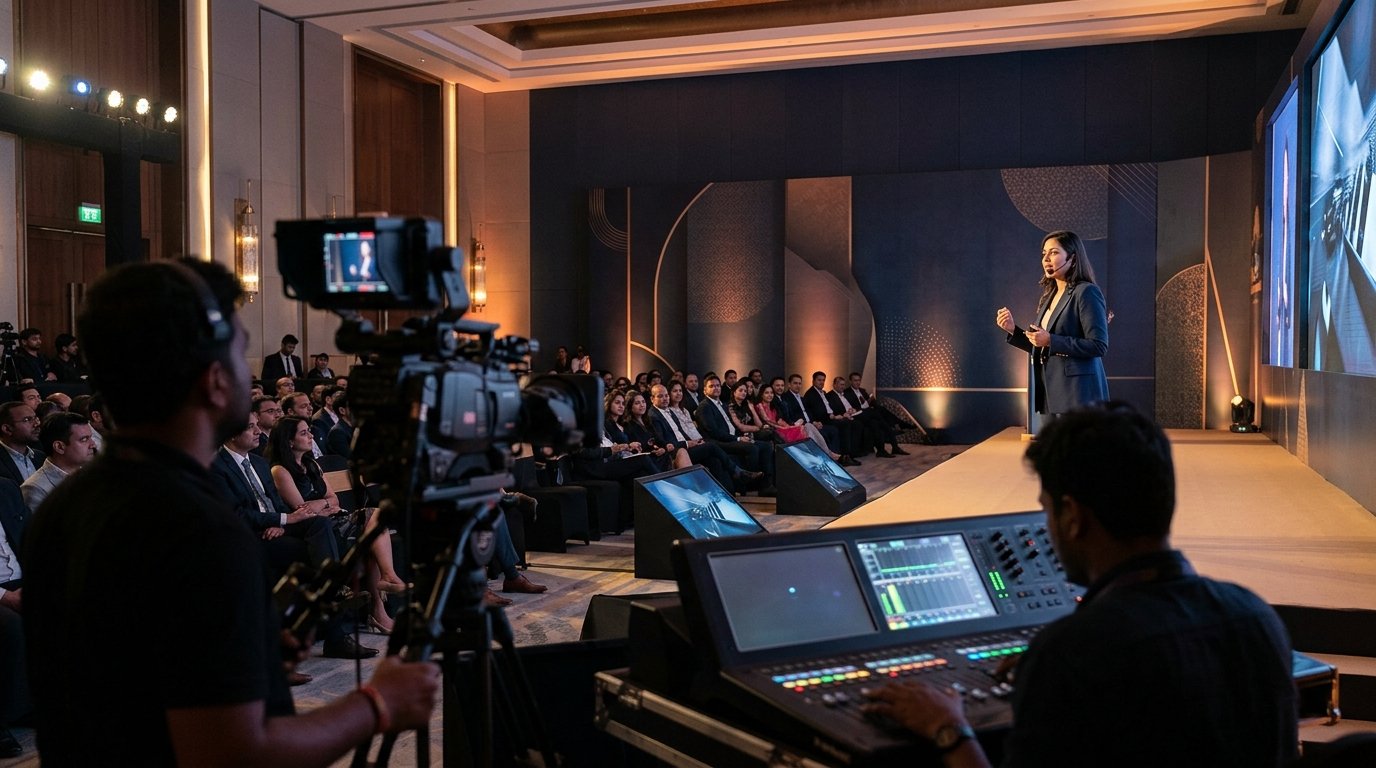
For India to truly capture the $103.7 billion opportunity, it must prioritize the 'visual output' of its summits. This means moving away from generic event snapshots and toward editorial-grade storytelling. Professional coverage doesn't just record what happened; it frames the venue as a sophisticated, capable environment. It bridges the gap between 'we have a convention center' and 'we are a world-class business destination.' High-end visual documentation serves two purposes: it validates the investment of the current sponsors and acts as a high-conversion sales tool for the next year's edition. When an international planner sees crisp, well-lit shots of a plenary session with perfect stage design and high-density LED walls in a city like Indore or Bhubaneswar, the geographical location becomes secondary to the professional standard displayed. At Alesia RSVP, we have seen this dynamic play out across 22 global cities; the venues that invest in premium AV and visual documentation are the ones that secure the recurring, high-value corporate contracts. The visual narrative must reflect the sophistication of the attendees. If you are hosting a tech summit for AI researchers, the visual documentation cannot look like a local trade fair. It must have the aesthetic of a global innovation hub. This level of visual consistency is what builds the brand equity of a MICE destination over time, turning a one-off event into a long-term partnership between the city and the global corporate sector.
What role does the 'ground reality' of logistics play in the success of premium B2B conferences?
The 'ground reality' mentioned by industry insiders is the ultimate litmus test for India’s MICE aspirations. Logistics in emerging hubs can be unpredictable, and for a premium B2B conference, unpredictability is the enemy. This is why the partnership between a venue and a sophisticated AV production house is critical. Alesia RSVP bridges the gap between infrastructure and reputation; while India builds the physical spaces, we provide the high-end visual storytelling and technical management that proves these venues can handle the prestige and complexity of world-class corporate gatherings. Our role is to ensure that the production quality—from the live stream stability to the editorial photography—meets the exact standards of a Fortune 500 brand, regardless of the local learning curve. We don't just provide services; we provide a layer of corporate-grade reliability. When an international brand hosts a summit in a new market, they need a partner who understands executive expectations. This involves meticulous site inspections, redundant power systems, and a deep understanding of local labor dynamics to ensure that the 'last mile' of event delivery is as polished as the initial pitch.
By bringing a global standard of AV production and event management to these emerging hubs, we allow organizers to focus on their content while we handle the technical 'ground reality.' The future of India as a MICE leader depends on this operational alignment. The government can build the walls, but the industry must provide the excellence. As India moves toward its 2030 goals, the focus must remain on delivering a premium, frictionless experience that justifies the investment of international delegates. This means solving for the small things—like high-speed dedicated internet lines for media rooms and seamless airport-to-hotel transfers—that often make or break the attendee experience. The goal is not just to host an event, but to create a benchmark for what a modern, high-tech summit looks like in the 21st century. To achieve this, there must be a concerted effort to standardize technical riders across the country, ensuring that a planner booking a space in Varanasi can expect the same level of technical support as they would in Mumbai. This consistency is the hallmark of a mature MICE market. As we look toward the next decade, the winners will be those who can marry India's unique cultural appeal with the clinical precision of international event standards. The potential is immense, but the path to $103 billion is paved with the successful execution of thousands of small, technical details that collectively define the 'India experience' for the global business community.
FAQ
What is the projected growth of India's MICE industry by 2030?
India's MICE market is projected to grow from $49.4 billion in 2023 to $103.7 billion by 2030. This growth is driven by government investment in new convention centers in cities like Varanasi and Kochi, following the successful hosting of the G20 Summit.
Why is professional event photography crucial for new international venues?
Professional photography serves as essential social proof for international event planners who may be hesitant to book unproven locations. High-quality visual documentation demonstrates that a venue can handle the technical and aesthetic standards required for premium B2B corporate events.
Which Indian cities are emerging as top destinations for B2B conferences?
Beyond the major hubs of Delhi and Mumbai, the Indian government is heavily promoting Varanasi, Khajuraho, and Kochi as 'MICE-ready' destinations. These cities are being equipped with modern convention centers to attract international business summits and corporate retreats.
Frequently Asked Questions
What is the projected growth of India's MICE industry by 2030?
India's MICE market is projected to grow from $49.4 billion in 2023 to $103.7 billion by 2030. This growth is driven by government investment in new convention centers in cities like Varanasi and Kochi, following the successful hosting of the G20 Summit.
Why is professional event photography crucial for new international venues?
Professional photography serves as essential social proof for international event planners who may be hesitant to book unproven locations. High-quality visual documentation demonstrates that a venue can handle the technical and aesthetic standards required for premium B2B corporate events.
Which Indian cities are emerging as top destinations for B2B conferences?
Beyond the major hubs of Delhi and Mumbai, the Indian government is heavily promoting Varanasi, Khajuraho, and Kochi as 'MICE-ready' destinations. These cities are being equipped with modern convention centers to attract international business summits and corporate retreats.