
India MICE Market Growth: B2B Event Production Guide 2025
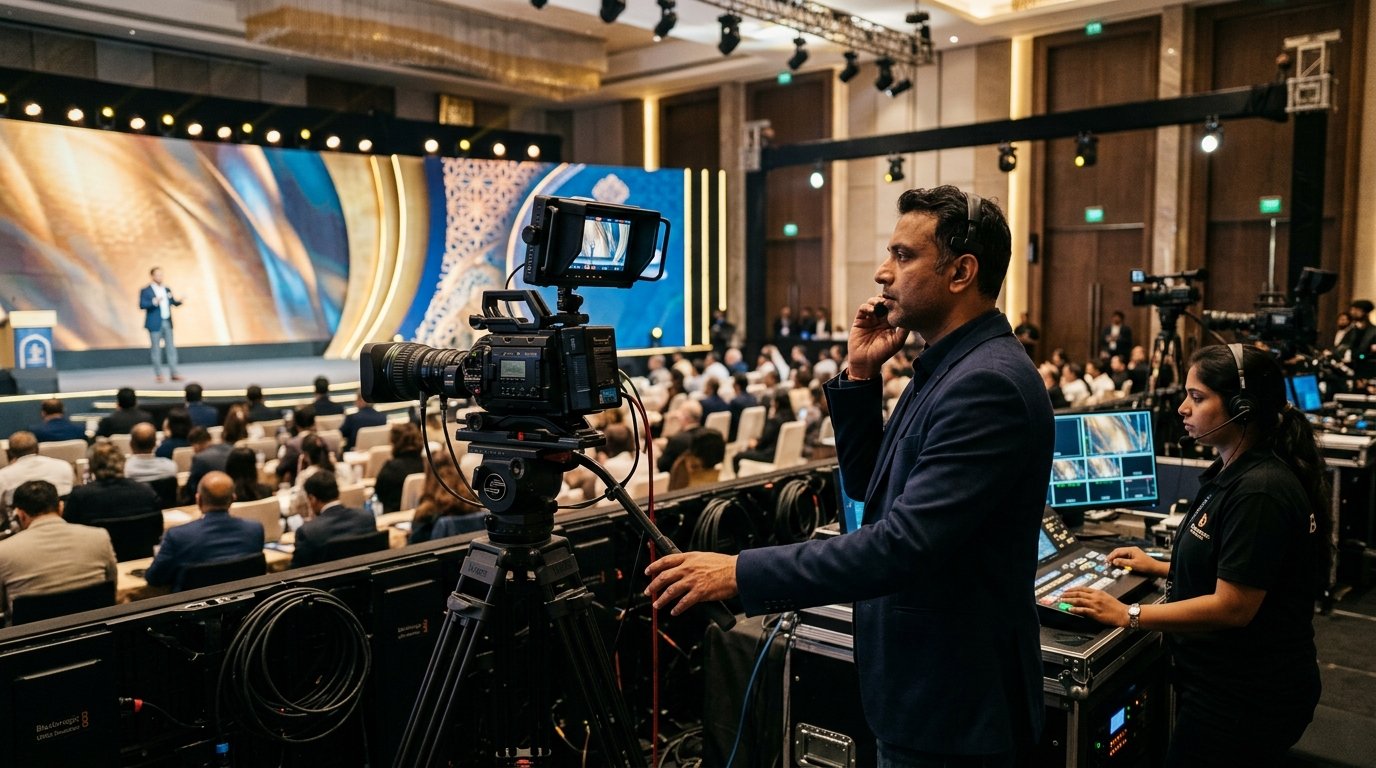
India MICE Market Growth: B2B Event Production Guide 2025
India is aggressively scaling its convention infrastructure to capture the $103 billion MICE market. We analyze if the reality matches the ambition.
Is India truly ready to host world-class MICE events?
With India's MICE market projected to hit $103 billion by 2030, the race is on to capture the visual grandeur of a new global event powerhouse. Is your brand ready to document its footprint in the world's fastest-growing event destination? The ambition is undeniable. Tourism Minister Gajendra Singh Shekhawat recently identified MICE as the fastest-growing segment in the national tourism portfolio, an engine for economic growth that generated $49.4 billion in 2023. The target is a 100% increase in revenue within six years. This isn't just government bluster; the physical evidence exists in the form of Bharat Mandapam and Yashobhoomi, two massive convention complexes in Delhi that hosted the G20 Summit with surgical precision. These venues prove that India can build hardware on a scale that rivals Singapore or Dubai.
However, being 'ready' involves more than pouring concrete. While the G20 was a masterclass in state-led event execution, the private corporate sector operates under different constraints. For a VP of Events at a Fortune 500 firm, readiness is measured by the reliability of the local supply chain. Can the venue provide 1Gbps synchronous dedicated internet for a 4K live stream? Is there a local pool of technical directors who understand the nuances of a high-stakes keynote? The current environment shows a disconnect between the 'mega-projects' and the mid-tier corporate summit needs. India is ready for the world stage in terms of capacity, but the service layer—the AV technicians, the event managers, and the logistical coordinators—is still catching up to international standards of professional corporate production.
We are seeing a shift where the 'Big Fat Indian Wedding' infrastructure is being repurposed for corporate needs. This is a mistake. A corporate summit requires a different psychological approach to production than a social celebration. The focus must be on technical redundancy, clear communication of brand values, and high-fidelity archival. As more global firms look toward India for their annual kick-offs or regional summits, the demand for a Western-standard production approach is skyrocketing. You can read more about global event trends and venue insights to see how this compares to other maturing markets.
What are the top emerging MICE destinations in India for 2025?
The government is banking on cities like Varanasi, Khajuraho, and Kochi to lead the next wave of growth. These aren't your traditional business hubs like Mumbai or Bangalore. Varanasi is being positioned as a cultural-corporate hybrid, capitalizing on its spiritual heritage to attract 'incentive' trips. Kochi, with its established international airport and coastal appeal, is a strong contender for medical and tech conferences. But the real story for 2025 is the decentralization of the Indian event market. For years, planners were stuck with the humidity of Mumbai or the traffic of Bangalore. Now, the expansion of regional airports has made tier-2 cities viable for international delegates.
From a production standpoint, these emerging cities present a unique challenge. While a venue in Kochi might have the square footage, it may lack the specialized equipment required for a multi-camera broadcast or a professional podcast studio setup. This is where the strategy must shift from 'local hiring' to 'hub-and-spoke' production. Alesia RSVP often handles this by bringing core technical leadership from a primary hub while utilizing local labor for heavy lifting. This ensures that the output remains consistent regardless of the city's individual development stage.
Kochi is particularly interesting for the fintech and maritime sectors. The city has shown it can handle large-scale international gatherings, but the 'last mile' of production—the high-end editorial photography and the rapid-turnaround aftermovies—remains a specialized service that must be imported. Planners should look at these cities for their 'wow' factor and cultural depth, but they must remain vigilant about the technical specifications of the venues. Don't assume that a new building has the internal cabling required for a complex hybrid event. Verification of the tech stack is the first step in any site visit to these emerging locations.
How can international brands maintain visual consistency at global conferences?
When a brand hosts a summit in New York, then another in Paris, and a third in New Delhi, the visual output must be indistinguishable in quality. The audience on LinkedIn or Instagram shouldn't see a drop in production value just because the event moved to a different continent. This is a common pitfall for global marketing teams. They hire a local photographer in each city with different styles, different equipment, and different delivery timelines. The result is a fragmented brand identity. To avoid this, you need a centralized production partner who understands the global brand book and can execute it locally.
As India scales its infrastructure with world-class venues like those seen at the G20, Alesia RSVP bridges the gap for international firms by ensuring that the premium aesthetic and high-production value of their global events are captured flawlessly in these emerging markets. We apply the same rigorous standards to a conference in New Delhi as we do for our gallery of work in London or Singapore. This involves standardized color grading for video, specific shot lists for photography that emphasize executive presence, and a unified live-streaming interface that remains the same for every global office.
Consistency is also about the 'corporate' eye. A local wedding photographer might take beautiful photos, but they won't understand how to frame a speaker to highlight the sponsor branding in the background, or how to capture the 'networking' shots that actually matter to a B2B marketing director. Professional event documentation is about storytelling, not just recording. It is about proving the ROI of the event through visual evidence of engagement. By maintaining a single production standard, brands can build a cohesive narrative of their global expansion, making each event feel like part of a larger, high-end series rather than a one-off local gathering.
What are the main challenges India faces in becoming a top global MICE destination?
The primary hurdle isn't the lack of buildings; it's the 'soft infrastructure.' Ramanpreet Singh, VP of Growth at SKIL, noted that a successful MICE destination requires more than just a convention center. It requires a seamless ecosystem. This includes simplified visa processes for international delegates, reliable high-speed transport from airports to venues, and a hospitality sector that understands the specific needs of a business traveler—which are very different from those of a tourist. There is an ongoing Industry discussion on India's MICE aspirations that highlights the friction points in the current system.
Logistics and customs for AV equipment remain a major pain point. For international production crews, navigating the ATA Carnet system or local import regulations can be a significant bureaucratic hurdle. This often leads to planners settling for subpar local gear rather than bringing in the specialized tools required for a global-standard broadcast. To overcome this, the industry needs more streamlined 'single-window' clearances for event-related hardware. Until then, success in the Indian MICE market depends on local partnerships that can navigate these regulatory complexities without compromising the technical integrity of the event.
Frequently Asked Questions
Quelles sont les meilleures villes pour un événement B2B en Inde en 2025 ?
Outre Delhi et Mumbai, Kochi et Varanasi émergent comme des destinations de choix alliant infrastructures modernes et attrait culturel pour les incentives.
Comment gérer le transport de matériel audiovisuel vers l'Inde ?
L'utilisation du Carnet ATA est recommandée, mais faire appel à un partenaire de production local pour la location du gros matériel permet de réduire les risques douaniers.
Le RGPD s'applique-t-il lors d'un événement en Inde ?
Oui, si votre entreprise est basée dans l'UE ou si vous traitez les données de citoyens européens, vous devez garantir la conformité RGPD pour toute captation de données ou d'images.