
Business Events as Strategic Assets: The JMIC Manifesto
Business Events as Strategic Assets: The JMIC Manifesto
Beyond the buffet and the badges, business events are now officially recognized as high-stakes economic drivers. The JMIC Manifesto proves it.
How do business events drive economic and social transformation?
The narrative surrounding corporate gatherings has shifted permanently. No longer viewed as discretionary marketing spend or simple hospitality line items, business events are now categorized as strategic economic assets. The release of the JMIC Global Manifesto Edition 3 marks a definitive end to the era where conferences were judged solely by ticket sales, delegate counts, or the quality of the cocktail reception. According to the latest data from the Events Industry Council’s 2026 Global Economic Significance Study, these gatherings are the primary engines for knowledge transfer, professional development, and cross-sector innovation on a global scale. When a high-level summit lands in a city, it doesn't just fill hotel rooms and restaurant seats; it catalyzes trade, fosters cross-border investment, and accelerates the adoption of new technologies. This isn't just industry optimism; it is a data-backed reality that governments, regional development agencies, and C-suite executives are finally beginning to quantify. For decision-makers, this means every event must be approached with a legacy-first mindset. You are not just hosting a meeting; you are engineering a professional transformation that reverberates through the local and global economy. This shift is being widely discussed among industry leaders on LinkedIn discussion on JMIC Global Manifesto, where the focus has moved from logistical efficiency to long-term societal impact. If your event strategy doesn't account for this broader economic footprint, you are leaving significant ROI on the table. The manifesto outlines how these events serve as the 'front door' for talent acquisition and regional development, making the choice of production partner more significant than ever. You need a team that understands the weight of these outcomes, not just someone to set up a stage. To truly align with the JMIC’s vision, organizations must look at the 'knowledge spillover' that occurs when experts congregate. This spillover leads to new research collaborations, policy shifts, and the birth of startups. The manifesto argues that the true value of a business event is found in the months and years following the closing ceremony. Therefore, the planning phase must include a strategy for capturing and extending this value. By treating an event as a strategic asset, brands can justify higher budgets and more ambitious programming, knowing that the return is measured in industry influence and economic growth rather than just immediate revenue. This paradigm shift requires a new vocabulary for event success—one that prioritizes intellectual capital over logistical checklists.
Why is impact storytelling essential for modern event ROI?
The JMIC Manifesto introduces a concept that every VP of Events and Chief Marketing Officer needs to master: the 'Iceberg' of event impact. While the visible portion of an event—the speakers, the venue, the immediate networking—is easily observed by those in attendance, the vast majority of the value lies beneath the surface. This submerged value includes long-term policy changes, community legacies, the establishment of new industry standards, and the professional growth of attendees that manifests months after the closing keynote. However, invisible value is notoriously difficult to defend in a boardroom when budgets are under scrutiny. This is where impact storytelling becomes a non-negotiable requirement. Without a sophisticated content strategy, the 'Iceberg' remains hidden, and your event's perceived value remains superficial and ephemeral. Modern event ROI is no longer about a spreadsheet of attendee counts or social media impressions; it is about the narrative of change you can prove through high-end, editorial documentation. Industry analysts at BizBash trends in event industry strategy highlight that the most successful brands are those that treat their events as content engines. By capturing the intellectual capital exchanged during a summit, you extend the life of the event indefinitely. This requires moving beyond standard event photography and into the realm of strategic documentation. You need to capture the specific moments where deals are struck, ideas are born, and professional breakthroughs occur, providing the visual evidence required to support the JMIC’s case for events as strategic assets. If you aren't documenting the transformation, did it even happen in the eyes of your stakeholders? Impact storytelling bridges the gap between the lived experience of the attendee and the strategic goals of the sponsor. It involves identifying the key themes of the manifesto—such as innovation, talent development, and sustainability—and creating visual narratives that demonstrate how your event moved the needle in those areas. High-quality video interviews with thought leaders, documentary-style recaps that focus on outcomes rather than just aesthetics, and deep-dive case studies are the tools of this new trade. When you present these assets to a board, you aren't just showing them a video of a party; you are showing them the tangible manifestation of their strategic goals. This level of documentation ensures that the event remains a living asset long after the breakdown is complete, providing a continuous stream of value that justifies the initial investment.
How can premium visual documentation support the JMIC Global Manifesto goals?
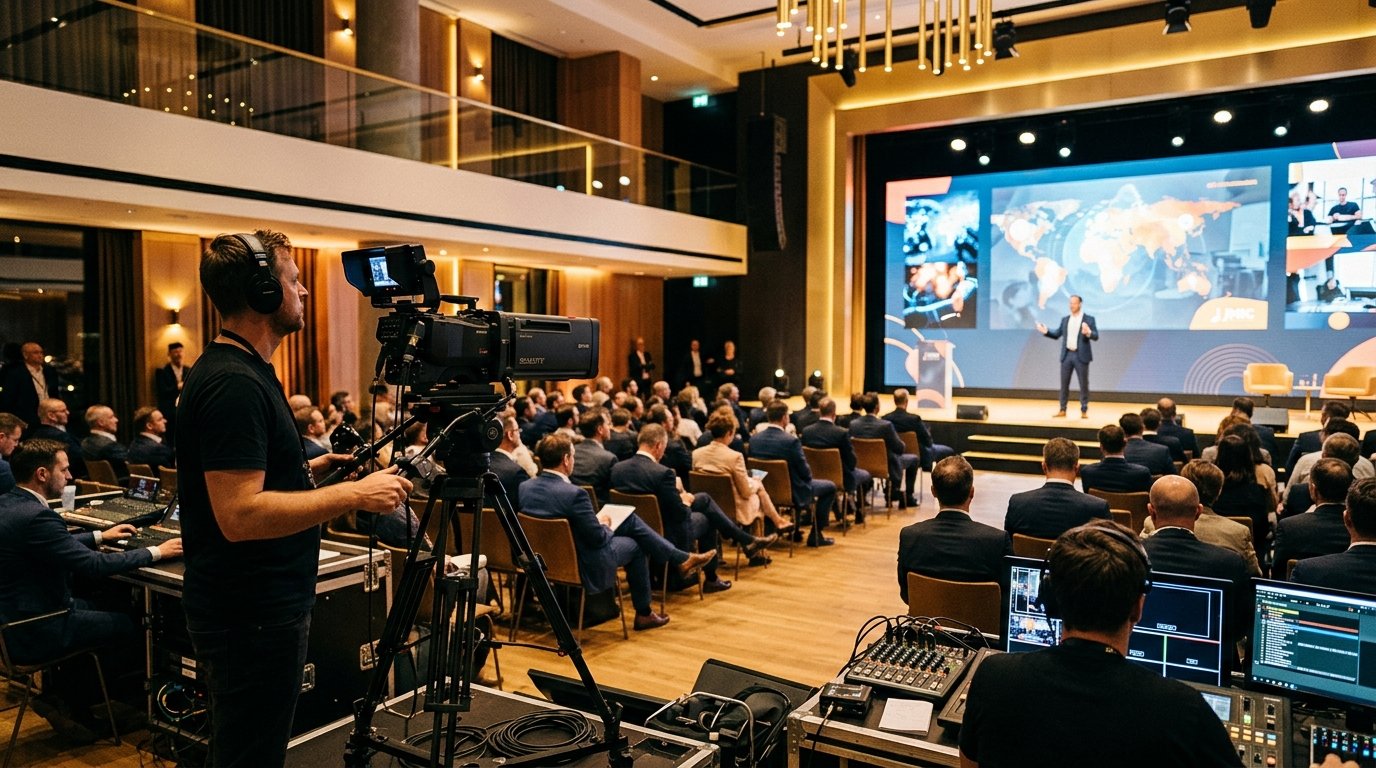
As the JMIC Manifesto emphasizes 'impact storytelling' and 'legacy narratives,' Alesia RSVP positions itself as the essential partner to document these transformations. We turn ephemeral event moments into permanent, high-end visual assets that prove ROI and build the long-term brand authority stakeholders now demand. In global hubs like London and New York, where the competition for executive attention is fierce and the stakes are exceptionally high, the quality of your event's visual output is a direct reflection of your brand's professional standing. We don't just take photos; we curate a visual legacy. Our approach aligns perfectly with the manifesto’s goal of positioning business events as drivers of professional transformation. When we produce a multi-camera live stream or a documentary-style aftermovie, we aren't just recording a sequence of events; we are capturing the strategic advantage your brand provides to its industry. This level of production is what separates a standard corporate meeting from a global summit. By utilizing our Galerie Photo & Video, clients can see how we've successfully translated complex B2B narratives into compelling visual stories that resonate long after the breakdown is complete. This is the bridge between the high-level advocacy of the JMIC and the practical reality of corporate event execution. Premium documentation is the only way to make the 'Iceberg' visible to those who weren't in the room, ensuring that the economic and social impact of your event is recognized by the people who hold the budgets. Our methodology involves a deep understanding of the event's objectives before a single frame is shot. We identify the key stakeholders, the pivotal sessions, and the intended legacy outcomes. By doing so, we ensure that the visual assets we create are not just beautiful, but strategically aligned with the goals outlined in the JMIC Manifesto. For example, if an event aims to drive regional investment, our documentation will focus on the interactions between local government officials and international investors. If the goal is talent development, we highlight the mentorship and knowledge exchange occurring in breakout sessions. This targeted approach to documentation provides the 'proof of impact' that the manifesto advocates for, making it easier for event organizers to secure future funding and support. In an era where digital presence is as important as physical presence, the quality of your visual documentation determines the reach and influence of your event's message.
What are the 15 ways business events create strategic advantage for brands?
The JMIC Manifesto identifies 15 specific ways business events drive advantage, ranging from building trust and community legacies to supporting talent development and sustainability. For the corporate planner, these 15 points serve as a comprehensive checklist for event success. Are you facilitating meaningful networking that builds trust between disparate stakeholders? Are you creating a platform for emerging talent to showcase their expertise to industry veterans? Are you implementing sustainable practices that reflect modern corporate values and leave a positive footprint on the host city? Each of these objectives requires a specific production and documentation strategy. For instance, talent development is best showcased through on-site podcast recordings and executive interviews that highlight the intellectual depth and diversity of your organization. Sustainability isn't just about reducing plastic or carbon offsetting; it's about the social legacy you leave in the host city, which can be documented through community-focused video features. When planning your next major gathering, whether it's an industry-wide summit, a high-stakes board meeting, or an internal leadership retreat, these 15 pillars should guide your RFP process and your choice of partners. We have integrated these principles into our own Nos evenements framework, ensuring that every project we undertake contributes to the broader strategic goals of our clients. The manifesto makes it clear: the business event industry is no longer a service sector; it is a strategic partner in global economic growth. As a premium agency, Alesia RSVP provides the technical and creative infrastructure to realize this vision. We move beyond the logistics of AV and into the realm of strategic production, ensuring that your event delivers on the high-stakes promises outlined in the JMIC Global Manifesto. The future of corporate events is not just about being there; it's about the measurable, visible impact you leave behind. To truly leverage these 15 ways, organizers must move away from 'one-size-fits-all' event templates. Each event should be a bespoke response to a specific strategic challenge. Whether it is driving innovation through collaborative workshops or building brand trust through exclusive C-suite gatherings, the documentation must reflect the specific 'advantage' being targeted. By focusing on these 15 pillars, brands can transform their events from isolated occurrences into a cohesive, year-round strategy for growth and influence. This is the essence of the JMIC’s message: events are the catalysts for the progress of civilizations and industries alike, and they deserve to be treated with the same strategic rigor as any other major business investment.
FAQ
What is the JMIC Global Manifesto Edition 3?
The JMIC Global Manifesto Edition 3 is the industry’s flagship advocacy resource designed to position business events as strategic drivers of economic, social, and professional transformation. It provides data-backed evidence for governments and corporations to view events as investments rather than costs.
How does the 'Iceberg' concept apply to event ROI?
The 'Iceberg' concept suggests that while the immediate event activities (the tip) are visible, the majority of the value—such as long-term policy changes, professional growth, and economic legacy—lies beneath the surface. Documenting this 'submerged' value is essential for proving the true ROI of an event.
Why is high-end visual documentation necessary for the JMIC goals?
High-end documentation serves as the 'proof of impact.' It captures the intellectual capital and strategic outcomes of an event, making the invisible value visible to stakeholders and board members who require tangible evidence of success to justify future budgets.
What are the key pillars of the JMIC Manifesto?
The manifesto identifies 15 ways events drive advantage, including building trust, fostering innovation, talent development, community legacy, and regional economic growth. These pillars serve as a framework for planning and measuring the success of modern business events.
How can Alesia RSVP help align my event with the JMIC Manifesto?
Alesia RSVP provides strategic visual production that focuses on 'impact storytelling.' We move beyond simple recording to create high-end assets—such as documentary recaps and executive interviews—that highlight the professional transformation and economic legacy of your event.
Frequently Asked Questions
What is the JMIC Global Manifesto Edition 3?
The JMIC Global Manifesto Edition 3 is the industry’s flagship advocacy resource designed to position business events as strategic drivers of economic, social, and professional transformation. It provides data-backed evidence for governments and corporations to view events as investments rather than costs.
How does the 'Iceberg' concept apply to event ROI?
The 'Iceberg' concept suggests that while the immediate event activities (the tip) are visible, the majority of the value—such as long-term policy changes, professional growth, and economic legacy—lies beneath the surface. Documenting this 'submerged' value is essential for proving the true ROI of an event.
Why is high-end visual documentation necessary for the JMIC goals?
High-end documentation serves as the 'proof of impact.' It captures the intellectual capital and strategic outcomes of an event, making the invisible value visible to stakeholders and board members who require tangible evidence of success to justify future budgets.
What are the key pillars of the JMIC Manifesto?
The manifesto identifies 15 ways events drive advantage, including building trust, fostering innovation, talent development, community legacy, and regional economic growth. These pillars serve as a framework for planning and measuring the success of modern business events.
How can Alesia RSVP help align my event with the JMIC Manifesto?
Alesia RSVP provides strategic visual production that focuses on 'impact storytelling.' We move beyond simple recording to create high-end assets—such as documentary recaps and executive interviews—that highlight the professional transformation and economic legacy of your event.