
Riyadh Airport Restrictions: Impact on B2B Event Strategy
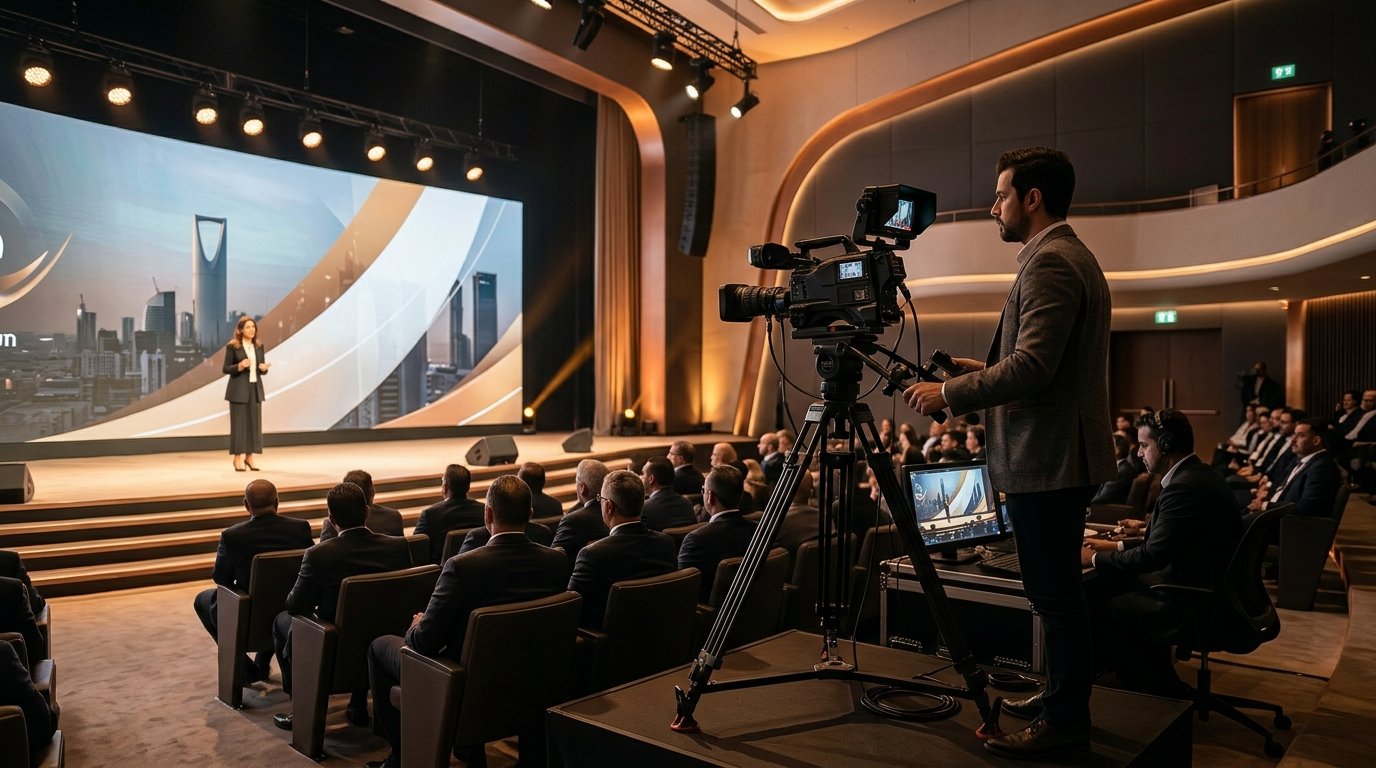
Riyadh Airport Restrictions: Impact on B2B Event Strategy
As Riyadh airport restrictions push the Saudi event season into 2027, corporate planners must navigate travel freezes and logistical pivots.
How do Riyadh airport restrictions impact the 2026-2027 corporate event calendar?
When geopolitical shifts freeze one of the world's fastest-growing event hubs, agility becomes the ultimate luxury for B2B organizers. As Riyadh's airport restrictions push the kingdom's event season into 2027, the global corporate landscape is forced to pivot. The recent suspension of scheduled flights following regional security escalations has transformed what was once a booming destination into a logistical bottleneck. For marketing directors and VP Events who had banked on Saudi Arabia’s 'Vision 2030' momentum, the current reality is a stark reminder that infrastructure is only as good as its accessibility. This isn't just a temporary delay; it's a fundamental shift in the risk assessment profile for the entire Middle East region. The 2026-2027 calendar, which was expected to be the peak of Saudi Arabia's emergence as a global summit leader, is now being rewritten in real-time.
The immediate impact on the 2026-2027 calendar is a total freeze on new travel initiatives. Industry data suggests that the majority of corporate travel has been paused, with stranded visitors resorting to 11-hour road journeys through Dammam and Bahrain just to exit the region. This is not merely a delay; it is a disruption of the trust required to host high-stakes B2B summits. When a CEO cannot guarantee their arrival or departure, the event's viability evaporates. The industry discussion on Saudi travel restrictions highlights a growing consensus: reliability is the primary currency in event planning. Without it, even the most lavish venues remain empty. Planners are now looking at force majeure clauses with a level of scrutiny never seen before, as the 'sovereign risk' of hosting in Riyadh has spiked overnight. The ripple effect extends to the supply chain; local vendors who scaled up for a busy 2026 are now facing a sudden vacuum of demand, leading to potential bankruptcies and a thinning of the local talent pool.
Furthermore, the backlog created by these restrictions will likely saturate the 2027 calendar. Events originally slated for late 2026 are being pushed forward, creating a 'traffic jam' of summits that will compete for the same executive attention and sponsorship dollars. This saturation forces a strategic re-evaluation of the entire Middle Eastern events circuit. Organizers are no longer asking if they should be in the Kingdom, but rather how they can hedge their bets against regional instability. The shift from air travel to grueling overland routes for pilgrims and business travelers alike signals a regression that corporate brands cannot afford to ignore. We are seeing a 'flight to certainty' where the 2027 calendar is being pre-emptively booked in more stable hubs to avoid the risk of a secondary freeze. This creates a supply-side crunch in alternative cities, driving up prices for venues and high-end AV equipment across the entire EMEA region. For the B2B strategist, the challenge is now two-fold: managing the immediate crisis in Riyadh while securing future slots in a hyper-competitive, post-disruption market.
What are the best alternative cities for high-end B2B events in the Middle East?
As Riyadh faces a prolonged period of restricted access, the corporate event spotlight is shifting back to established hubs with proven resilience. For organizers seeking to maintain their Middle Eastern presence without the logistical nightmare of road-bound evacuations, Dubai remains the undisputed leader. The city’s infrastructure is designed to absorb the overflow from regional disruptions, offering the same—if not superior—luxury and technical capabilities as Riyadh without the current security overhead. Dubai has spent decades building a buffer against regional volatility, creating a 'safe harbor' status that is currently paying dividends. The ease of entry, combined with a world-class airport that remains unaffected by the current restrictions, makes it the primary fallback for any event displaced from the Kingdom.
Dubai’s advantage lies in its multi-modal connectivity and mature vendor ecosystem. When an event is forced to relocate, the transition to Dubai is often the path of least resistance. The city’s ability to host massive conferences like GITEX or COP demonstrates a capacity for scale that Riyadh was only just beginning to emulate. Other alternatives like Doha or Abu Dhabi are also seeing an uptick in inquiries, but they lack the sheer volume of high-end AV production and event management services found in the UAE. Abu Dhabi, in particular, offers a more curated, 'boutique' feel for high-level executive retreats, while Doha provides state-of-the-art facilities that rival anything in Europe. However, the sheer density of the Dubai event industry means that last-minute pivots are more feasible there than anywhere else in the world.
Choosing an alternative city is not just about finding a venue; it is about ensuring the brand’s reputation remains intact. A canceled event is a PR disaster; a relocated event is a masterclass in crisis management. According to recent corporate event trends and risk management reports, the trend is moving toward 'safe-haven' cities that offer political and logistical stability. For the 2026-2027 season, the priority for B2B organizers is clear: minimize risk by utilizing hubs that can guarantee attendee safety and seamless international transit. This shift also includes a return to European hubs like Paris or London for events that were originally intended to capture the 'new' Middle East market but now require the absolute certainty of Western logistics. The 'Plan B' is no longer a secondary thought; it is the core of the 2027 strategy. Organizers are now diversifying their geographic footprint, ensuring that no single regional disruption can take down their entire annual event series.
How can event planners ensure business continuity and premium content capture during regional instability?
In an era of unpredictability, the value of an event is increasingly tied to its digital footprint rather than just its physical attendance. If regional instability limits the number of executives who can fly into a specific location, the burden of success falls on professional content capture and live streaming. Business continuity in the event space means ensuring that the insights shared on stage reach the global audience, regardless of travel restrictions. This requires a shift in budget allocation from 'hospitality' to 'production.' If 30% of your audience cannot attend due to a travel freeze, that 30% must be reached through high-fidelity digital experiences that go beyond a simple Zoom link.
This is where the strategy shifts from mere logistics to content-first production. High-quality video recaps, same-day social cuts, and multi-camera live broadcasts allow a brand to maintain its authority even if the physical footprint of the event must be scaled down or moved. If your keynote speaker is stuck in a different time zone due to flight cancellations, a professional hybrid setup becomes the difference between a successful session and a total loss. We are seeing a rise in 'distributed events,' where a central hub hosts the core production while satellite locations around the world host local viewing parties. This model mitigates the risk of a single point of failure—like Riyadh airport—shutting down the entire initiative.
At Alesia RSVP, we understand that high-stakes B2B events require more than just a venue; they require logistical certainty. As Saudi Arabia faces travel freezes, we help premium brands transition their visual storytelling and event documentation to more accessible, established hubs like Dubai or Paris, ensuring their brand presence remains uninterrupted. Our dual expertise in both event management and high-end AV production allows us to pivot quickly, moving entire production teams and equipment to alternative cities without compromising on the magazine-quality output our clients expect. We focus on 'archival-grade' content capture, ensuring that even if an event is smaller than planned, the resulting media assets can be used for months of high-level marketing.
The conclusion for any modern event professional is that the 'Plan B' is now the 'Plan A.' The situation in Riyadh proves that even the most ambitious national projects can be sidelined by external forces. To survive and thrive, corporate event strategies must be built on a foundation of agility, prioritizing locations with reliable access and partners who can manage the technical complexities of a shifting landscape. The goal is no longer just to host an event, but to ensure that the brand's message is delivered, documented, and distributed, no matter the geopolitical climate. This means investing in local crews who know the terrain, maintaining flexible contracts with venues, and always having a secondary production plan that can be activated within 48 hours. In the new world of B2B events, the most valuable asset isn't the venue—it's the ability to adapt without losing the premium quality of the brand's voice.
FAQ
Is it still safe to plan corporate events in the Gulf region?
While Saudi Arabia is currently facing specific travel restrictions at Riyadh airport due to geopolitical tensions, neighboring hubs like Dubai and Abu Dhabi remain highly secure, operational, and accessible. Planners should focus on these established cities to ensure logistical reliability and attendee safety during the 2026-2027 season. It is recommended to maintain comprehensive event cancellation insurance and work with agencies that have a footprint in multiple GCC countries to allow for rapid relocation if necessary.
Which cities are currently the most reliable for international B2B summits?
Dubai, Singapore, and Paris are currently the most reliable hubs for international summits due to their superior air connectivity, mature event infrastructure, and political stability. These cities offer the multi-modal transport links and vendor density required for high-stakes corporate events that cannot risk travel disruptions. For events specifically targeting the Middle East, Dubai and Abu Dhabi are the primary alternatives to Riyadh, offering a seamless transition for logistics and attendee management.
How does travel instability affect event photography and video production logistics?
Instability often leads to equipment delays, customs bottlenecks, and crew transit issues, making it essential to hire agencies with local hubs or proven global mobility. Professional production teams must have contingency plans to ensure that content capture is not compromised. This includes using local equipment rentals to avoid shipping delays, utilizing cloud-based editing workflows for real-time delivery, and ensuring that all crew members have flexible travel documentation. At Alesia RSVP, we mitigate these risks by maintaining a presence in key global hubs, ensuring that our technical standards remain consistent regardless of regional travel freezes.
Frequently Asked Questions
Is it still safe to plan corporate events in the Gulf region?
While Saudi Arabia is currently facing specific travel restrictions at Riyadh airport due to geopolitical tensions, neighboring hubs like Dubai and Abu Dhabi remain highly secure, operational, and accessible. Planners should focus on these established cities to ensure logistical reliability and attendee safety during the 2026-2027 season. It is recommended to maintain comprehensive event cancellation insurance and work with agencies that have a footprint in multiple GCC countries to allow for rapid relocation if necessary.
Which cities are currently the most reliable for international B2B summits?
Dubai, Singapore, and Paris are currently the most reliable hubs for international summits due to their superior air connectivity, mature event infrastructure, and political stability. These cities offer the multi-modal transport links and vendor density required for high-stakes corporate events that cannot risk travel disruptions. For events specifically targeting the Middle East, Dubai and Abu Dhabi are the primary alternatives to Riyadh, offering a seamless transition for logistics and attendee management.
How does travel instability affect event photography and video production logistics?
Instability often leads to equipment delays, customs bottlenecks, and crew transit issues, making it essential to hire agencies with local hubs or proven global mobility. Professional production teams must have contingency plans to ensure that content capture is not compromised. This includes using local equipment rentals to avoid shipping delays, utilizing cloud-based editing workflows for real-time delivery, and ensuring that all crew members have flexible travel documentation. At Alesia RSVP, we mitigate these risks by maintaining a presence in key global hubs, ensuring that our technical standards remain consistent regardless of regional travel freezes.